Parenting · Beginner
Encourage your child's first words through everyday play
A four-week programme for parents of children aged 1 to 5. One short game a day, shown on video, with no dry theory.
- 20 play-based speech games
- Video guide for every game
- One new game each weekday
- 4 months of access
- 14-day refund
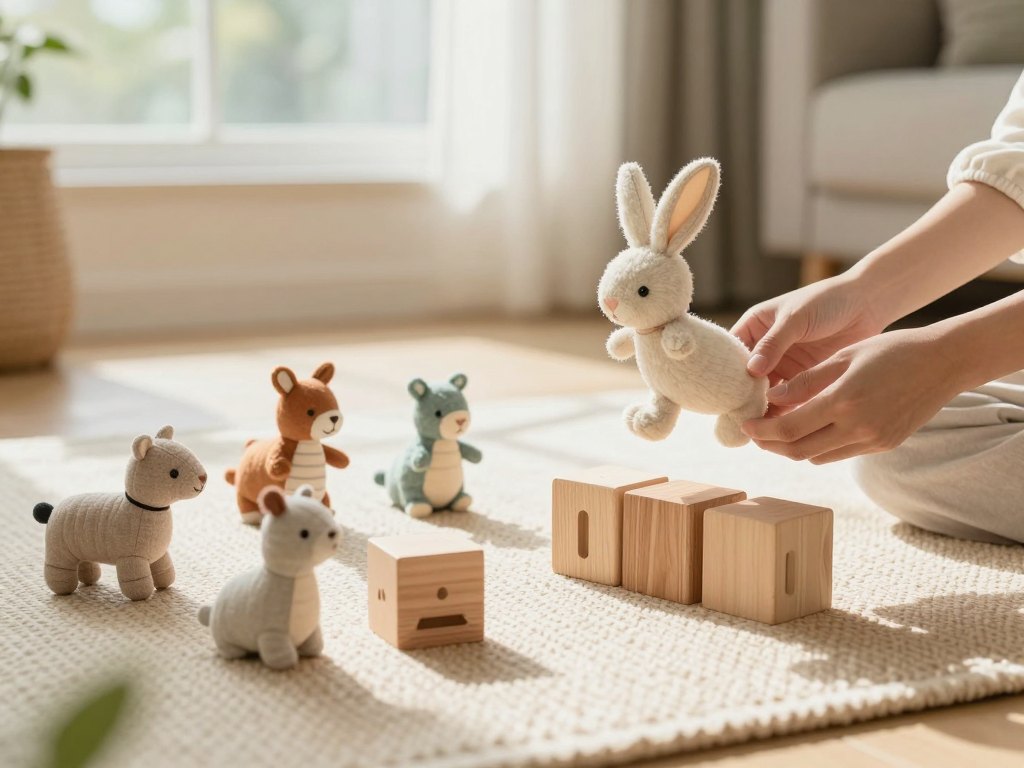
When you want to help your child talk, but do not know where to start
Every parent waits for those first words, and many of us start to wonder whether we are doing enough. You may have read articles full of theory, watched a few videos, and still found yourself standing in the living room with a toy in your hand, unsure what to say or do next.
Most advice about early speech is either too abstract or too demanding. It asks you to set aside long study sessions, buy special materials or turn playtime into a lesson. Toddlers do not learn that way. They learn through movement, repetition, surprise, laughter and the attention of the adult beside them.
This course was built around that idea. Instead of lectures, you get a sequence of short games that you can play with your child straight away. Each game is shown on video, so you see how the adult speaks, pauses, waits and responds, and you can copy it in your own words.
In four weeks you will build a simple routine of playful speech support that fits into the day you already have: at home, on a walk or in the shop. It becomes the foundation that helps your child start talking, at a pace that suits them.
What you will be able to do
- Build a play session without dull theory
You will learn a simple structure that keeps a toddler engaged and keeps you relaxed.
- Play with your child in a genuine way
Live examples show how to follow your child's interest instead of directing every move.
- Use speech-friendly techniques in daily routines
Dressing, meals, bath time and shopping all become small chances to practise.
- Take your child's lead during play
You will notice what holds their attention and build the game around it.
- Use sounds, words and gestures at the right moment
You will see when to model a word, when to wait, and when to just enjoy the game.
- Run one short game a day without preparation
Each game uses simple items you already have at home.
- Take speech practice outside the playroom
You will adapt the same ideas for walks, queues and car rides.
- Keep a calm, encouraging tone
Your child learns that talking is safe, fun and rewarding.
- 4
- weeks of guided play
- 20
- speech games
- 1
- new game each weekday
- 4 months
- of access to the materials
The idea behind the games
Young children rarely respond to being asked to repeat a word. They respond when something interesting is happening and a familiar adult shares it with them. The games in this course are built around that principle: a story, a toy, a movement or a small surprise gives your child a reason to listen, look and, in time, make sounds of their own.
Each game is short enough to fit into a busy day. You do not need to turn the whole afternoon into a lesson. A few focused minutes of real attention, repeated regularly, are more useful than a long session that leaves both of you tired.
The course also shows the small habits that make a difference: getting down to your child's eye level, speaking in clear short phrases, pausing so your child has room to respond, and celebrating every attempt. These habits are easy to learn when you can see them in action, which is why every game comes with a video demonstration.
How the course works
The course runs over four weeks. On every weekday a new game opens in your account, so you always know what to do today and never face a large pile of material. Each game comes with a video instruction that shows the activity from start to finish and explains what to say and what to wait for.
You study at your own pace and at a time that suits you and your child. Many parents watch the video while the child is napping or playing, then try the game when the child is fresh and curious. If a day is missed, the game is still waiting for you, and you can repeat any game as many times as your child enjoys it.
Your access lasts four months from the moment of payment. That is long enough to finish the main programme in a month and return to your favourite games whenever your child reaches a new stage. There are no deadlines, no assignments to submit and nothing to prepare in advance.
The programme
Four weeks, five games per week. A new game opens every weekday and each one comes with a video guide.
1Week 1 — Getting attention and building connectionThe first games focus on eye contact, shared attention and a relaxed atmosphere.5 games
- How to set up a play session your child wants to join
- A game of hide and appear to catch attention
- Sounds and gestures in a simple toy story
- Playing together without asking the child to repeat
- Turning the first game into a daily ritual
2Week 2 — Sounds, imitation and rhythmGames that invite your child to copy movements and sounds in a playful way.5 games
- Copying movements as a path to copying sounds
- Animal sounds in a story game
- Rhythm and clapping with a favourite song
- The pause that invites your child to join in
- Sound games with everyday objects
3Week 3 — First words and meaningful namingShort games that connect words with objects, actions and routines.5 games
- Naming toys during a story
- Action words in a moving game
- Choosing between two objects to encourage a response
- Words for daily routines: meals, dressing and bath time
- Using a story game to repeat key words naturally
4Week 4 — Bringing play into everyday lifeThe final games help you carry the approach beyond the playroom.5 games
- Speech games on a walk
- Playful words in the shop and on the way
- Building short phrases from familiar words
- Keeping a daily routine you can maintain
- Planning what to repeat after the first month

What you get
- 20 play-based speech games
A full month of activities, with a new game opening each weekday.
- A video instruction for every game
You see the activity demonstrated, so you know exactly what to do.
- Four months of access
Come back to any game as often as you like during this time.
- Your own schedule
Study when it suits you and your child, with no live sessions to attend.
- Examples from real play
Live demonstrations show how to play naturally with a small child.
- Ideas for daily routines
Practical ways to use the games at home, outdoors and on errands.
Is this course for you?
This course is for you if…
- Parents of children aged 1 to 5 who want to support early speech through play
- Parents who feel unsure how to play with a toddler in a way that helps them talk
- Caregivers who prefer short, practical activities over long theory
- Families who want a simple daily routine that fits around work and sleep schedules
Probably not a fit if…
- Anyone looking for a medical assessment or a treatment plan for a health condition
- Parents who want live one-to-one coaching as the core of the programme
- Those who expect an instant result without regular play and patience
- Families with children older than five who need a different approach
After the course
After four weeks you will have a set of games you know well and a daily habit of short, attentive play. Your sessions will feel less like a task and more like a shared pleasure, and you will know what to say, when to pause and how to respond to every sound your child makes.
You will also see everyday moments differently. A trip to the shop or a walk to the park becomes a chance to name things, make sounds and share a laugh. These small moments add up, and they give your child many gentle opportunities to try out new words.
Every child develops at their own pace, and the course does not promise a specific result by a specific date. What it gives you is a clear, enjoyable method and the confidence to keep going, so your child has a warm and playful environment in which to start talking.
Questions before you buy
How much time do I need each week?
One game a day on weekdays is enough. Most games take a few minutes to watch and a short play session to try, so plan on about 15 to 30 minutes a day, depending on how long your child stays interested.
Do I need any previous experience?
No. The course is written for parents and caregivers without any special training. If you can sit and play with your child, you can follow the lessons.
How does access work after payment?
Once your payment is complete you receive access to the course materials. The first games open on the weekday schedule, and your access lasts four months from the moment of payment.
What format are the lessons in?
Each game comes as a short video instruction that demonstrates the activity and explains how to play it. You can watch on a phone, tablet or computer.
What materials do I need?
The games are designed for ordinary home settings, so you mostly need toys, objects and routines you already have. The video for each game shows what is used.
Is there a refund policy?
Yes. If the course does not suit you, you can ask for a refund within 14 days of purchase.
Will the materials stay available?
You can use the materials throughout the four-month access period and repeat any game as many times as you wish. Plan to finish the main programme in the first month, then return whenever you like.
Can I study at my own pace?
Yes. The course is self-paced, with no live sessions to attend, so you can fit it around your child's sleep and mood. You can repeat or postpone any game.
Is this suitable for all children aged 1 to 5?
The games are designed for the 1 to 5 age range, and you can adjust the pace and difficulty to your child. The course is a play-based programme for parents and does not replace advice from a specialist if you have concerns about your child's development.
Start playing this week
Twenty short games, four weeks and one calm routine to help your child begin to talk.