Creative · All levels
Learn to paint water in the Japanese ink tradition
A step-by-step online course in suibokuga that takes you from brush control to ripples, mist and reflections, with feedback on your own work.
- 6 modules, 20 video lessons
- Practice assignments
- Feedback on your work
- 3 months of access
- 14-day refund
Why water is the hardest thing to paint with ink
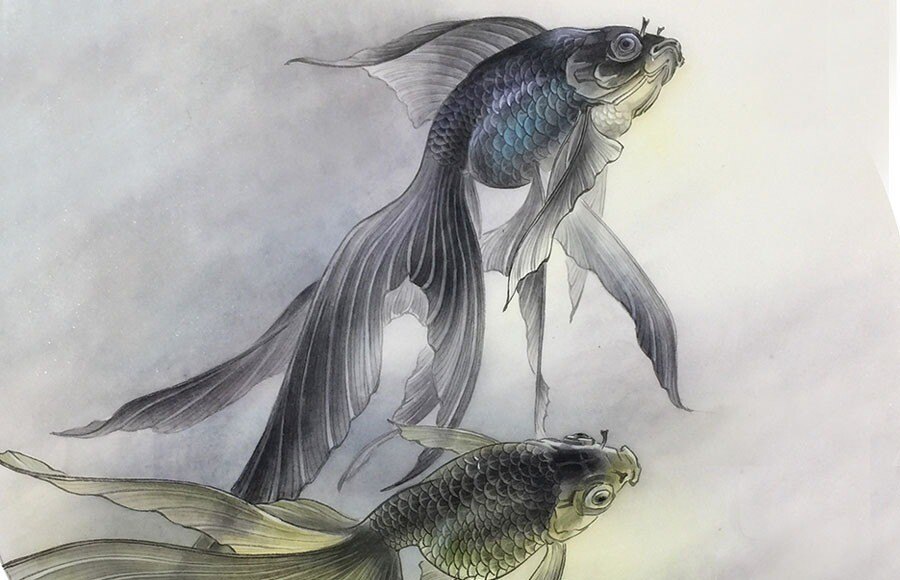
Suibokuga, the Japanese art of ink-wash painting, uses almost nothing: black ink, water, a brush and paper. With so little to hide behind, every stroke shows. A branch or a flower can be built from a few confident marks, but water has no outline and no fixed shape. It moves, reflects and fades, and it has to be suggested rather than drawn.
That is why many people who enjoy ink painting stall at this point. Their fish float on blank paper, their lotus ponds look flat, and their mist turns into a grey smudge. Copying a finished picture does not help, because you never see why the artist made each decision.
This course approaches water as a subject you can learn in order. You start with how ink behaves on paper and how to control your brush. Then you move from simple, quiet water to rippling and flowing water, and finally to water as part of a complete composition. Each step rests on the one before it.
Suibokuga rewards patience. The aim is a calm, harmonious image that evokes nature rather than copying it, and the course is paced to give you that calm: short lessons, one idea at a time, and time to practise between them.
What you will be able to do
- Prepare ink and control its tone
Make a range of greys from pale mist to deep black and know when to use each.
- Handle the brush with confidence
Vary pressure, speed and angle to get thick, thin, dry and wet lines.
- Suggest still water with empty space
Use the unpainted paper as part of the picture instead of filling it.
- Paint ripples and moving water
Build the rhythm of flowing lines that read as current rather than decoration.
- Place fish and plants on the water
Anchor subjects with reflections, ripples and shadows so they sit naturally.
- Create mist and soft distance
Use wet-on-wet washes to push parts of the picture back.
- Compose a balanced picture
Arrange subject, water and empty space so the eye moves through the work.
- Spot and correct your own mistakes
Learn from feedback what went wrong and how to repeat what went right.
- 3 months
- of access to the course
- 6
- modules
- 20
- video lessons
- 1
- theme: the element of water
The method: one idea per lesson, built up in order
The course is a sequence, not a collection of separate pictures. Each lesson introduces a single technical idea, such as a wet edge, a dry-brush stroke or a graded wash, and then asks you to use it in a short exercise before it appears in a finished piece.
Water is taught in layers. You first learn how to leave it unpainted, then how to hint at it with a few lines, and only then how to paint reflections, currents and mist. By the time you reach a full composition, each part of it is something you have already practised.
- Short exercises before every finished painting
- Clear explanations of why each stroke is made
- Assignments you can photograph and submit
- Gradual increase in difficulty
How the course works
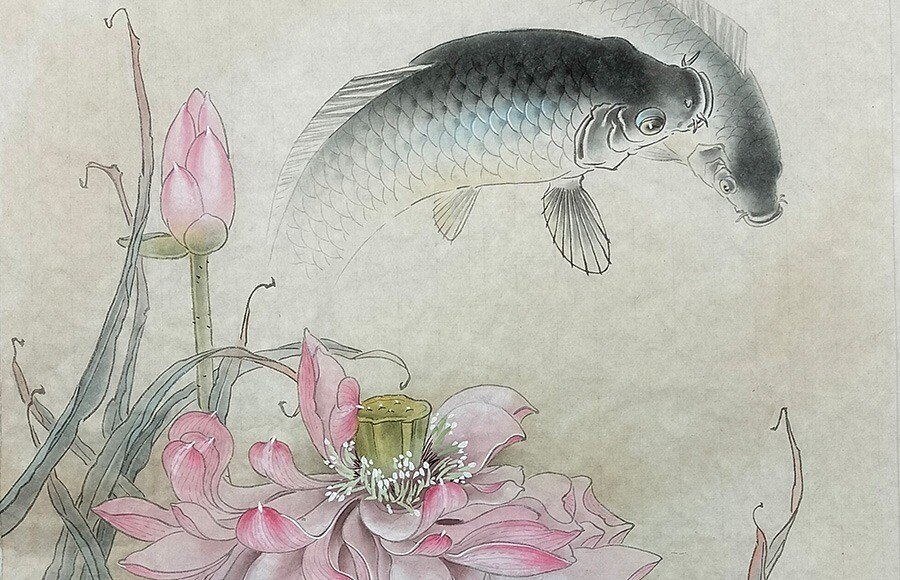
After you pay, you register and open your personal account. Access to the programme opens within three days and lasts three months, during which you can watch the lessons as many times as you like, at any hour. The teaching materials you need are provided with the lessons.
In the video lessons the teacher explains the material in detail and sets assignments for you to complete on your own. You paint at your own desk and at your own pace. Many learners watch a lesson once through, then again while they paint.
Your finished assignments are photographed and posted on the lesson page. The teacher reviews them, comments, points out mistakes, suggests how to fix them and either accepts the work or asks you to redo it. You can also see other students' work on the same course and read the comments they receive, which is often as instructive as feedback on your own. Course curators are available to answer practical questions.
The programme
Six modules that move from materials and brush control to complete compositions with water.
1Module 1 — Ink, paper and brushSet up your workspace and learn how ink behaves.3 lessons
- Materials and workspace for suibokuga
- Grinding and diluting ink: the range of tones
- How ink and water move on different papers
2Module 2 — Brush control and lineBuild the strokes you will use throughout the course.3 lessons
- Holding the brush and moving from the arm
- Thick, thin, wet and dry strokes
- Rhythm exercises for flowing lines
3Module 3 — Still and moving waterThe core water techniques, taught one at a time.4 lessons
- Water as empty space: leaving the paper untouched
- Suggesting a calm surface with a few lines
- Ripples and expanding rings
- Currents, eddies and flowing water
4Module 4 — Living subjects on waterConnect fish and plants to the surface they belong to.4 lessons
- Painting a fish body with one brush movement
- Long flowing fins and tails
- Lotus leaves and stems rising from the surface
- Reflections and shadows beneath the subject
5Module 5 — Mist, depth and distanceCreate atmosphere with soft washes.3 lessons
- Wet-on-wet washes for mist
- Pushing elements into the background
- Combining sharp and soft edges in one picture
6Module 6 — Composition and finishingBring everything together in complete paintings.3 lessons
- Balancing subject, water and empty space
- Painting a full water scene from start to finish
- Reviewing your work and planning your next steps
What you get
- 20 video lessons in 6 modules
Recorded lessons you can pause, repeat and watch at any time.
- Teaching materials
Everything you need to follow the lessons, available through your personal account.
- Practice assignments
Tasks for every stage so you apply each technique yourself.
- Teacher review of your work
Photograph your painting, post it on the lesson page and receive comments and recommendations.
- Access to other students' work
See how others solved the same assignment and read the comments they received.
- Curator support
Practical questions about the course are answered by the course curators.
- Three months of access
Unlimited viewing during the access period, with the course opening within three days of payment.
- 14-day refund policy
If the course is not right for you, ask for a refund within 14 days of purchase.
Is this course for you?
This course is for you if…
- You enjoy Eastern art and want to learn ink-wash painting in a structured way
- You can already paint a little and want to master the most difficult subject, water
- You are a beginner who prefers small, clear lessons to long demonstrations
- You want feedback on your own work rather than only watching videos
- You like slow, meditative creative practice
Probably not a fit if…
- You want to master every Chinese and Japanese painting style in one course
- You expect polished results without practising between lessons
- You are looking for live, in-person tuition at a studio
- You prefer to paint in bright colour; this course is mainly about ink
After the course
When you finish, ink and water will feel less intimidating. You will know how to prepare tones, load the brush and decide where the paper should stay empty. Water will stop being a blank gap in your pictures and become an element you can design.
You will also have a small collection of finished paintings and a set of exercises you can keep repeating. Because the teacher has commented on your work, you will know your own habits: where you press too hard, where you overwork a wash, and which strokes already come naturally.
From there you can go on to more complex compositions, add other subjects around the water, or return to a favourite lesson as a warm-up before a painting session. The course gives you a foundation for any further study in the style.
Questions before you buy
How much time do I need each week?
It depends on your pace. Most people set aside a few hours a week to watch a lesson and complete the exercise. You have three months of access, so you can go faster or slower as your schedule allows.
Do I need painting experience?
No specific experience is required. The course starts with materials and brush control. Some previous drawing or painting helps, but patience matters more.
What materials will I need?
The first module explains the tools and paper used in ink painting and how to choose them, so you can prepare before you begin the exercises.
How does access work after payment?
You register and open your personal account. After payment you receive a confirmation by email, and access to the course opens within three days. You then have three months to study.
What format are the lessons?
Self-paced video lessons with supporting materials and practice assignments. You can watch each lesson as many times as you wish during the access period.
Will I get feedback on my work?
Yes. You photograph your finished assignment and post it on the lesson page. The teacher comments, points out mistakes and gives recommendations, then accepts the work or asks you to redo it.
Can I see other students' work?
Yes. You can see other participants' work on the course and read the comments they receive.
Does the material stay available?
The lessons are available throughout your three-month access period, and the teaching materials remain yours for personal use.
What is the refund policy?
If the course is not what you expected, you can request a refund within 14 days of purchase.
Start painting water this week
Open the first lesson, prepare your ink and begin with the simplest stroke.