Creative · All levels
Paint a still life that holds light, colour and feeling
A recorded five-lesson programme that guides you from a simple composition sketch to a finished oil painting of peonies, cherries and an orange.
- 5 recorded video lessons
- 2.5 hours of demonstrations
- Composition and grisaille
- Oil painting and creative variations
- Four months of access
- 14-day money-back guarantee
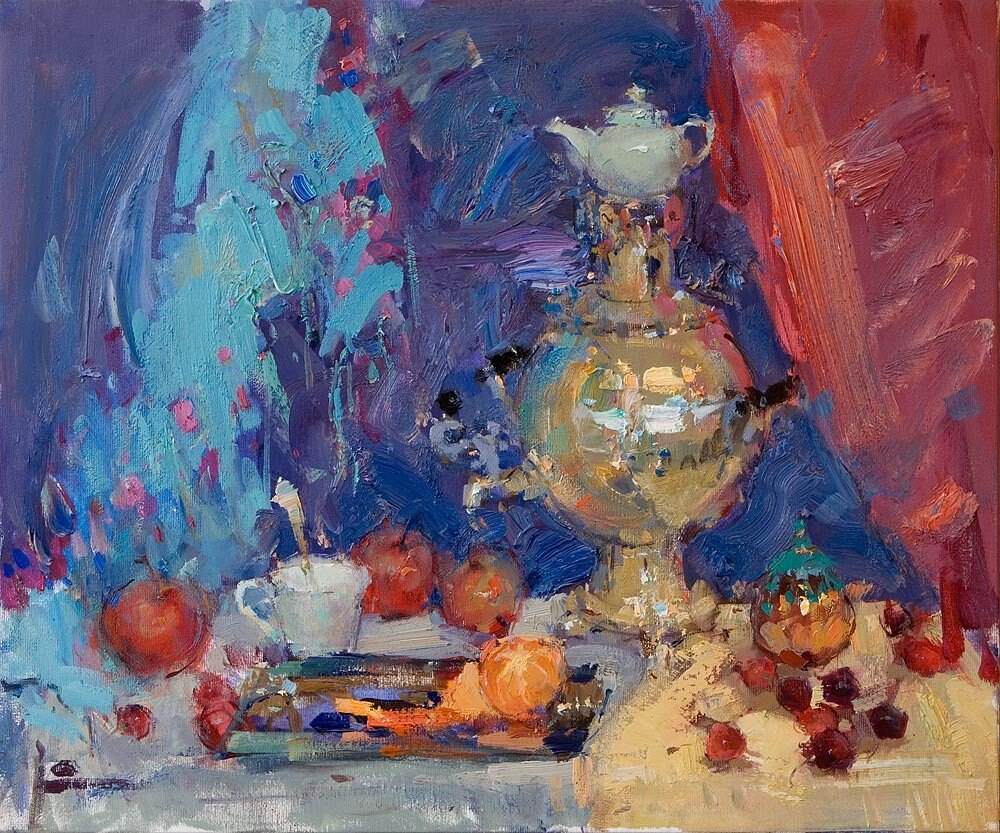
Why a still life teaches you to paint
A still life looks modest: a few flowers, some fruit, a cup, a cloth. That is exactly why it works as a painting subject. You control the light, the arrangement and the pace, so you can study the decisions that make a picture feel convincing.
Peonies, cherries and an orange give you a useful range of problems. Petals are soft and layered, cherries are dark and reflective, and the orange carries a strong warm note. Painting them together teaches you to compare edges, values and colour temperatures instead of treating each object separately.
Many painters begin with colour and detail, then wonder why the result feels flat or muddy. This course reverses the order. You start with composition and drawing, establish the tonal structure in grisaille, and only then move into oil. Each stage makes the next one easier to judge.
You follow one still life from the first sketch to a finished painting. By the end you have more than a single picture: you have a repeatable process you can apply to flowers, fruit, glass, fabric or any subject you set up at home.
What you will be able to do
Each lesson builds a practical skill that carries into your own work.
- Compose a still life in more than one format
Test vertical, horizontal and square arrangements before you commit to paint.
- Draw the main shapes with clarity
Place the peonies, cherries and orange accurately and keep the drawing readable.
- Judge tone before you mix colour
Group the subject into light and shadow so the painting holds together at a distance.
- Paint a grisaille underpainting
Use black and white to establish value structure without the distraction of hue.
- Build an oil painting from dark to light
Work from the tonal plan into colour while keeping edges and accents under control.
- Mix warm and cool notes for petals and fruit
Avoid muddy mixtures and make the flowers feel soft against the firmer fruit.
- Create a freer water-based variation
Use tempera, acrylic or watercolour to interpret the same subject with more spontaneity.
- Design a decorative oil variation
Explore colour spots, rhythm and expressive brushwork without losing the structure.
- 5
- recorded video lessons
- 2 h 37 min
- of demonstration
- 5
- stages of one still life
- 1
- finished painting project
See the tone before you mix the colour
Grisaille is the discipline at the centre of this course. Before you reach for colour, you paint the still life in black and white. The aim is not to make a grey picture for its own sake, but to decide where the light sits, how the shadows group and which edges need to stay soft.
When the tonal structure is clear, colour becomes easier. You can compare every mixture against a fixed value plan instead of guessing. Petals stop turning into a flat pink mass, cherries keep their depth, and the orange reads as a solid, luminous shape.
The lessons show the same subject moving through these stages. You see the drawing corrected, the grisaille adjusted and the oil layers built on top. That visible sequence is the real content of the course: not a set of tricks, but a way of looking.
- Separate light from shadow before adding hue
- Group small details into larger tonal masses
- Keep the drawing visible through the underpainting
- Test each colour mixture against the value plan
How the course works
The programme is made of five recorded lessons with a combined running time of 2 hours 37 minutes. You watch the demonstrations on the course platform, pause when you need to, and paint alongside at your own speed. There are no scheduled sessions to attend and no fixed timetable.
Each lesson has a clear task. The first uses paper and pencil for composition and drawing. The second introduces black and white paint for grisaille. The third is the main oil painting. Lessons four and five take the same subject into freer creative variations, first with water-based paints and then in oil.
A materials list is included so you can prepare before you start. You will need basic drawing tools, black and white paint, oil paints and a surface for the main work, plus a water-based medium for the fourth lesson. The lessons explain the palette as they go, so you can substitute materials you already own.
The programme
One still life, built up in five recorded stages. Times are the running time of each lesson.
1Lesson 1 — Drawing and compositionSet up the subject and decide how it sits inside the frame.13 min · 4 topics
- Arranging peonies, cherries and an orange under a single light
- Testing several compositional solutions on paper
- Blocking the main shapes and proportions in line
- Correcting the drawing before any paint is applied
2Lesson 2 — GrisailleEstablish the tonal structure in black and white.28 min · 4 topics
- Mixing a simple black-and-white value scale
- Grouping the still life into light and shadow
- Painting the underpainting from large masses to small accents
- Softening edges and checking the tonal plan at a distance
3Lesson 3 — The main oil paintingTranslate the tonal plan into colour and finish the principal work.1 h 8 min · 5 topics
- Preparing the surface and laying in the darkest passages
- Mixing warm and cool notes for the peony petals
- Painting the cherries and the orange as solid forms
- Building the light areas with fuller paint
- Final accents, edge control and unifying the picture
4Lesson 4 — Creative solution in water-based paintsInterpret the same subject loosely with tempera, acrylic or watercolour.27 min · 3 topics
- Choosing a water-based medium and preparing the palette
- Working freely from the tonal plan instead of copying detail
- Letting washes and visible brush marks carry the expression
5Lesson 5 — Creative solution in oilDesign a decorative oil variation built on colour and rhythm.21 min · 3 topics
- Planning a bolder, more decorative colour scheme
- Balancing colour spots, shapes and visual rhythm
- Finishing with deliberate, expressive brushwork
What you get
Everything is delivered on the course platform and stays with you for four months.
- Five recorded video lessons
Full demonstrations you can pause, rewind and paint along with.
- A complete still life project
One subject carried from first sketch to two finished variations.
- A materials list
Know what to prepare before the first lesson begins.
- Practical work in every lesson
Each stage ends with something to paint or draw yourself.
- Four months of platform access
Enough time to work through the course more than once.
- A method you can reuse
Composition, grisaille and colour planning for any future subject.
Is this course for you?
This course is for you if…
- Beginners who want a clear, ordered process rather than scattered tips
- Self-taught painters who feel their work is flat and want to understand why
- Artists with training who want to revisit tone, edges and colour temperature
- Anyone who prefers to learn by watching a subject painted from start to finish
- Painters looking for a repeatable method for flowers, fruit and everyday objects
Probably not a fit if…
- People looking for live classes, scheduled critiques or personal feedback
- Advanced painters seeking a specialised portrait or figure programme
- Anyone who wants a quick decorative result without the drawing and grisaille stages
- Students who cannot yet work with oil or water-based paint at all and want a pure drawing course
After the course
You finish with a completed oil still life of peonies, cherries and an orange, plus two freer variations of the same subject. More importantly, you finish with a working order of operations that you can repeat on your own.
The next time you set up a vase of flowers or a bowl of fruit, you will know how to test the composition before committing, how to check the values in a small study, and how to keep colour decisions tied to that structure. The guesswork shrinks and the painting moves forward faster.
Many painters find that the grisaille habit changes how they look at everything. You begin to see the world in grouped lights and darks first, and colour second. That shift is what makes later work look deliberate rather than accidental.
Questions before you buy
How much time do I need each week?
The five lessons run for 2 hours 37 minutes in total, so you can watch the whole course in an afternoon. Most people prefer to spread it over two to four weeks, painting between lessons. Plan roughly two to three hours per stage if you work alongside the demonstration.
Do I need previous painting experience?
No. The course starts with composition and drawing on paper and explains each stage as it happens. It is also useful for painters with training who want to strengthen their understanding of tone and colour relationships.
What materials will I need?
Paper and pencil for the first lesson, black and white paint for the grisaille, oil paints and a canvas or board for the main work, and a water-based medium such as tempera, acrylic or watercolour for the fourth lesson. A materials list is included, and you can substitute what you already own.
How do I get access after payment?
Access is opened on the course platform as soon as your payment is confirmed. You receive the lessons, the materials list and the practical tasks in your account, and you can start immediately.
How long is the material available?
The lessons stay available on the platform for four months from the date of purchase. That is enough time to work through the course once, take a break and return for a second pass.
What format are the lessons in?
Each lesson is a recorded video demonstration with spoken explanation, filmed while the still life is being drawn and painted. You watch, pause and repeat the stage on your own surface. There are no live sessions and no scheduled calls.
Will I receive feedback on my work?
The course is a self-study programme, so it does not include personal reviews or individual critique. The lessons are built so that you can check your own progress: each stage shows the reference result and explains what to compare in your own painting.
Can I use different paints or a different subject?
Yes. The method works with any subject that has a clear light source. The course uses peonies, cherries and an orange because they offer a useful mix of soft petals, dark reflective fruit and a strong warm note, but the same sequence applies to other arrangements.
What is the refund policy?
You have 14 days from purchase to request a refund. If the course is not what you expected, contact support within that period and the payment is returned according to the store's refund terms.
Start with the first sketch this week
Five recorded lessons, one still life, and a method you can take to your next canvas.