Cooking · Beginner
Bake-free raw vegan cakes without sugar, syrups or honey
Sixteen video recipes, a full knowledge base and ready-made calculators that take you from first cake to confident home dessert maker.
- 16 video recipes
- No oven, no eggs, no dairy
- Ingredient and equipment guides
- Cost and nutrition calculators
- 14-day refund policy
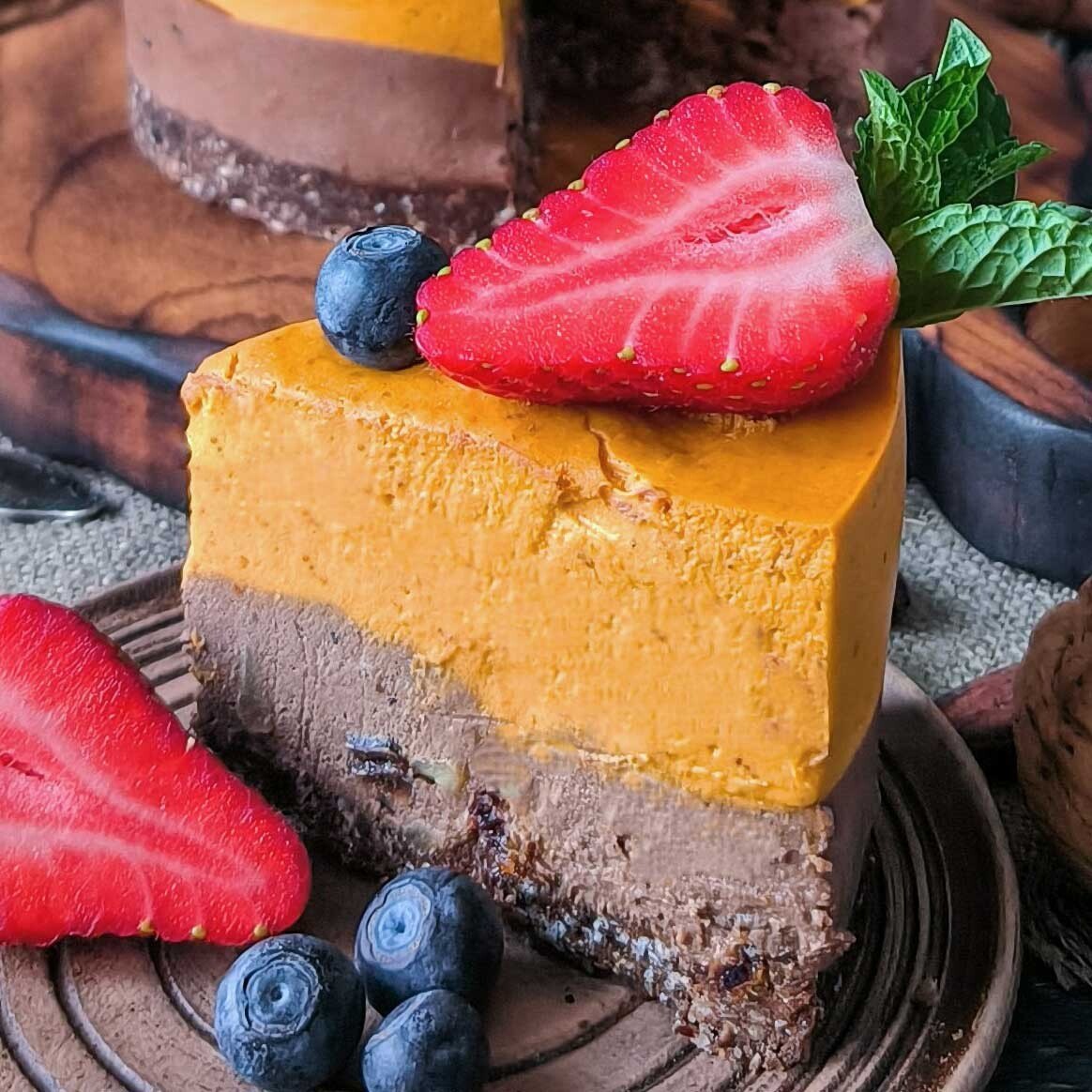
A dessert that does not need a sweetener
Most cakes labelled as light or healthy still rely on sugar in one of its many disguises. Syrups, date pastes, honey and sugar substitutes all sweeten the cake, and they all keep the sweet tooth well fed. If you want a dessert that is genuinely different, the shelves rarely offer one, and the recipes you find online often turn out dry, bland or impossible to slice.
This course is built around a different idea. The sweetness comes from whole fruit, berries and unprocessed dried fruit, the structure comes from nuts, seeds and coconut, and the colours come from ingredients such as berries, spices, spirulina and blue tea. There is no baking, no whipping and no levelling of sponge layers. The technique is quite unlike a traditional cake, which is exactly why you do not need pastry experience.
The recipes were developed for custom orders over several years, and every flavour was adjusted according to customer feedback. What you see in the lessons is the polished version: tested proportions, clear order of steps and tips for the moments where people usually go wrong.
The programme was refreshed in 2024 and is organised so that you start with the basics, cook your first cakes in the very first module and finish with a collection of sixteen flavours you can repeat, adapt and serve with confidence.
What you will be able to do
- Prepare raw vegan cakes from scratch
Follow sixteen video recipes from base layer to finished slice, with no oven required.
- Make desserts without sugar, syrups or honey
Learn how fruit, berries and dried fruit provide the sweetness instead.
- Choose and prepare quality ingredients
Know which nuts, seeds, berries and spices to buy and how to get them ready.
- Pick the right equipment
Separate the essential tools from the nice-to-have extras before you spend anything.
- Make coconut milk and nut-seed butter at home
Use the step-by-step videos to prepare two staples of the recipes yourself.
- Store and decorate finished cakes
Keep your cakes fresh and finish them with simple, attractive toppings.
- Substitute ingredients sensibly
Use the purchasing tips and replacement notes when something is hard to find.
- Recalculate recipes and costs
Scale a recipe up or down and see cost and nutrition values change instantly.
- Create your own variations
Once you understand the proportions, adapt flavours with confidence.
- 16
- video recipes
- 4
- recipe modules
- 1
- knowledge base with ingredient and equipment guides
- 12 months
- of access, extendable
A technique that is closer to assembling than baking
Each cake is built in layers: a nut-and-fruit base, a smooth cream made from soaked nuts, coconut and fruit, and a flavoured top layer. Because nothing is baked or whipped, the process rewards patience and attention to proportions rather than manual skill.
The lessons show the full sequence on camera, so you can pause, rewind and copy each step. The proportions of every component are given in the recipe materials, tested over years of practice.
- Nut and dried-fruit bases
- Creamy fillings without dairy or eggs
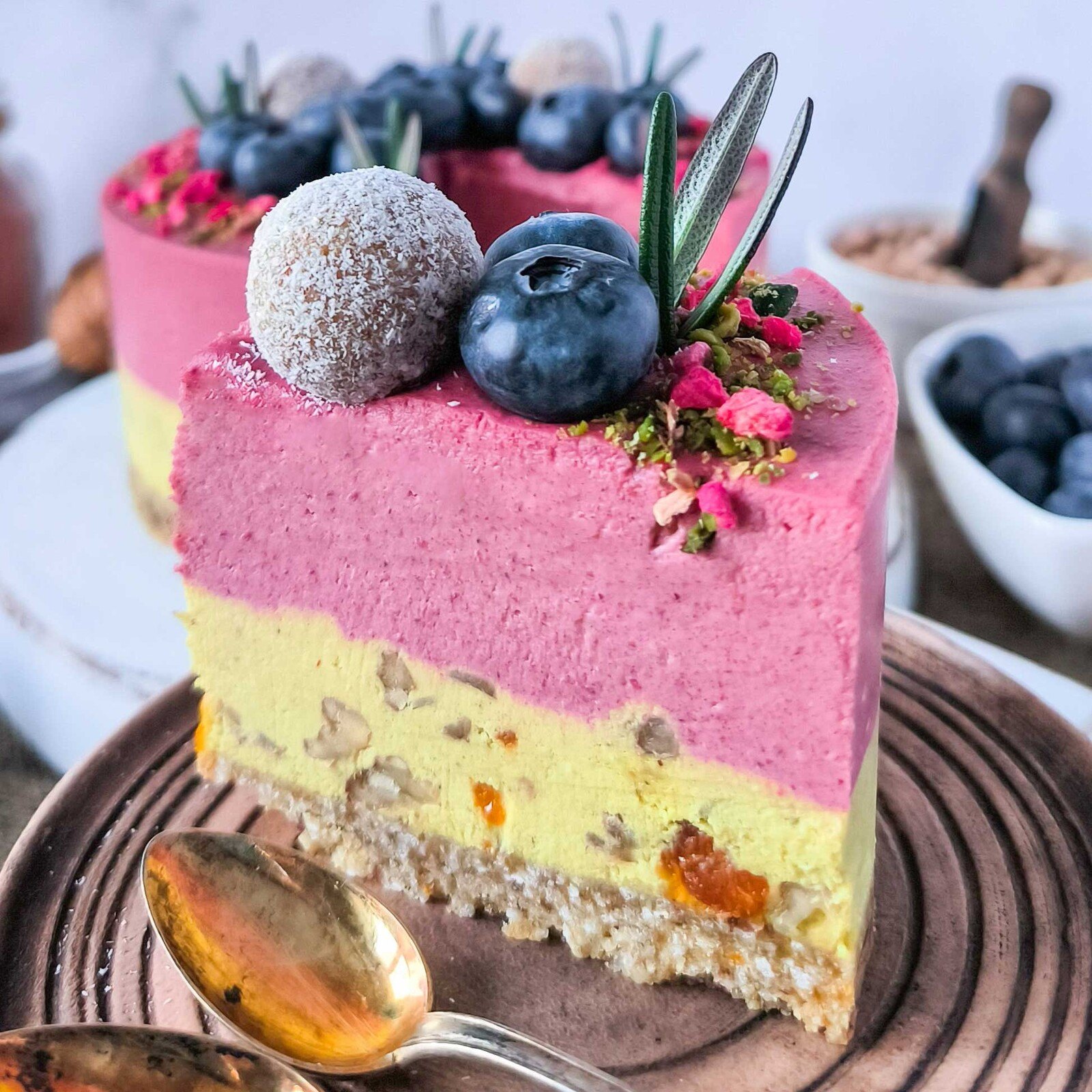
- Fruit and berry layers for natural flavour
- Natural colour from berries, spices and spirulina
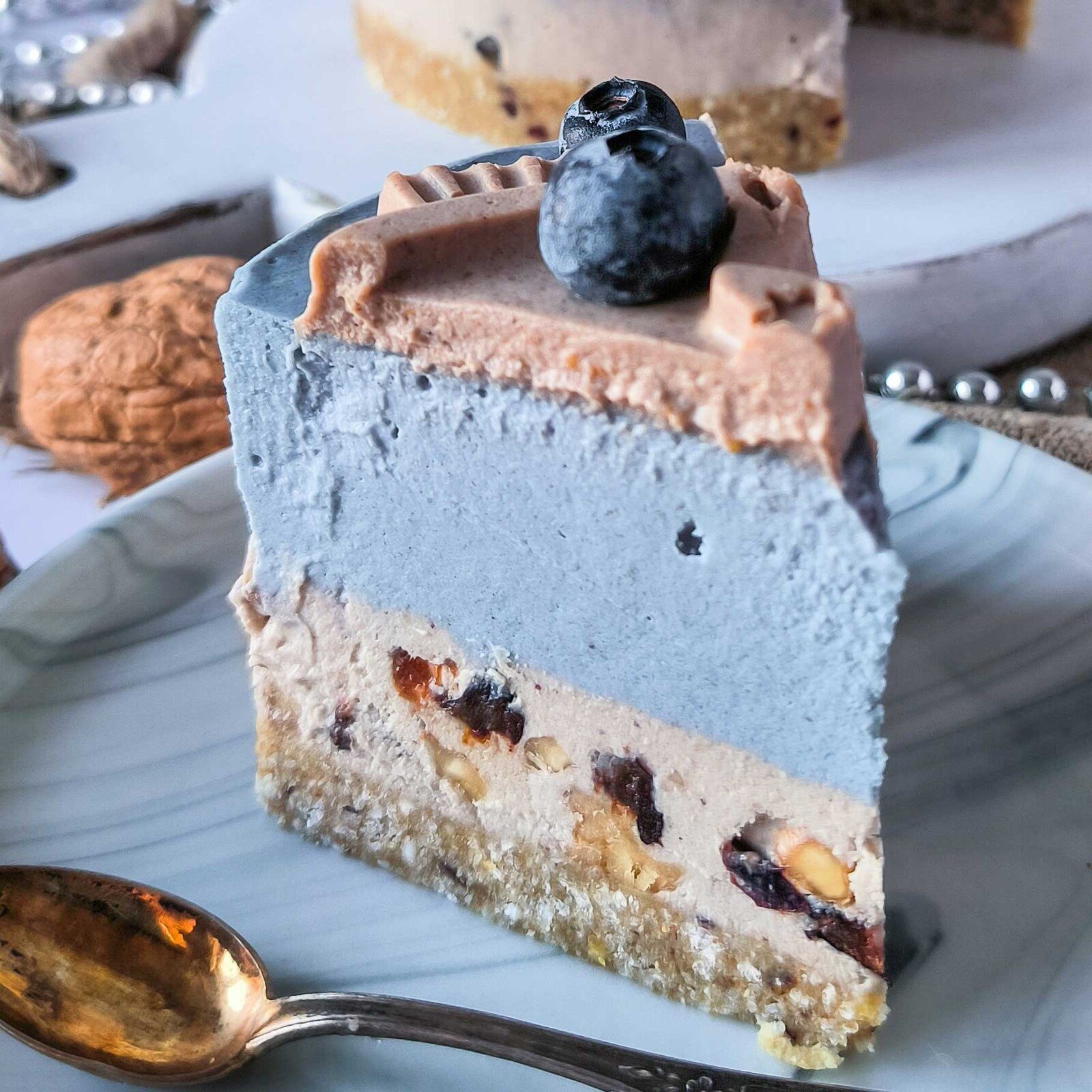
How the course works
The course is self-paced and delivered as video lessons on a learning platform that works well on a phone, so you can follow a recipe in the kitchen with the screen in front of you. You can study from anywhere you have an internet connection.
Start with the knowledge base. It covers the ingredients, the equipment, decoration and storage, and it answers most of the questions beginners ask. After that, you move through four modules of four recipes each, cooking at the pace that suits your schedule.
Along with the videos you receive ingredient and equipment guides, purchasing tips and spreadsheets that automatically recalculate quantities, nutritional values and cost. A chat with other participants and a feedback channel are there for the moments when something does not go to plan. Access lasts a year, and it can be extended on request at no charge.
The programme
A knowledge base followed by four recipe modules, with four cakes in each.
1Knowledge baseEverything you need to know before the first cake.5 lessons
- An introduction to the world of raw vegan cakes
- Ingredients: what to buy and how to prepare it
- Equipment: what is essential and what is optional
- Decorating and storing finished cakes
- Making coconut milk and nut-seed butter at home
2Module 1 — Four base flavoursYour first cakes, following the starter recipes.4 recipes
- Strawberry cake
- Blackcurrant cake
- Mango and melon cake
- Blueberry cake
3Module 2 — Family favouritesFour popular flavours that build on the basics.4 recipes
- Chocolate-covered strawberry cake
- Chocolate mojito cake
- Sea buckthorn cake
- Banana tiramisu cake
4Module 3 — Orange and crème brûlée layersCakes with two different signature layers.4 recipes
- Orange and chocolate cake
- Spiced cranberry cake with orange layer
- Blue tea cake with crème brûlée layer
- Blackberry punch cake with crème brûlée layer
5Module 4 — Lime-layer cakesThe final four recipes, with a fresh citrus layer.4 recipes
- Raspberry and lime cake
- Spinach and lime cake
- Piña colada cake
- Pink dragon fruit cake
What you get
- 16 video recipes
Detailed, step-by-step lessons for raw vegan cakes without sugar, syrups, honey or their substitutes.
- Tested proportions
Component quantities for every cake, refined through years of practice.
- A knowledge base
Guides to ingredients, equipment, decoration and storage.
- Purchasing and substitution tips
Advice on what to buy, what to look for and what can be swapped.
- Recalculation spreadsheets
Tables that adjust ingredient amounts, nutritional values and cost automatically.
- Mobile-friendly learning
Study from a phone or computer wherever you have internet access.
- Feedback and community chat
Ask questions and share your results with other participants.
- A year of access
Extendable free of charge if you need more time.
Is this course for you?
This course is for you if…
- You want to enjoy dessert without relying on sugar, syrups or honey.
- You are new to raw or vegan desserts and want clear, detailed guidance.
- You follow a plant-based diet or try to eat more unprocessed food.
- You dislike baking or whipping creams and prefer a simpler method.
- You already make raw desserts and want to learn how to skip syrups and sugar substitutes.
Probably not a fit if…
- You want recipes that use dairy, eggs or conventional sugar.
- You are looking for a low-fat dessert; these cakes rely on nuts, seeds and coconut oil.
- You are looking for classic baked sponge cakes or buttercream decorating.
- You are not able to buy nuts, dried fruit, berries and coconut products where you live.
After the course
By the end of the fourth module you will have cooked a number of cakes yourself and will know how each of the sixteen recipes is put together. Making a new flavour will mean opening the lesson and following the steps, not guessing at quantities.
You will also understand why each ingredient is in the cake, which makes shopping simpler and substitutions less stressful. If you want to adjust a recipe, the calculation tables let you see the effect on quantities, nutritional values and cost before you start.
For reference, the course's own figures put the cakes at roughly 300 kcal and about 25 g of carbohydrates per 100 g, with around 5 g of fibre, depending on the flavour. The cakes are rich and filling, so a small slice is enough for most people.
Questions before you buy
How much time do I need each week?
There is no fixed schedule. Each recipe takes the time of one cooking session plus time for the cake to set, so many people cook one or two cakes a week. You can go faster or slower.
Do I need any pastry experience?
No. The method is very different from conventional baking, and the lessons describe every step. Beginners often find these cakes easier than baked ones, because there is no oven, sponge or whipped cream to manage.
What equipment and ingredients will I need?
The knowledge base lists the essential and optional equipment. The ingredients are mostly nuts, seeds, coconut, unprocessed dried fruit, berries, fruit, spices and a few specialty items. The course explains where to buy them and what can be substituted.
How does access work after payment?
Once your payment is confirmed you receive access to the lessons and materials on the learning platform. Access lasts 12 months and can be extended free of charge on request.
What format are the lessons in?
Self-paced video recipes with supporting materials: a knowledge base, ingredient and equipment guides, and spreadsheets for recalculating quantities, nutrition and cost. Everything works on a phone or a computer.
Will the material stay available?
Yes, for the full access period, and the period can be extended if you need more time. You can revisit any lesson as often as you like.
Can I get a refund?
Yes. If the course is not right for you, you can request a refund within 14 days of purchase.
What if something goes wrong when I cook?
Start with the knowledge base, which answers the most common questions. There is also a participants' chat and a feedback channel for questions.
Can I use dairy in these recipes?
The recipes are designed to be fully plant-based, with nuts and coconut in place of dairy. They are not intended to be adapted to use dairy products.
Start with your first cake
Sixteen recipes, one knowledge base and a year of access are ready when you are.