Creative · All levels
Turn silk, velvet and beads into flowers worth wearing
A video library and weekly live sessions that take you from your first coloured petal to couture brooches, headpieces and hats.
- 100+ video lessons and recordings
- 40+ technique lessons
- Weekly live sessions with experts
- Step-by-step technical sheets
- 14-day money-back guarantee
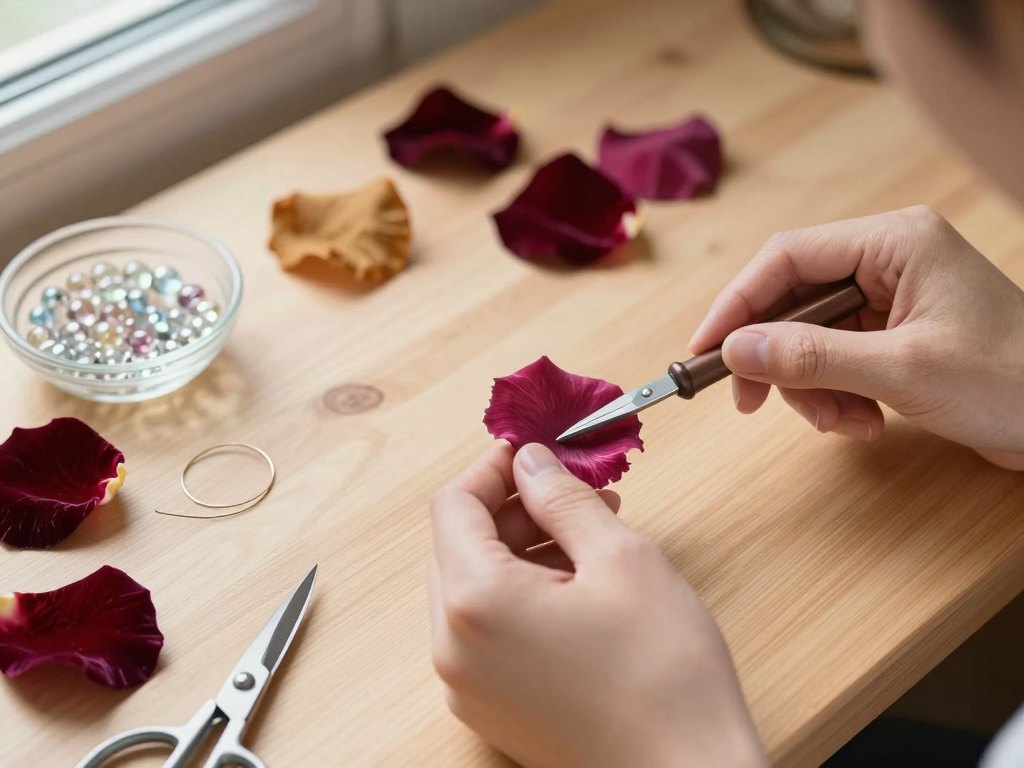
Beautiful flowers are made from small, learnable techniques
A well-made silk flower looks almost impossible. The petals curve naturally, the colour shifts softly from the edge to the centre, and the whole piece sits securely on a headband, a hat or a lapel. Most people who try to make one on their own discover how many small decisions hide behind that result: which fabric to choose, how to tint it, how to shape it with heat and tools, and how to assemble it so it holds.
Learning from scattered tutorials rarely solves this. You copy a single flower, but you do not learn why it works, so the next flower fails for new reasons. You also buy tools and materials by trial and error, and some of those purchases turn out to be a waste.
This programme is built as a long, calm path rather than a quick project. It combines a large library of step-by-step video lessons with weekly live sessions, so you can learn the foundations at your own pace and still have fresh ideas and expert answers every week.
Along the way you move through several related crafts: soft fabric flowers, flowers from natural silk and velvet, leather flowers, and couture embroidery that turns a flower into a finished accessory. These flowers work for interiors, clothing, and accessories alike.
What you will be able to do
- Tint and colour petals and leaves
Mix paints and create smooth colour transitions on fabric.
- Shape petals with specialised tools
Use tools and cold corrugation to give petals natural volume.
- Build roses, poppies and sunflowers
Work in the Japanese Somebana technique and its relatives.
- Decorate flowers with beads and feathers
Finish pieces with Japanese beads, feathers and small details.
- Embroider on velvet and other tricky surfaces
Use the Luneville hook and needle to add couture embroidery.
- Fix flowers securely to headbands and brooches
Make a piece that is attractive and also durable.
- Make hats and sinamay shapes
Stretch material over a hat block and add decorative elements.
- Choose tools and materials wisely
Know what to buy, where to find it, and what to skip.
- Read trends and design references
Analyse designer pieces and plan how to recreate them in fabric flowers.
- 100+
- videos: lessons, lectures and session recordings
- 40+
- detailed flower-making technique lessons
- 1
- live session with experts every week
- 7
- modules in the programme below
Learn the structure of a flower, not just its steps
Each lesson is built around one finished piece, but the real aim is the set of skills inside it. The poppy teaches you to tint, corrugate and shape petals, and those same skills carry over to irises, peonies and many other flowers.
The live sessions go a step further. In the current cycle, for example, you study how an airy, layered garden rose is built from the inside out, then create your own interpretation. You choose an image, tone the fabric, make an open organza centre, build the outer contour and assemble the flower.
This approach, which moves from observing a natural or designer reference to a finished piece, is what lets you eventually design your own flowers.
- Study the reference before you cut anything
- Tone the fabric to match the character of the flower
- Build the centre first, then work outward
- Adapt the finished flower into a brooch, clip or bag decoration
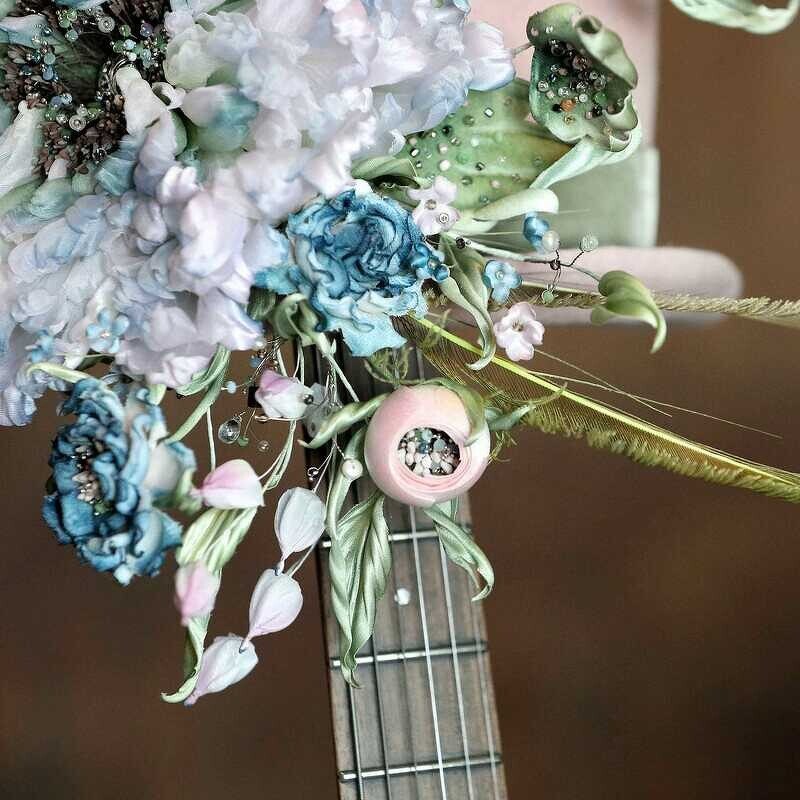
How the course works
The core of the programme is a video library of more than 100 lessons, lectures and recorded sessions. You can start anywhere that suits your level: foundation lessons if you are new, advanced compositions if you already make flowers. Lessons come with technical sheets, so you can check materials and measurements while you work.
Once a week there is a live video session with the host and invited experts. Each one covers a current topic for inspiration or professional growth. You listen, ask your questions and join the discussion. If you cannot attend, every session is recorded and published, so you can watch it later at your own pace.
Alongside the lessons there are private chats where members share photos of their work, finds and ideas. Creative challenges and contests are also offered, and taking part is always optional.
What is inside
The library is organised around finished projects and the techniques they teach. Lessons are added over time, and this is a representative overview of the main areas.
1Module 1 — Foundations of silk flower makingTools, colour and the core techniques that every later project builds on.5 lessons
- Choosing tools and materials, and what not to buy
- Mixing paints and colouring petals and leaves
- Working with tools and cold corrugation
- Making a poppy in the Somebana technique
- Mounting the flower on a headband
2Module 2 — Brooches and decorative flowersSingle flowers that teach you how to build and finish accessories.6 lessons
- A sunflower brooch with Japanese beads and feathers
- A chrysanthemum for a sautoir, brooch or summer hat
- An old English rose in the Somebana technique
- A three-part rose assembly, step by step
- A fantasy orchid with feather and bead details
- A camellia from fabric or leather
3Module 3 — Advanced floral compositionsLarger designs that combine several flowers and decorative elements.6 lessons
- A large peony and round roses
- Velvet roses and a rose brooch
- Physalis, stock and forget-me-not sprigs
- Cherry blossom and hydrangea as supporting flowers
- Hidden bead embroidery on leaves
- Assembling a flower composition for a hat
4Module 4 — Couture embroidery with flowersEmbroidery techniques that turn flowers into refined, high-value pieces.5 lessons
- Embroidering with the Luneville hook
- Working with bullion wire and tambour stitch
- Embroidering on velvet and other opaque surfaces
- Making a silk bow, earrings and cufflinks
- Building a velvet rose in the couture manner
5Module 5 — Hats, sashes and wearable piecesBigger accessories that give flowers a place to live.5 lessons
- Stretching sinamay over a hat block
- A cloche hat for beginners
- A retro freeform cloche shaped to the wearer
- A velour top hat
- A sash with silk flowers and embroidered brooches
- A statement necklace with flowers, beads and a tassel
6Module 6 — Weekly live sessions and recordingsCurrent themes, expert talks and an archive of past meetings.5 sessions in the current cycle
- Inspiration session: the architecture of a lush garden rose
- Toning fabric and preparing petal patterns
- The heart of the rose: an open organza centre
- The outer contour: volume, waves and movement
- Final session: assembly and questions
7Module 7 — Trends, design analysis and making a craft of itContext that helps you decide what to make next.Ongoing sessions
- Analysing designer pieces and how to recreate them in fabric
- Reading fashion collections and current trends
- Ideas for presenting and promoting your handmade work
- Creative challenges and optional contests
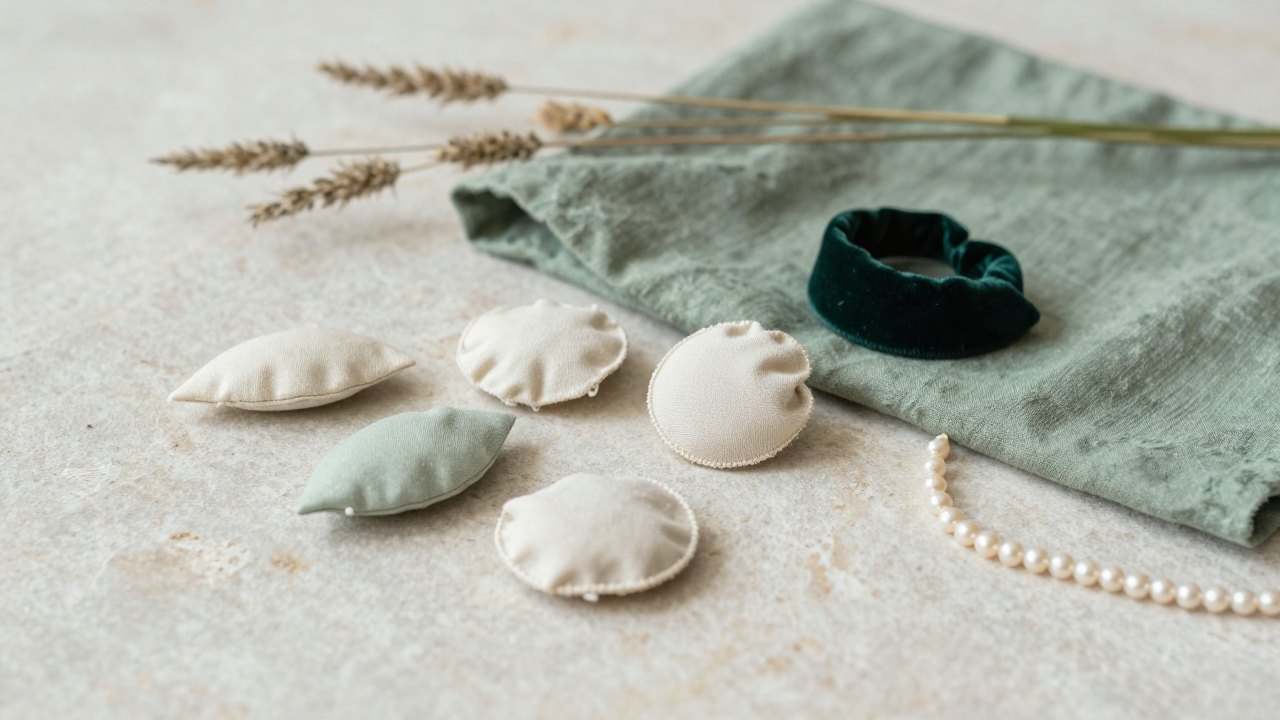
What you get
- A library of 100+ videos
Step-by-step lessons, lectures and recorded sessions.
- Technical sheets
Materials and construction details for the projects.
- Weekly live sessions
Talks with the host and invited experts, with time for your questions.
- Recordings of every session
Watch later if you cannot attend live.
- An archive of past meetings
A growing collection of the most interesting sessions.
- Private member chats
Share your work and exchange ideas with makers from different countries.
- Guidance on tools and materials
Advice on what to buy and what to avoid.
- Creative challenges
Optional projects that let you practise and show your work.
Is this course for you?
This course is for you if…
- Beginners who want to find their direction in fabric flowers and start with solid technique
- Working makers who want new techniques, current trends and a creative community
- Tailors and designers who want to make their garments more elegant and distinctive
- Anyone looking for a calm creative hobby, or a way to share a craft with a daughter or granddaughter
- Makers living abroad who want to meet others who share the same craft
Probably not a fit if…
- People who want a single quick project finished in one evening
- Anyone expecting guaranteed income or a ready-made business from the lessons
- Learners who want one-to-one personal coaching rather than a library and group sessions
- People who are not interested in hand sewing, delicate tools and fine detail
After the course
After a few months of regular practice you will know how to tint fabric, shape petals and assemble a flower that holds its form. You will have a set of finished pieces, such as brooches, headbands and small compositions, that you made yourself.
You will also know which tools and materials are worth your money, and you will be able to look at a designer piece or a garden rose and plan how to interpret it in fabric.
If you want to share or sell your work, you will have ideas on how to present it, where to promote it and how to approach collaborations. For many members, though, the main change is simpler: a creative practice that feels like a place to rest.
Questions before you buy
How much time do I need each week?
It is up to you. Many members watch one live session a week and spend a few hours on a project. You can go faster or slower, since lessons are self-paced.
Do I need previous experience?
No. The foundation lessons start with tools, colour and basic shaping. Some projects are more advanced, so you can begin with the simpler ones and move on when you are ready.
How does access work after payment?
After payment you receive access to the learning platform with the video library and the member areas. You can start with any lesson you like.
What is your refund policy?
If the programme is not right for you, you can request a refund within 14 days of purchase.
What format are the lessons in?
Mostly recorded video lessons with technical sheets, plus weekly live video sessions that are recorded and added to the library.
What if I miss a live session?
Every session is recorded and published, so you can watch it later at your own pace.
Does the material stay available?
Yes. The lessons and recordings remain in your account so you can come back to them whenever you like.
Do I need special tools and materials?
You will need some tools and fabrics, depending on the project. The lessons explain what to choose and where to buy it, and they tell you what is not worth buying.
Start making your first silk flower
Join the library, pick a project and begin with the tools and colour basics.