Creative · All levels
Sew a complete ballet costume with your own hands
Follow a clear video programme that takes you from fabric and measurements to a finished tutu with a ring, a bodice and sleeves.
- Tutu with ring, bodice, sleeves
- Step-by-step video lessons
- Access with no time limit
- 14-day refund policy
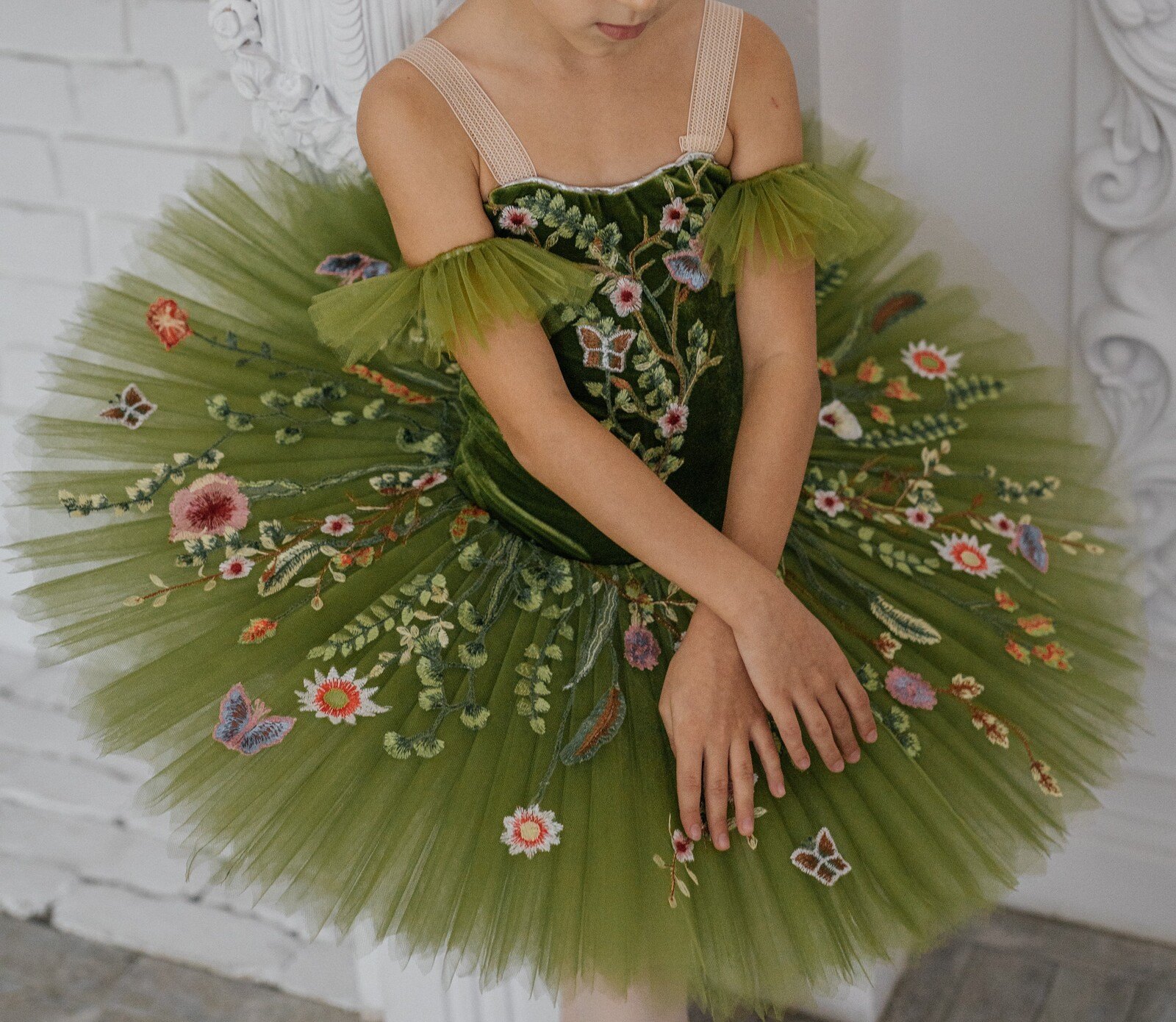
Why a handmade ballet costume is worth learning
A ballet tutu looks simple from the audience, yet anyone who has tried to make one knows how many details hide inside it. The ring has to hold its shape, the layers of tulle must sit evenly, the bodice has to fit like a second skin, and all of it must stay comfortable for a dancer who rehearses for hours.
Many people start by searching the internet and end up with a pile of unrelated videos, each using a different method and different materials. It is hard to tell which advice fits your project, so projects stall halfway or end up with a skirt that droops, a bodice that gapes or a ring that bends after the first rehearsal.
This course gathers the whole process into one logical route. You work on one complete costume: a ballet tutu with a ring, a matching bodice and sleeves. Along the way you study the composition of the costume, which means how its parts relate to each other, so that you understand why each step is done and can repeat it for other designs.
Parents often choose this path to dress a young dancer with more variety and for noticeably less money than ready-made costumes cost. Others come for the pleasure of making something beautiful and technical with their hands. Whatever your reason, the aim is the same: a costume you can be proud to see on stage.
What you will be able to do
By the end of the programme you will have the skills to make a full costume from start to finish.
- Take measurements for a tutu and bodice
You will know which measurements matter and how to record them accurately.
- Choose suitable fabrics and notions
You will compare tulle, lining, elastic and fastenings for the job they do.
- Cut the pieces of a ringed tutu
You will prepare the skirt layers and base parts correctly and economically.
- Assemble the ring and attach the layers
You will build a skirt that keeps its shape and sits evenly.
- Sew a fitted bodice
You will assemble, fit and finish a bodice that is comfortable to dance in.
- Make matching sleeves
You will add sleeves that fit the bodice and finish the look of the costume.
- Join skirt and bodice neatly
You will combine the parts into one costume with clean, durable seams.
- Understand the composition of a stage costume
You will see how the proportions create a balanced, professional look.
- Adapt the base to other stage costumes
You will use the same construction as a starting point for your own ideas.
- 5
- modules
- 20
- video lessons
- 3
- parts of one costume: tutu, bodice, sleeves
- No limit
- on access time
Learning through one complete costume
Instead of practising on scraps, you build a real costume from the first lesson to the last. Every stage is shown in close-up, so you can see where the hands are, how the fabric is held and what the seam looks like when it is done correctly.
The lessons also look at composition, the way the length of the skirt, the shape of the bodice and the placement of sleeves work together. This is what turns a technically correct costume into one that looks right on a dancer.
- Work on one project from start to finish
- See each technique in close-up video
- Learn the logic behind the proportions
- Reuse the same base for new designs
How the course works
The course is made of recorded video lessons that you watch at your own pace. You can pause, rewind and repeat a technique as often as you need, and you can sew along with the video or watch a whole lesson first and then try it yourself.
The lessons follow the natural order of the work: preparation and measurements, the bodice, the tutu base with the ring, the joining of the parts and the final finishing. Each module builds on the previous one, so beginners can follow the route without gaps, while experienced sewists can jump to the part they want to refine.
Support options depend on the plan you choose. Those who are just starting to work with a sewing machine are advised to pick the plan with the most support, which includes extra guidance from a curator. Materials stay available to you without a time limit, so there is no deadline to finish.
The programme
Five modules take you through one complete costume in the order you would work on it.
1Module 1 — Materials, measurements and compositionPrepare everything you need before the first cut.4 lessons
- Fabrics, tulle and notions for a stage tutu
- Taking measurements for a tutu and bodice
- The composition of a ringed tutu costume
- Preparing the pattern pieces and cutting plan
2Module 2 — The bodiceCut, assemble and fit the bodice that carries the whole costume.4 lessons
- Cutting the bodice and its lining
- Assembling the bodice pieces
- Fitting and adjusting the bodice
- Finishing edges and fastenings
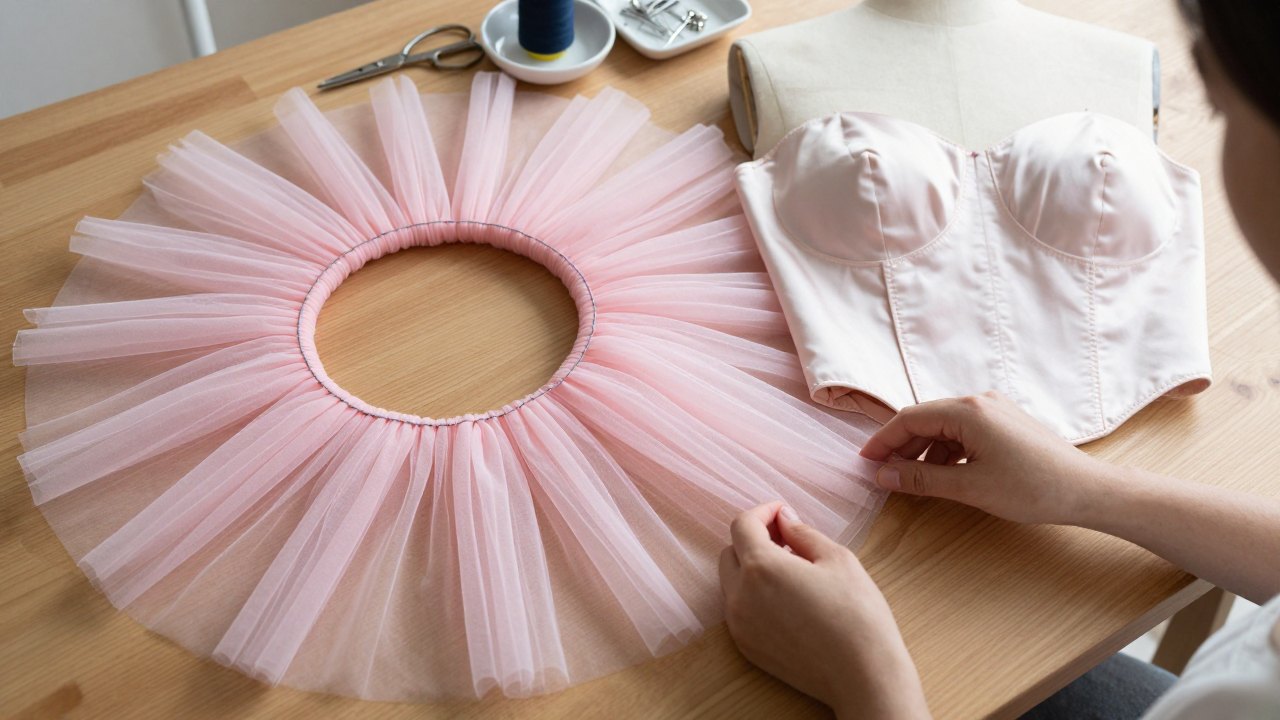
3Module 3 — The tutu base with a ringBuild the structure that gives the skirt its shape.4 lessons
- Preparing the ring and the waist base
- Cutting the layers of tulle
- Attaching the layers to the ring
- Shaping and levelling the skirt
4Module 4 — Sleeves and joining the partsComplete the costume and bring the pieces together.4 lessons
- Cutting and sewing the sleeves
- Attaching the sleeves to the bodice
- Joining the skirt and the bodice
- Checking symmetry and fit
5Module 5 — Finishing and next stepsPolish the costume and learn how to build on it.4 lessons
- Pressing and final shaping
- Fixing the most common construction faults
- Caring for and storing a tutu
- Using the base for other stage costumes
What you get
- Recorded video lessons
Twenty lessons covering the full route from measurements to a finished costume.
- A complete worked example
A tutu with a ring, a bodice and sleeves shown step by step.
- Access with no time limit
Return to any lesson whenever you start a new project.
- Self-paced learning
Watch and sew whenever it suits you, with no fixed schedule.
- Close-up demonstrations
Techniques are filmed so you can see the details of each stage.
- Support options
Plans with extra guidance are available for those who want more help.
Is this course for you?
This course is for you if…
- Creative adults, aged 18 and over, who want to learn to sew a ballet tutu
- Parents of young dancers who want to dress their child in well-made costumes
- Amateur dancers who want to make a costume for school concerts
- Sewists who already work with a machine and want a clear method for tutus
- Dance school staff who want to learn costume sewing
Probably not a fit if…
- Anyone looking for a quick, no-effort result without any sewing
- People who want only a pattern pack and no video instruction
- Those who expect a live, in-person workshop
- Anyone who does not have access to a sewing machine
After the course
When you finish, you will have a finished tutu with a ring, a bodice and sleeves, and the understanding to repeat the process. You will know how to measure a dancer, how to plan the cutting and how to assemble each part in the right order.
You will also be able to look at a costume design and see how it is built, which makes it much easier to plan new projects. You can adjust the colour, the length of the skirt or the trims, and still rely on the same underlying structure.
Because access has no time limit, the lessons remain a reference. If your dancer grows, you can return to the measuring lessons and make the next costume with confidence.
Questions before you buy
How much time do I need each week?
There is no fixed schedule. Many students set aside a few evenings a week for watching and sewing, but you can go faster or slower depending on your free time.
Do I need sewing experience?
The course suits both beginners and experienced sewists. If you have only just started to use a sewing machine, practise basic seams first and choose a plan that includes extra guidance.
How does access work after payment?
After your payment is confirmed, you receive access to the lessons through your account and can start straight away.
What is the refund policy?
You can request a refund within 14 days of purchase. If the course is not what you expected, contact support within that period.
What format are the lessons in?
The lessons are recorded videos that you can watch on a computer, tablet or phone, as often as you like.
Will the material stay available?
Yes. Access to the lessons has no time limit, so you can return to them whenever you start a new costume.
What materials and tools will I need?
You will need a sewing machine, tulle and lining fabric, elastic, fastenings and basic sewing tools. The first module explains how to choose what suits your project.
Can I use the lessons for other costumes?
Yes. The construction of the tutu, bodice and sleeves is a base that you can adapt to other stage designs.
Start sewing your first tutu
Order the course today and make a complete ballet costume at your own pace.