Creative · Beginner
Make raised, lifelike flower paintings with paste and a palette knife
A step-by-step video programme that takes you from your first background to twelve finished panels, with no drawing experience required.
- 6 structured modules
- 12 finished flower panels
- Graded homework
- Lifetime access
- 14-day refund
A new way to paint that does not start with drawing
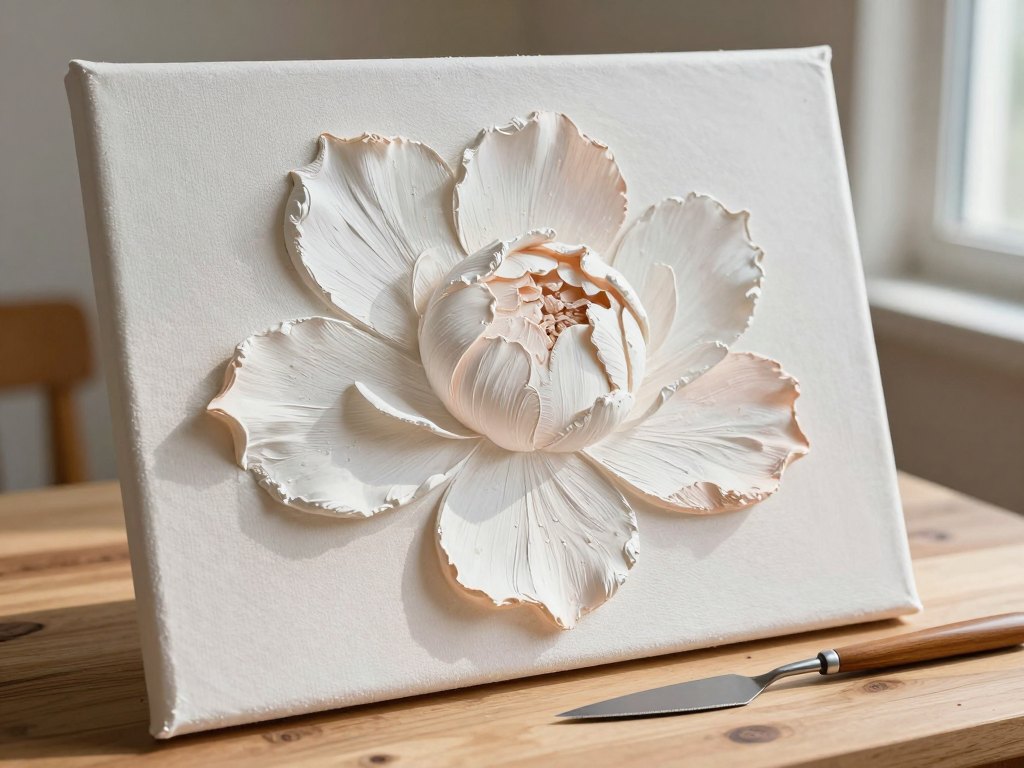
Many people would love to make art but are put off by one thought: I cannot draw. Sculptural painting removes that barrier. Instead of outlines and shading, you build the image from texture paste, shaping it with a palette knife into petals, leaves, birds and butterflies that stand out from the surface.
The result looks impressive. Thin, tall petals catch the light, colours blend directly in the paste, and a finished panel feels closer to a small sculpture than a flat picture. Yet the technique itself is made of a limited set of repeatable movements, which is exactly why anyone can learn it.
This course teaches those movements in a clear order. You begin with materials and tools, practise on backgrounds and ornaments, learn the core techniques, and only then move on to flowers, from simple ones to complex ones. Each step prepares you for the next, so you are never asked to do something you have not been shown.
Many people find the process calm and absorbing. Working slowly with paste and a knife is a gentle way to switch off from a busy day, and the finished pieces can hang on your wall, decorate a gift or become part of your home interior.
What you will be able to do
- Choose and care for your materials
Learn which pastes and tools to use, how to store paste so it lasts, and how to keep waste low.
- Apply the basics of colour and composition
Understand how colours work together and how to arrange elements on a panel.
- Decorate backgrounds in seven different ways
Including imitation of wooden and concrete surfaces with acrylic pastes.
- Draw raised ornaments by hand
Create monochrome and coloured relief patterns and work with stencils.
- Shape petals with a palette knife
Master the base techniques that make a raised image neat and clean.
- Avoid the common beginner mistakes
Recognise typical errors early and know how to correct them.
- Create a series of volumetric flowers
From daisies and hydrangeas to peonies, orchids and roses.
- Finish a painting properly
Varnish it, treat the back, attach hangers and prepare it for display.
- Photograph and pack your work
Present your pieces well online and send them safely.
- 6
- modules from basics to finishing
- 12
- finished 30×30 cm flower panels
- 7
- background decorating techniques
- ∞
- access to all modules
The technique in a nutshell
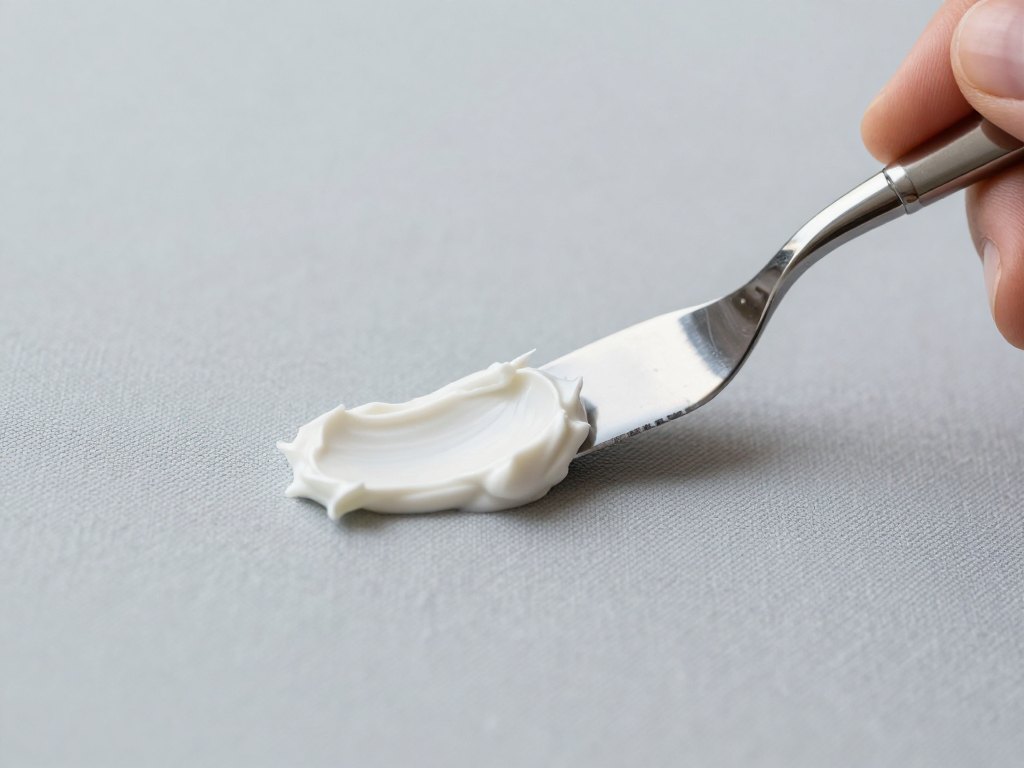
Sculptural painting is built on two things: a thick, workable texture paste and a palette knife. You spread, lift, press and pull the paste to form shapes. A petal, for example, starts as a small amount of paste that is drawn out into a thin edge and then lifted into the right curve.
Because the movements are small and repeatable, you can practise them on their own before using them in a picture. The course makes use of this: it first separates the techniques, then shows how they combine into a rose, a poppy or a magnolia.
The same approach works well beyond pictures. Once you control the technique, you can apply it to decorative objects, accessories and other surfaces, and you can adapt flowers to your own colour choices.
How the course works
The lessons run from simple to complex and are meant to be taken in order. Each one combines detailed video with text explanations, diagrams, practical tips and walkthroughs of common mistakes. You do not just watch: you practise the topic with your own materials.
At the end of each practical lesson there is a homework task. You complete the work, photograph or film the result and send it for review. Access to the next lesson opens once the homework has been accepted with a good or excellent mark. This keeps the pace honest and makes sure every step is solid before you build on it.
The programme is based on a personalised system of instruction, in which you move forward after showing that you have mastered the previous material. You study at your own pace, at any time, on any device connected to the internet, and the speed depends only on you. A course chat lets you ask questions, get feedback and receive technical help.
The programme
Six modules take you from your first tools to a polished, photographed painting.
1Module 1 — Getting startedThe theory you need before touching the paste.4 lessons
- Materials and tools for sculptural painting
- Caring for tools and storing paste so it lasts
- Keeping paste consumption to a minimum
- Colour and composition basics
2Module 2 — Ornaments and backgroundsDecorate surfaces with relief patterns, stencils and textures.10 lessons
- Hand-drawn monochrome relief ornaments
- Coloured volumetric ornaments
- Working with stencils
- Seven ways to decorate a background
- Imitating a wooden surface with acrylic paste
- Imitating a concrete surface with acrylic paste
3Module 3 — Foundations of sculptural paintingEvery base technique, with attention to typical errors.8 lessons
- Holding and moving the palette knife
- Forming a basic petal
- Building thin and tall petals
- Layering and blending colours in paste
- Common beginner mistakes and how to fix them
4Module 4 — Simple flowersEasy flowers that let you practise the basic elements.4 flowers
- Daisy
- Hydrangea
- Clematis
- Wild rose
5Module 5 — FlowersTwelve complete 30×30 cm panels using every base technique.12 lessons
- Poppy and iris
- Magnolia and orchid
- Lotus and a bird on an apple tree
- Ranunculus and peony
- Rose and chrysanthemum
- Tea hybrid rose and tree peony
6Module 6 — Finishing and photographing your paintingTurn a finished panel into a presentable piece.6 lessons
- Varnishing the finished painting
- Treating the back of the work
- Attaching hangers
- Photographing your work for social media and online galleries
- Packing paintings and sending them safely
What you get
- Lifetime access to all six modules
Return to any lesson whenever you want to refresh a technique.
- Detailed video lessons
Each lesson comes with text notes, diagrams, tips and mistake walkthroughs.
- Homework with personal review
Your submitted work is checked by the programme author, not by hired assistants.
- A course chat
Ask questions, get feedback from the author and fellow learners and reach technical support.
- Twelve panel projects
A complete collection of flowers to practise on and display.
- Instalment options
Banks offer instalment plans if you prefer to spread the cost.
- A discount on materials
A club discount on the brand's own paste and tools, with no time limit.
- A 14-day refund period
If the course is not right for you, you can ask for your money back within 14 days.
Is this course for you?
This course is for you if…
- Complete beginners who want a new creative hobby and cannot draw
- Painters and artists who want to add a popular, expressive technique
- Interior designers and decorators who want raised decor for panels, boxes, clocks and furniture
- Anyone who wants a slow, absorbing activity to balance a stressful week
Probably not a fit if…
- Anyone looking for a quick, effortless result without practising
- People who want to skip ahead, since lessons are taken in order and homework opens the next step
- Learners who expect one-to-one personal coaching as part of this programme
- Anyone not ready to buy paste and a palette knife to work along with the lessons
After the course
By the end, you will have a shelf of finished flower panels, each practised with a different set of petals, colours and layouts. More importantly, you will understand why each technique works, so you can approach a new flower with confidence instead of copying a sequence step by step.
You will also be able to complete a painting from start to finish: prepare the background, build the flowers, varnish and finish the back, add hangers, photograph and pack the result. That means your work is ready for a wall, for a gift or for sharing online.
Many learners continue experimenting with their own colour choices and new subjects. Because the access stays with you, you can always go back to the earlier modules and refine your technique.
Questions before you buy
How much time do I need each week?
There is no fixed schedule. You study at your own pace, so a few hours a week is enough to make steady progress. Each practical lesson includes a homework task, so plan time to complete it before moving on.
Do I need to know how to draw?
No. The technique is built from repeatable palette knife movements, and the lessons start from the very beginning. You do not need any drawing or painting background.
What materials will I need?
You will need texture paste and palette knives, plus basic items such as bases to work on. The first module explains which materials to choose, how to use them economically and how to look after them.
How does access work after payment?
After payment you receive an email with login details for the learning platform. You can study on the website or in the mobile app, on any device with an internet connection.
What format are the lessons in?
Lessons are recorded video, supported by text explanations, diagrams, tips and analysis of common mistakes. You work along with each lesson using your own materials.
How does the homework work?
After a practical lesson you create the piece, photograph or film the result and send it for review. The next lesson opens once your work has been accepted with a good or excellent mark.
Will I be able to ask questions?
Yes. There is a course chat where you can ask questions, get feedback and contact technical support.
Does the material stay available after I finish?
Yes. You keep access to all modules of the programme for good, so you can return to any lesson whenever you like.
What is your refund policy?
You can request a full refund within 14 days of purchase if the course is not what you expected.
Start building your first raised flower
Order the course today and begin with the materials lesson at your own pace.