Creative · Beginner
Learn to embroider traditional Russian patterns with confidence, starting from zero
44 video lessons take you from simple stitches to satin stitch, drawn-thread work and Richelieu, in one clear order.
- 44 video lessons
- 6 progressive modules
- Illustrated PDF handbook
- Homework with photo review
- 14-day money-back guarantee
Why traditional embroidery feels hard to start
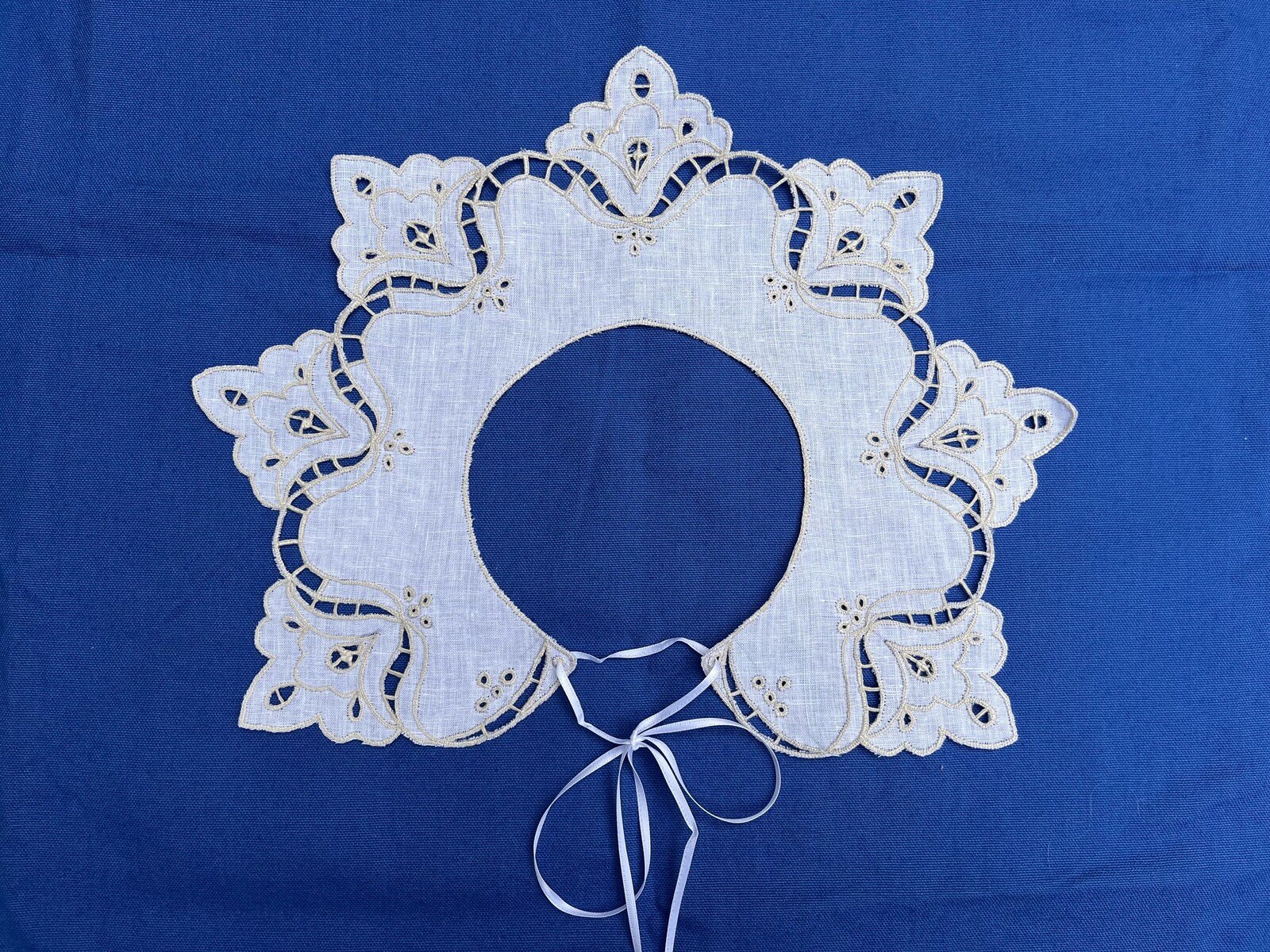
Many people are drawn to old Russian embroidery: the white-on-white openwork, the geometric nets, the delicate satin stitch. Then they try to learn it and hit a wall. Information is scattered across short videos, forum posts and photographs of finished pieces that never show how the work was done. It is hard to tell which source is right.
The usual result is doubt. You wonder whether your stitches are correct, whether the fabric and thread you bought are suitable, and why the edges of your work pucker. Without a clear order of learning, it is easy to jump into a complex technique too early and give up after one frustrating evening.
This course gives you that order. It begins with the simplest stitches and moves through six techniques, each building on the previous one. Every step is shown on video, so you can see the needle, the thread and the hands at work rather than guess from a photo.
The aim is practical. By the end you will not only know the names of the techniques but also be able to plan and complete a finished piece, handle your tools and materials sensibly, and keep going on your own.
What you will be able to do
The course follows a six-part system, from tools to finished piece.
- Choose and prepare tools and materials
Know which needles, fabrics and threads suit each technique.
- Work basic stitches evenly and neatly
Build a steady hand with simple seams before moving on.
- Stitch the traditional set-stitch pattern
Fill motifs with a counted set stitch.
- Work drawn-thread hemstitching
Create the openwork borders that are typical of Russian linen.
- Embroider two-sided painted-stitch designs
Follow the thread count to produce a clean result on both sides.
- Fill shapes with smooth satin stitch
Cover areas with even, flat stitches.
- Build a net-based openwork background
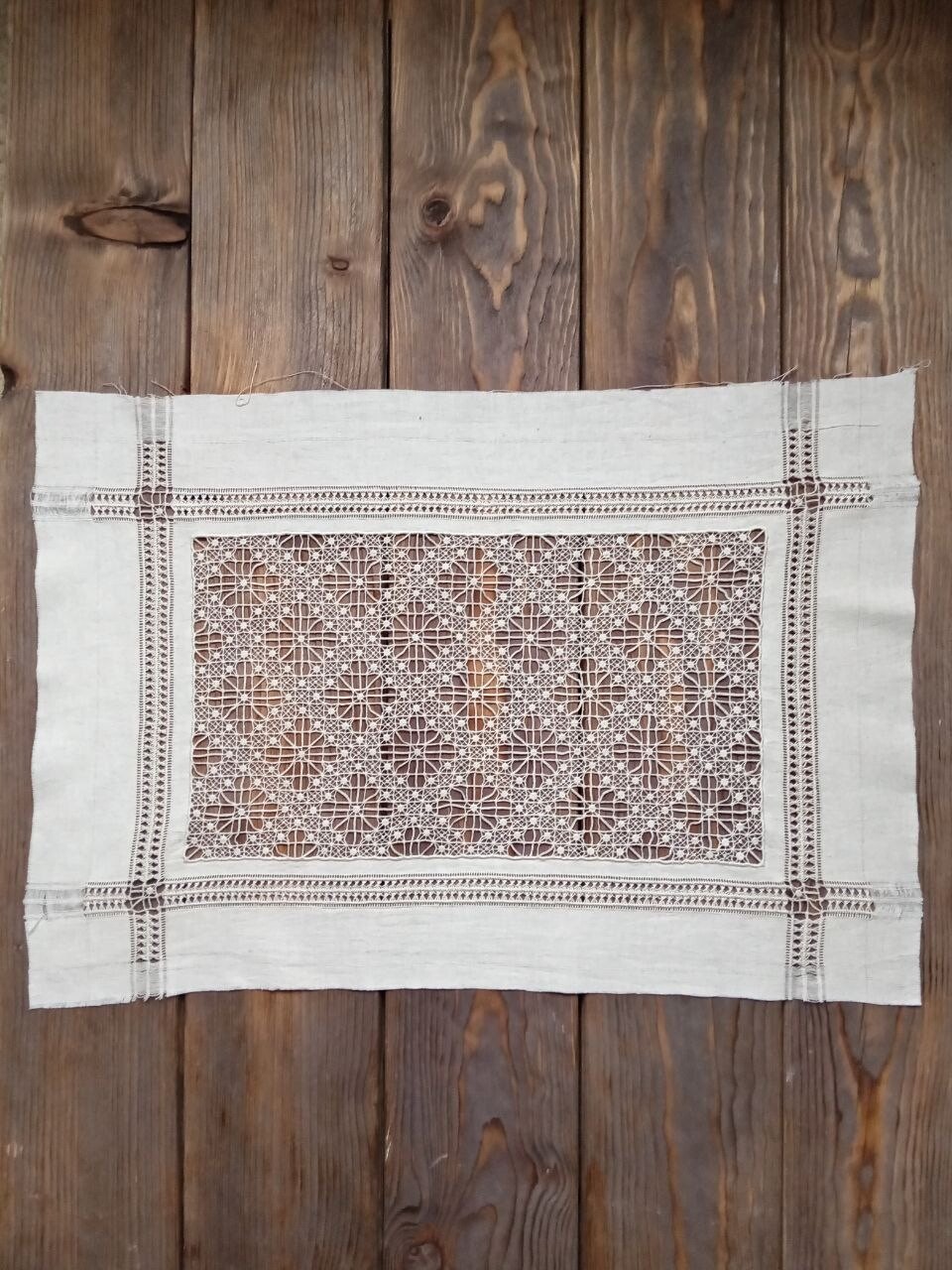
Work the Krestetsky net and the Richelieu cutwork method.
- Plan a complete finished piece
Move from an idea to a pattern to an item you can use or give away.
- Care for your embroidery properly
Wash, press and store finished work so it lasts.
- 44
- video lessons
- 6
- modules from simple to complex
- 20–25 min
- per lesson
- 1
- illustrated PDF handbook
One technique at a time, each on top of the last
The programme rests on six elements: working with tools, working with materials, the embroidery technique itself, making a finished item, caring for embroidery, and creating your own patterns. Every module touches these elements, so you learn the craft as a whole instead of as isolated tricks.
This is why the order matters. Simple stitches teach you tension and rhythm. Those skills carry into the set stitch, then into drawn-thread work, satin stitch, nets and finally Richelieu cutwork, where precision counts most.
- Start with simple stitches and a few basic tools
- Practise each technique on a small piece before a full project
- Follow the thread count, as traditional embroiderers do
- Finish with openwork that combines several skills
How the course works
The course is made of recorded video lessons, usually 20 to 25 minutes each. You can watch them whenever it suits you and pause to stitch along. If a step goes wrong, rewind and watch it again.
After each lesson you complete a homework task and send a photo of your work for review. This keeps you moving and gives you a concrete check on your results instead of leaving you to wonder if you are doing it right.
Alongside the videos you receive an illustrated handbook in PDF. It describes the techniques and includes extra materials, so you can look up a stitch quickly without scrubbing through a video.
The programme
Six modules, 44 video lessons in total, arranged from the simplest stitch to the most intricate openwork.
1Module 1 — Simple stitchesGet to know your tools, fabric and the most basic seams.
- Needles, threads and fabric for beginners
- Setting up the fabric and starting the thread
- Basic running and outline stitches
- Securing and finishing the thread neatly
2Module 2 — The set stitchLearn the counted set stitch used for traditional ornaments.
- Reading a counted pattern
- Working the first rows of the set stitch
- Filling a motif evenly
- Finishing a small sampler
3Module 3 — Drawn-thread hemstitching and painted stitchWork openwork borders and two-sided designs by thread count.
- Drawing out threads for a border
- Hemstitch variations
- Starting the two-sided painted stitch
- Turning corners and joining rows
- Making a small decorative edge
4Module 4 — Satin stitchCover shapes with smooth, flat stitches.
- Preparing the outline for satin stitch
- Direction and tension of the stitches
- Embroidering leaves and petals
- Keeping edges clean and curves smooth
5Module 5 — The Krestetsky netBuild a decorative net as a foundation for openwork.
- Preparing fabric for the net
- Working the base grid
- Filling the net with patterns
- Joining the net to surrounding embroidery
6Module 6 — RichelieuCombine cutwork and stitching to complete a refined piece.
- Transferring a design to fabric
- Outlining and bridging
- Cutting out openwork areas safely
- Finishing, pressing and caring for the work
What you get
- 44 recorded video lessons
Step-by-step demonstrations you can pause and replay.
- Six modules in a clear order
From basic seams to Richelieu, with no gaps.
- An illustrated PDF handbook
Technique descriptions and additional materials for quick reference.
- Homework after each lesson
Send a photo of your work and get it reviewed.
- Learning on your own schedule
Watch whenever you have time, at your own pace.
- Lasting access to the material
Return to any lesson whenever you need a refresher.
Is this course for you?
This course is for you if…
- You dream of learning old Russian embroidery techniques but do not know where to begin
- You are tired of searching for and double-checking scattered information
- You want a systematic foundation instead of fragments
- You prefer to learn at home at times that suit you
- You enjoy hands-on creative work and are happy to complete practice tasks
Probably not a fit if…
- You are looking for a quick craft you can finish in an hour
- You are an experienced embroiderer who already works openwork confidently
- You want a live, in-person workshop with a group in one room
- You are not willing to practise between lessons
After the course
You will know where to begin and have a plan for what to do next. The fear of doing it wrong gives way to a calm routine: choose the fabric, prepare the thread, follow the pattern, check your work.
You will be able to stitch six foundational techniques and combine them in a finished piece. You will also know how to look after your work, so what you make stays beautiful for years.
Most importantly, you will have the base that makes more complex traditional techniques approachable. Whatever you choose to embroider next, you will have the skills to learn it on your own terms.
Questions before you order
How much time do I need each week?
Each video lesson lasts 20 to 25 minutes, and the pace is yours. Most people set aside a few hours a week to watch and stitch, but you can go faster or slower.
Do I need any experience?
No. The course starts from zero with the simplest stitches. You only need an interest in embroidery and the patience to practise.
What materials will I need?
You will need basic embroidery supplies such as needles, threads, fabric and small scissors. The early lessons explain what to choose so you do not buy the wrong things.
How does access work after payment?
Once your payment is confirmed, you receive access to the course materials. You can start immediately and move through the lessons in order.
What format are the lessons in?
The lessons are recorded videos of 20 to 25 minutes each, supported by an illustrated PDF handbook and homework tasks.
How does the homework work?
After each lesson you complete a practice task and send a photo of your work for review, so you get feedback on your progress.
Will the material stay available?
Yes. The lessons and handbook remain available to you, so you can come back to a technique whenever you want to refresh it.
What if the course is not right for me?
You can request a refund within 14 days of purchase, as set out in our refund policy.
Start with the first stitch
Begin the 44-lesson programme and learn traditional Russian embroidery in a clear, step-by-step order.