Parenting · Beginner
Help your child write neatly without tears or pressure
A play-based programme for parents that relaxes a tight hand, builds correct letter shapes and brings back your child's interest in writing.
- 15–20 minutes a day
- For children aged 5 and up
- 24 self-paced video lessons
- Printable practice materials
- 14-day refund policy
Why writing becomes a battle at home
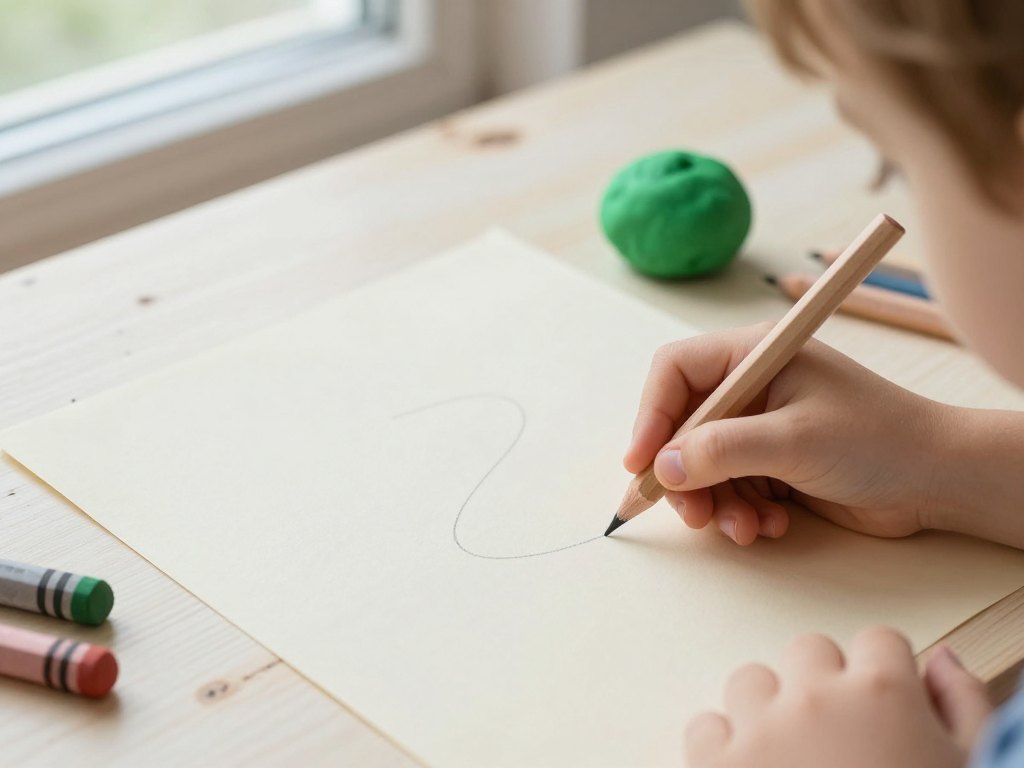
Many children start school keen to learn and then slowly lose interest in writing. The hand tires after two lines, the pencil is held in a fist, the letters wobble and every homework session ends with the same sentence: "Sit down and write."
Parents often respond with more repetition, more copybooks and more reminders. Yet a clenched hand, a tense shoulder and a fear of making mistakes are rarely solved by drilling. When writing feels painful or boring, practice only deepens the dislike.
This programme takes a different route. Instead of strict calligraphy lessons, it builds the three things that make regular practice possible: a relaxed hand, an understanding of why each movement matters, and real interest in the result. The work is done through games, short exercises and small creative tasks that fit into an ordinary family day.
You do not need to be a teacher or have beautiful handwriting yourself. The lessons show you what to do, what to say to your child and how to notice progress, so that practice becomes a calm routine rather than a source of conflict.
What you will be able to do
By the end of the programme you will know how to guide your child through each stage of learning to write.
- Recognise the signs of a tight grip
Learn what a clenched hand, a pressed pencil and a tired wrist look like in practice.
- Relax your child's hand with simple games
Use short warm-ups that prepare the fingers and wrist before any writing starts.
- Teach a comfortable pencil hold
Replace the "any way works" grip with a relaxed, stable position.
- Prepare the hand for letters
Practise lines, loops and waves so the hand knows the movements before it meets the alphabet.
- Set the correct way to write each letter
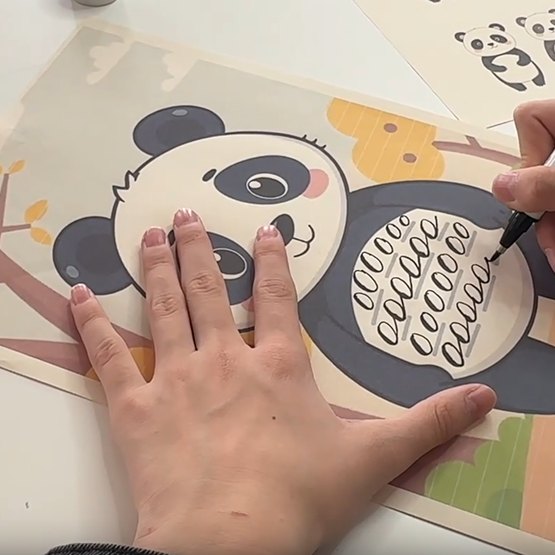
Show starting points, direction and shape, beginning with the oval letters.
- Improve size, slant and spacing
Help your child keep letters even and words separated, without endless rewriting.
- Build fluent, light writing
Move from slow, careful copying to easy and confident handwriting.
- Keep motivation high
Turn practice into small creative projects such as notes and gifts for family.
- Run a 15–20 minute daily routine
Set up a short, regular practice slot that your child accepts without negotiation.
- 6
- modules
- 24
- video lessons
- 15–20 min
- of practice a day
- 5+
- recommended age of the child
Learning through play, not through drilling
The method behind the programme is simple: a child who enjoys the movement will repeat it, and a child who repeats it will improve. Every stage starts with a game or a small task and only then moves on to letters on a line.
You will see how to present exercises as a story or a challenge, how to keep each session short enough that your child asks for more, and how to talk about mistakes without discouragement. The aim is that your child understands why a movement is made, not only how to copy it.
- Short sessions that end while interest is still high
- Movement practice before letter practice
- Clear explanations a child can follow
- Small creative results to be proud of
How the course works
The programme is delivered online as a library of self-paced video lessons with supporting materials. You watch a lesson, try the exercise together with your child and then repeat it over the following days. There are no fixed class times, so you can fit the work around school, clubs and family life.
Each module covers one stage of the journey, from relaxing the hand to writing quickly and neatly. The stages follow one another, so we recommend going in order and staying with a module until the exercises feel easy for your child.
Plan on 15–20 minutes of practice a day. That is enough to make steady progress, and short enough that children rarely resist. Because results depend on your child's mood and on how regularly you practise, the lessons also explain how to adapt the pace on tired or busy days.
The programme
Six modules take you from a tense hand to light, fluent writing.
1Module 1 — Getting startedUnderstand the problem and prepare a calm daily routine.4 lessons
- Why handwriting gets stuck
- Setting up a comfortable writing place
- Choosing pens, pencils and paper
- Building the 15-minute daily routine
2Module 2 — Releasing a tight handReduce tension before asking the hand to write.4 lessons
- Signs of a clenched grip and pressed pencil
- Warm-up games for fingers and wrist
- Finding a relaxed pencil hold
- A short daily tension check
3Module 3 — Preparing the hand for lettersTrain the basic movements that every letter is built from.4 lessons
- Lines, loops and waves
- Drawing movement with rhythm
- Controlling pressure on the page
- Posture and paper position
4Module 4 — Shaping letters correctlySet the right way to write each letter from the start.4 lessons
- Starting with the oval letters
- Letters with sticks and hooks
- Starting points and direction of movement
- Joining letters into simple words
5Module 5 — Making handwriting neaterWork on the details that make writing easy to read.4 lessons
- Keeping letters an even size
- Slant and staying on the line
- Spacing between letters and words
- Copying short phrases with care
6Module 6 — Light and fluent writingBuild ease, speed and lasting motivation.4 lessons
- Gaining speed without rushing
- Writing a short note by hand
- Making a handwritten gift for someone close
- Keeping the habit going after the programme
What you get
- 24 self-paced video lessons
Watch whenever it suits your family.
- Practice materials
Exercises and guides to use alongside the lessons.
- A clear step-by-step order
Six modules that build on each other.
- Ideas for games and small projects
Ways to keep practice playful.
- Guidance for the daily routine
How to run short sessions that your child accepts.
- Ongoing access to the material
Return to any lesson as often as you need.
- 14-day refund policy
Try the programme and ask for a refund within 14 days if it is not right for you.

Is this programme for you?
This course is for you if…
- Parents of children aged 5 and up who find writing tiring or unpleasant
- Families whose child holds the pencil too tightly or in an uncomfortable way
- Parents who want to prepare a future first-grader's hand for writing
- Anyone who wants a gentle, game-based alternative to endless copybook drills
Probably not a fit if…
- Anyone looking for strict, traditional calligraphy training
- Families who cannot spare roughly 15–20 minutes a day for practice
- Parents expecting overnight results without regular practice
- Those wanting one-to-one coaching or in-person classes
After the course
After the programme you will have a clear picture of how your child learns to write and what to do when something goes wrong. Instead of reacting to each bad page, you will know which stage to return to and which exercise to use.
Many families find that practice stops being a negotiation. Sessions are short, predictable and often playful, and the child begins to see letters as something they can shape rather than something they are forced to copy.
Individual results depend on your child's emotional state and on how regularly you practise, so we do not promise a fixed outcome. What you can expect is a calmer routine, a more relaxed hand and steady improvement that you can see page by page.
Questions before you buy
How much time does it take each week?
We recommend 15–20 minutes of practice a day with your child, plus the time to watch a lesson. You can slow down in busy weeks and continue at your own pace.
Do I need any experience or good handwriting myself?
No. The lessons explain every exercise step by step, so you can guide your child without a teaching background.
What age is the programme suitable for?
It is designed for children from 5 years old. Older children who struggle with a tight hand or untidy writing can also follow the exercises.
How does access work after payment?
Once your payment is confirmed you receive access to the lessons and materials online. You can start immediately and study at any time of day.
What format are the lessons in?
Self-paced video lessons accompanied by practice materials. There are no live sessions you must attend.
Will the material stay available?
Yes. You can return to any lesson whenever you need, for example when a younger sibling starts learning to write.
What if it does not suit us?
You can request a refund within 14 days of purchase.
Can I guarantee a result?
No. Progress depends on your child's emotional state and the regularity of practice, but short daily sessions give the best chance of steady improvement.
Make writing easier for your child
Start with the first lesson this week and build a calm 15-minute routine.