Creative · All levels
Draw wild animals in pencil with true-to-life realism
A 36-lesson programme that takes you from first proportions to fur, feathers and scales that look almost photographic.
- 36 video lessons
- 6 themed modules
- Pencil-only technique
- Self-paced access
- 14-day refund
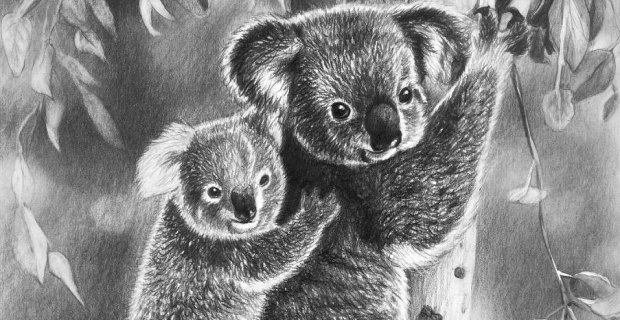
Why animals look flat on paper
Most people who love drawing animals reach the same wall. The outline is roughly right, but the result looks like a cartoon of the creature rather than the creature itself. The head sits a little too large, the legs are slightly off, and the coat is a grey smudge instead of thousands of individual hairs.
The gap between a flat sketch and a lifelike drawing is rarely talent. It comes down to a handful of skills: seeing proportions accurately, understanding how form sits under the surface, and imitating each texture with the right kind of stroke. These skills can be taught, practised and repeated until they become habit.
This programme is built around exactly those skills. It takes you into the world of wild animals and shows, step by step, how to measure a subject, how to build volume with tone, and how to reproduce very different surfaces, from soft fur to rough skin, using nothing more than pencils.
You do not need to arrive with a portfolio. You need patience, a few pencils and paper, and the willingness to look at animals more closely than you ever have before.
What you will be able to do
By the end of the programme you will have practical, repeatable skills rather than a collection of one-off pictures.
- Measure proportions before you draw
Use simple comparison and construction methods so heads, bodies and limbs relate correctly.
- Build a drawing from light construction lines
Start with basic shapes and refine them into an accurate outline without heavy erasing.
- Imitate different textures with pencil
Reproduce short fur, long fur, mane, feathers, scales and rough hide with suitable strokes.
- Create volume with tone
Control light, shadow and reflected light so the animal looks solid rather than flat.
- Draw convincing eyes
Give the animal a living, focused gaze with highlights, depth and the right edges.
- Render noses, whiskers and fine details
Handle small elements that make the difference between a good and a lifelike drawing.
- Place an animal in its natural setting
Add simple backgrounds and surroundings that support the subject without stealing attention.
- Work toward maximum realism
Finish a piece with careful refinement, contrast adjustments and clean edges.
- 36
- video lessons
- 6
- themed modules
- 1
- core tool: the pencil
- 14 days
- refund window
Texture is the signature exercise
The central idea of the programme is that every surface has its own stroke. Fur is not drawn the way feathers are drawn, and neither is drawn like scales. Throughout the lessons you practise each texture on small studies first, so you understand the logic of the stroke before you commit to a full drawing.
Once you know how a texture behaves, you can apply it to any animal, including ones that are not covered in the lessons. That is what turns copying into a skill you own.
- Direction of strokes follows the growth of the coat
- Tone is built in layers, from light to dark
- Edges are softened or sharpened to suggest distance
- Small studies come before every full drawing
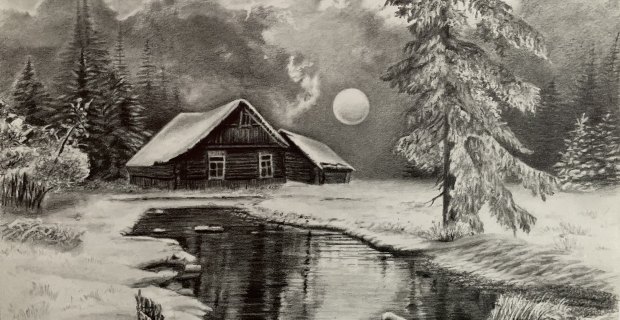
How the course works
The programme is delivered online as a library of recorded video lessons, organised into six modules. You watch a lesson, pause when you need to, and draw alongside it. Because the lessons are recorded, you can fit them around work and family, repeat difficult moments, and move at the speed that suits you.
The lessons build on each other, so it is best to follow the order of the modules. Early lessons cover proportion and construction; later ones concentrate on texture, detail and finishing. If you already draw confidently, you can move faster through the opening modules and spend more time on the later ones.
Plan to set aside a regular block of time for drawing rather than only watching. Realism is a practical skill, and the real progress happens at the table with a pencil in your hand. Many learners find that two or three sessions per week works well.
The programme
Six modules and 36 lessons, from first measurements to finished lifelike drawings.
1Module 1 — Seeing animals as shapesLearn to observe and measure before you draw a single detail.6 lessons
- Choosing pencils, paper and a comfortable workspace
- Breaking an animal into basic shapes
- Measuring proportions by comparison
- Checking angles and negative space
- Building a light construction drawing
- Correcting an outline without heavy erasing
2Module 2 — Structure and anatomy basicsUnderstand what lies beneath the surface so poses look natural.6 lessons
- How the skull shapes the head
- Neck, shoulders and the line of the back
- Front and hind limbs in simple terms
- Paws, hooves and claws
- Drawing animals in different poses
- Foreshortening and turning the head
3Module 3 — Tone and volumeTurn flat outlines into solid, three-dimensional forms.6 lessons
- Reading light and shadow on a subject
- Building tonal scales with graphite
- Core shadow, reflected light and cast shadow
- Smooth shading versus hatched shading
- Controlling contrast across the whole drawing
- Creating depth with tone
4Module 4 — Fur, mane and feathersPractise the strokes that make soft and layered coats believable.6 lessons
- Short fur and the direction of growth
- Long fur, manes and fluffy ruffs
- Layering light strands over dark tone
- Drawing feathers and plumage patterns
- Whiskers and fine highlights
- Soft transitions between different coat areas
5Module 5 — Skin, scales and rough surfacesExtend your toolkit to harder and more unusual textures.6 lessons
- Thick wrinkled hide
- Scales and repeating patterns
- Wet and shiny surfaces
- Stripes and spots that follow the form
- Rock, bark and ground textures
- Mixing several textures in one drawing
6Module 6 — Eyes, details and finishingBring everything together in complete, highly realistic drawings.6 lessons
- Drawing a lifelike eye step by step
- Noses, mouths and ears
- Adding a simple natural background
- Strengthening contrast and focal points
- Final refinements and cleaning edges
- Planning your next realistic drawing
What you get
- 36 recorded video lessons
Watch and draw along at your own speed.
- Six clearly structured modules
A logical path from measurement to finished work.
- Step-by-step demonstrations
Each drawing is built in visible stages.
- Texture studies for practice
Small exercises you can repeat as often as you like.
- Access on any device
Learn on a computer, tablet or phone.
- Lasting access to the material
Return to any lesson whenever you want to refresh a technique.
- A 14-day refund window
Try the course and decide with no pressure.
Is this course for you?
This course is for you if…
- You love animals and want to draw them realistically, not as cartoons
- You are a beginner who wants a clear, structured way to learn pencil technique
- You draw already but your results look flat or inaccurate
- You enjoy detailed, patient work and like seeing steady improvement
- You prefer learning at your own pace from recorded lessons
Probably not a fit if…
- You want quick sketches or loose, abstract styles rather than detailed realism
- You are looking for live one-to-one tutoring
- You expect to finish the programme in a single weekend
- You want to learn painting with colour; this programme focuses on pencil
After the course
When you finish the programme, you will look at an animal photo differently. Instead of seeing a confusing mass of detail, you will see shapes, proportions, areas of tone and distinct textures, and you will know what to do with each of them.
You will have a set of finished drawings that show real progress, along with the habits that produced them: measuring first, building volume gradually and choosing the right stroke for every surface.
Most importantly, you will be able to choose a new subject on your own and work through it with confidence. The skills are not tied to a single picture, so they keep growing every time you pick up a pencil.
Questions before you buy
How much time do I need each week?
It depends on your pace. Many learners set aside a few hours per week, for example two or three drawing sessions. Since the lessons are recorded, you can speed up or slow down whenever you need to.
Do I need any drawing experience?
No. The programme starts with observation and proportion, so beginners can follow it. If you already draw, you can move faster through the early lessons and concentrate on texture and finishing.
What materials will I need?
Mainly graphite pencils of different softness, suitable drawing paper, an eraser and a sharpener. The opening lessons explain what to choose so you do not buy more than necessary.
How does access work after payment?
Once your payment is confirmed, you receive access to the lessons through your account. You can start straight away and continue whenever it suits you.
What format are the lessons in?
They are self-paced recorded video lessons. Each one shows the drawing process step by step so you can pause, rewind and draw alongside.
Does the material stay available?
Yes. The lessons remain available in your account, so you can return to any technique whenever you want to practise or review it.
What is the refund policy?
You can request a refund within 14 days of purchase if the course is not right for you.
Can I watch on my phone or tablet?
Yes. The lessons work on computers, tablets and phones, though a larger screen makes it easier to see fine pencil detail.
Start drawing animals that look alive
Join the programme, follow the lessons at your own pace and build realistic pencil skills one texture at a time.