Creative · All levels
Paint doll faces that look alive, layer by layer
A video programme that teaches you to see the face, understand light and colour, and build a realistic portrait on a doll step by step.
- Self-paced video lessons
- Layered portrait technique
- Beginners welcome
- 30 days of access
- 14-day refund policy
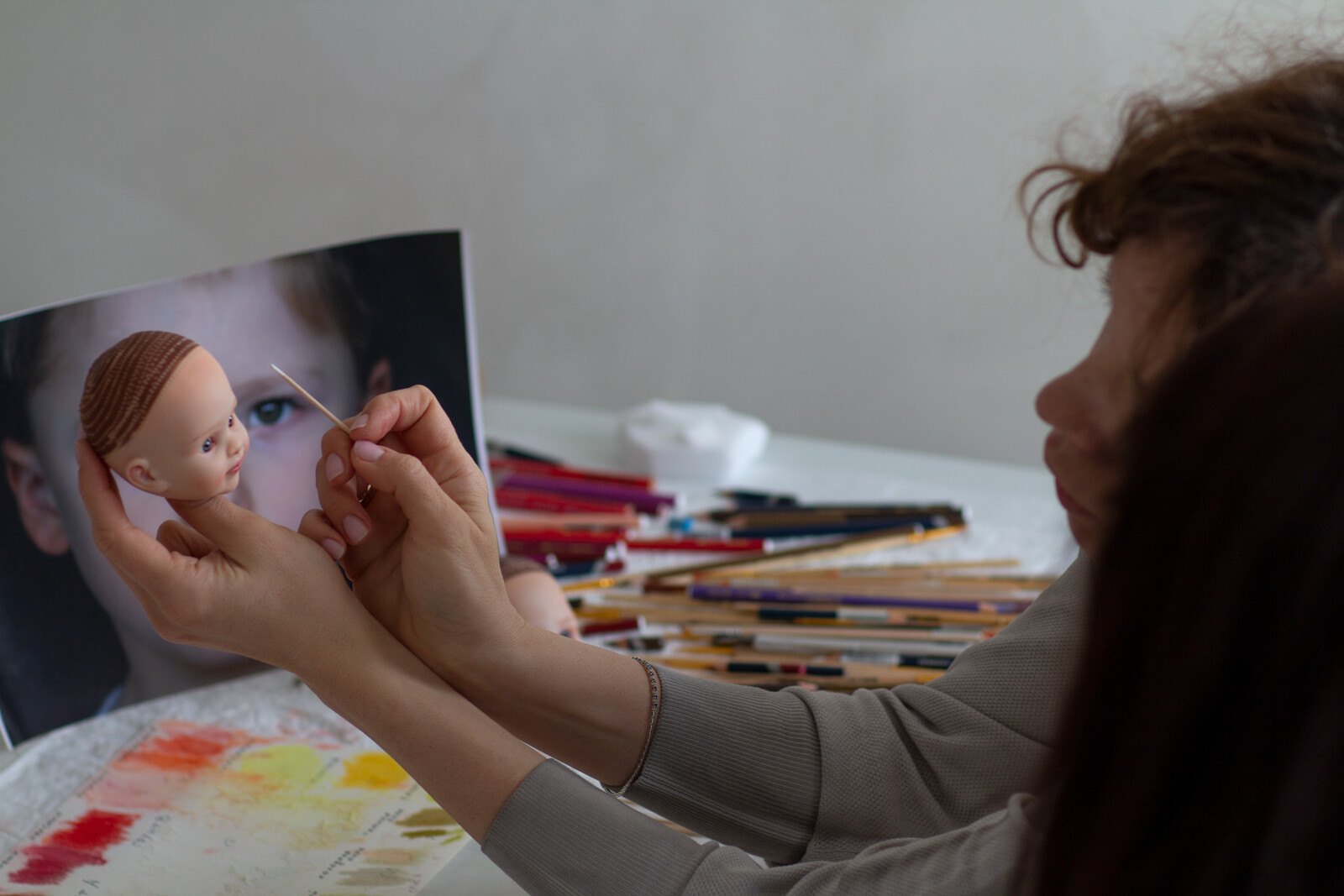
Why most painted dolls never look truly alive
Many people who love dolls reach a point where they want to paint a face themselves. They find tutorials that say where to put a colour and how to draw a lip, and they follow them exactly. The result is often flat, stiff and slightly off, and it is hard to tell why.
The reason is that a convincing face is not a collection of tricks. It is proportion, light, shadow and thin transparent layers of colour that together give the impression of volume and skin. If you copy steps without understanding them, you cannot fix a mistake or adapt the method to a different doll.
This programme takes the opposite approach. It teaches you to look at a face the way a portrait painter does, and then to translate what you see into the small surface of a doll's head. Every step comes with its reason, so you know what you are doing and why.
The goal is not to make you repeat one demonstration. It is to give you a way of working that you can carry into your own characters, your own colour choices and your own style.
What you will be able to do
- Read the structure of a face
Understand proportions and how a face is built before you pick up a brush.
- Control light, shadow and volume
Make a small sculpted surface look rounded and three-dimensional.
- Mix natural, complex skin tones
Work with subtle colour shifts instead of flat, single-colour blushes.
- Build a face in thin layers
Apply multilayer painting and glazing so the colour gains depth gradually.
- Paint realistic eyes, lips and brows
Treat each feature as part of one portrait, not as a separate decoration.
- Use line and graphic detail
Add fine linework that supports the face without looking drawn on.
- Create a unified character
Bring colour, expression and detail together into one coherent image.
- Photograph your finished doll
Present your work clearly for sharing with other doll lovers.
- 6
- modules in the programme
- 30 days
- of access after purchase
- 700+
- learners have taken the author's courses
Seeing before painting
The core idea of the programme is that painting a doll is a portrait exercise on a very small scale. Before any paint touches the head, you learn to look at a real face and notice where it is light, where it is shadowed, and where colour changes quietly from one area to the next.
Then you transfer those observations to the doll in stages. Each layer is thin and has one job, so you can judge the effect, correct it and move on without fear of ruining the work.
- Proportions and facial construction
- Light, shadow and volume
- Skin colour and subtle undertones
- Glazing and multilayer build-up
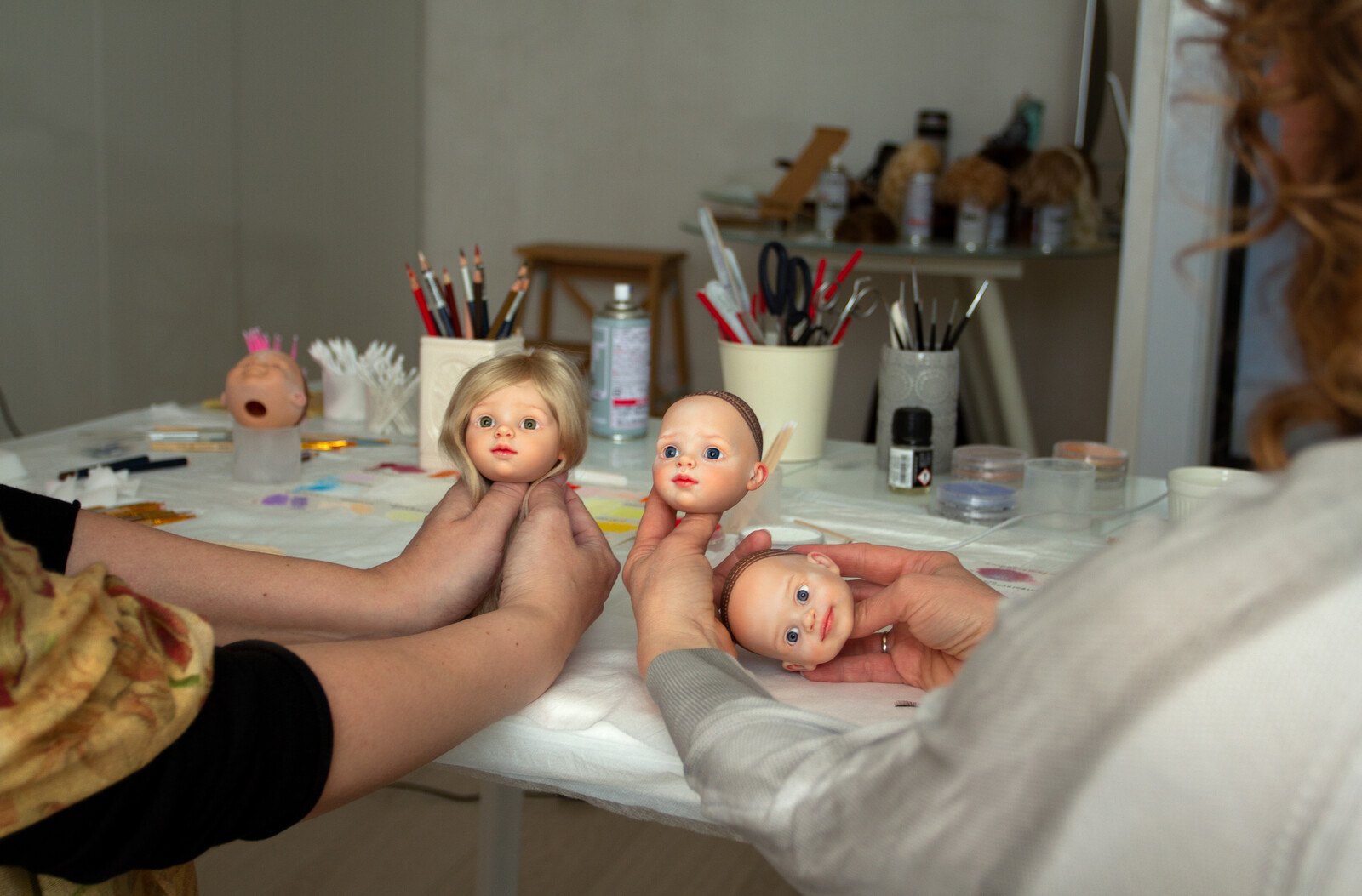
How the course works
The programme is delivered as recorded video lessons that you watch online at your own pace. The lessons follow the painting process in the order you would actually work, so you can pause the video, paint a stage on your own doll and then return for the next step.
Access runs for 30 days from purchase, and during that time you can open any lesson as often as you like. Many learners find that a second viewing reveals details they missed the first time, so it helps to watch each module once to understand it and again while you paint.
The course demonstrates the method on a vinyl doll. You will need a doll head or a doll prepared for painting, plus the paints, brushes and sealing materials shown in the lessons. The course explains how to choose them, so you can start preparing before you begin.
Personal review of your work is not part of this standard programme. It is a video course with clear demonstrations, designed so that you can work independently.
The programme
Six modules that follow the painting process from first look to finished character.
1Module 1 — Preparing to paintSet up your doll, materials and workspace.3 lessons
- Preparing the doll before painting
- Choosing paints, materials and tools
- Setting up your workspace and light
2Module 2 — Understanding the faceLearn how a face is built and how to see it.3 lessons
- Facial proportions and construction
- Reading a reference portrait
- Planning the character's face before you begin
3Module 3 — Light, shadow and volumeCreate the impression of a rounded, living surface.4 lessons
- How light shapes a small face
- Placing shadows and highlights
- Building volume with soft transitions
- Checking your work and correcting mistakes
4Module 4 — Colour and skin tonesMix and layer realistic, subtle skin colour.4 lessons
- Colour theory for skin
- Mixing complex skin shades
- Layering and glazing for depth
- Adding delicate colour accents
5Module 5 — Eyes, lips and browsPaint the features so they belong to one face.4 lessons
- Painting realistic eyes
- Shaping and colouring lips
- Drawing brows with fine line work
- Balancing the features with the rest of the face
6Module 6 — Finishing the characterBring everything together into one finished image.3 lessons
- Final details and graphic touches
- Creating a unified artistic image
- Photographing your finished doll
What you get
- Recorded video lessons
Detailed demonstrations you can pause, rewatch and follow while painting.
- Six clearly ordered modules
From preparation through to the finished, photographed doll.
- A method, not a recipe
Explanations of why each step is done, so you can adapt it.
- Materials guidance
Advice on choosing paints, tools and supplies for your own work.
- 30 days of access
Watch whenever it suits you, on any device with a browser.
- 14-day refund policy
If the course is not right for you, you can ask for your money back within 14 days.
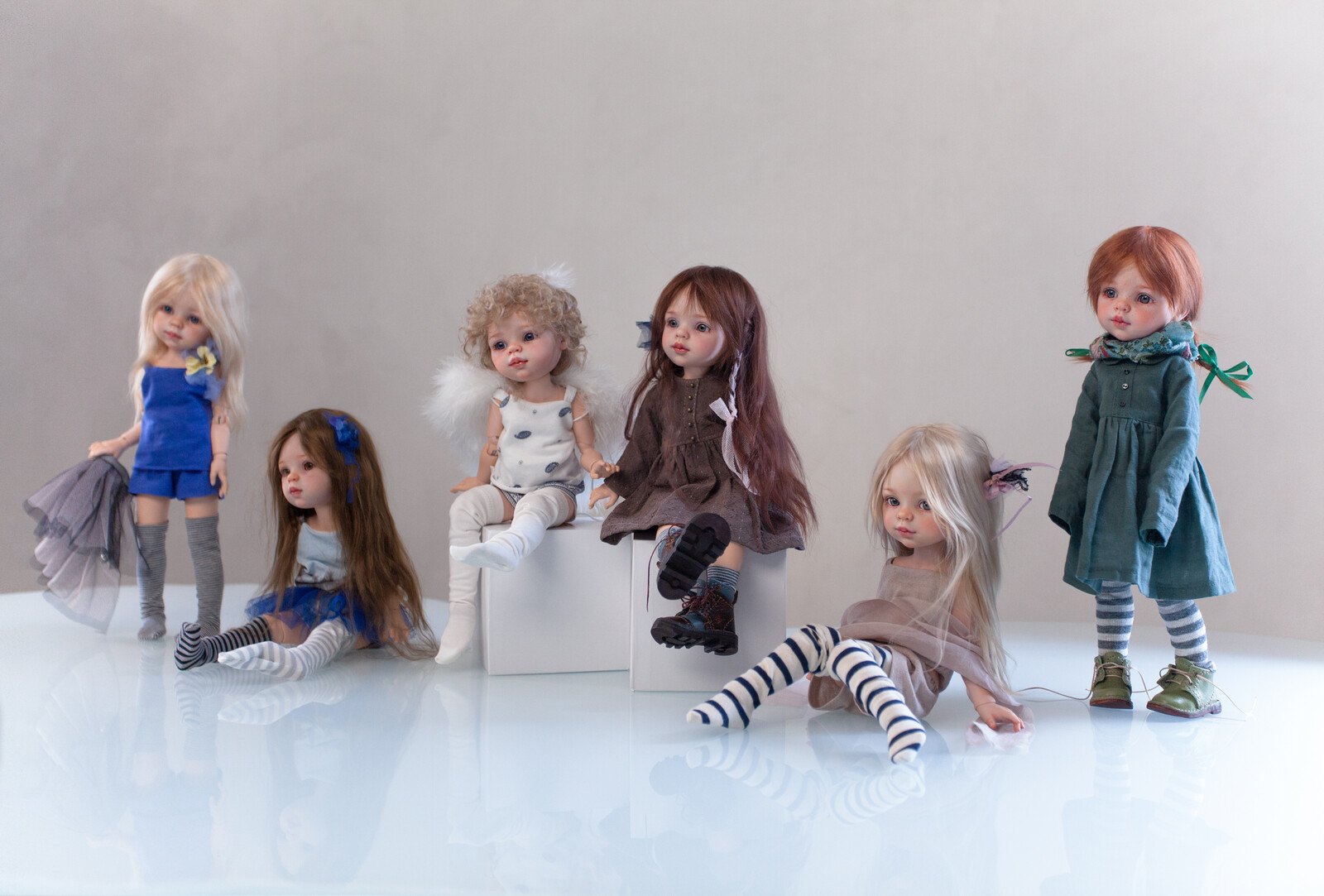
Is this course for you?
This course is for you if…
- You have never painted before but love dolls and want to learn from the basics
- You make clothes or accessories for dolls and want to paint faces too
- You are an artist looking for a new, detailed specialisation
- You already paint dolls and want more realistic, layered results
- You want to understand the reasons behind each step instead of copying a demonstration
Probably not a fit if…
- You want personal feedback on each layer of your painting
- You are looking for a quick shortcut with no practice
- You do not have, and do not plan to get, a doll and painting materials to practise on
- You need an in-person workshop
After the course
Once you have worked through the modules and painted along, you will look at a doll's face differently. You will notice where light falls, how colour shifts across the cheeks and around the eyes, and why a face looks flat or alive.
You will have a repeatable process for building a portrait in thin layers, mixing skin tones with confidence and correcting small errors before they become big ones.
Most importantly, you will be able to create your own characters instead of copying other people's. From there, painting can stay a calm and absorbing hobby, or grow into a creative practice you take further at your own pace.
Questions before you buy
How much time do I need each week?
It depends on how fast you paint. Watching a lesson takes a short while, but painting along takes longer because the layers need care and drying time. Plan a few hours a week and use the 30 days to move at a comfortable pace.
Do I need any experience?
No. The programme is suitable for complete beginners as well as people who already paint dolls. It starts with preparation and the basics of the face and builds gradually.
What do I need to take part?
A doll or doll head prepared for painting, paints, brushes and sealing materials. The lessons explain how to choose and prepare them, so you can follow along.
How does access work after payment?
After you pay, you receive access to the lessons online. Your access lasts for the 30-day subscription period, and you can watch the lessons as often as you wish during that time.
What is the refund policy?
You can request a full refund within 14 days of purchase if the course is not what you expected.
What format are the lessons?
The lessons are recorded videos that you watch online whenever you like. You can pause, rewind and repeat any part while you paint.
Does the material stay available?
All lessons stay available to you throughout the access period, so you can return to any module at any time during those 30 days.
Is personal feedback included?
No. This is a self-paced video programme. It is designed so you can follow the demonstrations and apply them independently.
Start painting faces with understanding
Order the programme today and begin with your first lesson straight away.