Creative · Beginner
Learn to throw pots on the wheel at your own pace
Systematic video lessons that take you from centring your first lump of clay to shaping finished forms, and show you how to spot and fix your own errors.
- Self-paced video lessons
- Full HD recordings
- Error-checking guide
- 12 months of access
- 14-day refund
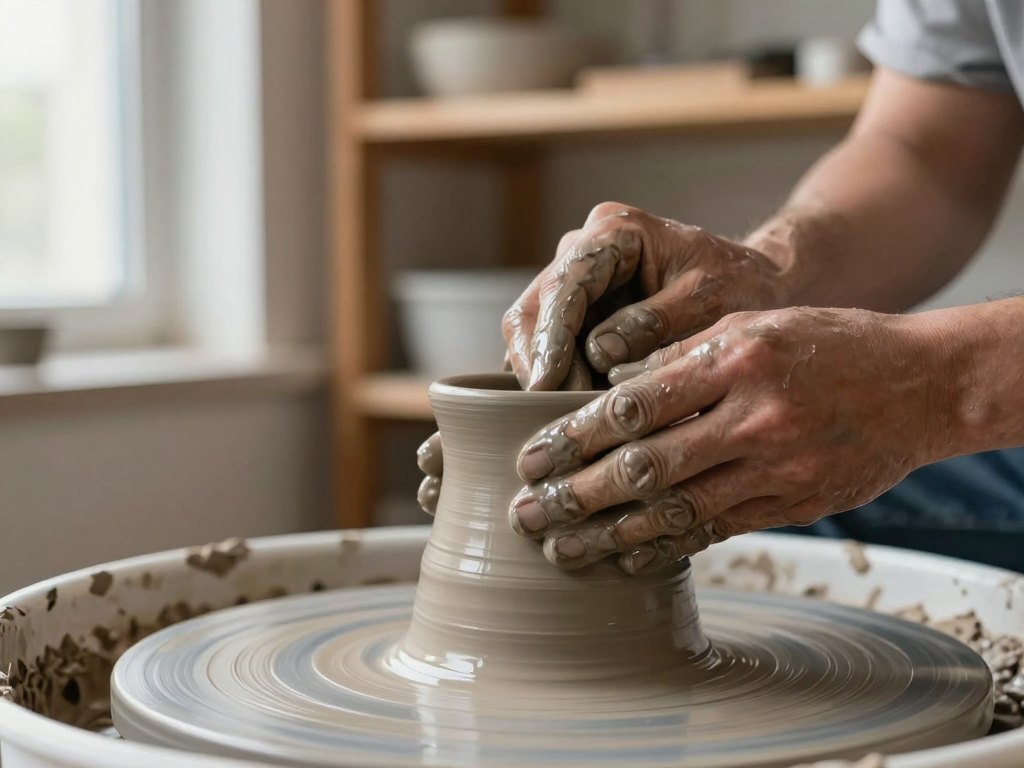
Why the wheel feels so hard at the start
Almost everyone who sits down at a potter's wheel for the first time has the same experience. The clay wobbles, the walls collapse, and it is impossible to tell what exactly went wrong. A few attempts later the lump is a puddle of slip on the splash pan, and it seems the skill belongs only to people with a special gift.
The truth is simpler. Throwing is a chain of small, repeatable actions: preparing the clay, centring it, opening it, pulling up the walls, shaping and finishing. When one link in the chain is weak, the whole piece fails. In a workshop, a teacher stands next to you and corrects your hands. At home, with only a wheel and a pile of clay, you have no one to say that your elbows are in the wrong place or that you are pressing too hard.
This course was built to fill that gap. It breaks the craft into clear, watchable steps, shows each movement at a pace you can pause and study, and gives you a way to diagnose typical problems yourself. You work with clay in your own hands while the video plays, so every lesson ends with something you have actually made.
If you already enjoy watching pottery videos but find that copying them is harder than it looks, this programme gives you the structure that single clips cannot.
What you will be able to do
- Prepare clay properly before you throw
Remove air and uneven texture so the clay behaves predictably on the wheel.
- Centre a lump of clay with confidence
Understand the posture and pressure that keep the clay steady.
- Open and pull up even walls
Control thickness from the base to the rim.
- Shape basic traditional forms
Make cylinders, bowls, cups and simple jugs.
- Trim and finish a piece
Clean up the foot, smooth the rim and prepare the piece for drying.
- Identify your own mistakes
Use a classifier of typical errors to find the cause of a failed piece.
- Correct your technique without a teacher
Adjust hand position, speed and water use based on what you see.
- Build a regular practice routine
Plan short sessions that steadily improve your results.
- 6
- modules
- 22
- lessons
- Full HD
- video quality
- 365 days
- of access
The method: watch, pause, repeat with clay in your hands
The course is designed around active learning rather than passive viewing. Each lesson shows one skill, from several angles where it helps, and the recordings are in Full HD so you can see how the fingers sit on the clay and how the wall responds to pressure. You are encouraged to pause the video, take a lump of clay and repeat the movement straight away.
Complex technology is reduced to simple step-by-step instructions, so that even a viewer without any experience can follow along. Where it is hard to learn without a teacher watching you, the course includes a classifier of typical errors and a self-check guide. You compare what happened on your wheel with the common patterns, find the likely cause and try again with one change at a time.
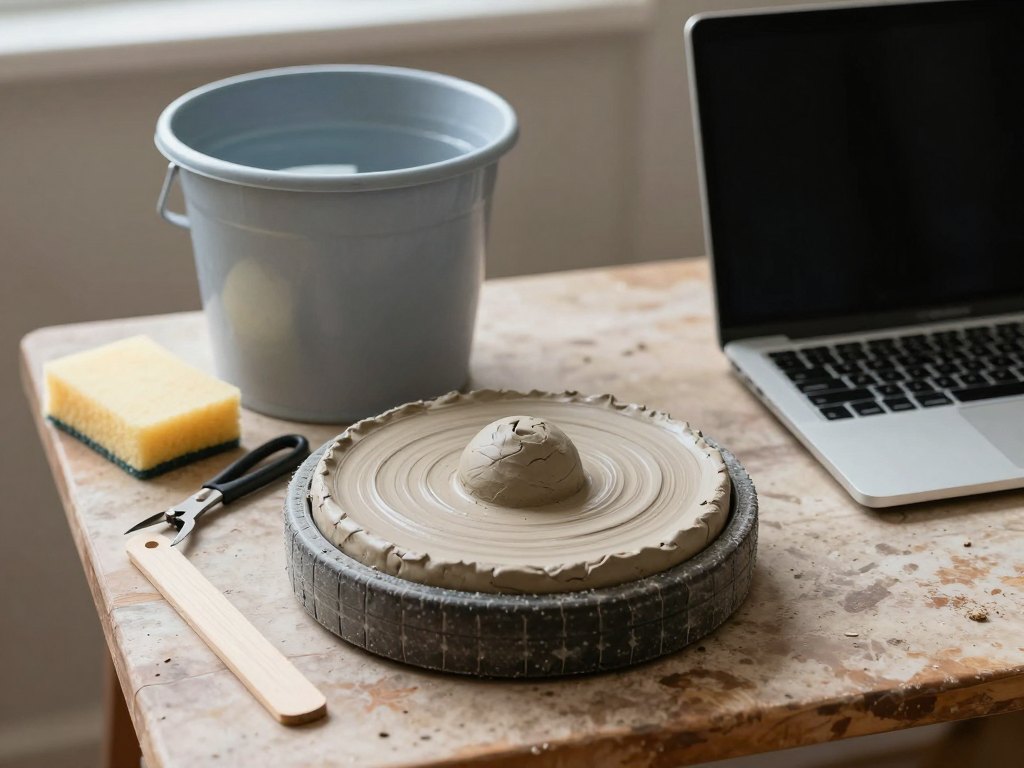
Tools are introduced at the start of the course. You see what you need and how to make or buy it, so you do not have to guess which equipment is essential and which is optional.
How the course works
After you enter your e-mail address and pay, you receive a message with access to the video lessons on the learning platform. There is no fixed schedule and no deadline for each lesson: you decide when to study and how often to repeat a topic.
Most of the material is delivered as video. Lessons are divided by topic and, in most cases, accompanied by short written descriptions, so months later you can return to exactly the lesson you need instead of rewatching everything. You can watch on a computer, tablet or phone, from any place, any number of times during your access period.
Access lasts 365 days from purchase. If you need more time, you can ask support to extend it. Questions about the lessons can be sent to the support team.
The programme
Six modules that move from preparation and centring to finished forms and self-correction.
1Module 1 — Clay, tools and your workspaceSet up everything you need before the wheel starts turning.4 lessons
- Choosing and preparing clay for throwing
- The essential tools and how to make or buy them
- Setting up the wheel, water and posture
- Wedging clay and removing air
2Module 2 — CentringThe foundation of every thrown piece.4 lessons
- Hand and body position for centring
- Coning up and pressing down
- Finding and fixing wobble
- Centring larger and smaller amounts of clay
3Module 3 — Opening and pulling wallsCreate a base and raise even walls.4 lessons
- Opening the clay and setting the floor
- Compressing the base to prevent cracks
- Pulling the first wall
- Keeping thickness even from bottom to rim
4Module 4 — Basic traditional formsApply your skills to forms that every potter practises.4 lessons
- The cylinder as a training form
- Bowls and open shapes
- Cups and mugs
- Jugs and narrowed necks
5Module 5 — Trimming and finishingComplete a piece so it is ready to dry.3 lessons
- Cutting the piece from the wheel
- Trimming the foot at the right moment
- Smoothing rims and cleaning surfaces
6Module 6 — Controlling your mistakesDiagnose problems on your own and plan practice.3 lessons
- The classifier of typical throwing errors
- Self-check: reading a failed piece
- Building a practice routine that improves results
What you get
- Structured video lessons
A logical sequence from preparation to finished forms.
- Full HD recordings
Clear detail of hands, clay and tools that you can pause and study.
- Topic-based lesson breakdown
Lessons are organised by theme so you can find a specific skill quickly.
- Text descriptions with the videos
Short notes that help you review without rewatching.
- A guide to typical mistakes
A classifier and self-check to replace a teacher watching your hands.
- Tool guidance
What to prepare, what to buy and what is easy to make yourself.
- 365 days of access
Watch any lesson at any time, as often as you like, with the option to extend.
- Support for your questions
Reach the support team if you are stuck with a lesson or with access.
Is this course for you?
This course is for you if…
- You are curious about pottery and want to start at the wheel without going to a studio
- You have watched pottery videos online and want a clear, ordered path instead
- You already throw a little but cannot work out why pieces fail
- You want to learn in the evenings or at weekends, at your own pace
- You enjoy hands-on learning and are happy to practise with real clay
Probably not a fit if…
- You expect to master the wheel after watching without ever touching clay
- You want live, personal feedback on your hands during every session
- You do not have access to a wheel, clay or a place to work
- You are looking for a course on glazing or kiln firing as the main subject
After the course
When you finish the programme, you will be sitting at the wheel with a calmer idea of what each movement is for. You will know how to prepare the clay, how to centre it, and how to raise walls that do not collapse halfway through.
More importantly, you will be able to look at a failed piece and understand why it failed. That ability changes practice from random trying into deliberate improvement, which is the fastest way to progress without a teacher beside you.
You will have a set of finished pieces, a routine you can keep up and the confidence to move on to more complex shapes, decoration and firing at your own pace. The lessons stay in your account during your access period, so you can return to any step whenever a new project needs it.
Questions before you buy
How much time do I need per week?
There is no fixed schedule. Many learners set aside two or three sessions a week of an hour or so, which leaves time to watch a lesson and practise it with clay. You can go faster or slower as you prefer.
Do I need any experience?
No. The course starts with clay preparation and centring and assumes no previous pottery knowledge. You do need a potter's wheel, clay and basic tools, which are introduced at the start of the course.
How do I get access after paying?
After you enter your e-mail address and pay, you receive a message with access to the lessons on the learning platform. You can start straight away.
What format are the lessons in?
The lessons are recorded videos, mostly in Full HD, divided by topic and in most cases accompanied by short text descriptions. You can pause, rewind and rewatch them as often as you like.
Will the material stay available?
Yes, for 365 days from purchase, from any device and any place. If you need more time, you can contact support to extend your access.
What is your refund policy?
You can request a refund within 14 days of purchase if the course is not what you expected.
Can I ask questions if I get stuck?
Yes. You can send questions to the support team. The course also includes a guide to typical mistakes that helps you work out many problems yourself.
What equipment will I need?
A potter's wheel, suitable clay, water and a few basic tools. The beginning of the course shows each tool and explains how to make or buy it.
Start throwing at your own pace
Get immediate access to the lessons and put your hands in clay today.