Career · All levels
Design, install and launch pool equipment the right way
A step-by-step programme that takes you from pool types and hydraulic schemes to pressure testing, dosing stations and the first launch.
- Theory with photos and drawings
- Practical installation videos
- Equipment selection guidance
- Access that stays with you
Why pool projects go wrong after the bowl is built
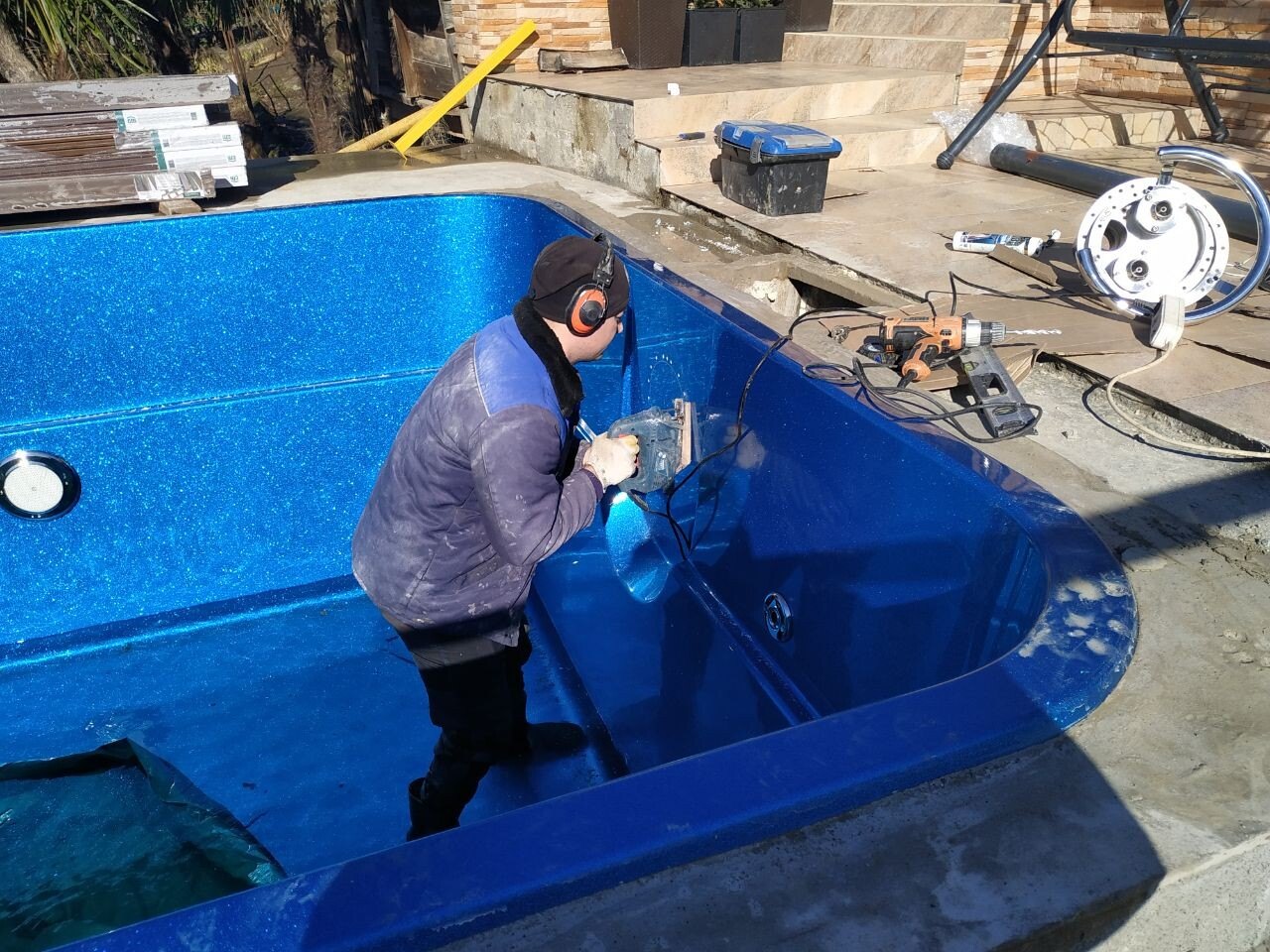
Building a pool looks like a job for the people who dig the pit and pour the concrete. In practice, much of the real risk sits in the part nobody sees once the water is in: the pipework, the embedded fittings, the pump, the filter, the heat exchanger and the water treatment. A badly placed fitting or a poorly chosen pump cannot be corrected without cutting into the structure.
Many people learn this trade piece by piece on live sites. They copy what a colleague did last season, guess at hydraulic layouts and discover mistakes only when the pool is filled. That is slow, expensive and stressful, especially when a customer is waiting.
This course puts the whole picture in one place. It starts with how pools are classified and how skimmer and overflow bowls are built, moves through filtration, heating, hydraulic schemes and equipment selection, and then shows the actual installation work on video.
You do not need to arrive with experience. The material is explained with photos, drawings and live examples rather than a wall of formulas, so a complete beginner can follow it, while experienced installers can use it to fill gaps and check their own methods.
What you will be able to do
- Tell the main pool types apart
Recognise skimmer and overflow pools and name the elements of each bowl.
- Read and choose hydraulic schemes
Understand how water moves through skimmer and overflow systems.
- Select a pump, filter and heat exchanger
Match equipment to the pool instead of guessing.
- Plan the positions of embedded fittings
Use opening layouts so that fittings go where they should in the pool walls.
- Glue PVC pipe correctly
Join pipes in a way that holds under pressure.
- Pressure-test the pipework
Check the system for leaks before it is closed up.
- Install embedded parts in different bowls
Work with plastic, stainless steel and composite pool fittings.
- Assemble equipment and run a first launch
Follow a clear order of steps from assembly to filling and start-up.
- Measure pH and chlorine and set up dosing
Use dosing stations and understand what to watch during operation.
- 11
- theory topics with photos and drawings
- 14
- practical installation video guides
- 7
- modules in the programme
- Lifetime
- access to the materials
Theory and hands-on video, side by side
The programme is built around one idea: you should understand why a thing is done before you see it done. Each theory topic explains the principle with photographs and drawings, and the practical videos then show the same principle at work on real equipment.
You choose equipment as part of the learning process. You place the embedded fittings in the pool walls, then select the pump, the filter and the heat exchanger that suit that layout. That order mirrors how a real project unfolds.
- Detailed topics with photos and drawings
- Equipment selection built into the lessons
- Video guides to installation and launch
- Technical room overviews to compare layouts
How the course works
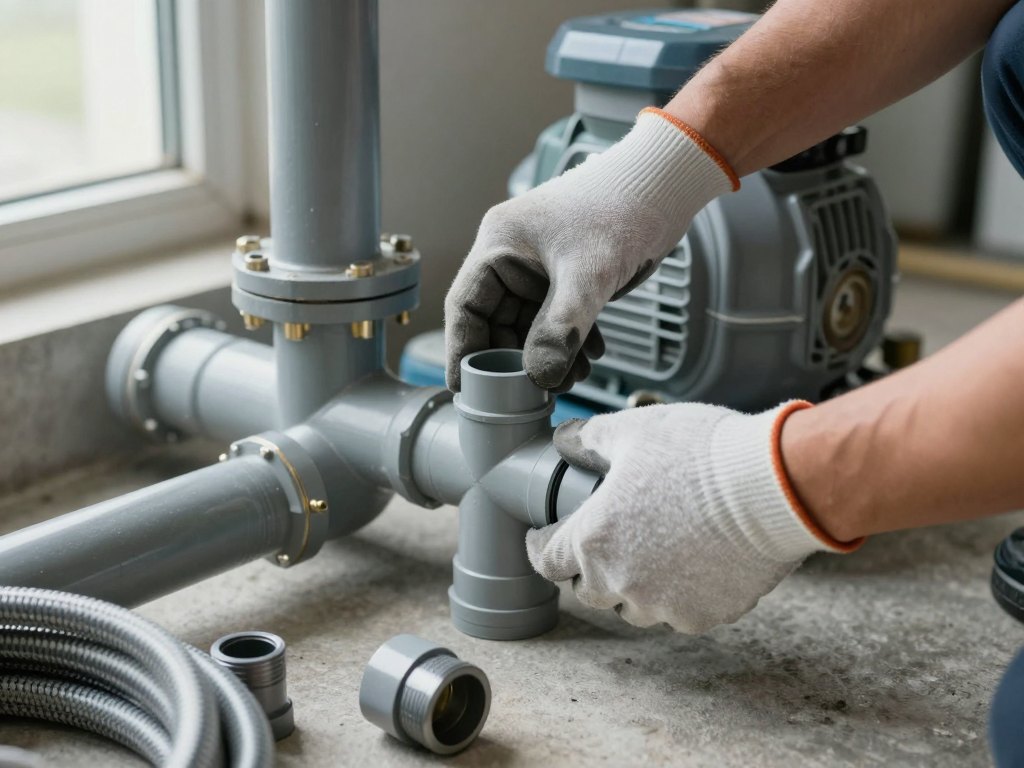
After payment you get a personal account on the learning platform. Through it you can open the course at any time from any device, so you can study at a desk in the evening or look up a video on a phone while standing in a technical room.
The programme has three working parts. First, you read through the theory, which covers pool types, bowl elements, filtration, heating, hydraulic schemes, equipment selection, water treatment and the layout of technological openings. Second, you work through equipment selection, placing embedded parts and choosing the main units. Third, you watch the practical video guides on installation and launch.
There is no fixed timetable. You can move quickly through topics you already know and slow down on the ones that are new, then return to any lesson later. The materials stay available to you, so the course can serve as a reference on future projects.
The programme
Every module and lesson in the course, in the order we recommend studying them.
1Module 1 — Pool types and bowl designStart with the vocabulary and the basic construction of the two main pool types.4 lessons
- Introduction to the course
- Classification of pools and their main types
- The skimmer pool and the elements of its bowl
- The overflow pool and the elements of its bowl
2Module 2 — Equipment and water treatmentUnderstand what the main units do and how to choose them.4 lessons
- Pool filtration equipment
- Heating the pool water
- Choosing equipment for a pool
- Water treatment: a detailed reference guide
3Module 3 — Hydraulic schemes and embedded partsLearn how water circulates and where the openings go.4 lessons
- Hydraulic schemes for skimmer pools
- Hydraulic schemes for overflow pools
- Layouts of technological openings for embedded parts
- Instructions for installing a composite bowl
4Module 4 — PipeworkPractical skills for building a pipe system that does not leak.3 lessons
- How to glue PVC pipe correctly
- Piping the pool bowl
- Pressure testing the pipes
5Module 5 — Embedded fittingsSee installation in three different types of pool wall.3 lessons
- Installing plastic embedded parts
- Installing stainless steel embedded parts
- Installing embedded parts in a composite pool
6Module 6 — Assembly and first launchBring the equipment together and start the pool for the first time.4 lessons
- Assembling the equipment
- The first launch of the pool
- How to wash the filter
- Measuring pH and chlorine in the pool
7Module 7 — Dosing stations and technical roomsSet up, calibrate and operate dosing equipment, and learn from real layouts.4 lessons
- Setting up the eMyPool (Etatron) station
- Calibrating the DOMINATOR (Akon) station
- Dosing stations: what to watch during operation
- Reviews of different technical rooms
What you get
- Theory lessons with photos and drawings
Clear explanations of pool types, bowls, filtration, heating and hydraulics.
- Practical video installation guides
Footage of pipework, embedded fittings, assembly and launch.
- A water treatment reference
A detailed guide you can return to on any project.
- Layouts for technological openings
Diagrams to plan where embedded parts should go.
- Composite bowl installation instructions
Written guidance for fitting a composite pool.
- Dosing station walkthroughs
Setup and calibration videos for two widely used stations.
- Technical room overviews
Several room layouts to compare and learn from.
- Personal account and lasting access
Study from any device, now and later.
Is this course for you?
This course is for you if…
- Beginner installers who want to understand the whole system, not just one task
- Experienced installers who want to check their methods and fill gaps
- Concrete-pool builders and foremen who want to understand the equipment side
- Sales managers for pool equipment who need to explain products with confidence
- Newcomers who want to learn a new trade from scratch
- Enthusiasts who want to raise their level of skill
Probably not a fit if…
- People looking for one-to-one coaching or on-site supervision
- Anyone who expects to master the trade without any practice on real equipment
- Those looking for architectural design or structural engineering training
After the course
When you finish, a pool should no longer look like a black box. You will be able to read a hydraulic scheme, explain how skimmer and overflow systems differ, and choose a pump, filter and heat exchanger with reasons rather than guesses.
On site, you will know the order of work: where embedded parts go, how pipes are glued and tested, how equipment is assembled and what to check at the first launch. You will be able to take readings of pH and chlorine and understand what a dosing station is doing.
Whether you are starting a new trade, advising customers or supervising a crew, you will have a structured reference that stays available whenever you need to check a detail.
Questions before you buy
How much time do I need per week?
There is no fixed schedule. The course is self-paced, so you decide how much time to spend each week. Many people work through a module or two at a time, and you can pause and return at any point.
Do I need previous experience?
No. The material starts from the classification of pools and builds up step by step. Experienced installers can skip ahead to the topics they need.
How does access work after payment?
After you pay, you receive a personal account on the learning platform. You can log in at any time from any device and open all course materials.
Can I get my money back?
Yes. You can request a refund within 14 days of purchase if the course is not what you expected.
What format are the lessons in?
The theory comes as detailed topics with photos and drawings, and the practical part consists of video guides showing installation and launch work.
Will the material stay available?
Yes. The materials remain with you after purchase, so you can return to them whenever a new project requires it.
Does the course cover specific equipment?
It covers choosing pumps, filters and heat exchangers, and includes setup and calibration of two dosing stations, the eMyPool (Etatron) and the DOMINATOR (Akon).
Is there live teaching or on-site coaching?
No. This is a digital course made of theory materials and recorded video guides that you study on your own.
Start learning pool installation today
Get the full theory, the practical videos and lasting access in one course.