Creative · Beginner
Learn to draw a portrait that truly looks like the person
A structured programme that combines academic drawing principles with a modern, practical approach, from the first line to expressive composition.
- Pre-recorded video lessons
- Theory plus 2 assignments per module
- No drawing experience needed
- Rewatch lessons any time
- 14-day refund policy
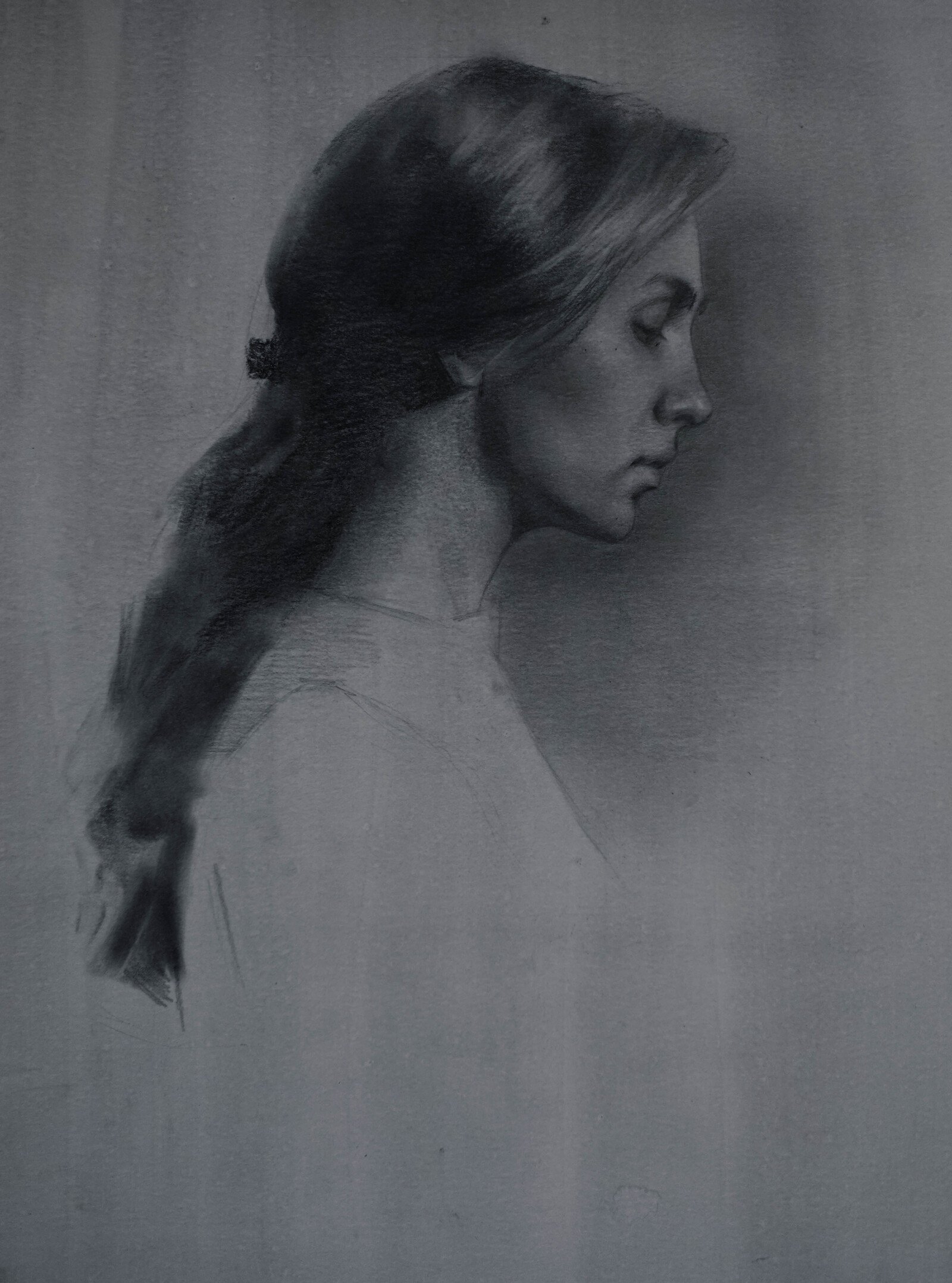
Why portraits feel out of reach
Many people love portraits and quietly assume that drawing one is a gift they were not born with. They try a few times, the nose lands in the wrong place, the eyes drift apart, and the result looks like a stranger. It is easy to conclude that talent is missing.
In most cases what is missing is a method. A portrait is not a mystery; it is a chain of decisions about proportion, construction, tone and edges. When nobody explains the logic behind those decisions, you end up guessing, and guessing rarely produces a likeness.
This programme is built for exactly that situation. It starts from the very basics of drawing, avoids heavy terminology, and moves step by step towards a finished, realistic pencil portrait. Along the way you learn why a drawing works, so you can repeat the result instead of hoping for it.
Learning to draw as an adult is not a disadvantage. Adults are good at building logic, spotting patterns and choosing sensible tactics, and those are precisely the skills a portrait rewards.
What you will be able to do
Skills you build over the course of the programme.
- Draw a realistic portrait in pencil
Your first finished portrait comes within the first few lessons, not at the end.
- Construct a head with correct proportions
Place the features accurately so the likeness holds from the first sketch.
- Understand face anatomy and perspective
See why features sit where they do, and how a turn of the head changes them.
- Control tone with light and shade
Build volume with a clear tonal structure instead of random shading.
- Work with references confidently
Choose and read a photo so it supports your drawing rather than confusing it.
- Compose a portrait on the page
Use placement, cropping and contrast to carry mood and emotion.
- Choose pencils, erasers and paper
Walk into an art shop knowing what you need and why.
- Spot and fix your own mistakes
Recognise what is off in a drawing and know how to correct it.
- 6
- thematic modules
- 2 weeks
- suggested time per module
- 2
- practical assignments in every module
- 4
- bonus weeks built in for catching up
Theory first, then straight to the paper
Each module follows the same rhythm. You watch a focused lesson on one topic, such as construction, tone or edges, and then you put it into practice right away in two assignments.
This loop matters because drawing knowledge only becomes a skill when it passes through the hand. Understanding a principle on Monday and applying it on Tuesday is what makes it stick.
- One clear topic per module
- Short lessons you can watch in parts
- Two practical drawings to apply each topic
- Extra tasks available if you want more of a challenge
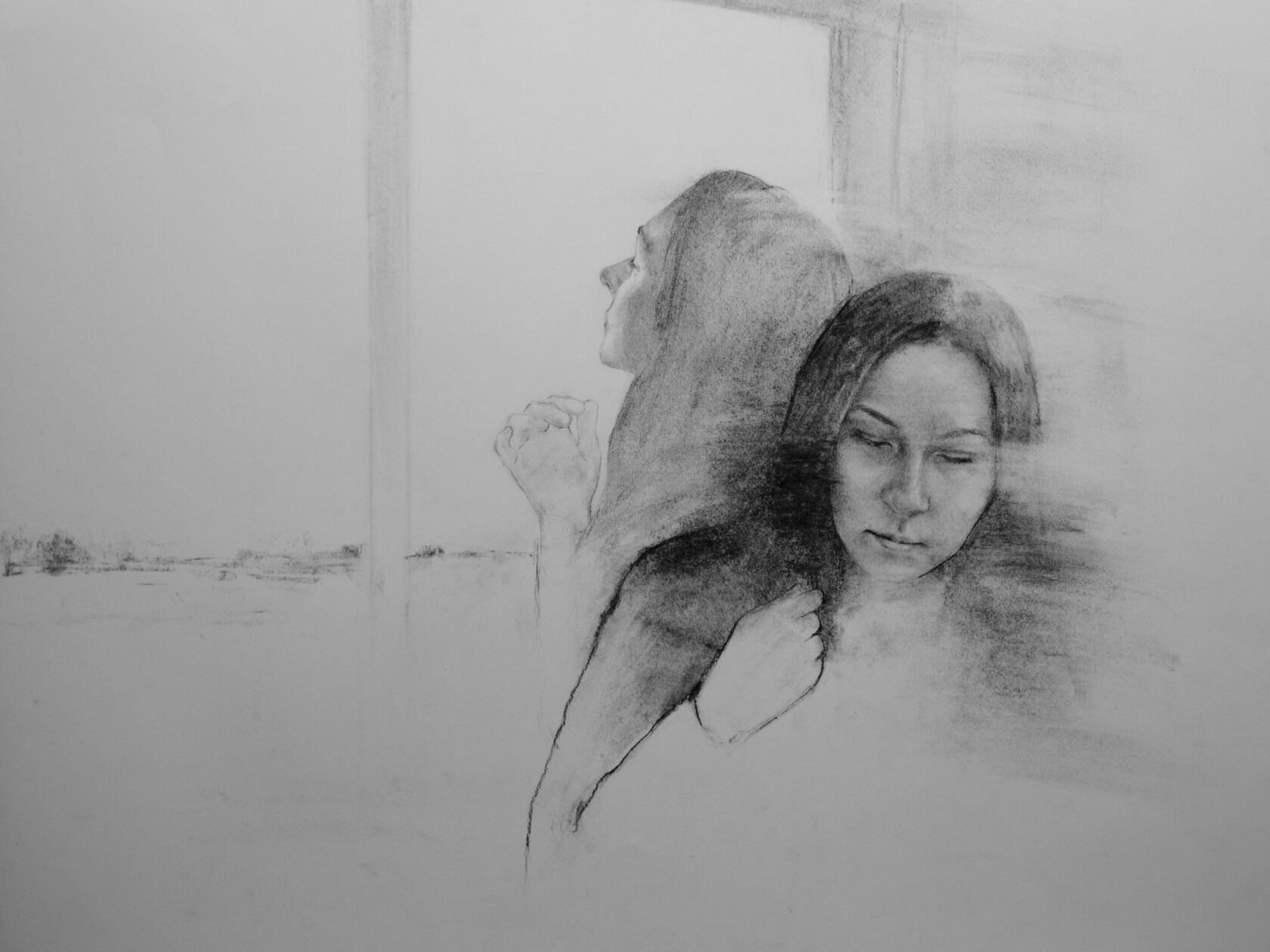
How the course works
The programme is divided into thematic modules, and each module is designed to take about two weeks. A module contains theory on its topic plus two practical assignments. Modules open on a schedule, and the lessons are pre-recorded, so you can watch them when it suits your day and rewatch them as many times as you need.
A realistic estimate for the full pace is around ten hours a week, counting the drawing itself, studying the theory and the time you need to absorb what you have learned. Everyone works at a different speed, so treat that figure as a guide, not a rule. The programme does not promise it will be effortless: you will be putting new information through your hands, and steady work beats long breaks, because long pauses wear away fresh skills.
If the pace feels too heavy, there is a gentler route. Four bonus weeks are built into the schedule for anyone who falls behind, and you can simply carry on at your own tempo without reporting to anyone. If the pace feels too light, additional tasks in each module will keep you busy. The version offered at this price is the self-paced one, with no submission of your work for review.
The programme
Six modules that take you from the first line to an expressive finished portrait. Each one combines theory with two practical drawings.
1Module 1 — Seeing like a draughtsmanMaterials, basic drawing skills and your first quick portrait.2 weeks · theory + 2 assignments
- Pencils, erasers and paper: what you really need
- Posture, grip and line control
- Seeing shapes instead of objects
- Your first portrait from a simple reference
2Module 2 — Proportions and construction of the headBuild the head so the likeness holds from the start.2 weeks · theory + 2 assignments
- The head as a simple volume
- Dividing the face into proportional zones
- Placing the features accurately
- Checking and correcting your construction
3Module 3 — Face anatomy and perspectiveUnderstand why the features sit where they do and how they change with the angle.2 weeks · theory + 2 assignments
- Structure of the eyes, nose and lips
- Planes of the face and the skull beneath
- Perspective in a turned or tilted head
- Drawing the ears, neck and hairline
4Module 4 — Light, shade and volumeTurn a flat outline into a three-dimensional portrait.2 weeks · theory + 2 assignments
- The tonal scale and how to control pressure
- Light, half-tone, shadow and reflected light
- Shading techniques for skin
- Modelling form with soft transitions
5Module 5 — Hair, edges and detailsAdd texture and finish without overworking the drawing.2 weeks · theory + 2 assignments
- Drawing hair as masses first, strands second
- Sharp and soft edges
- Eyes and lips: details that bring life
- Knowing when a drawing is finished
6Module 6 — Composition and emotionUse the whole page to express mood and character.2 weeks · theory + 2 assignments
- Placing a portrait on the sheet
- Cropping, contrast and focal point
- Conveying expression through the face
- Choosing and preparing your own references
- Your final portrait
What you get
- Pre-recorded video lessons
Clear, structured lessons you can watch in parts and rewatch whenever you like.
- Six thematic modules
A logical path from the basics to composition and emotion.
- Twelve practical assignments
Two per module, so every idea is tested on paper.
- Reference images
Photos chosen to match the aim of each lesson.
- Extra tasks
Optional additional assignments if you want a heavier load.
- Four bonus weeks
A built-in cushion for when life gets in the way.
- Your own pace
No reporting to anyone and no pressure to compare yourself with others.
- Account access
Your lessons stay in your account so you can come back to them.
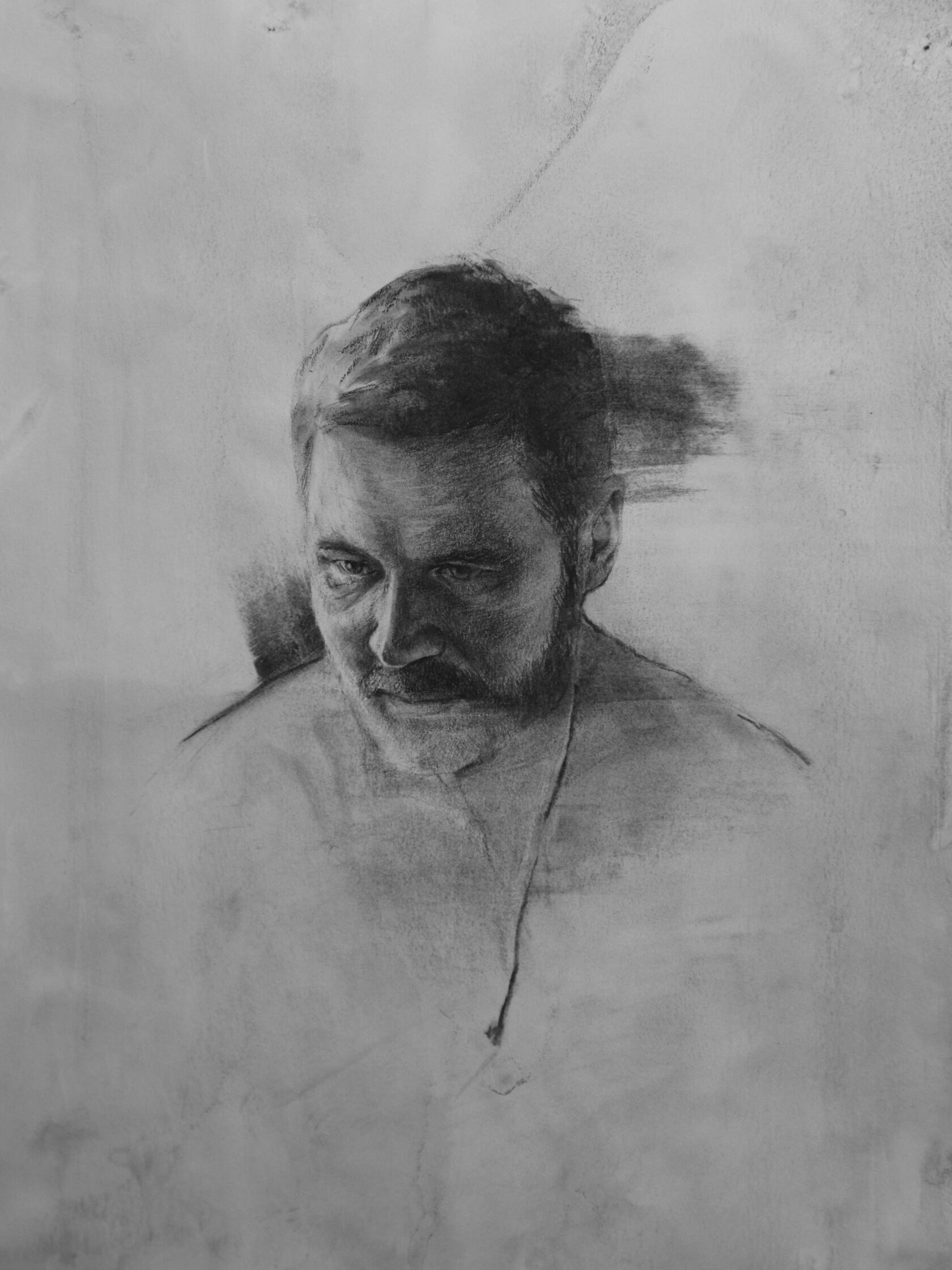
Is this course for you?
This course is for you if…
- You love portraits and want to draw them yourself, but have never studied drawing
- You have tried before and were frustrated that the result did not look like the person
- You want a clear, logical order of learning instead of scattered tutorials
- You can set aside regular time each week to practise, up to about ten hours at full pace
- You prefer to learn at your own pace and without having to submit your work
Probably not a fit if…
- You want results without practising; the programme is built on regular drawing
- You are looking for personal feedback on every drawing at this price
- You already draw portraits confidently and need advanced techniques
- You are hoping for a quick one-evening lesson
After the course
By the end you will have a sequence of finished portraits that show your progress, and more importantly you will understand how each of them was made. When a drawing goes wrong, you will know whether the problem is the construction, the tone or the edges, and what to do about it.
You will start a portrait with a plan instead of fear. You will place the features deliberately, read a reference photo properly and decide where the light falls before you shade a single area.
You will also know which pencils, erasers and paper you want, and you will have the habit of regular practice. That is a solid base for continuing in any direction, whether that means more realistic pencil work, other drawing materials or simply drawing for pleasure.
Questions before you buy
How much time will I need each week?
At the full pace, plan on about ten hours a week: drawing, studying the theory and absorbing what you have learned. Each module is designed for two weeks. If that is too much, the schedule includes four bonus weeks for catching up, and you can work more slowly without any reporting.
Do I need any drawing experience?
No. The programme is adapted to a beginner level and starts from the fundamentals without complicated terminology. Adults often find the logic of drawing easier than they expect.
What materials will I need?
Ordinary drawing pencils of several hardness grades, an eraser and suitable drawing paper. The first module explains what to buy and why, so you do not have to guess.
How does access work after payment?
Once your payment is confirmed, the programme is added to your account and you can sign in and start. Modules open following the programme schedule, and earlier modules remain open as you move forward.
What format are the lessons?
The lessons are pre-recorded videos combining theory and demonstration, followed by practical drawing assignments. Each module contains two assignments. You can watch lessons in parts and rewatch them as often as you need.
Will the material stay available?
Your lessons stay in your account, so you can return to them and rewatch any part of the programme whenever you want to refresh a technique.
Will my drawings be reviewed?
The version offered here is the self-paced one, so there is no submission of work for review. You practise at your own tempo and compare your progress against the examples in the lessons.
What is the refund policy?
You can request a full refund within 14 days of purchase if the programme is not what you expected.
Is this realistic if I have a full-time job?
Yes, many learners study alongside work. The lessons are short and can be watched in parts, and you can slow down using the bonus weeks. Keep your practice regular, because long breaks make new skills fade.
Draw your first real portrait
Start with the fundamentals and build up to expressive portraits, one module at a time.