Creative · All levels
Paint flowers from your own process, not from a reference
A short, dense video course that uses flowers as a reason to talk seriously about composition, expressive means and how you work.
- Three-part course
- 7 practical video lessons
- Oil, watercolour, mixed media
- Studio and outdoor painting
- 14-day refund
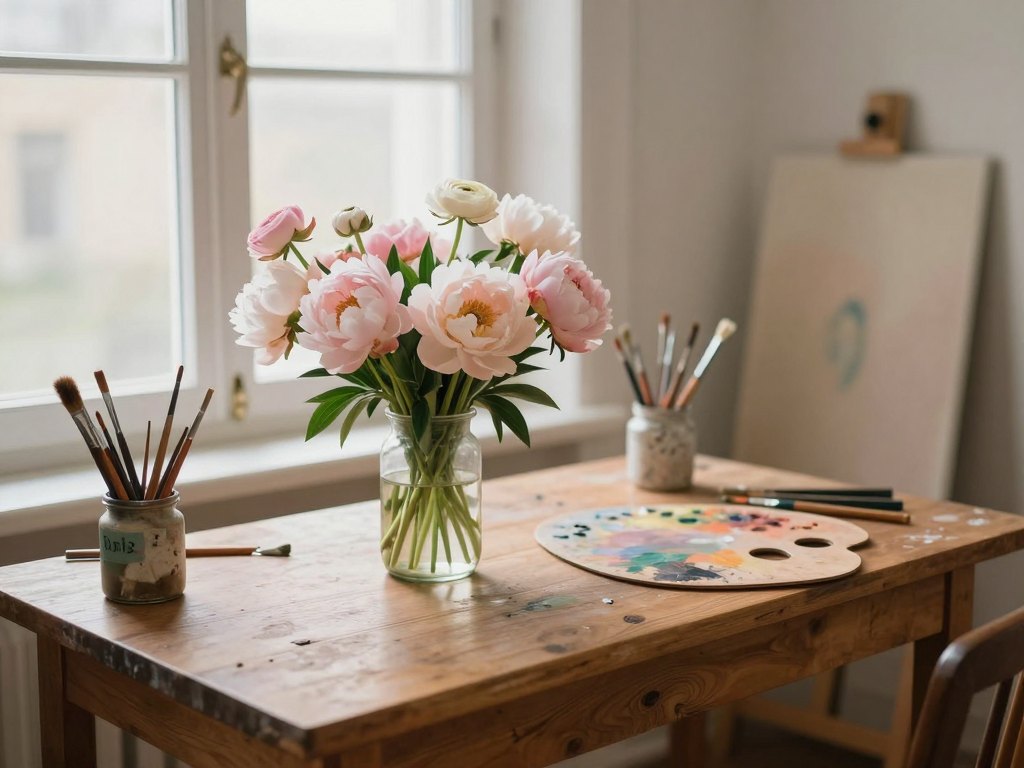
Why copying a bouquet rarely teaches you to paint
Many people who enjoy drawing and painting reach the same point. They can follow a demonstration, repeat a picture and finish a pleasant piece. Then they sit down in front of a real vase of flowers and do not know where to begin. The steps they memorised belong to someone else's picture, not to their own decisions.
This course takes a different route. It does not ask you to repeat what you see on screen. It shows you how to build a working process: what to decide first, what to leave for later, how to choose the means that fit your idea, and how to notice when you are slipping into a template.
Flowers are the subject, but they are also a pretext. A bouquet is a familiar, forgiving motif that lets you concentrate on composition, colour, edges, rhythm and the order of work. Once you understand those things on a bouquet, you can carry them into any other subject you choose.
The course is deliberately small and concise. It does not try to cover everything about painting. It gives you a clear view of how very different artists approached the same theme, a set of practical lessons in different media, and an honest conversation about the habits that hold many painters back.
What you will be able to do
- Recognise how different artists treated flowers
See what each one made the main point of a work and which expressive means they chose.
- Plan a bouquet composition before you paint
Decide on shapes, accents and the balance of the sheet or canvas first.
- Work out a sequence for a floral painting
Follow a working algorithm instead of improvising and hoping.
- Paint a bouquet in the studio in oil
Understand how the work develops from first layers to final accents.
- Take your painting outdoors
Handle changing light, a limited time window and a living, moving subject.
- Use watercolour for bouquets
Approach transparent layers and edges with a clear sequence.
- Combine media in a mixed-technique piece
Choose materials for a reason, not by accident.
- Spot templates in your own work
Notice repeating habits and decide whether to keep or change them.
- Move from small studies to a larger piece
Learn how a sketch-scale idea can become a more considered work.
- 3
- parts: history, practice, personal experience
- 7
- practical video lessons
- 5
- modules in the programme
- 3
- approaches: studio, outdoors, mixed media
Why a bouquet is a good teacher
A bouquet sits on a table in front of you, and it is easy to underestimate. In fact it contains almost everything a painter has to solve: a cluster of forms with a clear silhouette, a range of colours that must stay harmonious, soft and hard edges, and a background that either supports or ruins the whole.
Because the motif is so familiar, it is also a good place to see your own habits clearly. If you always paint the same type of vase, the same angle and the same background, the repetition becomes visible. The course invites you to notice that and make conscious choices.
The practical lessons are built around this idea. Each one concentrates on how the work is organised from the first mark to the last, so that what you learn applies beyond flowers.
How the course works
The course is made of recorded video lessons that you watch at your own pace. It has three parts. The first looks at examples from the history of art. The second is practical and contains seven video lessons. The third is a personal account of how one working artist moved from watercolour bouquets to an easel painting and what templates appeared along the way.
The emphasis throughout is on the algorithm of work and on building your own workflow. The lessons are not a follow-me master class where you copy every stroke. You are expected to think, choose your subject and decide how to apply what you have seen.
You choose the materials you work with from those you already own and know. A quiet corner, a vase of flowers and the time to concentrate matter more than an expensive set of supplies. Because the lessons are recorded, you can pause, return to a section and repeat an exercise as often as you like.
The programme
Five modules across the three parts of the course. Lesson titles describe the topics covered.
1Part 1 — Flowers in the history of artHow very different painters approached the same theme.2 lessons
- What artists made the main point of a flower painting
- Expressive means and compositional solutions compared
2Part 2 — A bouquet in the studio in oilA working sequence for painting a bouquet indoors.3 lessons
- Setting up the motif and planning the composition
- Building the painting from the first layers
- Developing form, accents and finishing decisions
3Part 2 — Painting flowers outdoors and in watercolourWorking from life in changing conditions and with transparent paint.2 lessons
- Working outdoors: choosing a view and managing time
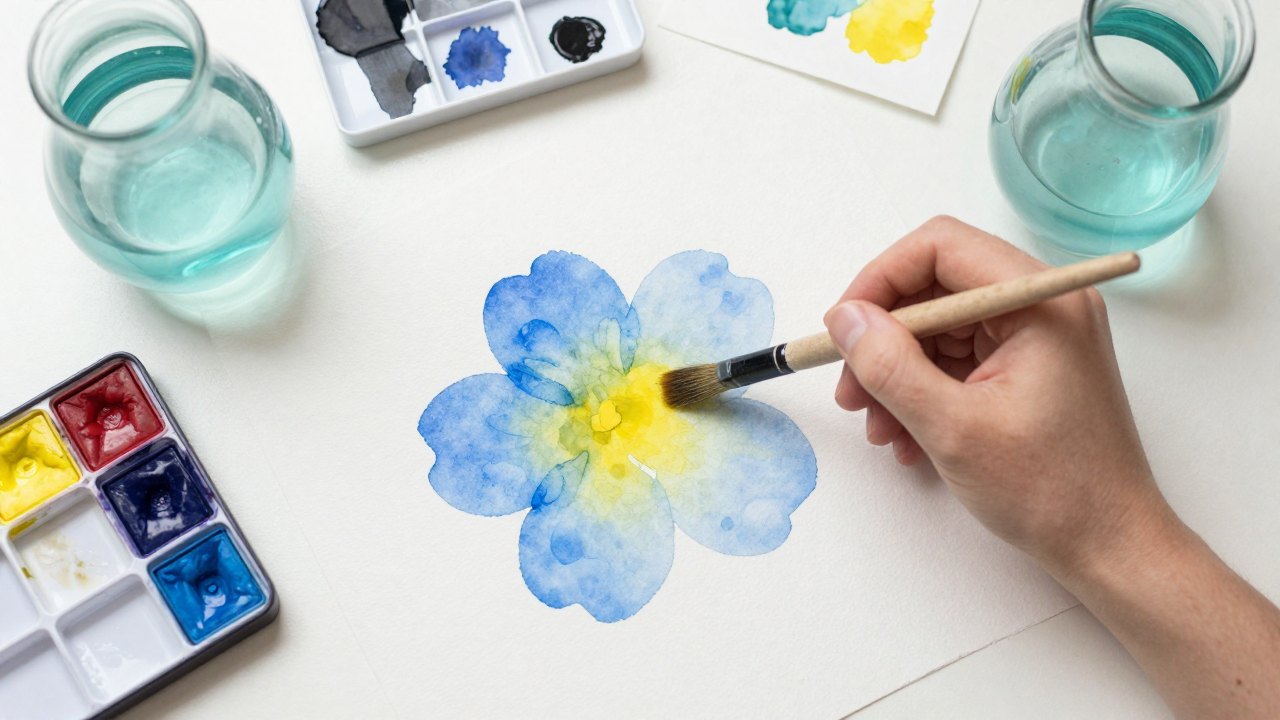
- Watercolour bouquets: layers, edges and sequence
4Part 2 — Mixed techniqueCombining materials with a clear intention.2 lessons
- Choosing materials for a mixed-technique bouquet
- Bringing the media together in one piece
5Part 3 — From watercolour bouquets to an easel workA personal account of one artist's development and the templates met on the way.1 lesson
- The path from watercolour bouquets to an easel painting
- Common templates in creative work and how to recognise them
What you get
- Recorded video lessons
A history part, seven practical lessons and a personal-experience lesson.
- A repeatable working process
A way of organising work that you can apply to other subjects.
- Examples across media
Oil, watercolour, outdoor work and mixed technique in one course.
- Freedom of materials
Work with the paints and surfaces you already know.
- Lessons at your own pace
Watch, pause and repeat whenever it suits you.
- Continued access
The material stays available after you buy it.
Is this course for you?
This course is for you if…
- You paint or draw already and want to move from copying towards your own decisions.
- You enjoy flowers as a subject and want a clear way to organise your work.
- You want to try oil, watercolour or mixed media with a thoughtful structure.
- You like to learn how other artists solved the same problems.
- You prefer a short, concentrated course to a long programme.
Probably not a fit if…
- You are looking for a follow-me class where every stroke is repeated on screen.
- You want a guaranteed result without doing any practical work yourself.
- You expect a complete beginner's course on how to hold a brush and mix colours from scratch.
- You are looking for art therapy or relaxation sessions rather than study.
After the course
When you finish, you will have seen how a bouquet can be approached in several ways and which of them suits you best. You will have your own studies, and you will know how to plan and sequence them instead of starting without a map.
You will also be better at looking at your own work. Spotting a template is the first step to deciding whether it helps you or limits you. That skill is useful far beyond flowers.
From there, you decide where to go: more floral painting, another subject, or a larger piece built on the process you have practised.
Questions before you buy
How much time do I need each week?
The course is self-paced, so you set the rhythm. Many people watch a lesson and then spend a few hours painting, but you can go faster or slower. There is no fixed weekly schedule.
Do I need previous experience?
Some familiarity with drawing or painting will help, because the lessons concentrate on process and decisions rather than basic technique. You do not need to be an expert, and you can choose materials you already know.
Which materials will I need?
You choose from the paints and surfaces you are comfortable with. The lessons show oil, watercolour and mixed technique, but you can adapt the ideas to the media you own.
How does access work after payment?
After your payment is confirmed you receive access to the course and can start the lessons immediately. You can return to them from any device whenever you like.
What is the refund policy?
If the course is not what you expected, you can ask for a refund within 14 days of your purchase.
What format are the lessons?
The lessons are recorded videos. The course has a history part, seven practical lessons and a personal-experience lesson, and you can pause or replay any of them.
Will the material stay available?
Yes. The lessons remain available to you after purchase, so you can come back to them as your painting develops.
Is this a copy-along master class?
No. The focus is on the algorithm of work and on building your own process. You are encouraged to choose your own subject and apply what you learn.
Start painting with a plan
Take a short, focused course that turns a vase of flowers into a lesson in independent painting.