Education · Beginner
Teach your child to enjoy problems they have never seen before
A step-by-step video course in olympiad-style maths for grades 1–4, designed so that parents and children can learn and puzzle together.
- Self-paced video lessons
- Grades 1–4 step by step
- Problem types and solving methods
- 14-day refund policy
Why unfamiliar problems feel so hard
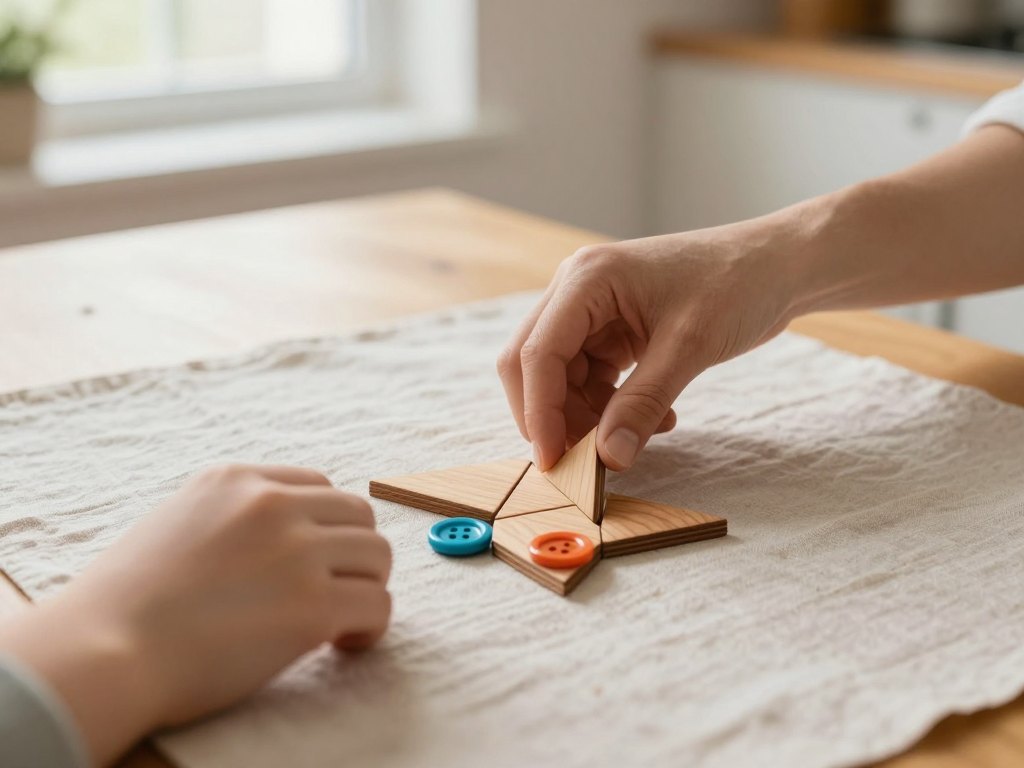
Most children meet maths as a series of exercises with a known pattern: see the type, apply the rule, write the answer. This works until the day a task looks different from anything seen before. Then many children freeze, say that they have not been taught this, and wait for an adult to rescue them.
Olympiad-style problems are built on exactly that moment. They are short, often playful, and they cannot be solved by repeating a template. They ask a child to look closely, try an idea, notice what went wrong and try another. This is the habit that real mathematical thinking grows from, and it can be learned at a young age.
Parents often want to help but are unsure how. Explaining a solution in the wrong way can take away the pleasure of discovery, and the methods used in problem-solving may differ from what you remember from school. It is also hard to tell whether your child simply dislikes this kind of task or has never been shown how to approach it.
This course gives you and your child a calm, structured way in. The lessons introduce one kind of problem at a time, show several ways to think about it, and bring in simple mathematical ideas gently, while the child is busy solving rather than being lectured.
What your child will be able to do
The course is built around abilities that grow lesson by lesson, not around memorised answers.
- Approach an unfamiliar problem without panic
Children learn a few reliable first steps to take when a task looks strange.
- Recognise common types of olympiad problems
Logic puzzles, counting tasks, number patterns and similar families become familiar territory.
- Try more than one way to solve a task
Drawing, listing, working backwards and reasoning step by step are shown side by side.
- Explain their own reasoning out loud
Saying why an answer works is practised as a normal part of every lesson.
- Notice simple mathematical structures
Basic ideas appear naturally while solutions are discussed, with no heavy theory.
- Stay patient with a task that does not work at first
Mistakes are treated as useful information rather than failures.
- Enjoy maths as a shared family activity
Parents and children can work through lessons together and compare ideas.
- Prepare for school competitions at a relaxed pace
The lessons build familiarity with the style of olympiad tasks over time.
- 4
- grade levels, from grade 1 to grade 4
- 6
- modules in the programme
- 1–7
- grades covered by the wider video textbook approach
- 0
- prior olympiad experience required
The idea behind the lessons
The course is guided by a simple mission: to motivate children to solve unfamiliar and non-standard tasks on their own, and to give them the chance to show how well they can think mathematically. Each lesson is a small invitation to try, not a test to pass.
While a solution is being discussed, the simplest mathematical constructions are introduced quietly and without pressure. A child may first meet an idea as a trick that works, then see it again in a different problem, and gradually realise that it is a general method.
Parents are part of the picture. The lessons are meant to create an atmosphere of shared curiosity at home, and to let adults enjoy their own cleverness. Watching your child work on a problem also gives you a natural, low-stress way to see what kind of mathematical tasks they enjoy and where they might need more support.
The material is organised in steps, from the first level of olympiad thinking to more demanding tasks, so that a child can move forward without feeling lost and can return to earlier steps when needed.
How the course works
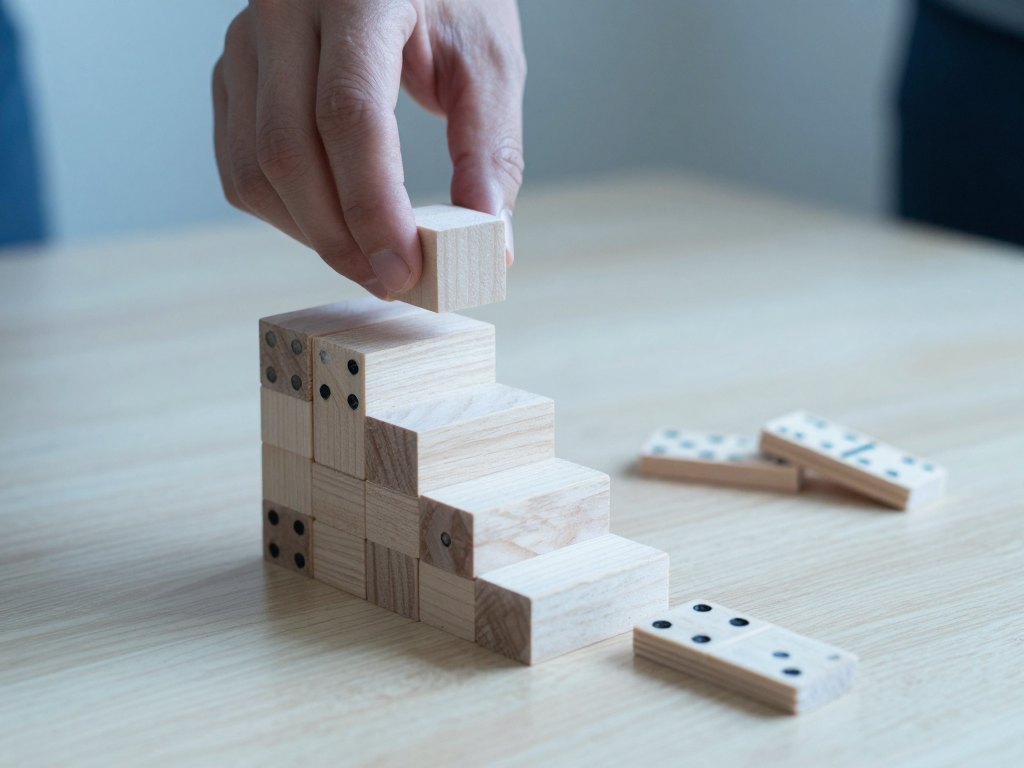
The course is delivered online as self-paced video lessons with accompanying problems. You decide when to watch, how often to practise and how long each session lasts. Many families choose short, regular sessions, because a few well-chosen problems and a good conversation are worth more than a long and tiring study hour.
A typical lesson invites the child to try a problem first. Pausing the video to think is encouraged. Then the solution is explained, often with more than one approach, so your child can compare their own idea with others and see that several routes can lead to the same answer.
You do not need a mathematical background to take part. The explanations are written in plain language, and the lessons show how to talk about a solution with a child without giving the answer away too early.
Because the format is self-paced, the course suits both a child who wants to move quickly and one who prefers to repeat a topic several times. The course is best used alongside regular school maths, as a place to explore ideas that school exercises rarely have time for.
The programme
Six modules guide your child from first steps in problem-solving to confident work with varied olympiad-style tasks.
1Module 1 — First steps in problem-solvingLearn how to read a task, find what is asked and make a first attempt.Self-paced
- Reading a problem carefully and saying it in your own words
- Drawing a picture to see what is going on
- Trying small cases before the big one
- Checking an answer and spotting a mistake
2Module 2 — Logic and reasoning puzzlesWork with statements, truth and untruth, and step-by-step deduction.Self-paced
- Who is telling the truth: simple liar puzzles
- Using tables to sort out facts
- Ruling out what cannot be true
- Explaining a chain of reasoning
3Module 3 — Numbers and patternsSpot rules, continue sequences and play with digits.Self-paced
- Finding the rule in a sequence
- Digit puzzles and number riddles
- Odd and even numbers as a thinking tool
- Patterns that repeat and patterns that grow
4Module 4 — Counting and arrangingLearn to count possibilities carefully and without missing any.Self-paced
- Listing options in a systematic order
- Counting combinations with a simple scheme
- Arranging objects under conditions
- Avoiding double counting
5Module 5 — Shapes, cutting and measuringLook at figures, fold and cut them, and compare sizes.Self-paced
- Cutting a figure into equal parts
- Counting squares, triangles and other shapes in a drawing
- Comparing lengths and perimeters
- Building shapes from simple pieces
6Module 6 — Putting methods togetherChoose among the methods you have learned and solve mixed olympiad-style tasks.Self-paced
- Working backwards from the result
- Choosing between a picture, a table and a list
- Solving a mixed set of problems step by step
- Reflecting on what worked and what to try next
What you get
- Self-paced video lessons
Watch on your schedule and repeat any lesson as often as you like.
- A grade-by-grade structure
Material arranged in steps for children in grades 1–4.
- Problems to solve after each lesson
Tasks to try on your own before reviewing the explanations.
- Several methods for each type of problem
Your child sees how different approaches lead to the same result.
- Guidance for parents
Ideas for discussing solutions with your child without taking over.
- Lasting access
The material stays available in your account after purchase.
- Support with questions
Help is available if you have questions about the material.
- A 14-day refund window
If the course is not right for your family, you can ask for a refund.
Is this course for you?
This course is for you if…
- Parents of children in grades 1–4 who like puzzles or are curious about maths
- Families who want a shared, relaxed activity built around thinking
- Children who enjoy unusual problems and want more than school exercises
- Parents who want to see what kind of mathematical thinking suits their child
- Teachers or tutors looking for ideas on how to present olympiad-style tasks
Probably not a fit if…
- Families looking for a quick fix for a failing school grade
- Anyone who wants a drill-based course of repeated exercises
- Parents hoping for guaranteed competition results
- Students above primary level who need advanced competition training
After the course
After working through the lessons, your child should feel more at ease with tasks that look unfamiliar. Instead of waiting to be told what to do, they will have a handful of habits to try: draw it, list it, test small numbers, work backwards, explain it aloud.
You will also have a clearer picture of how your child thinks. You may notice which kinds of problems they enjoy, where they get discouraged and how they respond when a first idea fails. This is useful for deciding what to practise next, whether at home, at school or in a local competition.
Most importantly, maths can become something you do together, not a source of homework tension. The lessons stay available, so you can return to a favourite module, repeat a difficult one or move on to harder material when your child is ready.
Questions before you buy
How much time does the course take each week?
There is no fixed schedule. Many families spend two or three short sessions a week, around 20 to 40 minutes each, but you can go faster or slower.
Does my child need any prior knowledge?
No. The course begins with basic problem-solving habits. Your child should be able to read at an early primary level and do simple arithmetic for their grade.
Do I need to be good at maths to help my child?
No. The lessons explain each idea in plain language and show how to talk about solutions with a child without giving everything away.
How does access work after payment?
Once your payment is confirmed, you receive access to the course in your account and can start watching straight away on any device with a browser.
What format are the lessons in?
The lessons are recorded videos with problems to try on your own. You can pause, rewatch and move through them at your own speed.
Will the material stay available?
Yes. The lessons remain in your account after purchase, so you can come back to any module whenever you need.
What is the refund policy?
You can request a full refund within 14 days of purchase if the course does not suit you.
Which grades is the course for?
The programme is aimed at children in grades 1 to 4, with steps that suit different ages and levels within that range.
Is this a preparation course for competitions?
It builds familiarity with the style of olympiad tasks and the thinking behind them, but it does not promise any particular competition result.
Give your child a place to enjoy thinking
Start the first module today and solve your first problem together.