Psychology · Intermediate
Bring a steadier body and a clearer presence into every session
A recorded seminar that treats contact and action as two axes of professional work, and gives you practices to work with both.
- 4 hours of recorded seminar
- Practices to repeat on your own
- Case discussion and analysis
- Distance-contact exercises
- 14-day money-back guarantee

Your state is part of your method
Anyone who works with people knows the feeling: two sessions with the same plan, the same tools and the same hour of the day, and yet one goes smoothly while the other leaves you drained. Often the difference is not in the technique. It lies in the state you bring into the room, and in how well you can stay in contact with another person without losing yourself.
Most professional training concentrates on what to say and what to do. It spends much less time on the person who is saying and doing it. Over the years this gap shows up as tension, rushing towards answers, fatigue after a full day of appointments, or a vague sense of acting from the head while the body is somewhere else.
This seminar approaches the question through the body. It uses two ideas as a map: the vagus nerve as an axis of contact, and the sciatic nerve as an axis of action. Contact is how you stay present, receptive and safe with another person. Action is how you move, decide and support a change. Both are needed in a working session, and each can go missing when you are under pressure.
The recording follows the logic of a live practice day. There is a short explanation of each axis, then practices you try yourself, then a look at how the same ideas play out when you work with clients, including when you are not in the same room.
What you will be able to do
After working through the recording and repeating its practices, you will be able to:
- Describe contact and action as two working axes
Use a simple, shared map to think about what happens in a session.
- Notice your own state before and during a session
Recognise signs of tension, rushing or withdrawal in your body.
- Practise simple exercises for steadying yourself
Short routines you can repeat between appointments.
- Support contact without forcing it
Build a calmer, safer pace of interaction with the people you work with.
- Support movement towards action
Recognise when a client or you yourself are stuck between wanting and doing.
- Relate your state to the result of your work
Understand why your condition changes the quality of a session.
- Work in distance contact
Apply the same attention to online and remote formats.
- Review your own cases through this lens
Ask better questions about what was happening in a difficult session.
- 4 h
- of recorded seminar
- 5
- modules
- 15
- lessons
- 2
- working axes: contact and action
Two axes, one working body
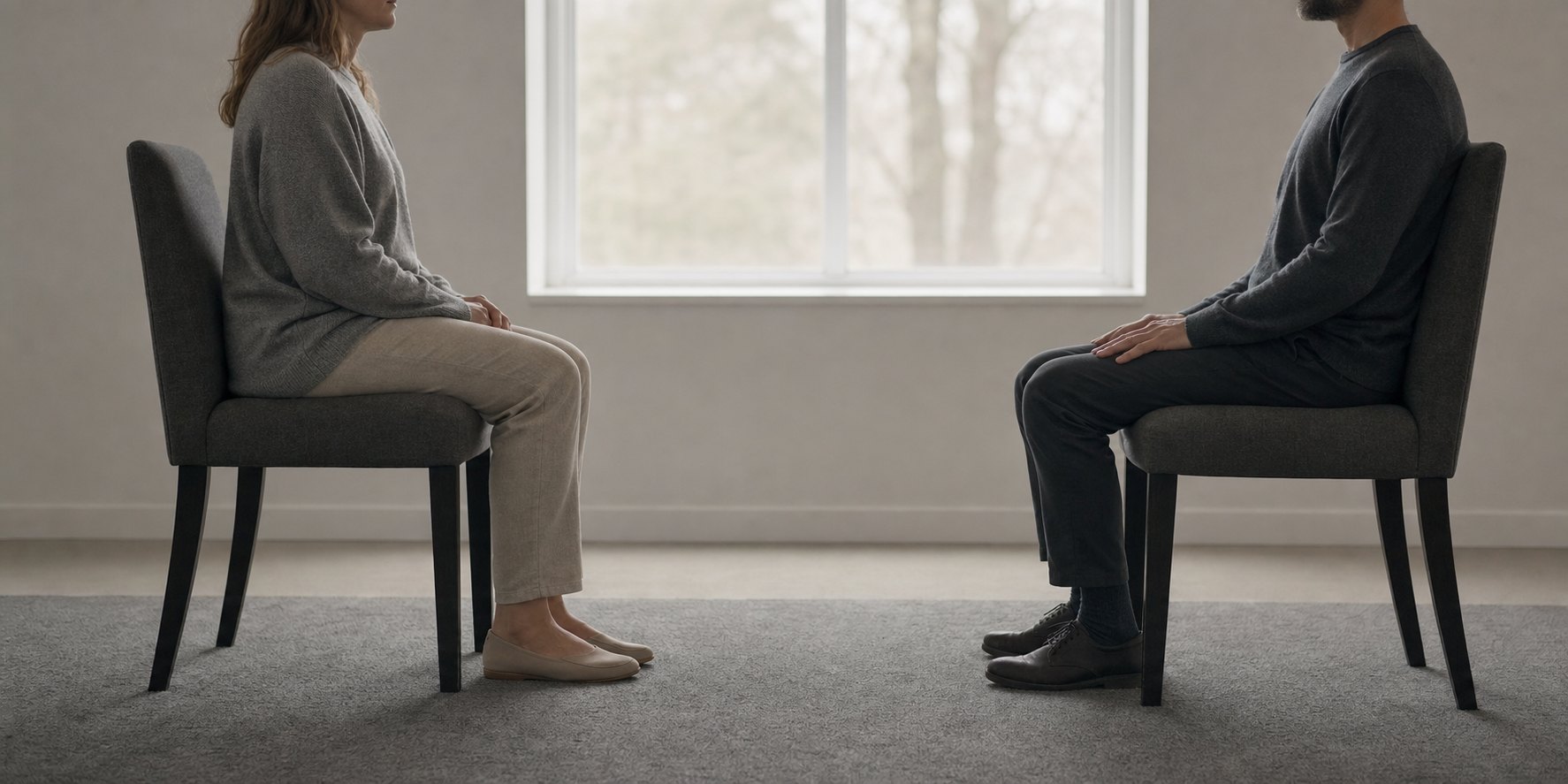
The central idea of the seminar is simple to state and takes practice to feel. Contact and action are two sides of the same professional presence. If you lean only on contact, you can become too absorbed and passive. If you lean only on action, you can become fast, directive and tiring to be around.
The practices in the recording invite you to feel the difference rather than only understand it. You will compare what it is like to be attentive and receptive with what it is like to be ready to move, and then practise bringing them together in a way that suits your style of work.
- Notice the axis you rely on most
- Find a small, repeatable way to shift between them
- See how pressure changes the balance
- Bring the same attention into a remote session
How the course works
The seminar is a recording of about four hours. You watch it at your own pace, in one sitting or in several shorter ones, whichever fits your week. We have divided it into five modules and fifteen lessons so you can stop, rewatch a practice or return to a single topic later.
Each module follows the same rhythm: an explanation of the idea, a practice to try yourself, and a short reflection on how it applies to your work. You do not need a partner for most of the exercises, although some can be repeated with a colleague if you want to.
There is no fixed schedule or deadline. We recommend that you watch once through, then pick one or two practices and use them for a week or two before returning to the recording. This course is educational and focused on professional presence. It does not teach diagnosis or treatment of any condition.
The programme
Five modules take you from the basic map to practice and application in your own work.
1Module 1 — The map: contact and actionTwo axes that describe how you meet another person and how you move with them.3 lessons
- Why the state of the specialist matters
- Contact and action as two axes of life
- How to use the map during a working day
2Module 2 — The axis of contactWhat helps you stay present, receptive and calm with another person.3 lessons
- Signs of contact and of losing it
- A practice for settling into presence
- Staying in contact when the session becomes intense
3Module 3 — The axis of actionSupport, movement and decision-making in the body.3 lessons
- Signs of readiness and of being stuck
- A practice for grounding and moving
- Action without rushing the client
4Module 4 — Your state and the result of your workHow your condition shapes what happens in a session.3 lessons
- Noticing your state before the session starts
- What changes when you rebalance contact and action
- Reviewing a difficult session through this lens
5Module 5 — Working in distance contactApplying the same attention to online and remote formats.3 lessons
- What changes in contact on a screen
- A practice for remote sessions
- Building a short routine for your working week
What you get
- A recorded seminar of about four hours
Fifteen lessons grouped into five modules.
- Practices you can repeat
Guided exercises to use on your own.
- Case discussion
Examples that show the ideas in a working context.
- Distance-contact work
Exercises suitable for online sessions.
- Access on any device
Watch on a computer, tablet or phone.
- Lasting availability
The material stays available in your account so you can return to it.
- Self-paced learning
No deadlines, no fixed schedule.
- 14-day money-back guarantee
Try the seminar and ask for a refund within 14 days if it is not for you.
Is this course for you?
This course is for you if…
- Psychologists and counsellors who want a body-based way to look after their own state
- Body-oriented practitioners who want a clearer map of contact and action
- Helping professionals who feel tired or rushed at the end of a working day
- Specialists who work online and want to keep a sense of contact on a screen
- Anyone curious about body-oriented psychology who is comfortable with a professional approach
Probably not a fit if…
- People looking for medical advice or a treatment for a health condition
- Beginners who want an introduction to psychology from the very start
- Those who want a full, formally structured training track
- Anyone who prefers a live, in-person workshop with a group
After the course
Once you have watched the seminar and tried the practices, you will have a simple map to refer to before, during and after a session. When something feels off, you can ask whether the issue is with contact, with action or with the balance between them, and then choose a small step instead of pushing harder.
You will also have a few short routines that fit into a working day, such as a settling practice before a session and a grounding practice after it. Used regularly, they help you notice your own state sooner and take care of it before it affects your work.
Over the following weeks you may find that your sessions feel less hurried and that you are more comfortable with silence and with not having the answer immediately. The recording remains in your account, so you can return to it when you want to refresh a practice.
Questions before you buy
How much time do I need each week?
The seminar lasts about four hours in total. Many learners watch one or two modules a week and spend ten to fifteen minutes repeating a practice on most days.
Do I need any prior experience?
The seminar is designed for people who work with others in a helping role or who have some experience of body-oriented methods. You do not need to know the topic in advance, but a professional context will help you apply it.
How does access work after payment?
Once your payment is confirmed, you receive access to the recording through your account. You can start straight away and watch at your own pace.
What is the refund policy?
You can ask for a full refund within 14 days of purchase if the course is not what you expected.
What format are the lessons in?
The lessons are self-paced video recordings, divided into modules, with practices that you try yourself.
Will the material stay available?
Yes. The recording stays in your account, so you can return to any lesson or practice whenever you like.
Is this a medical course?
No. It is about professional presence and body-oriented practice. It does not teach diagnosis or treatment, and it does not replace medical care.
Can I watch it on my phone?
Yes. The lessons work on a computer, tablet or phone with an internet connection.
Begin with your own state
Take four hours to learn a practical map of contact and action, and a few practices you can use straight away.