Education · All levels
Give your child a library of answers about the living world
More than 300 video lectures on animals, plants, space and the planet for children aged 5+ and the adults who watch with them.
- 300+ video lectures
- Ages 5+ and adults
- New lectures included
- Lifetime access
- 14-day refund

Why curious children need better answers than a search bar
Children ask questions faster than adults can answer them. Why do leaves turn yellow? Does the kraken really exist? Why does a bear walk into a village in autumn? Parents often reach for a quick search, and what comes back is a short clip, a half-true listicle or a video made mainly to hold attention.
This course is a different kind of answer. It is a library of long-form video lectures in which one topic is explored from start to finish, in language a child of five or six can follow and an adult still finds interesting. A typical lecture lasts about an hour. Shorter ones run closer to twenty minutes, and there is a separate shelf of mini-lectures for the youngest viewers.
The lectures are built around a simple idea: nature is more surprising than any invented monster. A giant squid, a flightless parrot that smells of honey, a mole-rat that digs with its teeth and an amphibian that never grows up are all real. When the facts are told well, children stop asking for something else to watch.
The library has been growing for years and keeps growing. You pay once, and the lectures that already exist and the ones added later all belong to your access.
What you and your child will be able to do
The lectures are made for watching, not for homework. These are the abilities that build up over time.
- Explain how animals and plants prepare for winter
From leaf colour to hibernation, with clear reasons behind each habit.
- Tell edible mushrooms from dangerous ones in principle
Learn the logic of identification and why a mistake in the forest matters.
- Recognise the dangers of the wild
Natural traps, poisonous berries and plants, and safe behaviour outdoors.
- Separate myth from fact about famous creatures
Kraken, megalodon, dinosaurs and the giant squid, compared with what science knows.
- Describe how the Moon, the stars and the weather work
Everyday phenomena explained in plain language a school-age child can repeat.
- Spot fake photos and videos made by neural networks
Practise checking what you see online before you believe or share it.
- Ask better questions about the world
Each lecture ends with more curiosity than it began with.
- Talk with your child about big topics calmly
Shared viewing gives you a natural starting point for conversation.
- Connect history, technology and nature
See how ships, cars and flight changed the way people live.
- 300+
- video lectures
- 10
- themed collections
- 5+
- recommended age
- 7
- modules in the guide below
The idea behind the lectures
Every lecture follows the same pattern: a puzzling question, a short journey through the evidence and a clear answer. The topic is never reduced to a list of facts. Instead the lecturer asks why something happens, what scientists did to find out, and what it means for the animals or people involved.
The lectures are written by a human author and checked by experts, without generated scripts. This matters for accuracy, and it also shapes the tone: calm, funny where it helps and honest about what is still unknown.
The same story is often told at several levels. A younger child enjoys the animals and the surprises, an older one picks up the cause and effect, and a parent notices the scientific method running underneath. That is why many families watch together.
How the course works
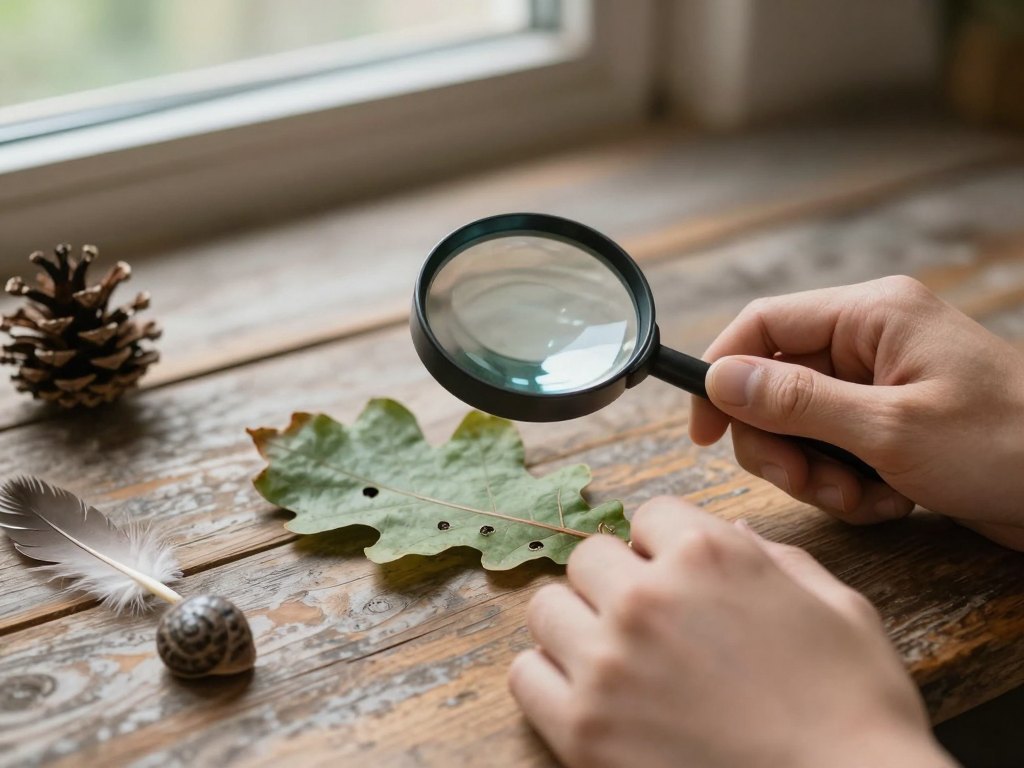
The course is a self-paced library of recorded video lectures. There is no schedule, no deadline and no homework to hand in. You open a lecture when you have time, pause it when dinner is ready and come back tomorrow.
The library is organised into collections, such as dangerous and poisonous species, giants of the animal world, space journeys, natural hazards, dinosaurs, surviving winter and school-related topics. You can also filter by length, choosing lectures of up to 30 minutes or up to 60 minutes, which makes it easy to match a lecture to the evening you have.
Most lectures are written for children aged 5 and older, and a few are marked for older viewers, for example catastrophes or topics about the human body for ages 16+. There is also a shelf of mini-lectures for children from three. The modules below group a selection of the lectures by theme so you can see what the library covers.
What is inside the library
A sample of lectures grouped by theme. The library holds more than 300, and new ones are added regularly.
1Module 1 — Remarkable animalsReal creatures that are stranger than fiction.Lectures of about an hour
- The kakapo: the most unusual parrot on Earth
- The capybara: the friendliest giant on the planet
- The naked mole-rat: an underground marvel
- Can you never grow up? The story of the axolotl
- The European wildcat: an invisible hunter in the thicket
2Module 2 — Giants, dinosaurs and sea monstersFrom extinct predators to the deep ocean.Lectures of about an hour
- Monster birds
- Can a human ever meet a dinosaur?
- The giant squid: the elusive ghost of the ocean
- Megalodon against kraken: who would win?
- Battle in the ocean: orca against great white shark
3Module 3 — Seasons and surviving winterHow living things cope with the cold.Lectures from 21 to 60 minutes
- Why do leaves turn yellow?
- How do animals prepare for winter?
- How do plants prepare for winter?
- Why does a bear come to people in autumn?
- What happens if the taiga is cut down?
4Module 4 — Dangers and safety in natureKnow what to watch for outdoors.Lectures of about an hour
- Natural traps: places you cannot escape from
- The five most dangerous summer berries
- Edible and inedible mushrooms
- Myths about fly agarics
- How to behave in nature to stay out of trouble
5Module 5 — Planet and spaceThe Earth, the sky and how they change.Lectures of about an hour
- Why does the Moon change every night?
- Why does the Sun shine by day and the stars by night?
- Why did green Antarctica disappear?
- The most mysterious natural phenomena
- A day in the life of a lynx
6Module 6 — Everyday science for school ageOrdinary things explained properly.Lectures of about an hour
- Why does the school bell ring?
- Why does it rain and the wind blow?
- What is a daily routine for?
- How did people learn to fly?
- How did cars change the world?
7Module 7 — Thinking critically in the digital ageNature, neural networks and what to believe.Lectures of about an hour
- Digital lies: how to spot a fake in the age of neural networks
- When can a neural network mistake cost a life?
- Bombardiro Crocodilo: why nature beats neural networks
- Read books or watch videos?
- The biggest misconceptions of schoolchildren
What you get
- Unlimited access to 300+ video lectures
Every lecture currently in the library.
- All future lectures at no extra cost
New releases are added to the same access.
- Access that does not expire
Watch whenever it suits your family.
- Ten themed collections
Browse by subject: giants, hazards, space, dinosaurs and more.
- Filters by length
Pick lectures of up to 30 or up to 60 minutes.
- Mini-lectures for the youngest
A shelf made for children from three.
- Lectures for older viewers
Selected topics are marked for teenagers and adults.
- A 14-day refund window
If the library is not right for you, ask for your money back.
Is this course for you?
This course is for you if…
- Parents of children aged 5 and older who ask endless questions about animals, plants and space
- Families who want screen time that teaches something and can be shared
- Grandparents and carers looking for reliable material to watch with a child
- Primary school pupils who enjoy long, story-like explanations
- Adults who enjoy popular science and simply like learning about nature
Probably not a fit if…
- Anyone looking for a structured school curriculum with tests and grades
- Viewers who want very short clips of a minute or two
- Families hoping for interactive exercises or live teacher feedback
- Children under five, apart from the mini-lecture shelf, who may find the full lectures too long
After the course
After a few weeks, you will probably notice that the questions in your home have changed. Instead of asking whether something is true, your child starts asking how scientists know, and what would happen if.
You will have a shelf of lectures to return to whenever a question comes up. A walk in the forest, a trip to the sea or a documentary about dinosaurs becomes a reason to open the library and find the matching lecture.
For older children, the lectures on digital fakes and neural network mistakes give a practical habit: check the source before you believe a surprising picture. For you as an adult, they offer a quiet evening of learning together without the guilt that often comes with screens.
Questions before you buy
How much time do I need per week?
As much or as little as you like. A single lecture lasts roughly 20 to 60 minutes, so many families watch one or two a week. There is no schedule to keep up with.
Do we need any prior knowledge?
No. The lectures start from the basics and are written for children aged 5 and older. Adults can follow them with no preparation as well.
How does access work after payment?
After you pay, you receive access to the whole library of lectures online. New lectures added later appear in the same place without an extra payment.
What is your refund policy?
You can ask for a full refund within 14 days of purchase if the course does not suit you. Contact our support team and we will take care of it.
What format are the lessons in?
Recorded video lectures that you can watch on a computer, tablet or phone. Each lecture covers one topic from start to finish, in about an hour or less.
Will the material stay available?
Yes. Your access does not expire, so you can return to any lecture as often as you like.
Which age is the library suitable for?
Most lectures are intended for children from 5 or 6 years old. Some topics are marked for older viewers, and a separate shelf of mini-lectures suits younger children.
Can the whole family watch on one account?
The lectures are made to be watched together, and many parents sit down with their children. Access is intended for your own household.
Open the library and pick the first lecture
Pay once, keep access for good and let your family explore the living world at its own pace.