Cooking · Advanced
Build mousse cakes from your own recipe, not a template
An advanced self-paced programme in mousse, insert and glaze logic so you can design original cakes with confidence.
- 24 structured video lessons
- 6 advanced modules
- Recipe development worksheets
- Lifetime access
- 14-day money-back guarantee
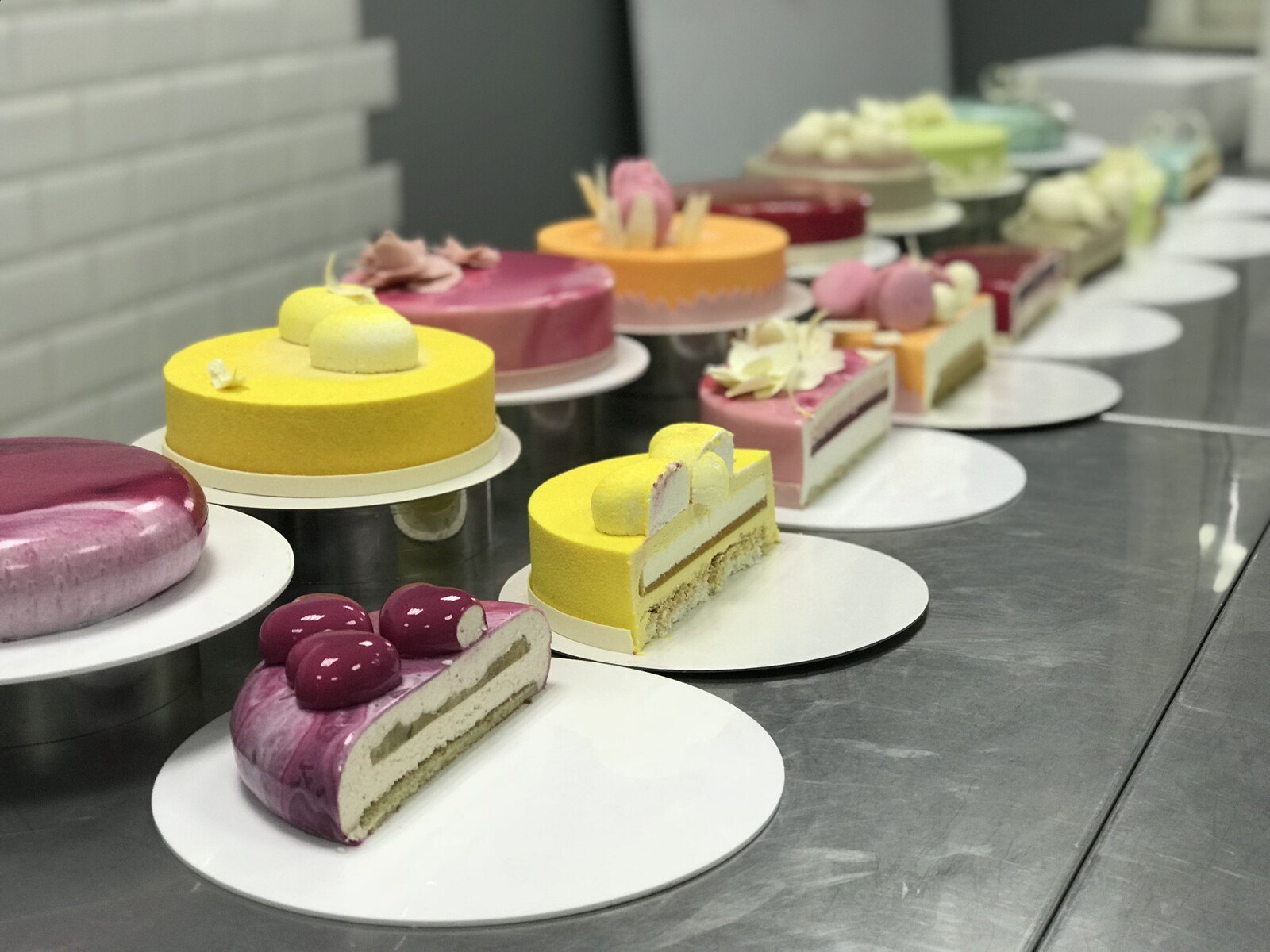
Why advanced mousse cakes need a different approach
You can follow a recipe carefully and still end up with a mousse cake that tastes flat, slices badly or cracks under the glaze. At the advanced level, the problem is rarely effort. It is usually the relationship between the layers: how much water is in the insert, how firm the mousse sets, how cold the cake is before finishing.
Most courses stop at one fixed cake. This programme teaches the logic behind mousse, inserts, bases and glazes so you can change a flavour, adjust sweetness or build a cake from your own idea without guessing. The aim is not to copy a single design but to understand why a formula works.
You will work through recorded lessons, practical worksheets and troubleshooting checklists. The pace is yours, but each module asks you to test a principle in your own kitchen. That could mean comparing two setting agents, writing a ratio for a fruit insert or planning an assembly order before you start.
By the end, you will have a repeatable framework for writing, testing and presenting mousse cakes that look deliberate and taste balanced. You will know what to adjust when a texture is too soft, a glaze is too thick or a flavour disappears behind sugar.
What you will be able to do
Each outcome is practised in a lesson and supported by a worksheet or checklist.
- Design a mousse cake from a flavour idea
Choose a base, mousse, insert and finish that work together before you bake.
- Balance sweetness, acidity and fat
Adjust a formula so the flavour stays clear and the texture stays stable.
- Choose setting agents with confidence
Understand how gelatin, agar and other systems change the final bite.
- Build inserts that freeze and unmould cleanly
Plan fruit, caramel and nut inserts that hold their shape during assembly.
- Create crisp layers that stay crisp
Use praline, feuilletine and biscuit bases without turning them soggy.
- Work with mirror glaze at the right temperature
Prepare surfaces and control glaze flow for clean, even coverage.
- Scale a recipe without losing texture
Turn a tested formula into a larger or smaller cake with predictable results.
- Diagnose common faults before serving
Recognise why a mousse weeps, a glaze dulls or a slice collapses.
- Present clean slices and sharp edges
Plan chilling, cutting and finishing so the cake looks professional.
- 6
- advanced modules
- 24
- video lessons
- 5
- recipe worksheets
The formula behind a balanced mousse cake
A mousse cake is a system: a base, a mousse, an insert and a finish. When one part is too sweet, too wet or too firm, the whole slice feels wrong. The course starts by mapping those parts and their roles, so you can see where a problem begins.
You will learn to read a recipe as ratios rather than a fixed list. That makes it possible to swap fruit, change a nut paste or reduce sugar without guessing. You will test setting strength, record what you changed and compare the result in the next lesson.
This is the difference between following a cake and designing one. Once you understand the formula, a new flavour idea becomes a set of decisions you can plan, test and repeat.
- Map base, mousse, insert and glaze
- Test setting strength before assembly
- Record ratios for repeatable results
- Adjust flavour without breaking texture
How the course works
The programme is delivered as self-paced video lessons. Each module opens with a short explanation of the principle, then shows it in a practical demonstration. You can pause, rewatch and work at your own speed, returning to a lesson whenever you bake.
Every module includes a worksheet or checklist. These are not filler: they ask you to write ratios, plan an assembly order or compare two tests. The course is designed for home kitchens, with notes on equipment and ingredients that are easy to source.
There are no live sessions or personal coaching. The material is structured so you can complete it independently, revisit lessons when you need them and keep the reference documents for future projects. You decide when to start and how often to practise.
The programme
Six modules take you from mousse architecture to original recipe development.
1Module 1 — Mousse architecture and ingredient rolesUnderstand what each component does before you change a recipe.4 lessons
- Mapping the anatomy of a modern mousse cake
- Choosing the right mousse base for your concept
- Gelatin, agar and alternative setting systems
- Balancing fat, sugar and water in a mousse
2Module 2 — Biscuits, bases and crunch layersBuild foundations that support the cake and stay pleasant to eat.4 lessons
- Selecting sponge and biscuit textures
- Building a crunch layer that stays crisp
- Nut pastes, pralines and feuilletine
- Gluten-free and flourless base options
3Module 3 — Inserts, compotes and flavour contrastCreate inserts with the right acidity, sweetness and freezing behaviour.4 lessons
- Designing fruit inserts with the right acidity
- Using citrus, berries and tropical fruit
- Caramel, praline and nut inserts
- Freezing and unmoulding inserts cleanly
4Module 4 — Glazes, coatings and finishingControl temperature, colour and surface preparation for a clean finish.4 lessons
- Mirror glaze chemistry and working temperature
- Colour selection and glaze application
- Velvet spray and alternative finishes
- Clean edges, sharp lines and professional presentation
5Module 5 — Custom recipe developmentTurn a flavour idea into a written, testable and repeatable formula.4 lessons
- Turning a flavour idea into a written recipe
- Calculating ratios and scaling a formula
- Testing and adjusting texture and sweetness
- Documenting your recipe for repeatable results
6Module 6 — Assembly, storage and troubleshootingPlan the timeline and solve problems before the cake reaches the table.4 lessons
- Planning the assembly timeline
- Layering and freezing for clean slices
- Defrosting, storing and serving
- Diagnosing common mousse cake faults
What you get
A complete self-study toolkit for advanced mousse cake work.
- 24 recorded video lessons
Short, focused demonstrations you can pause and rewatch.
- 6 module workbooks
Written notes that explain the principles behind each demonstration.
- 5 recipe development worksheets
Structured pages for ratios, testing notes and flavour planning.
- Troubleshooting checklists
Quick reference lists for texture, glaze and assembly problems.
- Ingredient and equipment notes
Practical guidance for adapting the method to a home kitchen.
- Lifetime access to all materials
Return to the lessons and worksheets whenever you bake.
- 14-day money-back guarantee
Review the programme and request a refund within 14 days if it is not right for you.
Is this course for you?
This course is for you if…
- Home bakers who have made mousse cakes before and want to understand the why behind the recipe.
- Confident bakers who are comfortable weighing ingredients, whipping cream and working with a freezer.
- Anyone who wants to create original flavour combinations instead of repeating one fixed design.
- Bakers who want cleaner slices, more stable layers and a more intentional finish.
- Learners who are happy to test, take notes and adjust a formula over several attempts.
Probably not a fit if…
- Complete beginners who have never made a mousse cake or worked with setting agents.
- Anyone looking for one fixed recipe to copy without testing or note-taking.
- Learners who want live coaching, personal feedback or in-person teaching.
- Bakers who expect professional equipment and cannot adapt methods to a home kitchen.
- People who want guaranteed business results or a ready-made product line.
After the course, you will bake with a plan
You will be able to look at a flavour idea and sketch a cake: which base, which mousse, which insert, which finish. You will know what to test first and what to adjust if the texture is off, rather than starting again from a different recipe.
Your cakes will slice more cleanly because you understand freezing, setting and assembly order. Your finishes will look more intentional because you control glaze temperature and surface preparation. You will also have a written record of your own ratios.
That means a cake you invent this month can be repeated next month, scaled up for a celebration or adapted for a different fruit. The course gives you a method you can keep using, not a single cake you bake once.
Questions before you order
How much time do I need per week?
The course is self-paced. Most learners spend two to three hours per module, including watching the lessons and practising in the kitchen. There are no deadlines, so you can spread the work over several weeks.
Do I need previous mousse cake experience?
Yes. This is an advanced programme. You should already be comfortable with basic baking, weighing ingredients, whipping cream and using a freezer. If you have never made a mousse cake, start with a foundations course first.
How do I access the course after payment?
After payment you receive access to the learning platform. The lessons and worksheets are available in your account, and you can watch them on any device with an internet connection. There are no live sessions.
What is the refund policy?
The course comes with a 14-day money-back guarantee. If you decide it is not right for you, request a refund within 14 days of purchase.
What format are the lessons in?
The lessons are recorded video demonstrations supported by written workbooks, worksheets and checklists. You can pause, rewatch and work through the material at your own speed.
How long does the material stay available?
You have lifetime access to the course materials. You can return to the lessons and reference documents whenever you bake, including after you have completed the programme.
What equipment do I need?
You will need basic baking equipment: scales, a mixer, bowls, a thermometer, a freezer and cake rings or moulds. The course includes notes on adapting the method when you do not have a specialised tool.
Are the ingredients easy to find?
The course uses common baking ingredients, with notes on more specialised items such as setting agents, nut pastes and glazes. Where possible, the lessons explain substitutions and what to check when buying an ingredient.
Will I learn to create my own recipes?
Yes. Custom recipe development is a core part of the programme. You will learn to write ratios, test texture and sweetness, and document a formula so you can repeat it. The course teaches method, not guaranteed commercial results.
Start building your own mousse cakes
Work through six advanced modules at your own pace, with worksheets that turn each principle into a repeatable recipe.