Education · Beginner
Help your child count quickly and confidently in their head
A step-by-step online programme that builds mental arithmetic from the first simple sums to addition and subtraction with thousands.
- 3 modules, 24 video lessons
- Neurogymnastics exercises
- Online trainer platform
- Monthly live group lesson
- Two bonus courses
- 14-day money-back guarantee
Why counting in the head is hard for so many children
Most children learn arithmetic by memorising tables and counting on their fingers. It works for small numbers, but as soon as the sums grow, speed drops, mistakes creep in and many children begin to lose confidence in mathematics.
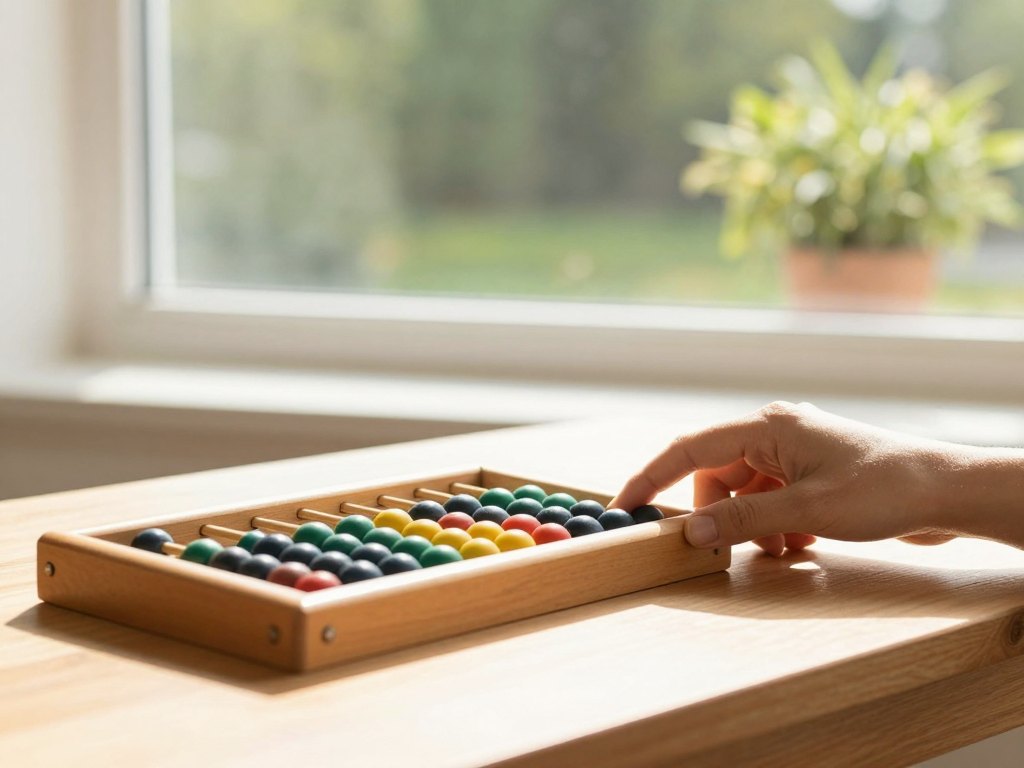
Mental arithmetic takes a different route. Children first learn to work with an abacus, build a clear picture of how numbers are made up, and then gradually move the abacus into their imagination. Calculations stop being a chore of memorised rules and become a visual, almost playful skill.
This programme is the first level of that route. It starts from the very beginning, assumes no previous experience, and moves through three carefully ordered modules: simple counting, the composition of the numbers 5 and 10, and addition and subtraction with units, tens, hundreds and thousands.
The lessons are recorded, so your child can learn at a pace that suits the family, repeat difficult topics as often as needed and practise regularly instead of waiting for the next class.
What your child will be able to do
The programme builds the skill in small steps, each one resting on the previous one.
- Understand the principle of the abacus
Your child learns how numbers are represented and why the method makes counting visual.
- Count with simple numbers with ease
The first lessons introduce the technique and basic counting in a relaxed way.
- Add and subtract units and tens
Early practice starts with small numbers so that success comes quickly.
- Use the composition of the number 5
Knowing how 5 is made up is the key to fast, error-free sums.
- Use the composition of the number 10
The second key skill lets your child work through tens with confidence.
- Work with hundreds and thousands
Addition and subtraction extend step by step to larger numbers.
- Calculate mentally, without the abacus
Practice moves from the physical tool to the image in the mind.
- Increase calculation speed
Timed practice in the later lessons trains both accuracy and pace.
- Stay focused for longer
Neurogymnastics and the concentration bonus course support attention during practice.
- 3
- modules
- 24
- video lessons in the core programme
- 30
- lessons in the emotional intelligence bonus course
- 1
- live group lesson each month
The idea behind the method
Mental arithmetic is built on a simple observation: children grasp what they can see and touch. The abacus gives every number a shape. A child moves beads, sees the result, and soon begins to picture the same movements without the tool.
That is why the programme keeps returning to the composition of numbers. Once a child knows how 5 and 10 are made up, the rules for adding and subtracting stop being separate facts to memorise and start to follow one logic. Each module then repeats the same pattern at a larger scale, first with units and tens, then with hundreds and thousands.
Alongside the counting practice the first module includes neurogymnastics: short exercises that warm up attention and coordination before the work begins. They are meant to be quick, enjoyable and easy for a parent to run together with the child.
Practice is the heart of the course. Every module ends with mental practice, and the later lessons add speed training, so the skill is exercised and not merely explained.

How the course works
The programme is delivered online as a sequence of video lessons grouped into three modules, with eight lessons in each. You open the lessons in order, watch them together with your child, and then practise what was shown. Because the lessons are recorded, you choose the days and times that fit your family.
Practice is supported by an online platform with training tools, and by workbooks and an abacus that are listed among the programme bonuses. Once a month there is also a live online lesson for the whole group with a teacher, a chance to ask questions and to see how other children are progressing. The programme also mentions participation in online competitions, which gives children a friendly, motivating way to try out their skills.
Short, regular sessions work better than long, occasional ones. Many families plan a few lessons and some practice each week and let the child repeat earlier topics whenever they feel unsure.
The programme
Three core modules of eight lessons each, followed by the bonus courses that come with the programme.
1Module 1 — Meeting the method and simple countingThe first steps with the abacus and the basic operations.8 lessons
- Introduction to the mental arithmetic method
- Simple counting on the abacus
- Adding units and tens
- Subtracting units and tens
- Neurogymnastics exercises for attention and coordination
2Module 2 — The composition of the number 5Learning how 5 is made up and using it to calculate faster.8 lessons
- The composition of the number 5
- Adding and subtracting units using the number 5
- Adding and subtracting tens and hundreds
- Working with thousands
- Mental practice without the abacus
3Module 3 — The composition of the number 10Extending the skill to the number 10 and building speed.8 lessons
- The composition of the number 10
- Adding and subtracting units, tens, hundreds and thousands
- Combining the numbers 5 and 10 in one example
- Speed practice, calculating mentally
4Bonus course — Emotional intelligenceA separate video course with 30 lessons included with the programme.30 video lessons
- Emotional intelligence video course, lesson library
- Exercises to practise at home
5Bonus course — Super concentration of attentionSupporting material for focus during practice and school work.Self-paced
- Super concentration of attention course
- Training tools on the online platform
- Monthly live group lesson with the teacher

What you get
- 24 recorded video lessons
Three modules that take your child from the first sums to larger numbers.
- Neurogymnastics exercises
Short activities to prepare attention before practice.
- Access to an online trainer platform
Training tools for regular practice of the skills from each module.
- A monthly live group lesson
An online lesson for the whole group with the teacher.
- A bonus course on emotional intelligence
Thirty video lessons that complement the maths practice.
- A bonus course on concentration
Material designed to help children focus.
- An abacus and workbooks
Listed among the bonuses of the programme for hands-on practice.
- Online competitions
Participation in friendly competitions is part of the programme.
- Continuing access
Come back to any lesson whenever your child needs a refresher.
Is this course for you?
This course is for you if…
- Parents of children who are starting with arithmetic and want a gentle, visual method
- Families who want to develop concentration and memory alongside counting
- Parents who prefer to study at home, in short sessions, at a time that suits them
- Children who enjoy practising with games, trainers and small competitions
Probably not a fit if…
- Anyone looking for personal one-to-one tutoring with individual feedback
- Families who expect results without regular practice at home
- Learners who want multiplication and division now; this level focuses on addition and subtraction
After the course
By the end of the three modules your child will know how the abacus works, how the numbers 5 and 10 are built, and how to add and subtract units, tens, hundreds and thousands, first with the abacus and then in the mind.
Just as importantly, they will have a regular practice habit and a tool set for training speed. Many children find that numbers become less intimidating and that they volunteer to solve problems instead of avoiding them.
If your child wants to go further, they will have the foundation needed to continue to more advanced calculation techniques. The results depend on regular practice, and the lessons are always there for revisiting.
Questions before you buy
How much time does it take each week?
There is no fixed schedule. Most families plan a few short lessons and practice sessions each week. Regular, brief practice is more effective than occasional long sessions.
Does my child need any previous knowledge?
No. The programme starts with the basics of the method and simple counting. Your child should be able to recognise numbers and be ready to practise with an adult nearby.
How does access work after payment?
After your payment is confirmed you receive access to the lessons through your account. You can start immediately and move through the modules at your own pace.
What is the refund policy?
You can ask for a full refund within 14 days of purchase if the course is not what you expected.
What format are the lessons in?
The core programme consists of recorded video lessons, supported by practice tasks and an online trainer platform. There is also a live online lesson for the group once a month.
Will the material stay available?
Yes. The lessons remain in your account so you can repeat any topic whenever you need to.
Are the bonus courses included?
Yes. The emotional intelligence course and the concentration course are listed as bonuses of the programme.
Do we have to be present for the live lesson?
The monthly live lesson is a bonus. If you cannot attend, you can keep working with the recorded lessons and the practice tools.
Start building your child's mental arithmetic skills
Begin with the first module today and let your child discover how enjoyable counting in the head can be.