Education · Grade 5 maths
Help your child finally understand maths, step by step
Video lessons explain each topic in plain language, practice tasks fix it in memory, and checked homework shows exactly what to improve.
- Self-paced video lessons
- Practice after every lesson
- Homework with feedback
- Study at any time of day
- 14-day refund policy
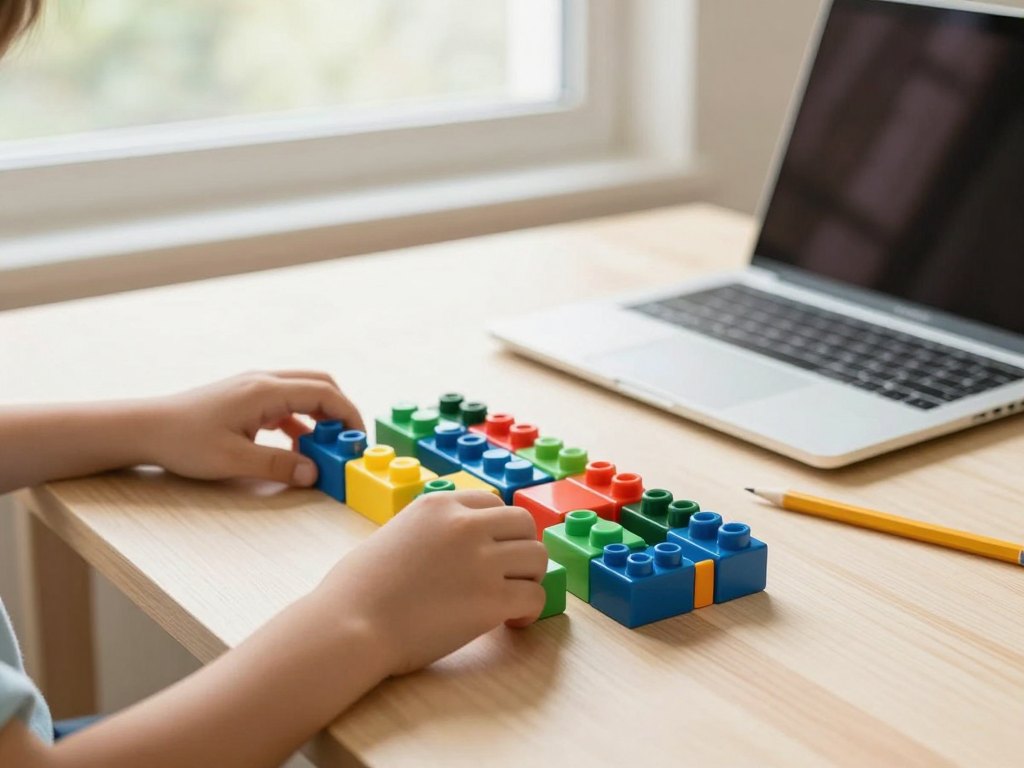
Why maths stops making sense in grade 5
Grade 5 is where maths changes. Primary school arithmetic gives way to fractions, divisibility, decimals, geometry and longer word problems. Many children cope for a few weeks by copying examples from the board, and then a single missed lesson turns into a gap that grows every month.
Parents usually notice it late: a low mark, a tearful evening over homework, a child who says they are simply bad at maths. In most cases the problem is not ability. The child learned a rule without seeing the logic behind it, so the next topic, which builds on that rule, feels like a foreign language.
School lessons move at one speed for the whole class. A child who needs a second explanation often does not ask for it, and a child who wants to move faster has to wait. Private tutoring helps, but it is hard to schedule and the cost adds up quickly.
This course takes a different route. Each topic is explained calmly in a recorded video lesson that your child can pause, rewatch and return to whenever they need. The topics follow one another in a deliberate order, so every new idea rests on something your child has already understood.
What your child will be able to do
By working through the lessons in order, your child learns to:
- Explain why a rule works, not only apply it
Each topic starts from the logic behind the method, so the rule becomes easy to remember.
- Work confidently with large natural numbers
Place value, rounding, comparison and the order of operations become routine.
- Use divisors, multiples and divisibility tests
These tools make fractions much easier later in the year.
- Add, subtract, multiply and divide ordinary fractions
Your child sees what a fraction means before learning the procedures.
- Calculate with decimals accurately
From reading and comparing to all four operations, with typical mistakes explained.
- Measure angles and find areas and volumes
Basic geometry is connected to the arithmetic your child already knows.
- Solve word problems step by step
Your child learns to read a problem, plan the solution and check the answer.
- Find and fix their own mistakes
Feedback on homework shows what went wrong and what to repeat.
- 6
- modules in the programme
- 24
- video lessons
- 4
- steps in every topic: watch, practise, check, move on
- 1
- place for lessons, tasks and feedback
The idea behind the lessons
The lessons are built on one principle: understanding comes first, speed comes second. Instead of showing a method and asking the child to repeat it twenty times, each video explains where the method comes from, shows it on carefully chosen examples and then walks through typical mistakes.
Topics are arranged in a sequence. Divisibility comes before fractions, ordinary fractions come before decimals, and arithmetic comes before word problems. Your child can see how the parts of the subject connect, which is what makes knowledge last longer than a single test.
Every explanation is followed straight away by practice. The aim is not to overload your child with exercises but to apply the new idea while it is fresh. When the task is done, the answer is checked and the child learns what to correct before moving to the next topic.
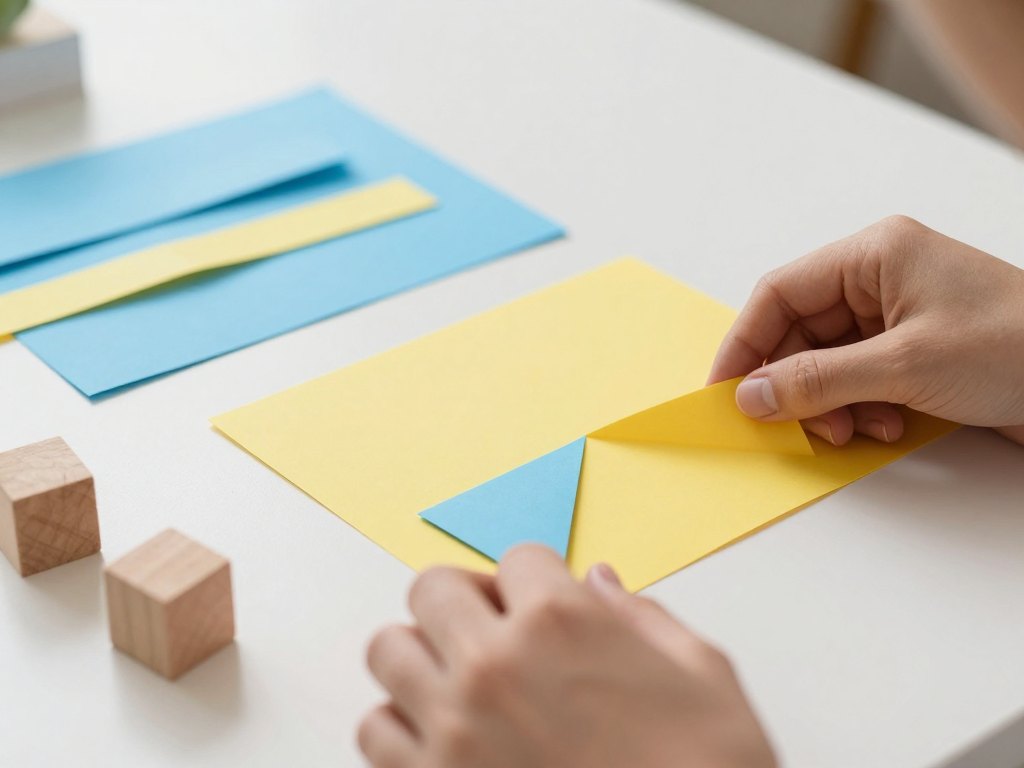
How the course works
The whole process takes place on the learning platform, from the first lesson to the checked homework. Your child does not need to install extra programmes or look for materials on several services. Everything needed for a topic sits on one lesson page.
Each topic follows the same four steps. First your child watches the video lesson, where the new idea is explained in simple language. Then they complete the tasks on the topic. Next, the homework is checked and your child receives feedback and sees their mistakes. Finally, once the corrections are made, they move on to the next topic.
Because the lessons are recorded, the course fits around school, clubs and family life. Your child studies when they have energy, at their own pace, and can return to any earlier lesson before a test. Your child works independently, but is not left alone: feedback on homework is part of the programme.
The programme
Six modules that follow the order in which the ideas build on each other.
1Module 1 — Natural numbers and operationsSolid footing with large numbers and the order of calculations.4 lessons
- Place value and reading large numbers
- Rounding and comparing numbers
- The order of operations
- Solving word problems with arithmetic
2Module 2 — Divisors, multiples and divisibilityThe toolkit that makes fractions manageable.4 lessons
- Divisors and multiples
- Divisibility tests
- Greatest common divisor and least common multiple
- Prime and composite numbers
3Module 3 — Ordinary fractionsFrom the meaning of a fraction to calculations with it.4 lessons
- What a fraction really means
- Equivalent fractions and simplifying
- Adding and subtracting fractions
- Multiplying and dividing fractions
4Module 4 — DecimalsCalculating with decimal numbers accurately.4 lessons
- Reading and comparing decimals
- Adding and subtracting decimals
- Multiplying and dividing decimals
- Converting between fractions and decimals
5Module 5 — Geometry basicsShapes, measurements and the link to arithmetic.4 lessons
- Angles and how to measure them
- Perimeter and area of a rectangle
- Volume of a cuboid
- Reading diagrams and charts
6Module 6 — Percentages, equations and problem solvingPutting the whole year together.4 lessons
- Percent as a part of a whole
- Finding a percentage of a number
- Simple equations
- Planning and checking a word problem
What you get
- 24 video lessons
Each topic is explained in simple language with worked examples.
- Practice tasks after every lesson
New knowledge is applied straight away.
- Checked homework with feedback
Your child sees their mistakes and knows what to fix.
- A clear order of topics
No guessing about what to study next.
- One place for everything
Lessons, tasks and feedback sit on the same platform.
- Study at any time
Pause, rewatch and revisit any lesson whenever needed.
- Continued access to the material
Return to topics before tests and at the start of the next school year.
Is this course for you?
This course is for you if…
- Parents of grade 5 students who want a clear, calm explanation of the school topics
- Children who lose the thread in class and need to hear an explanation again
- Students who want to fill gaps left by earlier topics before they pile up
- Families who prefer flexible, self-paced study to fixed tutoring hours
Probably not a fit if…
- Anyone looking for one-to-one live tutoring or a personal coach
- Students who want only a quick answer key for homework without learning the method
- Children in other grades, who need the course for their own year
After the course
After the last module, your child has seen the whole grade 5 programme in a logical order. Fractions no longer look like a separate, frightening subject, because divisibility and the meaning of a fraction were taught first. Decimals and percentages feel like natural relatives of what they already know.
Just as importantly, your child has a working habit: watch, try, check, correct. That habit is useful in every subject and prepares them for the more demanding algebra and geometry of the following years.
You will also notice a change at home. Homework conversations become shorter and calmer, because your child can explain how they solved a task and can see for themselves where a mistake crept in.
Questions before you order
How much time does the course take each week?
It depends on your child's pace. A typical topic takes one video lesson and a short practice session, so many families plan a few sessions per week alongside school. You can slow down or speed up whenever you like.
Does my child need any preparation?
No special preparation is needed beyond primary school arithmetic. The lessons begin with numbers and operations and build step by step from there.
How does access work after payment?
After payment you receive access to the course on the learning platform. Your child can start the first lesson straight away and continue at their own pace.
What format are the lessons in?
Lessons are recorded videos with practice tasks and homework. Your child watches the lesson, completes the tasks, receives feedback on the homework and then moves to the next topic.
Will my child get feedback on mistakes?
Yes. Homework is checked as part of the programme, so your child can see what went wrong and what to repeat before moving on.
Can my child rewatch lessons?
Yes. The lessons stay available, so your child can return to any topic before a test or whenever something needs a second explanation.
Does the material stay available after I finish?
Yes. The lessons remain in your account, so you can come back to them in the next school year or share a topic you want to revise.
What if the course is not right for us?
You can ask for a refund within 14 days of purchase. If the course does not suit your child, contact support within that period and we will return your payment.
Start with the first lesson this week
Give your child a clear, calm way to understand grade 5 maths, at their own pace and on their own schedule.