Design · Intermediate
Draft a sheath dress that fits like couture
A three-month online programme in luxury construction: build a precise sheath dress block, correct fit on the form and model a designer dress.
- 3 months with feedback
- 6 structured modules
- Dress-form fitting method
- Online, self-paced lessons
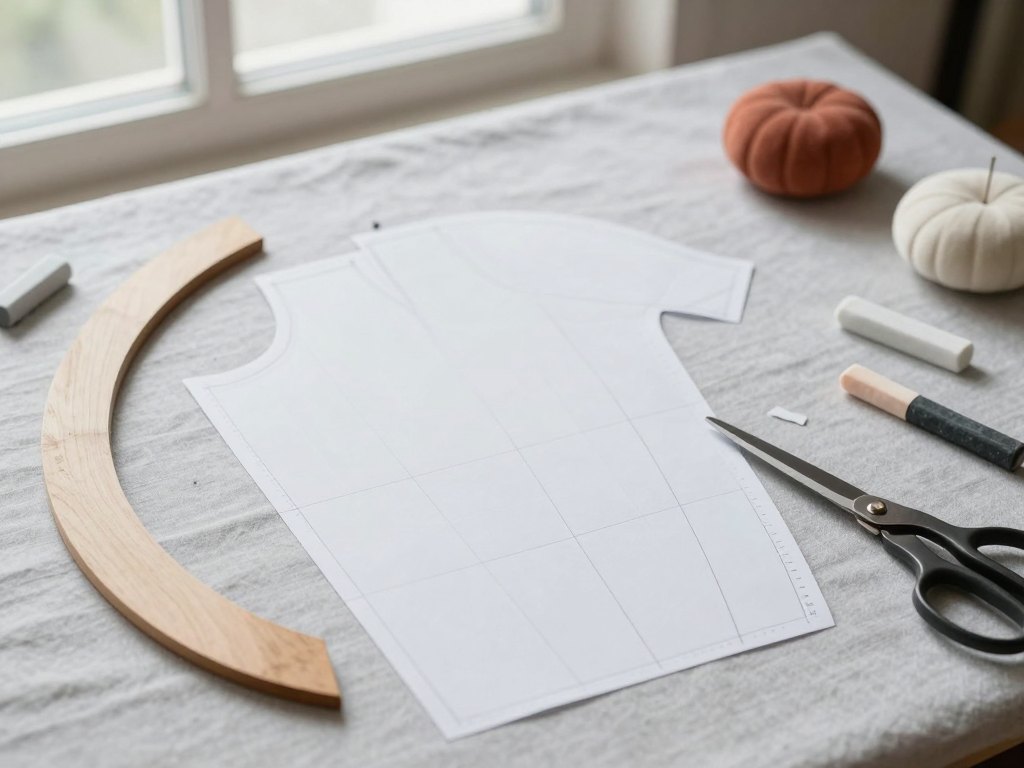
Why a sheath dress is the hardest simple dress to make
A sheath dress looks like the simplest thing in a pattern catalogue: two darts, a zip, a clean neckline. In practice it is unforgiving. A few millimetres of imbalance at the shoulder or a misplaced bust point and the whole garment pulls, twists or gapes. Many sewists spend years guessing at these corrections, buying more patterns instead of learning to read the toile.
The problem is rarely the pattern alone. It is the absence of a reliable method: how to take measurements that reflect posture, how to test a block on a dress form, how to tell a drag line caused by the bust from one caused by the back, and how to transfer a correction back to paper without losing the balance you have already achieved.
This programme teaches that method from the ground up. You build a basic sheath dress block, test it on a dress form, correct it until it hangs cleanly, and then use the same block to model a designer dress in a luxury-house style. The aim is not a single finished garment but a repeatable construction process you can use for every dress that follows.
What you will be able to do
By the end of the three months you will have a working method, not just a pattern.
- Draft a balanced sheath dress block
Take measurements, add the right ease and true the pattern so the front and back hang level.
- Read a toile on the dress form
Identify drag lines, gaping, twisting and balance faults before you cut the final fabric.
- Correct fit with confidence
Decide which changes belong on the pattern and which belong on the garment, then transfer them cleanly.
- Model a designer sheath dress
Map new design lines onto your tested block and draft the panels for a luxury-house silhouette.
- Choose fabrics for a clean finish
Match weight, drape and stabilisers to the shape so the dress holds its line without stiffness.
- Install a lining and invisible zip
Build a clean interior with a construction order that survives real wear.
- Press and finish to a professional standard
Use pressing tools and a construction sequence that gives sharp edges and smooth curves.
- Build a block you can reuse
Document your corrected pattern so every future dress starts from a reliable base.
- 3
- months of feedback
- 6
- structured modules
- 24
- lessons
- 1
- finished sheath dress
The dress-form method
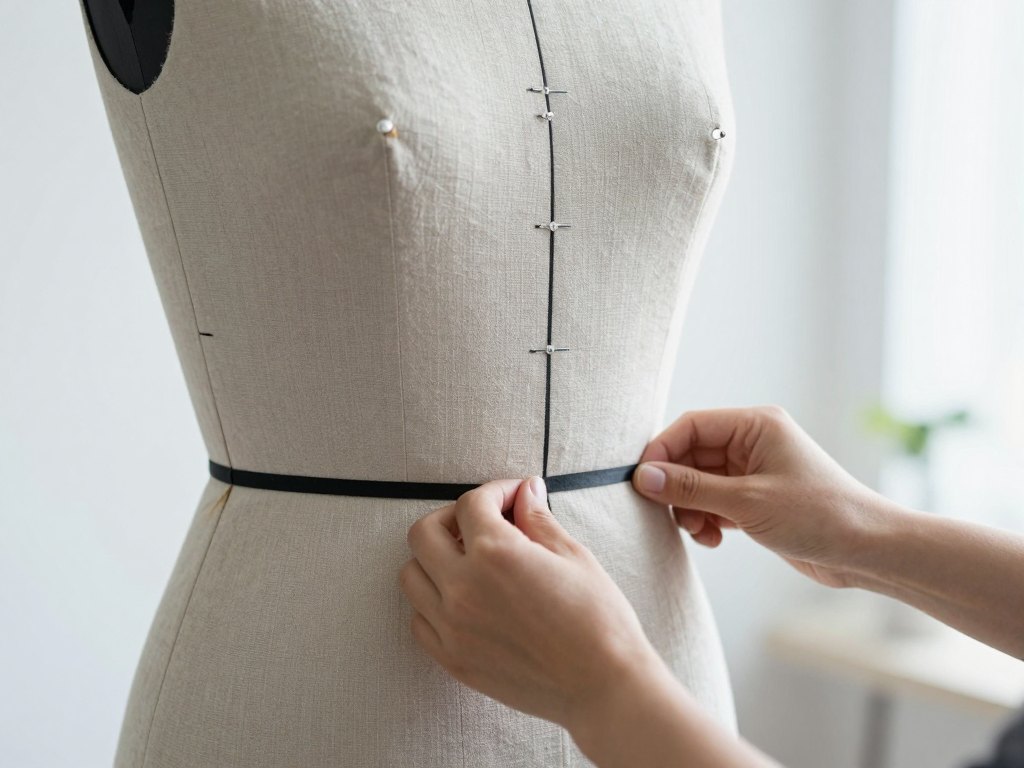
Luxury construction is not about harder techniques. It is about testing earlier. In this course you work on a dress form from the first week: pin the toile, mark the balance lines, step back and look. The form gives you a stable reference so you can see what the garment is doing before it is on a body.
Each correction follows a sequence: identify the fault, decide whether it comes from the block or the assembly, make one change, then re-test. You submit photos of your toile and your questions in writing, and a construction specialist from the luxury segment reviews them and tells you what to adjust next. That feedback loop is the core of the programme.
Test the toile before cutting final fabric. Correct balance, not just circumference. Transfer every change back to the pattern. Document the block for future dresses.
How the course works
The course is delivered online as a series of recorded lessons. Each module opens with a short explanation of the construction principle, then moves into a demonstration at the machine or on the dress form. You can pause, rewind and work at your own pace; there is no fixed class time.
The practical work is sequenced. You draft the block, cut a calico toile, fit it on the form, correct the pattern and only then move on to the designer model. Along the way you submit photos of your toile and written questions. During the three-month feedback window, a construction specialist reviews your work and answers in writing, so you always know what to fix before you cut the next version.
You will need a basic sewing setup: a machine, a dress form, calico or similar toile fabric, pattern paper, a French curve, pins and an iron. Nothing exotic is required. The lessons assume you can already sew a straight seam and insert a zip, and they build from there.
The programme
Six modules, twenty-four lessons, one finished dress. Each module ends with a practical checkpoint you submit for review.
1Module 1 — Measurements and the logic of the blockUnderstand what a sheath dress block is and take measurements you can trust.4 lessons
- What makes a block different from a pattern
- Taking measurements that account for posture and ease
- Choosing and preparing a dress form for fitting
- Setting up your pattern paper and marking conventions
2Module 2 — Drafting the sheath dress blockDraft the front, back and skirt panels and true the pattern.4 lessons
- Drafting the bodice front and placing the bust dart
- Drafting the back with shoulder and waist shaping
- Joining bodice to skirt and shaping the waistline
- Truing seams, checking notches and walking the pattern
3Module 3 — The toile and the first fittingCut, assemble and read a calico toile on the dress form.4 lessons
- Cutting and marking calico accurately
- Assembling the toile with temporary stitching
- Reading drag lines, gaping and twisting on the form
- Marking corrections directly on the toile
4Module 4 — Correcting balance and defectsDiagnose common faults and move corrections back onto paper.4 lessons
- Diagnosing shoulder and neckline imbalance
- Correcting bust, waist and hip drag lines
- Fixing a back that rides up or a hem that swings
- Transferring toile corrections to the paper block
5Module 5 — Modelling the designer dressUse your tested block to draft a luxury-house sheath silhouette.4 lessons
- Mapping new design lines onto a tested block
- Moving darts and creating panel seams
- Drafting a shaped neckline and armhole facing
- Cutting a second toile to test the new design
6Module 6 — Construction, lining and finishSew the final dress with a clean interior and a professional finish.4 lessons
- Choosing fabric, interfacing and lining for a sheath shape
- Construction order for a clean interior
- Inserting an invisible zip and lining the bodice
- Pressing, hemming and final quality checks
What you get
Everything is delivered online and stays with you after the feedback window closes.
- 24 recorded video lessons
Step-by-step demonstrations at the machine and on the dress form.
- Three months of written feedback
Photo reviews of your toile and answers to your construction questions.
- A complete drafting sequence
The full sheath dress block, drafted with you from the first line.
- A defect-diagnosis reference
A practical guide to reading drag lines and choosing the right correction.
- A designer modelling walkthrough
How to move darts and add panel seams without losing balance.
- Construction and finishing checklist
The order of work for a lined dress with an invisible zip.
- Ongoing access to the lessons
Return to any module when you start your next dress.
Is this course for you?
This course is for you if…
- Sewists who can already make a simple garment and want a professional construction method
- Pattern cutters and designers who want to raise the fit quality of their dresses
- Dressmakers who are tired of guessing at corrections and want a repeatable process
- Anyone preparing a portfolio or a small collection who needs a reliable sheath block
Probably not a fit if…
- Complete beginners who have never used a sewing machine — start with a basic sewing course first
- People looking for a quick pattern to copy rather than a method to learn
- Sewists who do not want to work on a dress form or submit photos for review
- Anyone hoping for instant results without cutting and re-cutting a toile
After the course
You finish with a corrected sheath dress block that fits your form and a finished dress built from it. More importantly, you finish with a diagnostic habit: when a garment pulls or hangs badly, you know where to look and what to change first.
The block becomes a working tool. The next dress you make starts from a base you already trust, so you spend your time on design decisions instead of re-solving fit. Many students go on to model variations — a different neckline, a panel seam, a longer hem — using the same method taught in the final module.
You also keep the lessons. When a new fabric behaves differently or a client's measurements fall outside your usual range, you can return to the relevant module and work through the correction again at your own pace.
Questions before you enrol
How much time do I need each week?
Plan for around four to six hours a week: roughly one hour of lessons and three to five hours of practical work. Drafting and fitting a toile takes longer than watching the demonstration, so leave room in your schedule for cutting and re-testing.
Do I need previous sewing experience?
Yes. The course assumes you can operate a sewing machine, sew a straight seam and insert a basic zip. It is aimed at sewists, dressmakers and designers who already make garments and want to improve fit and construction quality. Absolute beginners will find the pace too fast.
What equipment do I need?
A sewing machine, an iron and ironing board, a dress form, pattern paper, calico or similar toile fabric, a French curve, a ruler, pins, hand needles and thread. A overlocker is helpful but not required.
How do I get access after payment?
After checkout you receive an email with your login details for the learning platform. All modules are unlocked from the start, so you can begin with the first lesson immediately and work through the programme in your own order.
What format are the lessons in?
Every lesson is a recorded video demonstration with supporting written notes. You watch at your own pace, pause and rewind as often as you need. There are no live classes at fixed times.
How does the feedback work?
During the three-month feedback window you submit photos of your toile and written questions after each checkpoint. A construction specialist reviews them and replies in writing with specific corrections to make before you continue.
How long do I keep the material?
Your access to the recorded lessons and materials continues after the feedback window ends, so you can return to any module when you make your next dress.
What is the refund policy?
You have 14 days from purchase to request a refund. If the course is not what you expected, contact support within that period and the payment is returned according to the store's refund terms.
Will I need to buy expensive fabric?
No. Most of the work is done in calico or an inexpensive toile fabric. You only need final fabric for the last module, and the lessons explain how to choose something appropriate without overspending.
Start with your block this week
Twelve weeks, twenty-four lessons and a sheath dress block you will use for years.