Music · Beginner · Ages 4–10
Introduce your child to music through stories, games and play
Ten short video lessons, a workbook and an interactive app that explain how music works in a way young children enjoy.
- 10 video lessons
- Colour and black-and-white workbook
- Interactive app
- Self-paced learning
- 14-day refund
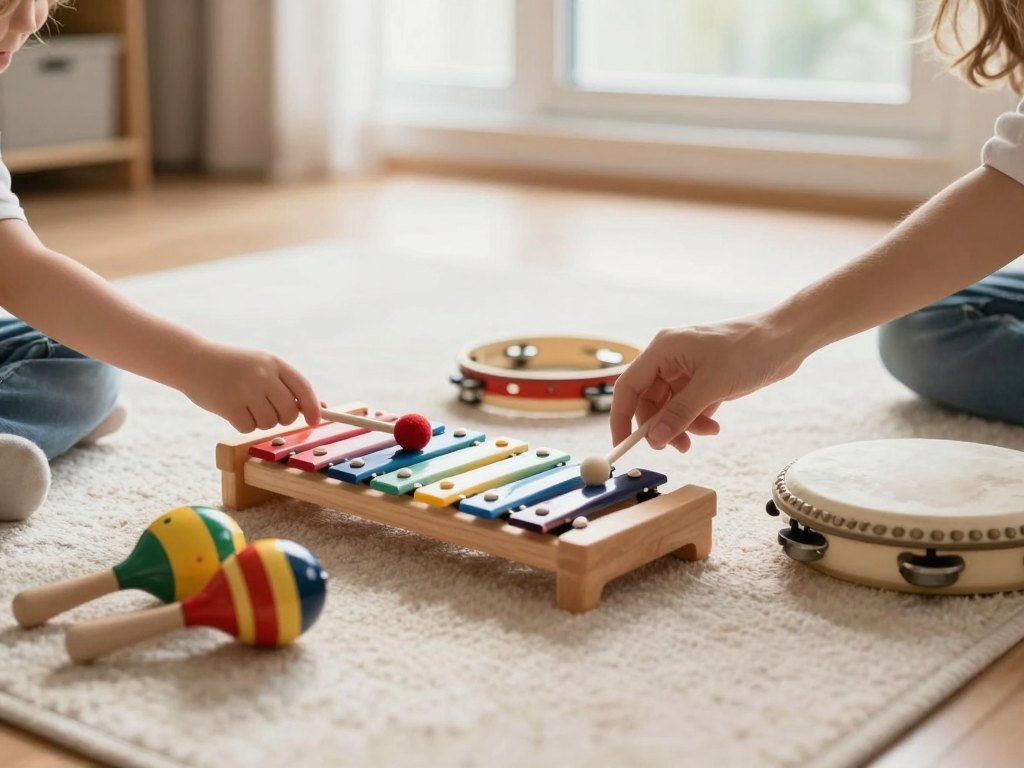
Why music lessons so often end in tears or boredom
Many parents want their child to love music, but the first steps are often discouraging. Children aged four to ten tire quickly of dry explanations, long drills and abstract rules. Before they have felt what music can do, they are asked to memorise terms they cannot yet connect to anything.
This course takes the opposite route. It starts with what children already understand: a steady heartbeat, a quiet whisper and a loud shout, a high squeak and a deep rumble. Each of these everyday experiences becomes a doorway into one of the building blocks of music.
Every lesson is built around play. Your child meets the ideas of music as characters and places in an imaginary city, then practises them with exercises in a workbook and tasks in an interactive app. Nothing feels like a test, and there is no pressure to perform.
The result is a child who can listen more attentively, talk about music in simple words and approach any instrument, teacher or song with curiosity instead of fear.
What your child will get to know
The course gives a first, hands-on acquaintance with the expressive means of music.
- Feel the pulse and the metre
Learn to tell a steady beat from the way beats group into patterns.
- Clap and recognise rhythms
Hear how long and short sounds combine into rhythmic patterns.
- Tell loud from quiet
Understand dynamics and how volume changes the mood of a piece.
- Place sounds high and low
Explore registers and match them to characters and situations.
- Recognise the colour of an instrument
Hear differences in timbre between voices and instruments.
- Compare happy and sad sounding music
Meet musical modes and notice how they change the feeling.
- Play with tempo and articulation
Hear fast and slow, smooth and detached, and describe the difference.
- Spot tension and rest in harmony
Notice the difference between dissonance and consonance.
- Follow and describe a melody
Listen to a tune as a journey that moves up, down and along.
- 10
- video lessons
- 5
- modules
- 10
- expressive means of music
- 2
- workbook versions: colour and black-and-white
A different way to explain music to a young child
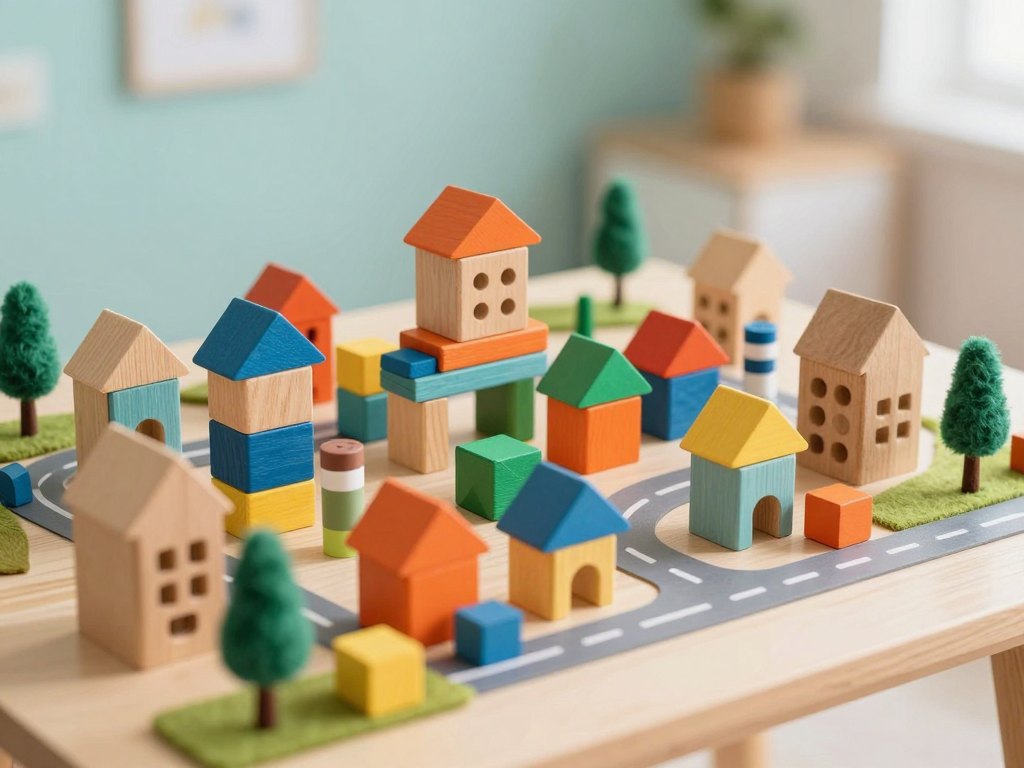
Children learn best when ideas are tied to images, movement and a story. In this course, the language of music is presented as a trip through a make-believe city where each district shows a different side of music. Rhythm, dynamics, registers and the other topics are not lists of definitions but places to explore.
Each lesson focuses on one idea and keeps it concrete. Your child listens, watches, answers simple questions and then does something with what they have just learned, such as tapping a pattern, choosing a sound for a character or colouring a page in the workbook.
Because the ideas are introduced one at a time and revisited in different forms, they stick. By the end, your child has a shared vocabulary for talking about music, which makes any future lessons easier and more enjoyable.
How the course works
The course is self-paced. You open a video lesson when you and your child are ready, watch it together or let an older child watch alone, and then move on to the matching activities. There are no live sessions and no deadlines, so you can fit lessons into your family routine.
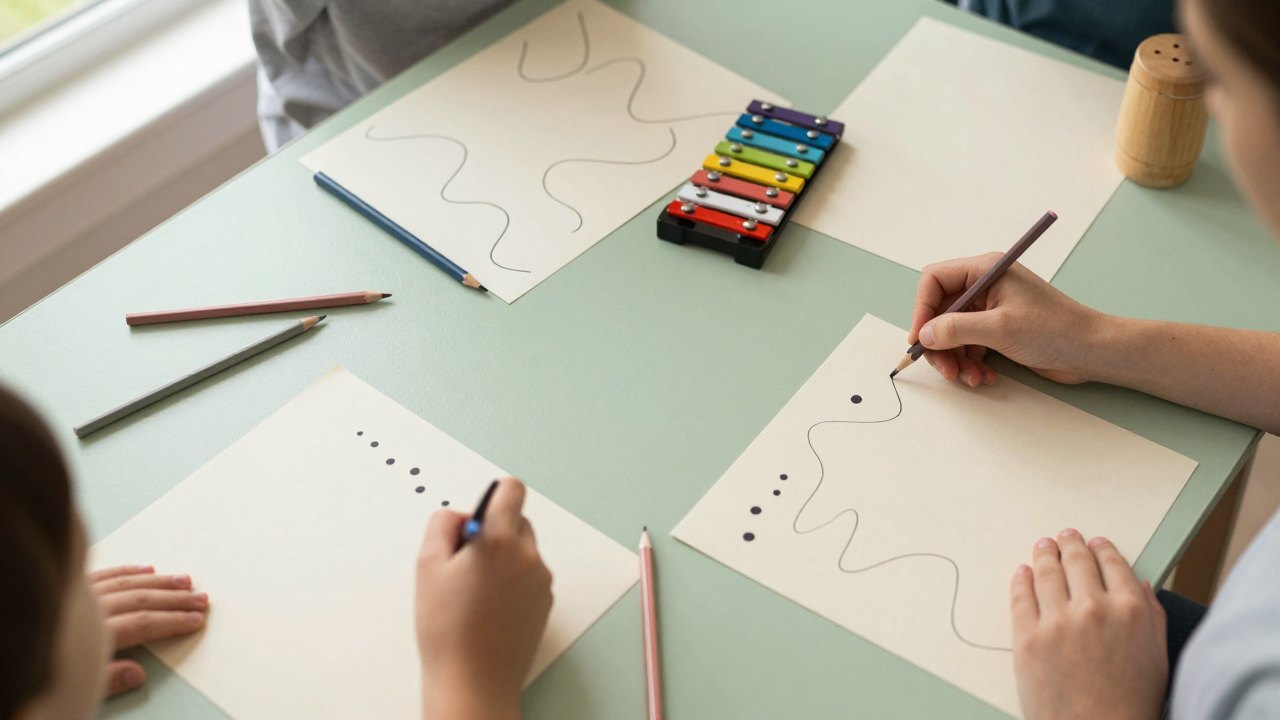
Alongside the videos you receive a workbook, available both in colour and in black and white so you can print it the way you prefer. An interactive app opens in your browser and lets your child practise what the lessons introduced through short playful tasks.
For the youngest children, we suggest sitting beside them and treating each lesson as a shared activity. Older children can work more independently. Either way, a few short sessions each week are enough to make steady progress.
The programme
Ten video lessons grouped into five modules, each introducing two expressive means of music.
1Module 1 — The heartbeat of musicDiscover how music is organised in time.2 lessons
- Pulse: finding the steady beat
- Metre: strong and weak beats
- Counting and moving together
2Module 2 — Patterns of soundMeet rhythm and the way long and short sounds combine.2 lessons
- Rhythm: long and short sounds
- Dynamics: from a whisper to a shout
3Module 3 — Where sounds liveExplore high and low sounds and the colours of instruments.2 lessons
- Registers: high, middle and low
- Timbre: the colour of every instrument
- Matching sounds to characters
4Module 4 — Mood and movementSee how music changes character and speed.2 lessons
- Modes: bright and gloomy sounds
- Tempo: fast, slow and everything between
- Articulation: smooth and detached playing
5Module 5 — Tension and tuneBring the ideas together in harmony and melody.2 lessons
- Dissonance and consonance: tension and rest
- Melody: a tune that travels
- Putting it all together in the city
What you get
- 10 video lessons
Short, story-based lessons you can watch at any time.
- A printable workbook
Available in colour and in black and white.
- An interactive app
Opens in the browser for extra practice through play.
- Self-paced access
Study when it suits your family, with no live sessions to attend.
- A clear order of topics
Each idea builds on the previous one.
- 14-day refund
If the course is not right for your family, ask for a refund within 14 days.
Is this course for you?
This course is for you if…
- Parents of children aged 4–10 who want a gentle first introduction to music
- Families whose child finds formal music lessons dull or stressful
- Parents with no musical background who want clear, ready-made activities
- Teachers and caregivers looking for playful ways to explain musical ideas
- Children who learn best through stories, games and drawing
Probably not a fit if…
- Anyone looking for one-to-one lessons with a live teacher
- Families who want to learn a specific instrument or song from scratch in this course
- Teenagers or adults wanting an in-depth music theory course
- Parents who expect a child to read sheet music fluently after ten lessons
After the course
When your child finishes the ten lessons, they will know the basic vocabulary of music and be able to hear it in the songs they already love. They can say whether a piece is fast or slow, loud or soft, high or low, and they can tell when the music feels tense or calm.
They will also have a positive first experience of learning music. That matters more than any single fact, because children who enjoy the start are far more willing to continue with an instrument, a choir or further lessons.
You will have a set of activities and a shared language to keep using at home, whether you listen to music in the car, sing together or decide to move on to the next steps.
Questions before you buy
How much time does it take each week?
There is no fixed schedule. Most families watch one or two lessons a week and spend a few minutes on the workbook or app between sessions. You can go faster or slower as you prefer.
Does my child need any musical experience?
No. The course is a first introduction and starts from everyday sounds and movements. You do not need any musical background yourself either.
What age is the course designed for?
The course is designed for children roughly between 4 and 10 years old. Younger children will enjoy it most with a parent beside them, while older children can work more on their own.
How does access work after I pay?
Once your payment is confirmed, the course appears in your account and you can start straight away. You open the lessons, workbook and app from there on any device with a browser.
What format are the lessons in?
The lessons are recorded video, supported by a workbook you can print and an interactive app that opens in your browser. There are no live classes.
Will the material stay available?
Yes. After purchase the course remains in your account, so you can return to any lesson and repeat activities whenever you like.
Do I need an instrument?
The course introduces the ideas of music and does not depend on a specific instrument. If your child already plays or is about to start, the lessons will make practice more meaningful.
What if it does not suit my child?
You can request a full refund within 14 days of purchase, no complicated questions asked.
Start the journey with your child
Ten playful lessons, a workbook and an app that turn first steps in music into something your child looks forward to.