Creative · Beginner
Paint a portrait that looks bold, textured and professional
A focused mini-course that takes you from a reference photo to a finished impasto portrait, using a palette knife and thick, confident strokes.
- Step-by-step video lessons
- One finished portrait
- Palette knife technique
- 14-day money-back guarantee
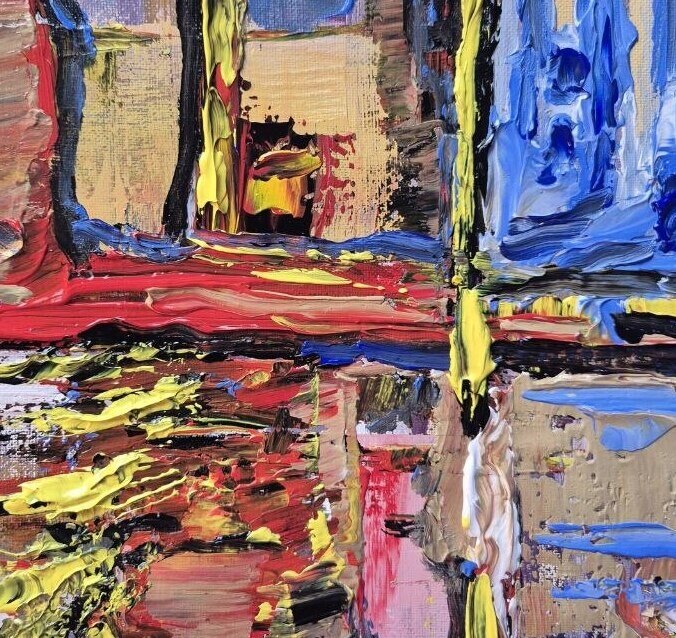
Stop painting carefully, start painting boldly
Many people who take up painting end up with portraits that are neat but flat. Every edge is blended, every transition is smoothed, and the result looks polite rather than alive. You work hard on it, and still the picture does not have the presence you see in paintings you admire.
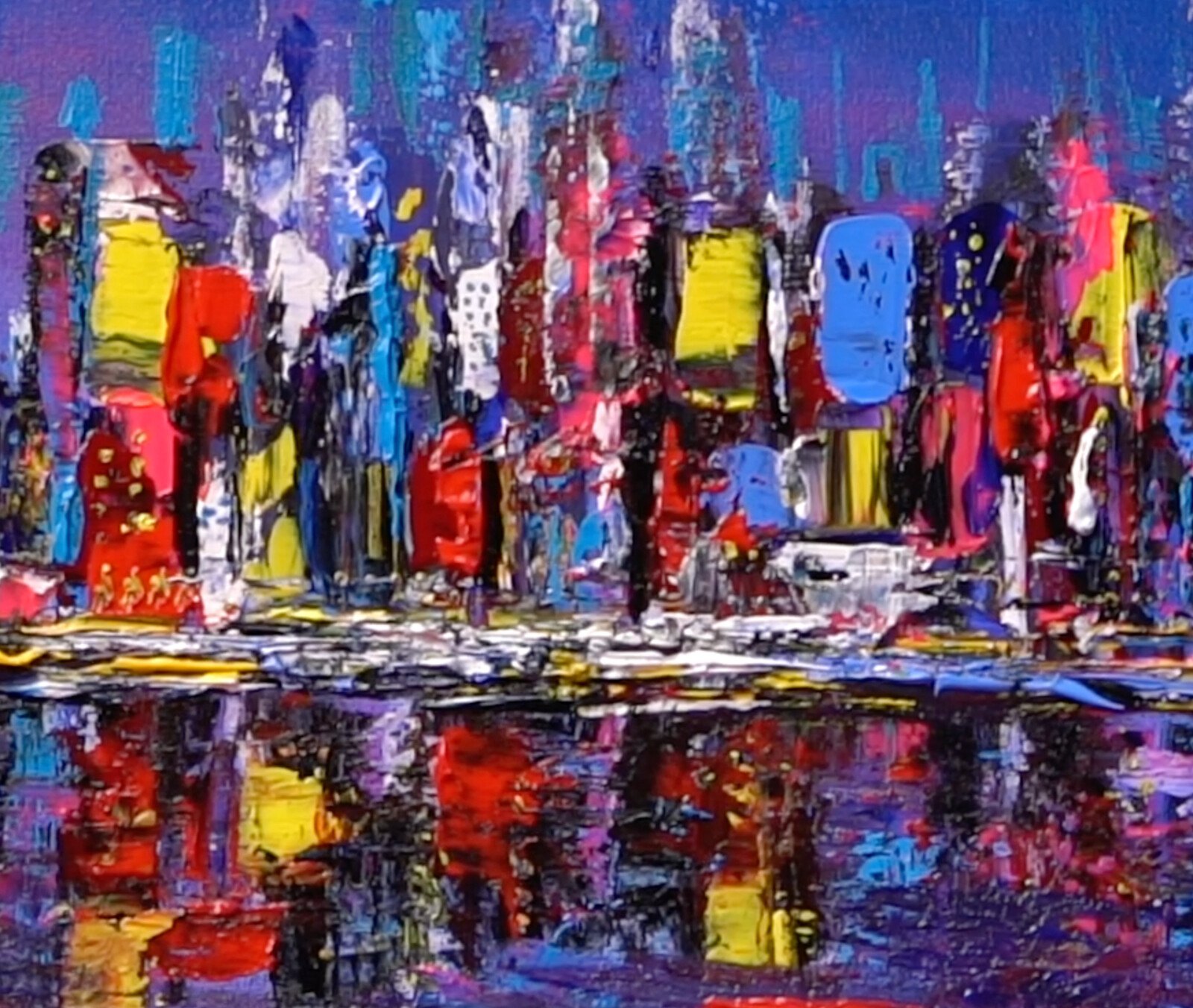
Impasto offers a different way of working. Instead of hiding the paint, you let it carry the picture: thick strokes, clear marks of the knife and the brush, and form that comes from texture rather than from endless polishing. A portrait made this way can look striking even from across the room.
This mini-course is built for people who want to try that approach without fear of making mistakes. It does not bury you in theory. You follow one portrait from the first look at the photo to the final accents, and you learn each decision as you meet it on the canvas.
By the end you have a finished work you can hang on a wall, give as a gift or add to your portfolio, and a method you can repeat on the next portrait.
What you will be able to do
- Paint expressive portraits from a photo
Work in the impasto technique from the first stroke to the final accents.
- Show volume, light and form through texture
Let the thickness and direction of the paint do the work instead of smooth blending.
- Break a photo into painterly patches
See a face as shapes of colour and value, then rebuild it into a strong portrait.
- Handle a palette knife with confidence
Load, spread and press paint so the marks look deliberate.
- Work with a dense brush stroke
Combine knife and thick brush for different kinds of surface in the same picture.
- Avoid the over-polished look
Know when to stop refining so the work stays fresh and energetic.
- Finish a work that looks striking from a distance
Use contrast and bold marks so the portrait reads well at any viewing distance.
- Prepare a result you can show or sell
Finish a canvas that is ready for your wall, a gift, social media or your portfolio.
- 5
- modules
- 17
- video lessons
- 1
- finished impasto portrait
The method: patches first, details last
The core idea of the course is simple. Instead of drawing a face feature by feature, you learn to read the photo as a small number of large patches of colour and value. Once those patches are on the canvas, the face already exists, and the details are only a final layer.
This is also why the knife works so well here. A knife cannot draw a fine eyelash, so it pushes you to think in planes and masses, which is exactly what makes a portrait feel solid and confident.
- Simplify the photo into light, middle and shadow masses
- Choose a limited palette with warm and cool contrasts
- Build the form with thick, directional strokes
- Add fine accents only where they matter
How the course works
The course is a set of recorded video lessons that you follow at your own pace. Each lesson covers one clear step of the portrait, so you can watch it, pause, go to your easel and paint, and then come back for the next step. There is no schedule to keep up with and no need to finish in a single weekend.
The format is deliberately practical. The lessons spend their time on decisions you actually make while painting: which colour to mix, how thick to lay the paint, where to leave a stroke alone. Theory is kept short and always tied to the canvas in front of you.
You paint along with the lessons using your own materials. The first module explains what you need and how to set up, so you can start even if you have never worked with a palette knife before.
The programme
Five modules that follow one portrait from preparation to the final accents.
1Module 1 — Getting readyMaterials, workspace and the choice of a good reference photo.3 lessons
- Materials for impasto painting
- Setting up your palette and workspace
- Choosing and preparing a reference photo
2Module 2 — Reading the photo as colour patchesTurn a photograph into a clear plan for the painting.4 lessons
- Simplifying the photo into large shapes
- Finding light, middle and shadow masses
- Planning a warm and cool colour palette
- Transferring the composition to the canvas
3Module 3 — Blocking in the portraitLay the first thick masses and establish the structure of the face.3 lessons
- Tinted ground and the first colour masses
- Building the structure of the face with a flat brush
- Placing the darkest and lightest accents
4Module 4 — Palette knife textureThe heart of the course: form created by thick paint.4 lessons
- Holding the knife and basic strokes
- Loading paint and building thick layers
- Modelling volume through texture
- Hair and clothing with bold strokes
5Module 5 — Finishing the workRefine without losing energy and present the finished portrait.3 lessons
- Eyes, nose and lips without over-polishing
- Controlling edges and transitions
- Final accents, drying and presenting the portrait
What you get
- Recorded video lessons
Seventeen step-by-step lessons grouped into five modules.
- A complete portrait workflow
From photo analysis to final accents, in a repeatable order.
- Materials guidance
A clear list of what to buy and how to arrange your workspace.
- Learn at your own pace
Pause, rewind and repeat any step as often as you need.
- Continued access
The lessons stay available so you can return to them for your next portrait.
- 14-day money-back guarantee
If the course is not right for you, you can ask for a refund within 14 days.
Is this course for you?
This course is for you if…
- You want to try textured, expressive painting without fear of making mistakes.
- You love bright, tactile works with a strong sense of volume.
- You want to learn the palette knife or a dense brush stroke.
- You prefer a clear step-by-step format without heavy theory.
- You want a finished portrait you can hang on the wall or give as a gift.
Probably not a fit if…
- You are looking for a course on fine, smooth, photorealistic portraiture.
- You want live one-to-one feedback on your canvas.
- You are not willing to buy basic painting materials.
- You expect a finished masterpiece without any practice.
After the course
You finish with a real painting on a canvas: an impasto portrait with visible texture, clear light and a confident look. It is something you made yourself, step by step, and you understand why each part of it works.
More importantly, you leave with a method. You can take any suitable photo, break it into patches, choose a palette and build the portrait with the knife and brush. The next picture will go faster and look bolder than the first.
Many students find that this way of working also changes how they paint in other genres. Thinking in large masses and trusting the stroke is useful in landscapes, still lifes and abstract work as well.
Questions before you buy
How much time do I need each week?
There is no fixed schedule. Most people paint for a few sessions a week, following one or two lessons at a time. Because the course is self-paced, you can go faster or slower depending on your week.
Do I need any painting experience?
No. The course is made for beginners, and the first module explains the materials and workspace. Basic comfort with holding a brush is enough to start.
What materials will I need?
You will need paints, a palette knife, a few thick brushes, a canvas and a palette. The first module explains exactly what to choose, so you can buy with confidence.
How does access work after payment?
After you pay, the course is added to your account and you can start watching straight away. You log in whenever you like, on a computer, tablet or phone.
What is the refund policy?
You can request a full refund within 14 days of purchase if the course is not what you expected.
What format are the lessons?
The lessons are recorded videos that show the painting process step by step. You watch a step, paint it yourself, and then move on to the next one.
Will the material stay available?
Yes. The lessons remain in your account, so you can come back to any step whenever you start a new portrait.
Can I use my own photo?
Yes. The lessons explain how to choose and prepare a reference photo, so you can apply the method to a portrait you care about.
Start your impasto portrait today
Pick up your palette knife and follow the lessons one step at a time.