Creative · Beginner
Paint your first traditional icon for the people you love
Follow a master's hands in detailed video lessons and finish an icon of Saint Nicholas, from the bare board to the gold leaf.
- Detailed video lessons
- Byzantine face technique
- Gilding with gold leaf
- Teacher reviews your work
- Watch on phone or computer
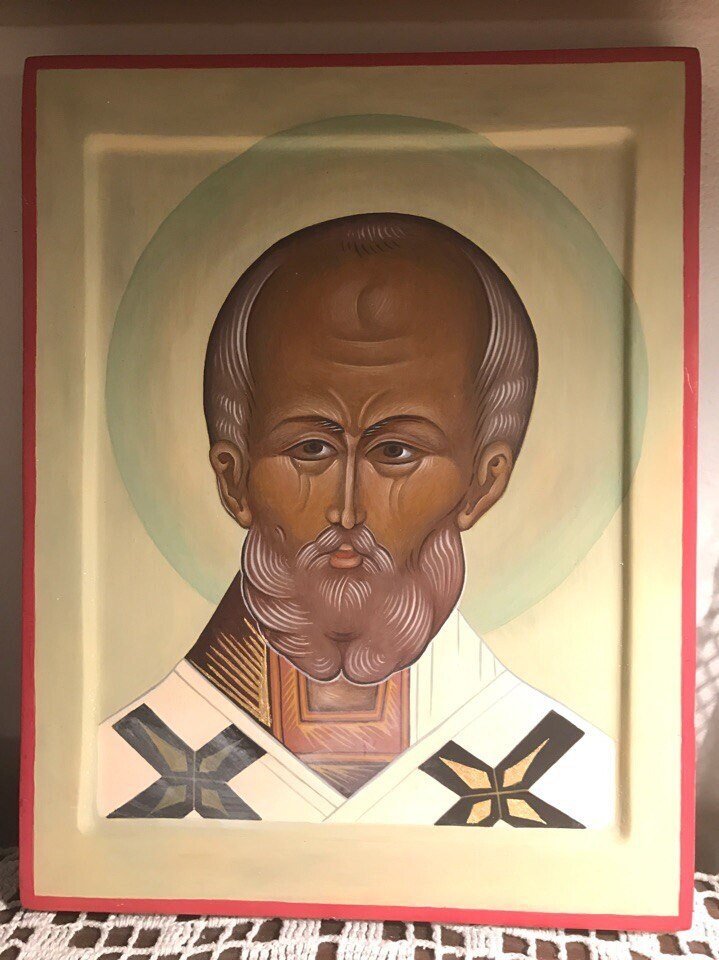
An old craft that is hard to learn from books
Many people feel drawn to icon painting. They admire the quiet faces, the deep colours and the sense that the same craft has been handed down for centuries. Then they look for a way to learn it and run into a wall. There may be no icon painter in your town, the schools meet on fixed days far away, and books explain the theory but never show the movement of the brush.
Icon painting is a craft passed from master to student, and that is exactly what this course recreates on your screen. You watch the work being done in detail, layer by layer, and you repeat each stage at your own table, in your own time. You do not need an art education or a studio. You need patience, a few simple materials and the wish to paint an image that may stay in your family for generations.
The course is built around one image: the icon of Saint Nicholas. It is a well-loved subject and a good first project, because it brings together everything a beginner needs to learn: preparing a board, building a face, mixing colour from natural pigments, painting folds of cloth and gilding the halo.
By the end you will not only have a finished icon. You will understand why each step is done in a certain order, so that you can approach your next icon with confidence.
What you will be able to do
- Build the structure of a face
Learn how the features of the face are constructed in the Byzantine manner before any paint is applied.
- Paint a face layer by layer
Work through the sequence of tones until the face gains depth and calm.
- Analyse and mix colour
Study the colours of the sample and mix them from a small set of natural pigments.
- Paint folds of clothing
Understand how folds are drawn, shaded and highlighted so that garments look natural and ordered.
- Apply gold leaf to the halo
Gild a halo with gold leaf and finish the surface cleanly.
- Tell Byzantine and Russian approaches apart
Recognise the main differences between the two traditions and what each means for your brush.
- Follow a complete painting sequence
Move from the first outline to the finished icon without guessing what comes next.
- Recognise the traditional types of Saint Nicholas icons
Know which images of the saint existed in Russia and why he is honoured around the world.
- 6
- modules
- 17
- video lessons
- 3 months
- to your first finished icon
- 2
- traditions compared: Byzantine and Russian
Learning by watching the master work
The core of the course is observation. Each lesson shows the painting process in close detail, so you see how the brush is loaded, how thin each layer is and how long the paint is left to settle before the next one. Nothing is skipped or hidden behind a time-lapse.
Photographs of the stages and supporting materials sit inside the lessons, so you can compare your own work with the example at every step. Whenever you are unsure, you can rewatch a short fragment as many times as you need.
- Close-up demonstrations of each stage
- Photographs of intermediate results
- Theory explained in plain words
- Your finished work is reviewed by a teacher
How the course works
The lessons are recorded videos that you can watch at any time, on a computer or on a phone. Many learners fit them into evenings or into the hours when children are asleep. The course is designed so that a first icon can be completed in about three months, but you move at the pace your life allows.
Alongside the practical lessons there are shorter theory parts on the history of the icon, its meaning and the traditions behind it. They explain complicated things in simple language, so that you paint with understanding and not only by copying.
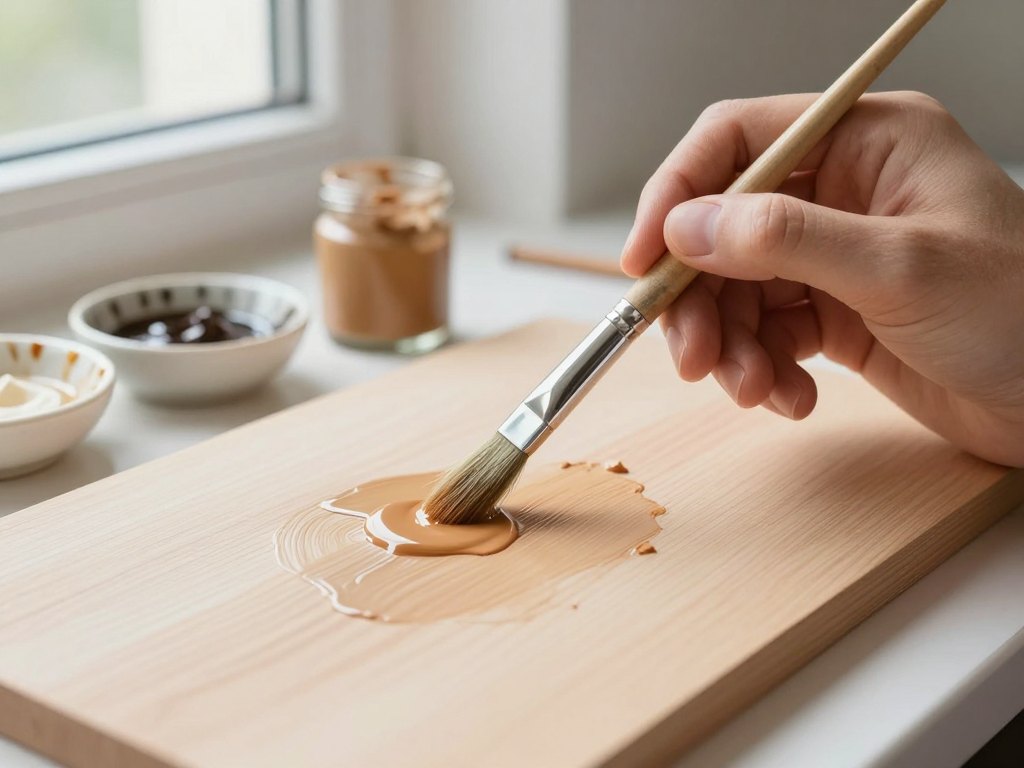
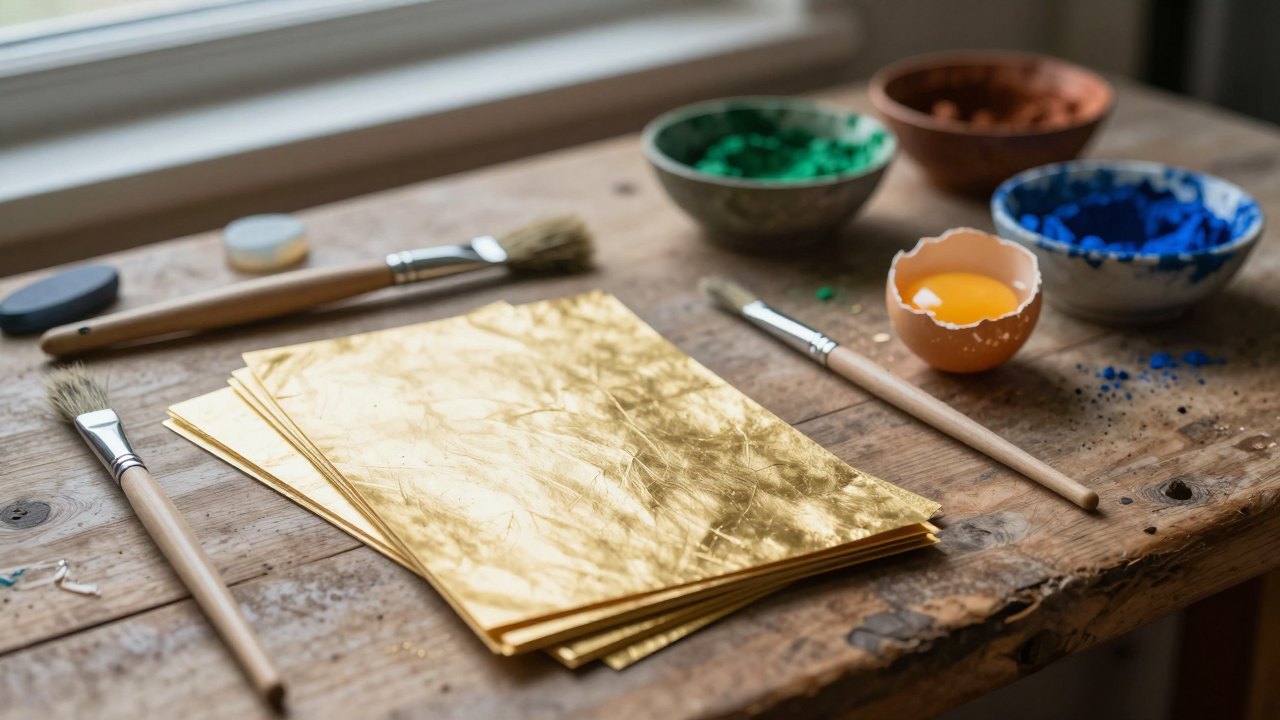
You send your work for review and receive feedback, so you are never left alone with a doubt about a face or a fold. The materials you need are listed in advance. They are simple and easy to find: soft brushes, natural tempera, tracing paper, a board, chalk, gelatin or hide glue and a few pigments. The exact list for this course is given inside the programme.
The programme
Six modules take you from the story of the saint to a finished, gilded icon.
1Module 1 — The saint and his imageUnderstand who you are painting and which traditions stand behind the image.3 lessons
- Who Saint Nicholas was and why he is honoured around the world
- Which icons of Saint Nicholas existed in Russia
- Byzantine and Russian icon painting compared
2Module 2 — Materials and the boardPrepare everything you need before the first brushstroke.2 lessons
- Choosing brushes, pigments and other materials
- Preparing the board for painting
3Module 3 — ColourLearn to see the colours of the sample and recreate them.3 lessons
- Analysing the colour scheme of the icon
- Mixing the working palette from natural pigments
- Laying the first colour layers
4Module 4 — The face in the Byzantine techniqueThe most delicate part of the work, taken slowly and in order.3 lessons
- Building the structure of the face
- Painting the face layer by layer
- Highlights and final details of the face
5Module 5 — Garments and foldsGive the clothing of the saint volume and order.3 lessons
- How folds are constructed
- Painting the folds step by step
- Adding highlights and finishing the garments
6Module 6 — Gilding and completionBring the icon together and finish it.3 lessons
- Gilding with gold leaf
- Completing the icon step by step
- Reviewing your finished work with a teacher
What you get
- Detailed video lessons
Close-up demonstrations of the whole painting process.
- Lessons for phone and computer
Watch wherever it is convenient for you.
- Photographs of the stages
Intermediate results and supporting materials placed inside the lessons.
- A materials guide
A clear list of what to buy and how to prepare it.
- Theory in plain language
The history and meaning of the icon explained without jargon.
- Teacher feedback on your work
Your icon is reviewed so you can correct and improve it.
- A comparison of two traditions
See how Byzantine and Russian approaches differ in practice.
- Lessons you can revisit
Return to any stage whenever you need to.
Is this course for you?
This course is for you if…
- You are interested in the Orthodox icon and want to understand it from the inside
- You are a complete beginner, or you have only a little drawing experience
- You are an artist who wants to learn icon painting as a spiritual art
- You value your family's traditions and want to paint an icon for your loved ones
- You do not know where to start but very much want to learn
Probably not a fit if…
- You want a quick result in a single evening; an icon is built slowly in layers
- You are looking for in-person classes in a studio
- You expect to learn without buying any materials or painting at home
- You want to paint in a free, modern style instead of the traditional canon
After the course
You will have an icon of Saint Nicholas that you painted yourself, with a face built in the Byzantine manner, carefully painted garments and a gilded halo. It can become a gift, a family heirloom or a quiet reminder of what you can do when you give a craft enough time.
You will also understand the logic of the whole process: how a board is prepared, how colour is mixed and layered, how a face is constructed and how gold is applied. That knowledge is what allows you to move on to the next image, whether it is another saint or a more complex composition.
Many learners find that the greatest change is in how they look at icons. Once you have painted one, you notice details of tone, line and gold that were invisible before.
Questions before you buy
How much time do I need each week?
Plan for a few hours a week, spread across several sittings. Layers of paint need time to dry, so the work suits short, regular sessions. Most learners complete their first icon in about three months, but the pace is yours.
Do I need any drawing experience?
No. The course starts from the beginning and assumes no art education. Basic patience and care are more important than talent. The programme shows how to build the drawing and each layer step by step.
What materials do I need to buy?
You will need soft brushes, natural tempera or similar paints, a few basic pigments, tracing paper, a board or plywood, chalk, gelatin or hide glue, glycerin and sandpaper. The course gives you a clear list, and the exact items are explained inside the lessons.
How does access work after payment?
Once your payment is confirmed, the lessons are available in your account. You can start straight away and watch at any time, on a computer or a phone.
What format are the lessons in?
They are recorded video lessons with close-up demonstrations, supported by photographs of the stages and written materials. You can pause and rewatch any fragment.
Will I get feedback on my work?
Yes. Your work is reviewed by a teacher, so you receive comments on your icon and know what to improve.
Is there a refund if the course is not right for me?
Yes. You can ask for a full refund within 14 days of purchase.
Does the material stay available after I finish?
Yes. The lessons stay in your account, so you can return to any stage when you start your next icon.
Begin your first icon
Prepare your board, open the first lesson and start painting an image that can stay in your family for generations.