Beauty · Intermediate
Work out hair colour formulas with confidence, client after client
A set of five reference checklists that puts mixing proportions, lightening base diagnosis, decapping, pigmenting and highlighting steps in one place.
- 5 practical checklists
- 6 mixing and correction tables
- Self-paced digital materials
- 14-day refund policy
Why colour formulas still cause sleepless nights
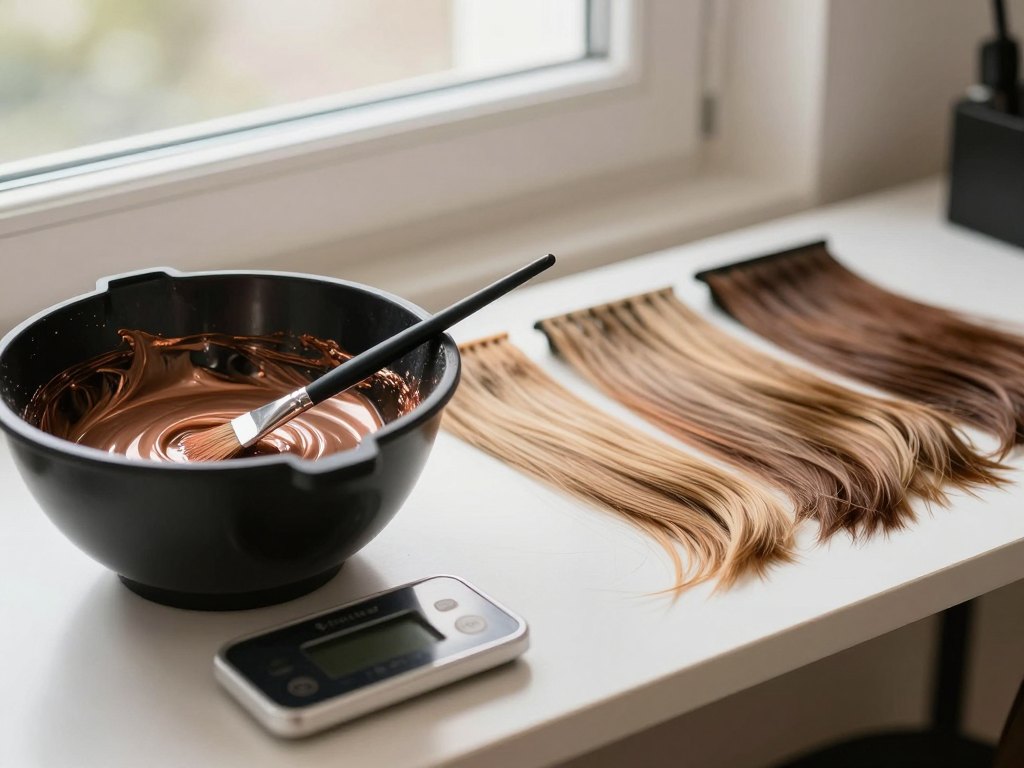
Hair colouring is one of the most in-demand professions in the beauty industry. Clients want healthy, beautiful hair and look for a professional who can deliver a predictable shade. Yet many colourists, even after years behind the chair, still hesitate at the mixing bowl and ask themselves the same questions: how much developer, how long to leave it on, which corrector to add, and what the hair will actually look like when the lightener is rinsed off.
The trouble is rarely a lack of motivation. It is the number of details that have to be held in your head at once: tone depth, lightening base, neutralising correctors, proportions of powder and oxidant, the order of work on different zones of the head. When the details blur, the result drifts away from what the client expected, and the fix costs time, product and trust.
This set of checklists was built for exactly that moment. Instead of long theory, each checklist condenses one recurring decision in a colourist's day into tables, short procedures and ready recipes. You open it, find the situation you are in, and follow the steps.
It does not replace practice, and it does not pretend to. What it gives you is a dependable frame for your decisions, so that practice teaches you something every time instead of repeating the same doubts.
What you will be able to do
- Mix colour shades confidently
Combine different shades in equal proportions using a table instead of trial and error.
- Choose the right powder-to-oxidant ratio
Pick proportions and a gentle processing time that suit the task.
- Match oxidants to dyes
Know which oxidant belongs with which type of colour and why.
- Read tone depth and lightening base
Connect the depth level, the base left after lightening and the corrector you need to neutralise it.
- Identify the lightening base more accurately
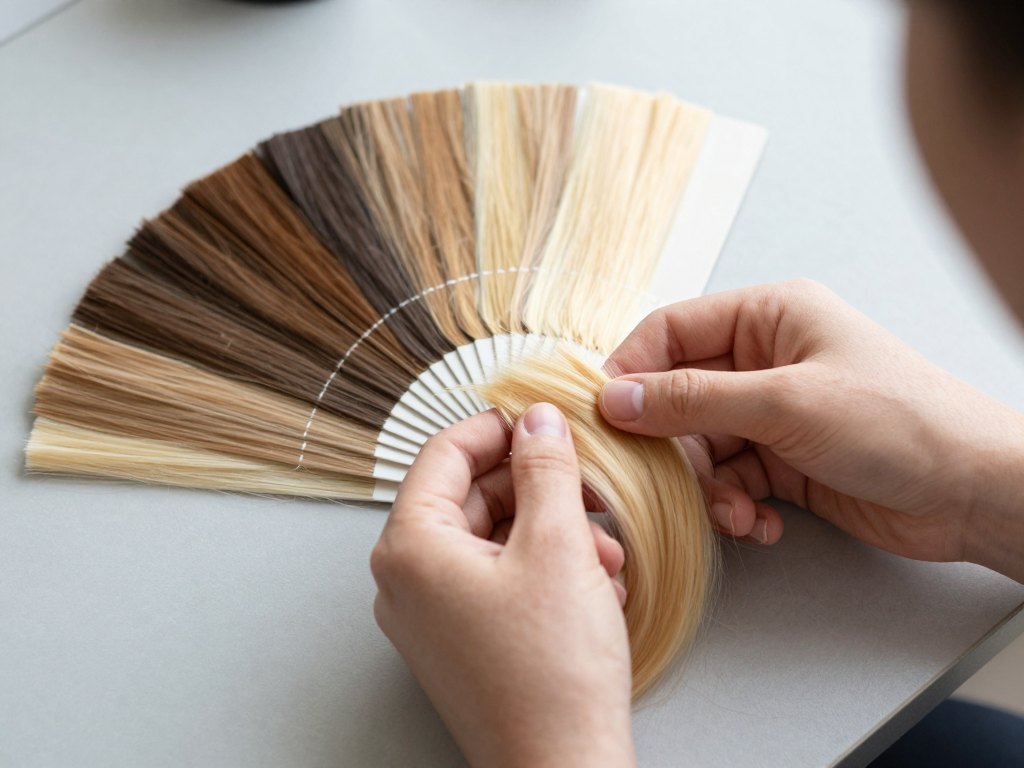
Use a colour scale designed to resemble real hair after lightening.
- Plan pre-pigmentation of lightened hair
Work out which dye to add at which level and which neutralising correctors to use.
- Perform and compare decapping methods
Understand the types of decapping and how each one is carried out.
- Colour grey hair with the main palette
Use a clear reference for covering grey with standard colours.
- Carry out a highlighting technique in order
Divide the hair into zones, follow a working sequence and protect against stains.
- 5
- checklists in the set
- 6
- reference tables in the first checklist
- 5
- modules in the programme
- 1
- clear purpose: predictable colour
The idea behind the materials
Every checklist starts from a real mistake that colourists make and works backwards. A wrong diagnosis of the lightening base, for example, leads to a wrongly built colour task. A wrong colour task leads to the wrong corrector, in the wrong amount, and the client leaves with a shade they never asked for. Fixing the diagnosis step fixes everything after it.
That is why the materials are practical and specific. They give you tables you can check against, recipes you can adapt, and short descriptions of techniques in the order they should be performed. There is no filler between the information and the situation where you need it.
You can work through the set in order, from the general mixing reference to the more specialised techniques, or jump straight to the checklist that matches the problem on your chair today.
How the course works
The programme is self-paced. After payment you receive access to the checklists and can study them on your own schedule, at your desk, on a phone or tablet between appointments, or alongside a model or a practice mannequin.
Each module corresponds to one checklist. We suggest reading it once from beginning to end, then using it during real work, and coming back to the sections that raised questions. Because the checklists are reference tools, you will probably return to them many times.
There are no deadlines and no homework to hand in. The best exercise is the one you are already doing: apply a table or a recipe at the next colouring appointment, note the result, and compare it with what the checklist predicted.
The programme
Five modules, each built around one checklist, from everyday mixing to highlighting technique.
1Module 1 — The colourist's cheat sheetSix tables to keep within reach during every colouring session.6 tables
- Mixing different colour nuances in equal proportions
- Powder-to-oxidant proportions and gentle processing times
- Oxidants and how to use them with dyes
- Tone depth levels, lightening bases and neutralising correctors
- Dye colours for pre-pigmentation when the lightening base is missing
- Colouring grey hair with the main palette
2Module 2 — Identifying the lightening baseA colour scale that helps you name the shade of lightened hair accurately.1 checklist
- Why a wrong diagnosis ruins the colour task
- Yellow or pale yellow, orange or yellow-orange: telling them apart
- Using the colour scale to put the base into numbers
- From the base to the right corrector and amount
3Module 3 — DecappingTypes of decapping and a detailed description of how each is performed.1 checklist
- The types of decapping and when each is used
- Step-by-step description of carrying out decapping
4Module 4 — Pre-pigmentation of the lightening baseHow to restore colour in previously lightened hair before the final shade.1 checklist
- How to apply the lightening base colour correctly
- The colour bath recipe
- Which dye to add at each level
- Which neutralising correctors to use
5Module 5 — Highlighting techniqueA complete working description of the technique, from zoning to toning.1 checklist
- Step-by-step description of the highlighting technique
- Dividing the hair into zones for different techniques
- The order of work
- Lightening mixture recipes and the tools to use
- Protecting against stains and keeping the natural base untouched when toning
- Recommendations for toning
What you get
- Five digital checklists
Cheat sheet, lightening base identification, decapping, pre-pigmentation and highlighting.
- Six reference tables
Mixing, proportions, oxidants, tone depth, pre-pigmentation and grey hair.
- A colour scale for the lightening base
Designed to resemble real hair as closely as possible.
- Ready recipes
Colour bath and lightening mixture recipes you can adapt to your own products.
- Technique descriptions
Zoning, order of work, tools and stain prevention for highlighting.
- Self-paced access
Study when it suits you, on the device you prefer.
- Continued availability
The materials stay available so you can return to them whenever you need.
- 14-day refund policy
If the set is not what you expected, you can request a refund within 14 days.
Is this course for you?
This course is for you if…
- Hair colourists who already work with clients and want clearer formulas
- Stylists who hesitate over proportions, correctors or processing times
- Beauty school students who want practical tables next to the theory
- Colourists who struggle to name the lightening base after bleaching
- Anyone who wants a reliable reference to keep close to the work station
Probably not a fit if…
- People looking for a complete introduction to hair colouring from zero
- Those who expect live feedback or personal coaching on their work
- Readers who want a long video course rather than concise reference materials
- Anyone hoping a checklist will replace regular hands-on practice
After the course
After working with these checklists, you will have a consistent way to approach a colouring task. You will diagnose the starting point, choose the dye and corrector with a table in front of you, and know the order of steps before you mix anything.
Doubts will not disappear overnight, but they will be easier to resolve. When a result differs from the plan, you will be able to trace it back to a specific step: the base you identified, the proportion you chose, or the corrector you added.
Over time, this habit builds the predictability that clients notice, and with it the calm that comes from knowing why a formula works. Results always depend on your hair, products and practice, but you will have a solid reference for each of them.
Frequently asked questions
How much time do I need per week?
There is no fixed schedule. Reading a single checklist takes a short sitting, and most of the learning happens when you apply it at work. Many people go through one module a week alongside their usual appointments.
Do I need any prior knowledge?
You should be familiar with the basics of hair colouring, such as tone levels and the use of developer. The checklists are reference tools for working colourists and advanced students, not an introduction from zero.
How does access work after payment?
After you order and pay, you receive access to the materials in digital form. You can open them on a computer, tablet or phone whenever you wish.
What is the refund policy?
You can request a refund within 14 days of purchase if the course is not what you expected.
What format are the lessons in?
The programme is made of written checklists, reference tables, a colour scale and step-by-step descriptions. It is self-paced and has no live sessions.
Will the material stay available?
Yes. The materials remain available after purchase, so you can come back to any table or recipe when a new task appears.
Does it work with any dye brand?
The checklists are built around general principles of mixing, correcting and lightening, so you can apply them across brands. Always test on your own products and adjust to the manufacturer's instructions.
Can I use it on my phone during appointments?
The materials are digital, so you can open them on whatever device you have at hand and check a table while you prepare the mix.
Put the formulas in front of you
Get all five checklists for €17.90 and start using them at your next colouring appointment.