Creative · Beginner
Paint ten finished acrylic pictures, even if you have never held a brush
Step-by-step video lessons take you from your first brushstroke to paintings you will want to hang on the wall or give away.
- Step-by-step video lessons
- Ten complete paintings
- No experience needed
- Self-paced, home study
- 14-day refund policy
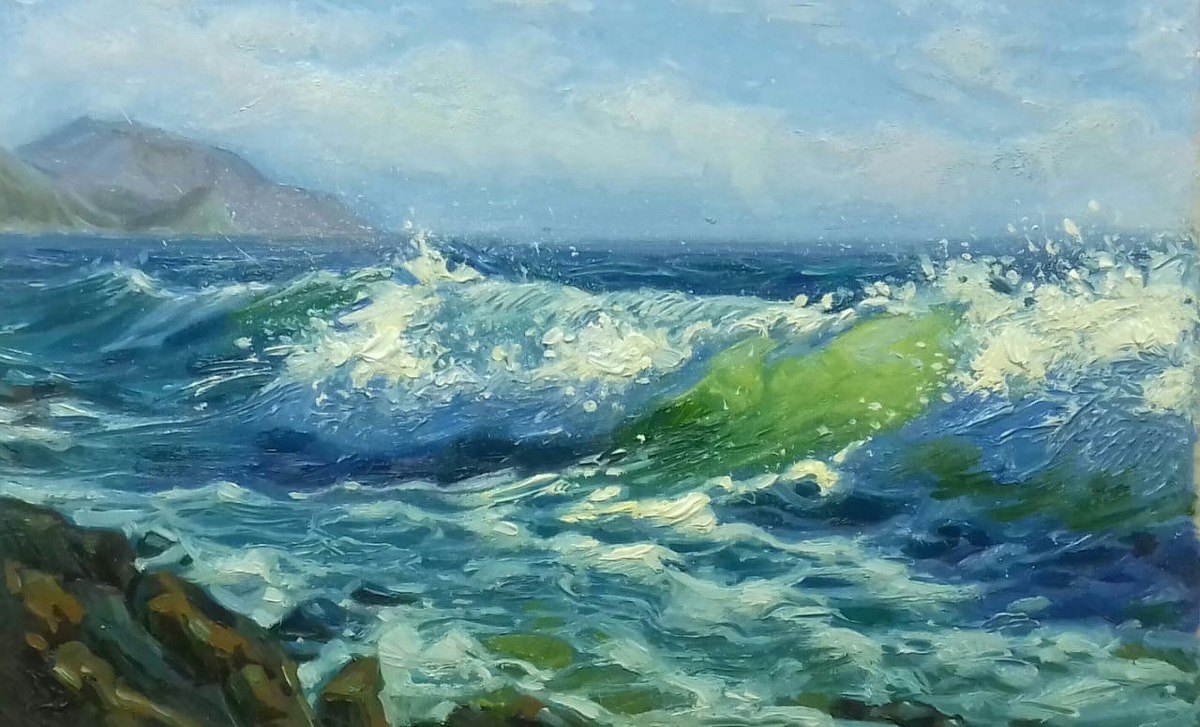
Why so many people never start painting
Many adults would love to paint, yet they never begin. A blank sheet of paper feels intimidating, the shop shelves are full of paints and brushes you cannot tell apart, and every sample online looks like the work of someone who has trained for years.
The result is a familiar loop: you buy a few supplies, try one picture without guidance, dislike how it looks and put everything in a drawer. The problem is rarely talent. It is the lack of a clear order in which to learn things, and of someone showing each stroke as it happens.
This course removes the guesswork. You follow recorded lessons in which each picture is built from the first layer to the final highlights, so you always know what to do next. Acrylic is a forgiving paint: it dries quickly, covers mistakes and can be reworked, which makes it a friendly choice for a first medium.
By the end you will not only have ten paintings. You will understand how colours mix, how to build a picture in stages, and how to bring your own taste into the work instead of copying a sample.
What you will be able to do
- Handle acrylic paint with confidence
Understand brushes, surfaces, paint consistency and how acrylic behaves as it dries.
- Build a picture in layers
Move from the first sketch and background to details without losing the overall composition.
- Mix the colours you actually want
Create shades, soft transitions and contrast instead of relying on tube colours alone.
- Paint ten complete pictures
Follow each lesson to a finished piece that is ready to frame.
- Follow a demonstration and adapt it
Use the lessons as a starting point and make small changes that reflect your own taste.
- Work calmly and without fear of mistakes
Learn how to correct, overpaint and refine, so a slip is only a step in the process.
- Set up a simple home painting space
Know what to buy, what to skip and how to organise your table for relaxed sessions.
- Develop a recognisable personal style
Notice which subjects, colours and strokes you enjoy and repeat them with intention.
- 10
- paintings to complete
- 6
- modules
- 24
- video lessons
- 0
- experience required
Learn by watching each stroke happen
Every painting in the course is taught as a full demonstration. You see how the first wash goes on, how the shapes are blocked in, and how the details are added once the base has dried.
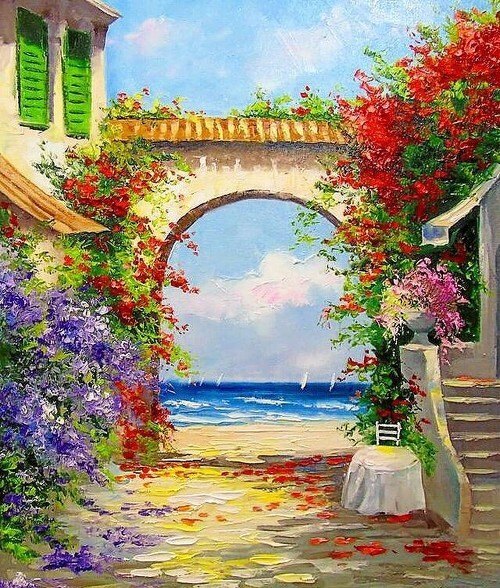
Because each picture is slightly different, the lessons gradually widen your skills: you practise soft backgrounds, textured water, flowers, architecture and light. By the end, the techniques feel familiar rather than new.
- Pause and rewind whenever you need
- Paint along with the video at your own speed
- Repeat any picture as many times as you like
- Compare your result with the demonstration
How the course works
The course is a library of recorded video lessons that you work through at your own pace. There are no fixed class times, so you can paint in the evening, at weekends or in short sessions during the week. Most people complete one picture in a few sittings.
Lessons are ordered from simple to more demanding. Early pictures focus on basic strokes and colour mixing, while later ones add composition, depth and finer detail. We recommend following the order, because each lesson builds on skills practised in the previous one.
You will need acrylic paints, a few brushes, paper or canvas and a palette. The first lessons explain what to choose so you do not overspend. Any optional extras are mentioned when they first appear.
The programme
Six modules take you from your first brushstroke to a collection of ten finished paintings.
1Module 1 — Getting ready to paintMaterials, workspace and the properties of acrylic.4 lessons
- Choosing acrylic paints, brushes and surfaces
- Setting up your painting space at home
- How acrylic dries and how to keep it workable
- Your first brushstrokes and colour swatches
2Module 2 — Colour and layersMixing colour and building a picture in stages.4 lessons
- Mixing shades from a small set of colours
- Painting soft backgrounds and gradients
- Working from dark to light in layers
- Fixing mistakes by overpainting
3Module 3 — First picturesSimple subjects that teach the core techniques.4 lessons
- Painting picture one: composition and base layer
- Painting picture two: adding contrast and detail
- Painting picture three: brush control and texture
- Reviewing your first three paintings
4Module 4 — Growing in confidenceMore expressive pictures with richer detail.4 lessons
- Painting picture four: light and shadow
- Painting picture five: movement and texture
- Painting picture six: depth and distance
- Finishing details and highlights
5Module 5 — Towards your own stylePictures that invite your personal choices.4 lessons
- Painting picture seven: choosing a colour mood
- Painting picture eight: simplifying a complex scene
- Painting picture nine: balancing detail and space
- Adapting a demonstration to your taste
6Module 6 — The final picture and what nextA closing painting and ideas for continuing.4 lessons
- Painting picture ten: planning the whole piece
- Painting picture ten: final layers and signature
- Framing and displaying your paintings
- Planning your next steps in painting
What you get
- Step-by-step video lessons
Recorded demonstrations for all ten paintings.
- Beginner-friendly materials guidance
Clear advice on what to buy and what you can skip.
- Learning at your own pace
No deadlines or class times to keep.
- Repeatable lessons
Watch and paint each picture as many times as you wish.
- Techniques you can reuse
Skills that carry over to your own subjects.
- Continuing access
The material stays available after you finish.
Is this course for you?
This course is for you if…
- Adults who have never painted and want a clear place to start
- People who like to learn by watching and copying a demonstration
- Hobbyists who want a relaxing, creative evening routine
- Anyone who wants finished pictures for their home or as gifts
Probably not a fit if…
- Those looking for in-depth academic art theory
- Learners who want live feedback on each brushstroke
- Anyone unwilling to buy basic painting supplies
- Experienced painters wanting advanced professional techniques
After the course
You finish with ten paintings of your own and a set of techniques you can use again. Mixing a colour, preparing a background or adding highlights will no longer feel mysterious.
Just as important, you will have a habit. Having completed ten pictures, you know how long a painting takes, which subjects you enjoy and how to settle into a session. Many learners find that this quiet, focused time becomes something they look forward to.
From here you can paint your own subjects, move to other media such as watercolour or oils, or simply keep painting for pleasure. The lessons remain available to revisit whenever you want a refresher.
Questions before you buy
How much time do I need each week?
It is entirely up to you. A typical picture takes a few sittings of one to two hours, so many people paint two or three evenings a week. You can go faster or slower.
Do I need any experience?
No. The course starts with the basics and assumes you have never painted. All you need is curiosity and the willingness to practise.
What materials do I need?
Acrylic paints, a few brushes, a palette and paper or canvas. The opening lessons explain what to choose so you can start with a modest budget.
How does access work after payment?
After checkout you receive access to the course in your account. You can start straight away and learn whenever suits you.
What format are the lessons in?
Recorded video lessons in which each painting is shown step by step. You can pause, rewind and paint along at your own speed.
Will the material stay available?
Yes. Once you have access you can return to any lesson whenever you like and repeat the paintings.
What if the course is not right for me?
You can request a refund within 14 days of purchase. Just contact our support team and we will take care of it.
Can I follow the course on a phone or tablet?
Yes. The lessons play in a standard web browser, so a laptop, tablet or phone propped up beside your painting table will work.
Start painting this week
Pick up a brush and finish your first picture by following the lessons step by step.