Languages · Beginner
Speak your first French words with a clean, melodic accent
A quick-start A1 course combined with a seminar on removing accent, so your first French sounds right from day one.
- 120 days of access
- A1 quick-start course
- Accent-reduction seminar
- Verb notebook method
- 14-day refund

Why the first steps in French matter so much
Many people start French with enthusiasm and then run into the same three walls. The sounds do not come out the way they do for native speakers. The articles seem to follow no logic at all. And the verb tables look like an endless list of endings to memorise by force.
The trouble is that these habits are set early. A pronunciation mistake you repeat for three months becomes a pattern that is hard to undo later. A verb form you memorised without understanding it will fail you the moment the sentence changes. That is why the very beginning is the best moment to build the right foundation.
This programme brings together two things that work well side by side: a quick-start A1 course that takes you from your first words to simple, correct sentences, and a seminar devoted to getting rid of accent. You train your ear and your mouth at the same time as you learn the grammar that holds the language together.
The aim is not to rush through a textbook. It is to help you start in a way that feels pleasant, so that every new word you learn also sounds good when you say it.
What you will be able to do
By the end of your access period you will have practical skills in three areas: sound, grammar and self-checking.
- Train your ear to hear French sounds
Learn to notice the differences that beginners usually miss, so you can imitate them accurately.
- Pronounce the hardest sounds correctly
Practise the sounds that cause the most trouble until the correct version feels natural.
- Make your phrases more melodic
Work on rhythm and intonation so a whole sentence sounds like French, not just single words.
- Check and correct your own pronunciation
Build the habit of listening to yourself and spotting what to fix without waiting for someone else.
- Use articles with understanding
See what stands behind le, un, du and the others, and why French speakers choose one over another.
- Conjugate verbs from simple to complex
Move step by step through regular patterns towards the most difficult verbs.
- Form six tenses and moods
Work with Présent, Passé Composé, Imparfait, Futur simple, Conditionnel and Subjonctif.
- Use the verb notebook method
Develop a feel for endings and stems, so that forms come from logic and not from rote memory.
- 120
- days of access to the materials
- 2
- parts: A1 quick-start course and accent seminar
- 6
- tenses and moods covered
- 6
- modules in the programme
The idea behind the course
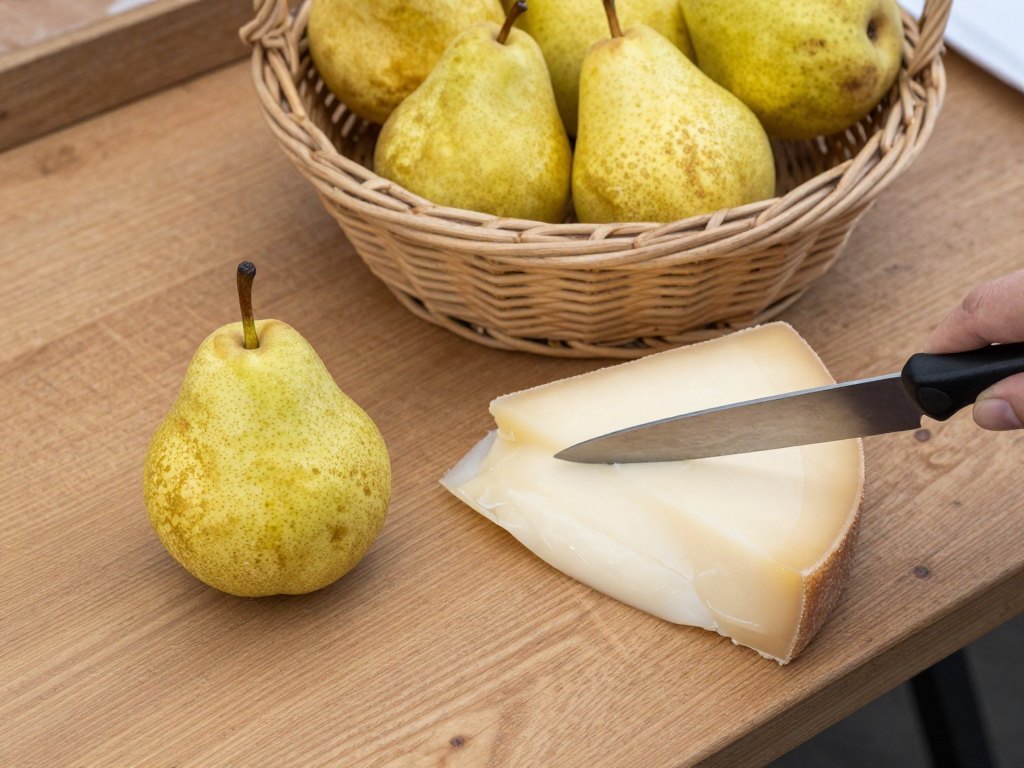
French is a language of images as much as rules. Behind every article there is a particular way of seeing the world: whether something is one of many, a specific item, or a portion of something. The course treats articles not as an obstacle but as a set of brushes and paints that French speakers use to draw reality. Once you see this picture, the choice of article stops feeling random.
The same principle applies to verbs. Instead of asking you to memorise tables, the course uses a verb notebook method. You work from the simplest forms to the most complex, noticing patterns as you go, until you can sense what the ending and the stem should be. The goal is an inner feeling for the logic of the forms.
Pronunciation is treated as a skill you can train, not a talent you either have or do not have. You learn to observe how sounds are made, to compare your version with the model, and to correct yourself. Beginners start by setting their ear. Learners who already know some French use the same tools to clean up an existing accent.
How the course works
The programme is delivered online as self-paced lessons with supporting materials. You decide when to study and how fast to move. There are no fixed class times, so it fits around work and family. The materials stay open for 120 days from your purchase, which gives you plenty of time to go through everything and return to the parts you find difficult.
We recommend starting with the pronunciation work and then moving through the A1 lessons in order. Each stage builds on the previous one, so sounds, articles and verbs reinforce each other. A short, regular routine usually works better than occasional long sessions. Many learners find that a few focused sessions a week are enough to keep steady progress.
Because the lessons are recorded, you can pause, replay and repeat as often as you like. This matters most for pronunciation, where hearing the same example many times is part of the training. The course includes practical exercises so you are not only watching but also speaking, writing and checking your own work.
The programme
The programme combines the A1 quick-start course with the accent-reduction seminar. Modules are arranged so that you begin with sound and move towards grammar and tenses.
1Module 1 — Setting your earLearn to listen like a French speaker before you try to speak like one.Self-paced
- How to listen: noticing what makes French sound French
- The rhythm and melody of a French phrase
- Comparing your voice with a model recording
2Module 2 — The most difficult soundsFocused practice on the sounds that beginners find hardest.Self-paced
- Vowels that do not exist in your own language
- Nasal sounds and how to make them
- The French r and its neighbours
- Linking words smoothly in a sentence
3Module 3 — Cleaning up your accentThe seminar on getting rid of accent, for beginners and continuing learners alike.Self-paced
- Finding your own typical mistakes
- Exercises to fix the most common accent habits
- Making a phrase more melodic
- Checking and correcting yourself without a teacher
4Module 4 — Articles and the world behind themA clear and visual approach to le, un, du and the other articles.Self-paced
- Definite and indefinite articles: two ways of seeing
- Partitive articles and the idea of a portion
- Choosing the right article in a real sentence
- Practice: describing the world around you
5Module 5 — Verbs from simple to complexStart the verb notebook and learn to see the logic inside the forms.Self-paced
- How the verb notebook method works
- Présent: the first regular and irregular verbs
- Patterns in endings and stems
- Training your sense for the correct form
6Module 6 — Tenses and moodsExtend your verbs across six tenses and moods.Self-paced
- Passé Composé: talking about what happened
- Imparfait: describing the past
- Futur simple: talking about plans
- Conditionnel: polite requests and possibilities
- Subjonctif: the first steps

What you get
- A1 quick-start course
Recorded lessons that take you from first words to simple correct sentences.
- Accent-reduction seminar
A dedicated session on pronunciation, with methods you can keep using on your own.
- Pronunciation exercises
Practical tasks for the hardest sounds and for phrase melody.
- Verb notebook method
A structured way to work with verbs across six tenses and moods.
- Lessons on articles
A clear explanation of how articles shape meaning in French.
- 120 days of access
Study at your own pace and revisit any lesson during that time.
- 14-day refund
If the course is not right for you, you can ask for your money back within 14 days.
Is this course for you?
This course is for you if…
- You are starting French from zero and want to build good habits from the first lesson.
- You already know some French but your accent holds you back or sounds flat.
- You find articles confusing and want to understand the logic behind them.
- You struggle to memorise verb tables and would like a method that relies on understanding.
- You prefer to study at your own pace in short, regular sessions.
Probably not a fit if…
- You want live one-to-one lessons with a teacher.
- You are looking for an advanced course for fluent speakers.
- You expect to become fluent in a few days without regular practice.
- You need exam preparation for a specific official test.
After the course
When you finish, you will be able to pronounce the most difficult French sounds more accurately and say whole phrases with a more natural melody. Just as important, you will know how to listen to yourself and find what to adjust, which lets you keep improving long after the lessons end.
You will also have a clearer view of articles and a working method for verbs. Instead of freezing when you need to choose le or du, or when you need a past or conditional form, you will have a way to reason your way to the answer.
The course does not promise instant fluency, and no recorded programme can replace regular practice. What it gives you is a solid, pleasant start at level A1, with sound and grammar working together, so that your next steps in French are easier and more enjoyable.
Questions before you order
How much time do I need each week?
There is no fixed schedule. Most learners do well with a few short sessions a week, for example three or four sessions of around 30 to 45 minutes. You can go faster or slower depending on your free time.
Do I need any French before I start?
No. The programme starts from the beginning and is designed for people who have never studied French. If you already know some, the pronunciation and verb parts will help you tidy up what you have.
How does access work after payment?
After you pay, you receive access to the programme on the learning platform. Your access lasts 120 days from the start, and you can study at any time of day during that period.
What format are the lessons in?
The lessons are recorded video lessons with supporting materials and practical exercises. You can pause, replay and repeat them as often as you like.
Does the material stay available?
Yes, for the full 120 days of your access. During that time you can return to any lesson, repeat the pronunciation exercises and revisit the verb work whenever you need to.
What is your refund policy?
You can request a full refund within 14 days of your purchase if the course is not what you expected.
Will this help me if I already have an accent in French?
Yes. The accent seminar is intended for both beginners and learners who want to clean up their pronunciation, make phrases more melodic and learn to check themselves.
Which verb tenses are covered?
The course works with Présent, Passé Composé, Imparfait, Futur simple, Conditionnel and Subjonctif, moving from simple forms to more complex ones.
Start French with the right sound
Get 120 days of access to the A1 quick-start course and the accent seminar, and begin speaking French the way it is meant to sound.