Psychology · All levels
Stop living for others and start choosing yourself
A three-part recorded course that explains why you keep falling into codependent relationships and gives you a clear plan for stepping out of them.
- 3 recorded sessions
- Step-by-step exit plan
- Self-test and checklist
- 12 months of access
- 14-day refund

When giving becomes losing yourself
Many people recognise the pattern without having a name for it. You say yes when you want to say no. You report to your parents, plan your life around other people's rules, or work so hard that family and health come last. You give time and energy to a partner, children or a community until there is almost nothing left for you.
Leaving a difficult person often does not fix this. Many people walk out of a toxic relationship only to find the same dynamic in the next one, or they go back again and again in a cycle of leaving and returning. The people change, but the problem stays.
This course is built around that observation. Instead of blaming the other person or telling you to be stronger, it looks at the mechanisms that pull you into codependency and keep you there: what holds you in these relationships, why others so easily draw you into their plans, and what is missing in your own life.
The course is a recorded three-part programme. You watch the sessions at your own pace, follow the exercises, and finish with a plan that is specific to your own situation rather than a general list of advice.
What you will be able to do
Outcomes you can work towards by following the sessions and exercises.
- Recognise codependent patterns in your own life
See the mechanisms that repeatedly pull you into one-sided relationships.
- Explain why leaving is not enough
Understand why getting away from one person does not remove the underlying pattern.
- Identify what keeps you in toxic relationships
Name the personal reasons that make staying feel necessary.
- Break the leave-and-return cycle
Use tools for making decisions from your own feelings rather than fear and duty.
- Choose in your own favour
Pick options that lead to your goals instead of ones that only earn approval.
- Set healthier boundaries
Plan how to say no, and how to handle the discomfort that follows.
- Stop dissolving into other people
Turn your attention from work and others back to yourself and your own identity.
- Follow a step-by-step exit plan
Know where to begin and how to keep moving, from leaving a toxic situation to building boundaries.
- Apply the ideas to real situations
Practise on worked examples so you can use the approach in your own life.
- 3
- recorded sessions
- 4
- modules including a bonus mini-course
- 12 months
- of access to the recordings
- 20
- signs of codependency in the checklist
From diagnosing causes to acting on them
The course follows a simple sequence. First you find out why you do what you do, and why other people come first in your life. Then you work out a way of living in which codependency no longer has room to operate. Finally you test the plan against concrete situations and see how it holds up.
This order matters. Strategies without understanding tend to fade after a few weeks, and understanding without a plan leaves you knowing the problem but not what to do on Monday morning. Each part of the course is designed to give you a clear result before you move on.
- Diagnose the causes of your own pattern
- Build a step-by-step strategy for stepping out
- Look at worked examples of first steps
- Learn how to overcome what blocks those steps
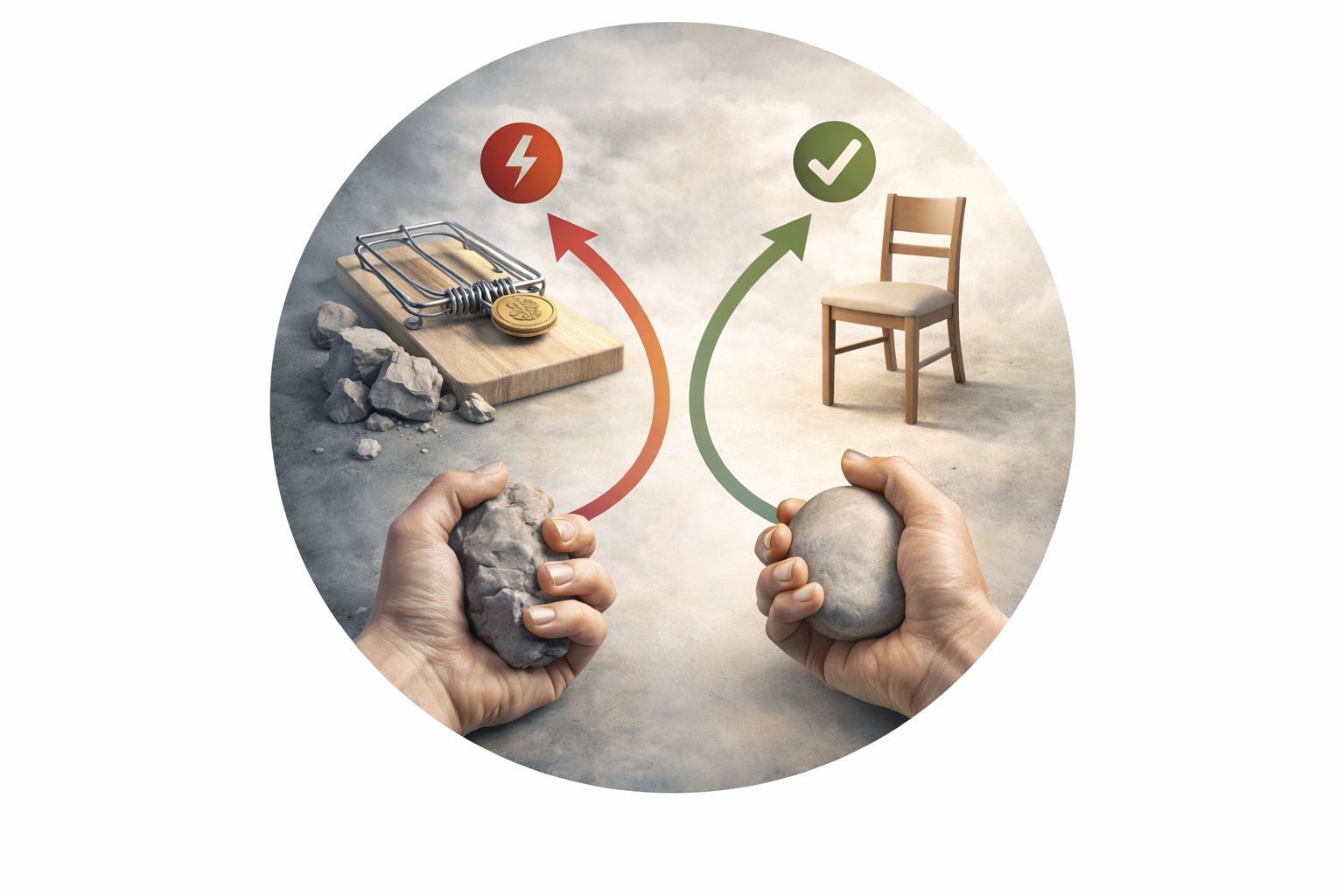
How the course works
The course is a recording of a three-day programme. Each day is one session, and each session has a single theme and a clear outcome. You can watch them on consecutive days, as the programme was designed, or spread them over a longer period if that suits you better.
The sessions include practices and exercises, so it helps to have a notebook and a quiet half hour to pause the video and work through them. The third session looks at a selection of personal situations, which shows how the approach applies in real life and gives you ideas for your own case.
Alongside the recordings you receive a self-test to identify your type of codependency, a checklist of twenty signs of codependency and a short ebook on five things to stop doing. Access to the recordings lasts twelve months from purchase. If a video does not play on your device, the course team can add another format.
The programme
Three sessions, each ending with a defined result, plus a bonus mini-course on codependency and money.
1Session 1 — Diagnosing the causes of your codependencyWhy you do what you do not want, and why others come first in your life.1 session
- Which mechanisms keep pulling you into codependency
- Why leaving a toxic person is not enough
- What holds you in toxic relationships in particular
- Why the objects of codependency change while the problem stays
- How to avoid falling into or creating toxic relationships
2Session 2 — Strategies for leaving codependencyHow to break out of the closed circle of codependent relationships and stay out.1 session
- How to stop living other people's lives
- Why people so easily draw you into their plans
- What is missing for happy relationships and a happy life
- How to build a life in which codependency disappears as a mechanism
- Your step-by-step plan for leaving codependent and toxic relationships
3Session 3 — Working through personal situationsConsolidating the material with concrete cases and details you may have missed.1 session
- Which first steps to take
- What prevents you from taking them and how to overcome it
- Step-by-step exit strategies on real participants' situations
- How to apply what you have learned in practice
4Bonus mini-course — Codependency and moneyHow the mechanism of codependency shapes your relationship with money, explained through real-life examples.6 short lessons
- What codependency with lack of money means: introductory lesson
- A practice for switching your brain into a problem-solving mode
- How to leave the illusion of hopelessness
- Step one: describe your own scenario with a workbook and research questions
- Step two: learn to tolerate the useful discomfort of looking after yourself
- Step three: make different choices where you used to endure or retreat
What you get
- Three recorded sessions
One session per theme: causes, strategies and personal situations.
- A step-by-step exit plan
The plan you assemble during the course, from first steps to boundaries.
- A self-test
A test to help you identify your type of codependency.
- A checklist of 20 signs
A quick way to spot codependent behaviour in daily life.
- A short ebook
Five things people with codependency need to stop doing.
- Bonus mini-course
Lessons on codependency and money, with a workbook and exercises.
- Twelve months of access
Return to any recording whenever you need to.
- Format support
If a video does not play for you, the team can provide a different format.

Is this course for you?
This course is for you if…
- You are in a toxic relationship now, or keep ending up in one
- You cannot separate from your parents, struggle to refuse them or report to them constantly
- You work so much that your family, health and rest suffer
- You give most of your time and energy to family, children or a community at your own expense
- You leave and return to the same relationship and want to understand why
Probably not a fit if…
- You are looking for personal therapy or one-to-one consultations
- You expect one video to change your life without any practice
- You want a quick trick for changing another person's behaviour
- You are in an emergency and need immediate professional or legal help
After the course
By the end of the third session you will have a clearer picture of why you ended up in codependent patterns, instead of the vague feeling that something is wrong with you. You will know what keeps you in these relationships and why changing partners or jobs has not solved the problem.
You will also have a plan: the first steps to take, the obstacles you are likely to meet and ideas for dealing with them. Small changes may start to appear while you are still watching, such as noticing when you are about to say yes out of duty, or asking what you actually want before answering.
The course does not promise that everything will change in three days. What it offers is a direction and a set of tools. Over the following weeks and months you can return to the recordings, repeat the exercises and keep practising choosing in your own favour.
Questions before you buy
How much time do I need per week?
The course consists of three sessions, so there is no weekly schedule to keep up with. Many people watch one session a day, and others spread them over a week or two. Allow extra time for the exercises, as you will want to pause and write.
Do I need any background knowledge?
No. The course is explained in everyday language and starts from your own experience. You do not need any training in psychology.
How does access work after payment?
You get access to the recordings straight after payment. The access period is twelve months from the date of purchase.
What is the refund policy?
You can ask for a full refund within 14 days of purchase if the course is not what you expected.
What format are the lessons in?
The lessons are video recordings of three sessions, supported by a self-test, a checklist, a short ebook and exercises. If a video does not play on your device, contact support and another format can be added.
Does the material stay available?
Yes, you can rewatch the recordings as often as you like during your twelve months of access, and work through the exercises again when you need to.
Is this therapy or a replacement for it?
No. It is an educational course that explains patterns and offers practical exercises. It does not diagnose or treat any condition, and it is not a substitute for personal professional help.
Will I need to share my situation with anyone?
No. You watch the recordings on your own and apply the exercises privately. The examples in the third session come from other people's situations.
Take the first step towards choosing yourself
Three sessions to understand your pattern and build a plan for leaving it.