Creative · Beginner
Learn to draw from the ground up, one technique at a time
A structured video course that moves from dots and lines to watercolour, gouache, pastel and full portraits, with practice built into every lesson.
- 34 video lessons
- 7 clear modules
- 6 drawing techniques
- Homework feedback by module
- 14-day refund
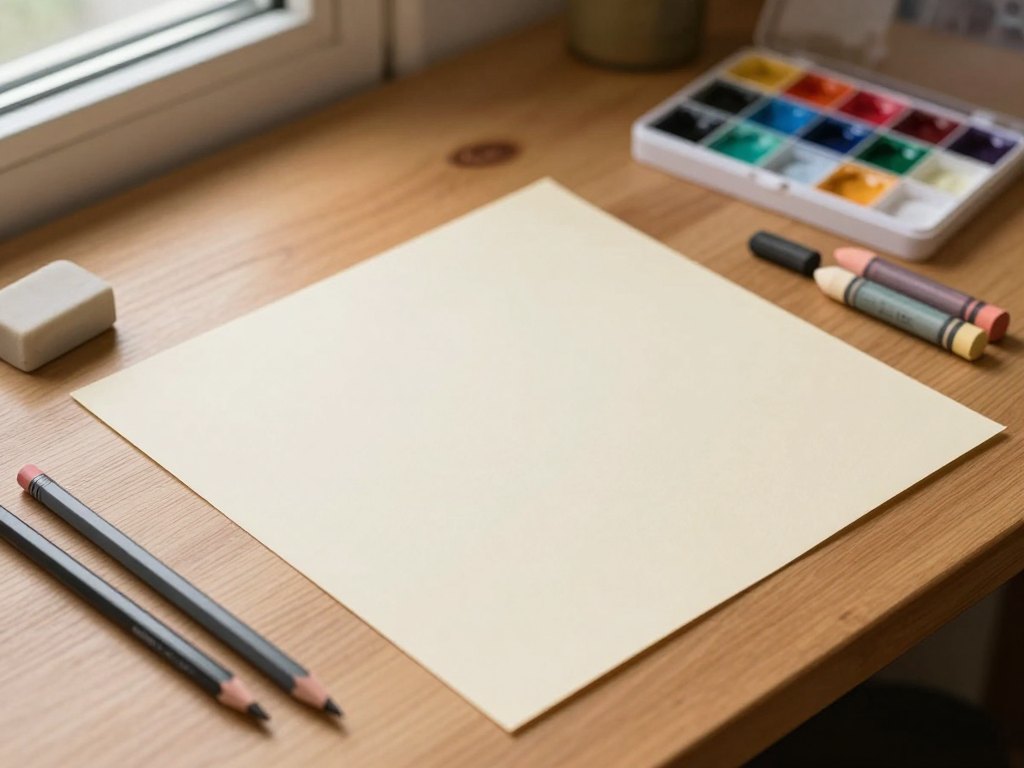
Why drawing feels harder than it should
Many people want to draw but stop after a few attempts. The pencil lines look wobbly, the colours turn muddy, and a face never quite looks like a face. It is easy to conclude that you simply have no talent.
In most cases the problem is not talent but order. Drawing is a set of learnable skills: controlling a line, understanding light and volume, mixing colours, building a composition. When these are learned in a random order from scattered videos, each new picture feels like starting again.
This course puts the fundamentals in a logical sequence. You begin with the simplest visual tools, the point, the line and the patch, and then move into one medium after another. Each lesson combines a short piece of theory with exercises and a finished picture, so you always practise what you have just learned.
By the end you will have tried graphite, watercolour, markers, coloured pencils, gouache and dry pastel. You will know which ones you enjoy, and you will have the foundation to keep growing in whichever direction you choose.
What you will be able to do
- Control line, dot and patch
Use the basic expressive tools of graphic art to create texture and mood.
- Shade and blend with a pencil
Apply hatching and smudging to give objects volume.
- Draw complicated objects simply
Break a difficult subject into basic shapes before adding detail.
- Paint with watercolour
Work wet-on-wet, build colour with glazes and use separate strokes.
- Combine markers and coloured pencils
Learn how each behaves and what happens when you mix them.
- Paint in gouache and pastel
Create volume, warm and cool palettes and a sense of distance.
- Show perspective and light
Use linear and aerial perspective and show an illuminated object.
- Draw a portrait
Build eyes, nose, lips, ears and hair, then assemble a complete face.
- 34
- video lessons
- 7
- modules
- 6
- drawing and painting techniques
- 1
- final project of your choice
Theory, exercises, then a real picture
Every lesson follows the same rhythm. First you learn the idea behind the technique, for example why a light fabric folds the way it does or how a wash behaves on wet paper. Then you do short exercises to train your hand, and finally you apply everything in a complete picture.
This rhythm matters because exercises alone can feel dry, and finished pictures alone teach you little if you do not understand what you are doing. Together they build skill and confidence at the same time.
The course is designed for beginners, so nothing is assumed. If you have never held a brush, the first modules will bring your hand and eye up to speed before you attempt anything complex.
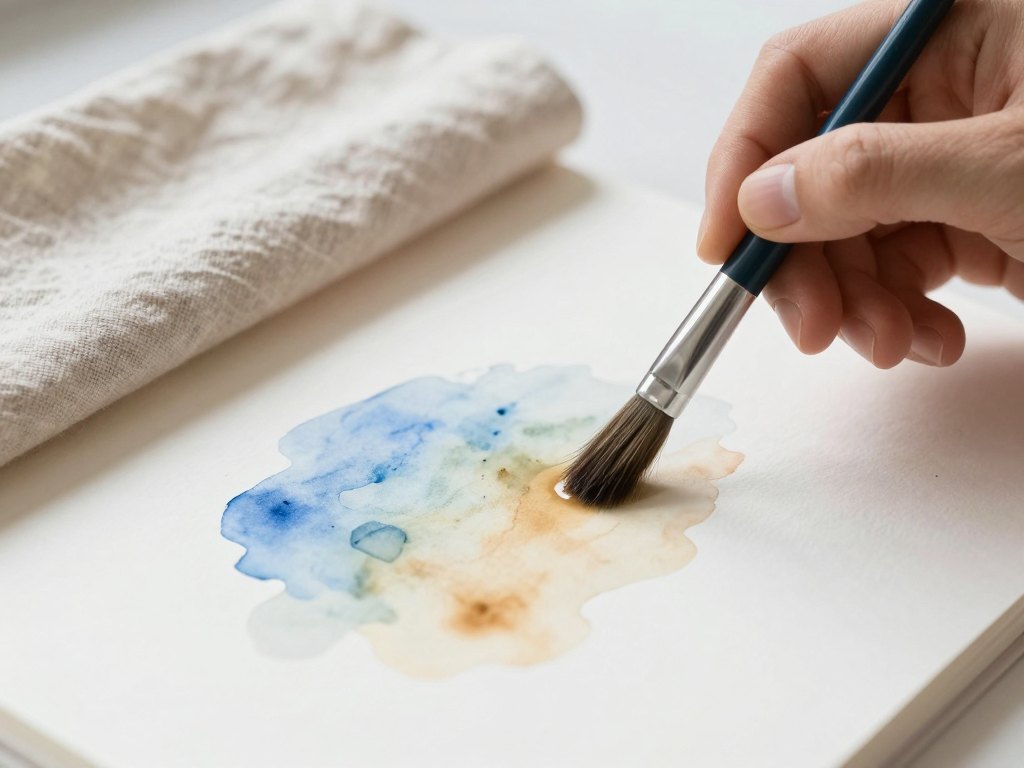
How the course works
The course is made of recorded video lessons that you watch on your own schedule, on a phone, tablet or computer. You can pause, rewind and repeat any step while you draw alongside. There are no fixed class times.
The programme is split into seven modules. At the end of each of the first six modules you can submit your work for feedback from a curator, so you do not have to guess whether you are on the right track. The seventh module is a final project that brings your skills together.
You will need basic art supplies that are introduced as the course moves along: simple and coloured pencils, a liner, markers, watercolour, gouache and dry pastel, plus suitable paper and brushes. You can start with the pencil modules and buy the other materials as you reach them.
The course is suitable for learners from age 9, so it works for a teenager studying alone, an adult starting from scratch, or a parent and child drawing side by side.
The programme
Seven modules, 34 lessons, from your first mark on the page to a finished final project.
1Module 1 — Expressive means of graphic artLearn the visual vocabulary that every drawing is built from.5 lessons
- Theory: point, line and patch
- Practice: the point
- Practice: the line
- Practice: the patch
- Practice: mixed technique
2Module 2 — Pencil drawingMaster hatching, blending, volume, composition and fabric.5 lessons
- Getting to know hatching and smudging
- How to draw a complicated object with ease
- Volume and composition
- Types of perspective and why you need them
- Drawing fabric and folds
3Module 3 — WatercolourUnderstand paper, brushes and the main watercolour techniques.5 lessons
- Getting to know watercolour, brushes and paper
- Wet-on-wet watercolour
- Glazing: what it is and why it matters
- The separate-stroke technique
- Perspective in painting
4Module 4 — Markers and coloured pencilsDiscover how two popular tools work alone and together.5 lessons
- Markers: how to draw with them
- Coloured pencils: how to build volume
- Markers plus coloured pencils: what happens when you combine them
- A picture in markers
- A picture in coloured pencils
5Module 5 — Gouache and dry pastelPaint with opaque colour and soft pastel to create depth and light.7 lessons
- Theory: gouache
- Gouache: how to build volume
- Gouache practice: warm colour palettes
- Gouache practice: cool colour palettes
- Properties of pastel and where to begin
- Aerial perspective in pastel
- How to show an illuminated object
6Module 6 — PortraitsDraw each part of the face, then bring them together.6 lessons
- Parts of the portrait: eyes
- Parts of the portrait: nose
- Parts of the portrait: lips
- Parts of the portrait: ears
- Parts of the portrait: hair
- Building the whole face
7Module 7 — Final projectApply what you have learned in a piece of your own.1 lesson plus project
- Preparing and presenting your final project in graphics or painting
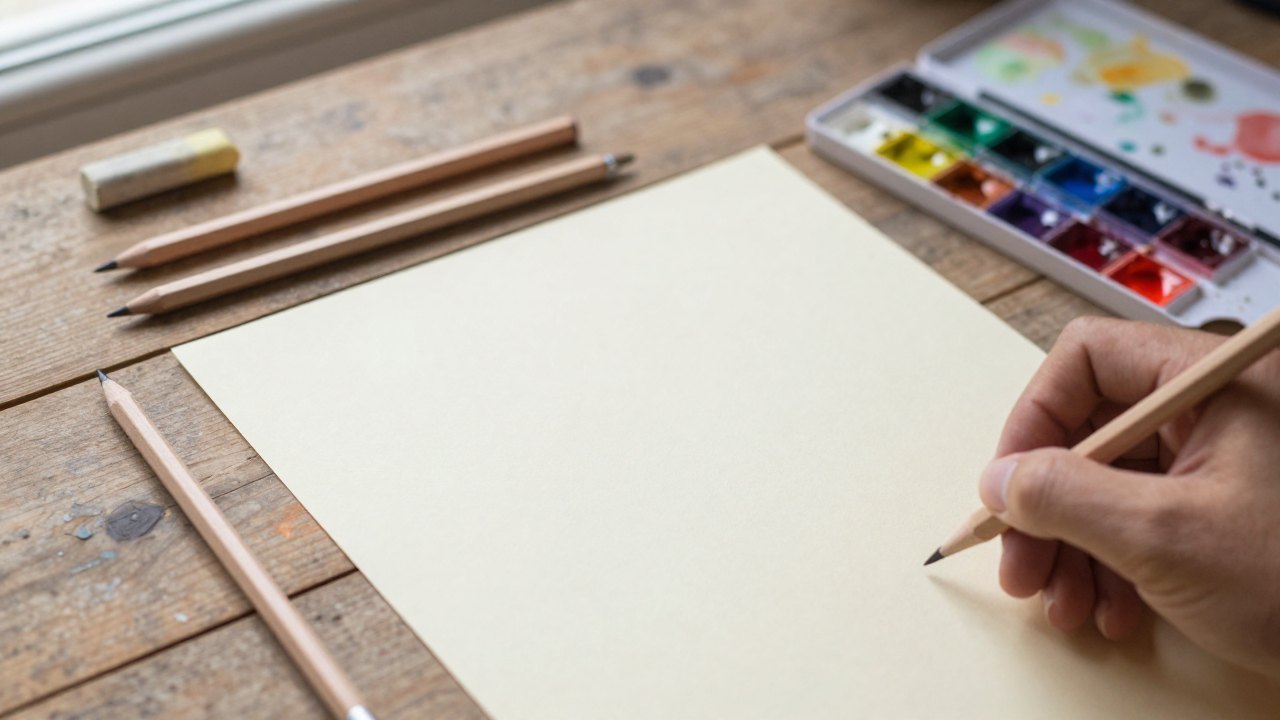
What you get
- 34 recorded video lessons
Watch on any device, at any time that suits you.
- Exercises in every lesson
Targeted practice to train your hand before each picture.
- Seven structured modules
A clear path from basics to a finished project.
- Curator feedback on homework
Submit your work at the end of each module.
- A materials overview
Know which pencils, paints and paper to prepare.
- Instant access after payment
Start your first lesson the same day you order.
- Six techniques in one course
Pencil, watercolour, markers, coloured pencils, gouache and pastel.
- 14-day refund
If the course is not right for you, ask for your money back within 14 days.
Is this course for you?
This course is for you if…
- You are starting from zero and want a clear, ordered path instead of random tutorials.
- You are a teenager from age 9 who wants to learn drawing properly.
- You want to try several media before choosing a favourite.
- You like learning at your own pace from recorded lessons.
- You want a portrait or landscape you can be proud of.
Probably not a fit if…
- You want live, one-to-one lessons with a teacher beside you.
- You only want to learn one narrow style, such as anime or digital art.
- You do not want to buy any art supplies.
- You expect professional-level results without regular practice.
After the course
When you finish, you will have worked through six different techniques and completed dozens of exercises and pictures. You will understand how light, volume and perspective work, and you will be able to look at a subject and know how to approach it.
Your sketchbook will hold a record of your progress, from the first dots and lines to a full portrait and a final project in the medium you enjoyed most.
Most importantly, you will know what to do next. Whether you want to specialise in watercolour, pastel, portraits or illustration, you will have the foundation to continue with confidence.
Questions before you buy
How much time do I need each week?
It is up to you. Many learners spend two to four hours a week, which is enough for one or two lessons with practice. You can go faster or slower depending on your schedule.
Do I need any drawing experience?
No. The course starts with the simplest tools, the point, the line and the patch, and builds up step by step. It is designed for complete beginners.
What materials will I need?
You will use simple and coloured pencils, a liner, markers, watercolour, gouache and dry pastel, with suitable paper and brushes. You can start with pencils and add the other materials as you reach those modules.
How does access work after payment?
Once your payment is confirmed, you receive access to the lessons online and can begin right away. You do not need to wait for a start date.
What format are the lessons?
The lessons are recorded videos. Each combines a short theory part, exercises and a finished drawing or painting. You can watch on a phone, tablet or computer.
Will I get feedback on my work?
Yes. You can submit homework at the end of each of the first six modules and receive feedback from a curator.
Is the course suitable for children?
The course is suitable for learners from age 9. Younger learners may want an adult nearby when using paints and other materials.
Does the material stay available?
Yes. The lessons remain available to you after purchase, so you can return to any technique and repeat the exercises whenever you like.
What is your refund policy?
If the course is not what you expected, you can request a refund within 14 days of purchase.
Start drawing this week
Begin with a single dot and a single line, and build real skill from there.