Music · Beginner
Start fingerstyle guitar with the right habits from day one
A step-by-step video programme that takes you from first fingerpicking patterns to playing complete pieces, without having to unlearn bad technique later.
- 6 modules, 20 video lessons
- Self-paced learning
- Practice routines and exercises
- Lifetime access
- 14-day refund policy
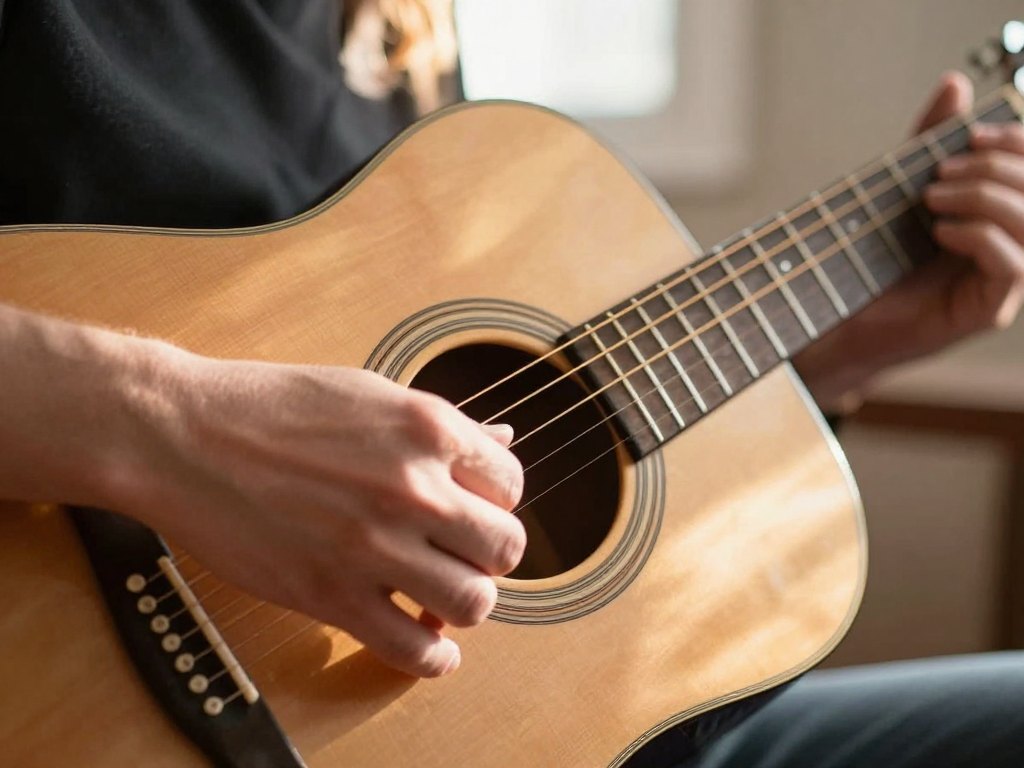
Why a good start matters in fingerstyle
Fingerstyle turns one guitar into a whole band: a bass line, a chord accompaniment and a melody, all played by your fingers at the same time. It is one of the most rewarding ways to play, and also one of the easiest to start badly. Many people pick up a few patterns from random videos, build habits that feel fine for a month, and then hit a wall.
Typical problems are a tense right hand, thumb and fingers that do not work independently, uneven rhythm, and a left hand that struggles to keep up. Each of these is easy to prevent at the beginning and slow to fix after a year of repetition. That is the situation this course is built around.
The programme is designed for people who want to start fingerstyle and get everything right from the first lessons. You work on posture, hand position and finger independence before you move on to arrangements, so each new piece rests on a technique you can trust.
You do not need to know the whole fretboard or read complicated notation. You need a guitar, a little time most days and the patience to practise slowly. The lessons take care of the rest by showing exactly what to do and in what order.
What you will be able to do
- Hold the guitar and position your hands correctly
Sit and set up your hands so they stay relaxed and free of strain.
- Pluck strings with independent thumb and fingers
Build the coordination that every fingerstyle piece depends on.
- Play steady patterns against a metronome
Develop an even pulse so your playing sounds clean and confident.
- Combine a bass line with chords and melody
Understand how one guitar carries several musical parts at once.
- Move between chords smoothly while picking
Prepare the left hand so changes do not break the rhythm.
- Read simple tablature for fingerstyle pieces
Learn new material from written music without guessing.
- Learn a piece from start to finish
Break a piece into parts, practise them and join them together.
- Organise your own practice sessions
Use a short, repeatable routine that produces steady progress.
- 6
- modules
- 20
- video lessons
- 8
- practical skills you build
- 14 days
- refund window
The idea behind the method
The course follows a simple principle: technique first, repertoire second. Each module introduces a small set of movements, shows them slowly and close up, and then applies them to short musical examples so the exercise never feels like dry drilling.
You will see the same ideas return in new forms. A pattern from the early lessons becomes the accompaniment of a later piece, and a rhythm exercise turns into part of an arrangement. This repetition is deliberate, because fingerstyle is learned by returning to the basics with ever more music on top.
Along the way you are encouraged to record yourself, compare your playing with the lesson, and slow down whenever something feels uneven. Playing slowly and accurately is the fastest route to playing well, and the lessons keep coming back to that point.
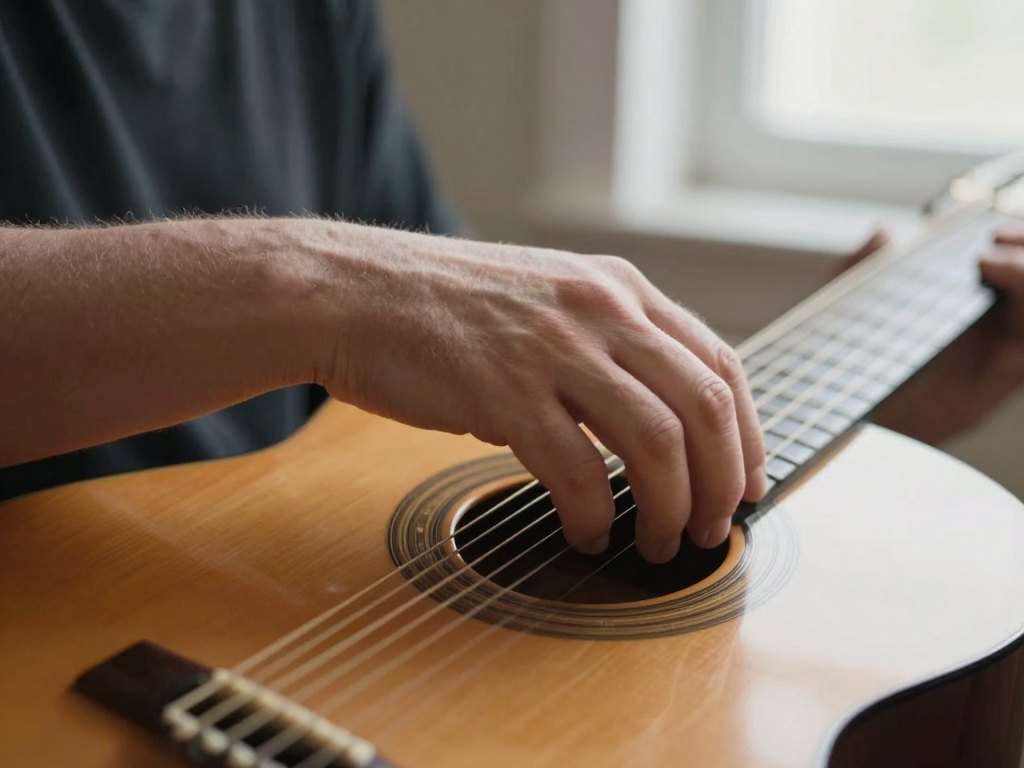
How the course works
The programme is delivered online as self-paced video lessons with accompanying materials. You decide when to study, and you can pause, rewind and repeat any lesson as often as you need. There are no fixed class times and no deadlines.
The lessons are arranged in six modules that build on one another, so it is best to follow them in order. Most people work through one or two lessons at a time and then spend several days practising the material before moving on. Short daily practice generally works better than one long weekend session.
Each module combines demonstration, explanation and exercises you can play along with. Practice material and tab-style examples support the videos, so you always know what to play and how to check your progress. You can come back to any module later when you want to refresh a skill.
The programme
Six modules take you from setting up your guitar to playing a complete beginner fingerstyle piece.
1Module 1 — Setting up for fingerstyleGet the basics of posture and hand position right before you play a note.3 lessons
- How to sit and hold the guitar comfortably
- Shaping the right hand and choosing finger positions
- Nail care and the sound you want to produce
2Module 2 — Right-hand techniqueTrain the thumb and fingers to work independently.4 lessons
- Placing fingers on strings and the basic pluck
- Thumb on the bass strings: steady alternating motion
- Fingers over a moving thumb: first coordination exercises
- Common right-hand mistakes and how to correct them
3Module 3 — The left handPrepare your fretting hand for clean chords and smooth changes.3 lessons
- Fretting without tension and pressing only as hard as needed
- Open chords for fingerstyle and easy chord changes
- Letting notes ring: holding shapes while the right hand plays
4Module 4 — Rhythm and pulseMake your playing even and musical with simple rhythmic tools.3 lessons
- Working with a metronome from the first day
- Counting beats and dividing them evenly
- Accents: shaping a pattern with dynamics
5Module 5 — First fingerstyle patternsPut technique to work in accompaniment patterns that sound like real music.4 lessons
- Your first fingerpicking pattern on open chords
- Variations that keep a pattern interesting
- Adding a simple melody on top of the bass and chords
- Linking two patterns inside one musical phrase
6Module 6 — Your first complete pieceLearn a short piece section by section and build a practice routine around it.3 lessons
- Reading the tablature and planning how to learn the piece
- Practising section by section and joining the parts
- Building a daily routine and choosing what to learn next
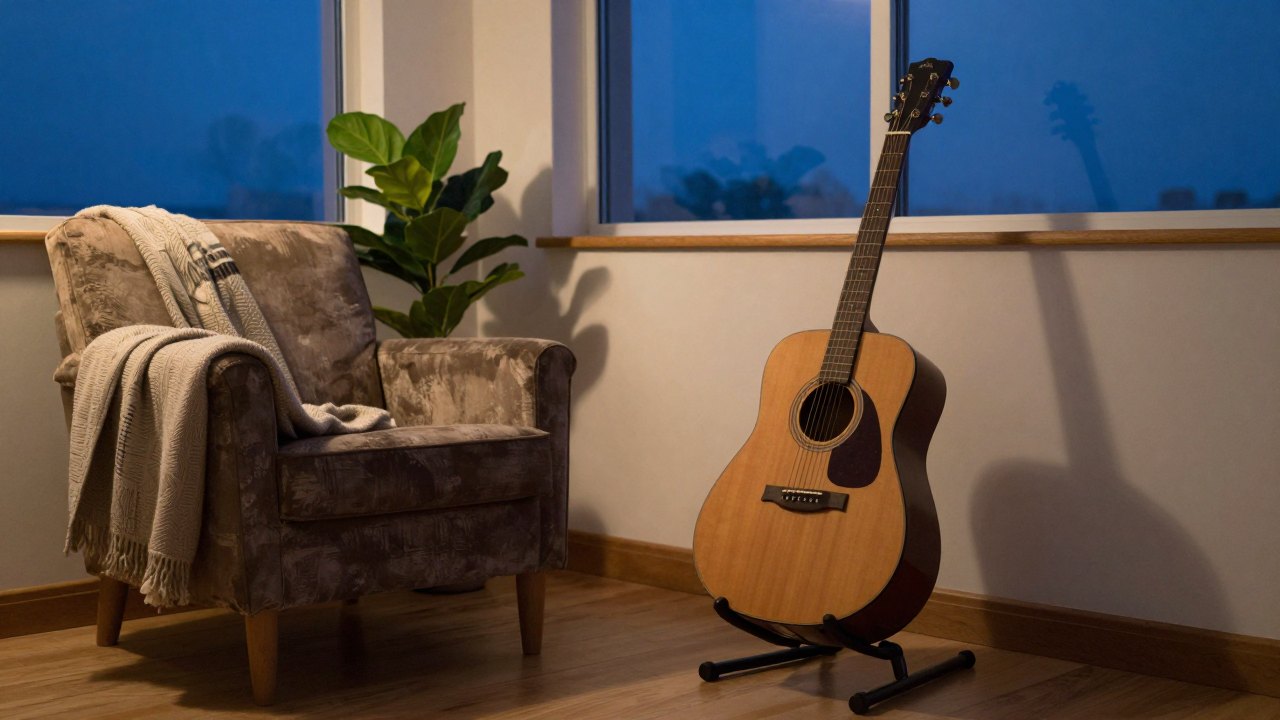
What you get
- 20 video lessons in six modules
Recorded lessons you can watch at your own pace on any device.
- Practice material for every module
Exercises and musical examples to play along with.
- A clear order of study
Each module prepares you for the next, so you never wonder what comes after.
- Unlimited replays
Pause, repeat and slow down any part as often as you like.
- Lifetime access
The lessons stay available after you finish, so you can return to them later.
- 14-day refund policy
If the course is not what you expected, you can ask for a refund within 14 days.
Is this course for you?
This course is for you if…
- You want to start fingerstyle guitar and avoid bad habits from the beginning.
- You can play a few chords or even none yet, and want a structured path rather than random videos.
- You have tried fingerpicking before but your right hand feels clumsy or tense.
- You prefer learning at your own pace in short daily sessions.
- You would like to play complete pieces, not only exercises.
Probably not a fit if…
- You are looking for live one-to-one lessons with personal feedback.
- You are already an advanced fingerstyle player looking for complex arrangement or composition techniques.
- You expect to play difficult concert pieces within a few days of starting.
- You do not have access to a guitar to practise on.
After the course
When you finish the programme, your hands will know what to do. You will be able to sit comfortably, pluck with a relaxed right hand, keep a steady pulse and switch between chords without losing the rhythm.
You will have learned at least one complete piece from start to finish, and, more importantly, you will know how to learn the next one. Reading tablature, splitting a piece into sections and practising slowly will feel like normal parts of your routine.
From here you can choose where to go next: more repertoire, percussive effects, your own arrangements or deeper harmony. Whichever direction you choose, you will be building on a solid foundation rather than patching holes in it.
Questions before you start
How much time do I need per week?
Plan for about three to five hours a week: one or two lessons and a few short practice sessions. Because the course is self-paced, you can do more or less depending on your schedule.
Do I need any experience?
No. The course is designed for beginners in fingerstyle. Basic familiarity with the guitar helps, but the early lessons explain posture, hand position and the first chords step by step.
What equipment do I need?
You need an acoustic or classical guitar, a metronome (a free app is fine) and a quiet place to practise. A device for watching the videos is also required.
How does access work after payment?
Once your payment is confirmed, you receive access to the course and can start the first lesson straight away. You can study at any time and on any device.
What format are the lessons in?
The lessons are recorded video lessons, supported by practice material and musical examples. You can watch them as many times as you like.
Will the material stay available?
Yes. Access does not expire, so you can return to any lesson whenever you want to revise a skill or start again.
What is the refund policy?
You can request a refund within 14 days of purchase if the course is not right for you.
Do I have to follow the lessons in order?
We recommend it. Each module builds on the previous one, especially the technique modules at the beginning. If you already feel confident with a topic, you can move faster through that part.
Begin with the right foundations
Start the first lesson today and build fingerstyle technique you can rely on for years.