Beauty · Intermediate
Build fantasy nails of extreme length with a repeatable system
A step-by-step programme that takes you from nail architecture and precise filing to a clean, balanced final assembly.
- 6 modules, 18 video lessons
- Self-paced learning
- Lifetime access
- 14-day money-back guarantee

Why extreme-length fantasy nails are so hard to get right
Fantasy nails of extreme length look effortless in photos, but anyone who has tried to build one knows how unforgiving the process is. A small error in the base structure shows up as a crooked line, a weak point or a shape that simply refuses to balance once the length grows. Fixing it late usually means starting again.
Most technicians learn by trial and error, copying a finished picture without knowing why it works. They can see the result, but not the decisions behind it: where the strength has to sit, how the silhouette is planned, how filing is sequenced and in what order the parts are put together.
This programme is built around a single authored system for creating fantasy nails. It is based on competition experience and on the analysis of thousands of finished pieces. Instead of showing one dramatic design and leaving you to guess, it breaks the work into clear stages you can repeat on any design you invent.
You will learn to think like a designer first and a builder second. You plan the architecture, prepare the elements, refine them with precise filing and assemble everything into a finished piece with clean lines and a confident silhouette.
What you will be able to do
- Plan the architecture of an extreme-length nail
Decide on proportions, balance and structure before you start building.
- Design an original fantasy concept
Turn an idea into a drawn plan with a clear silhouette and a logical build order.
- Apply fine jeweller-style filing
Refine edges, surfaces and details with precision rather than guesswork.
- Build components that fit together cleanly
Prepare each element so the final assembly needs minimal correction.
- Assemble the finished piece step by step
Follow a repeatable algorithm from first element to final finish.
- Spot and correct structural weak points
Recognise problems early and fix them before they spoil the result.
- Evaluate your own work critically
Use a checklist of what makes a piece look balanced and polished.
- Present your work with a professional finish
Prepare the piece for photos, portfolio use or a competition table.
- 6
- modules
- 18
- video lessons
- 1
- complete build algorithm
- 14 days
- refund window
The idea behind the method
The system follows the order in which a fantasy piece is actually created: idea, architecture, parts, filing, assembly and finish. Each stage has its own goals and its own typical mistakes, and the lessons treat them one at a time so you never face everything at once.
Rather than memorising a single design, you learn principles you can reuse. Once you understand how length, curvature and balance interact, you can apply the same logic to shapes the lessons never show.
Throughout the programme, the emphasis is on clarity. You see what is done, why it is done in that order, and what happens if you skip a step. That makes it easier to diagnose your own work when something does not turn out as planned.
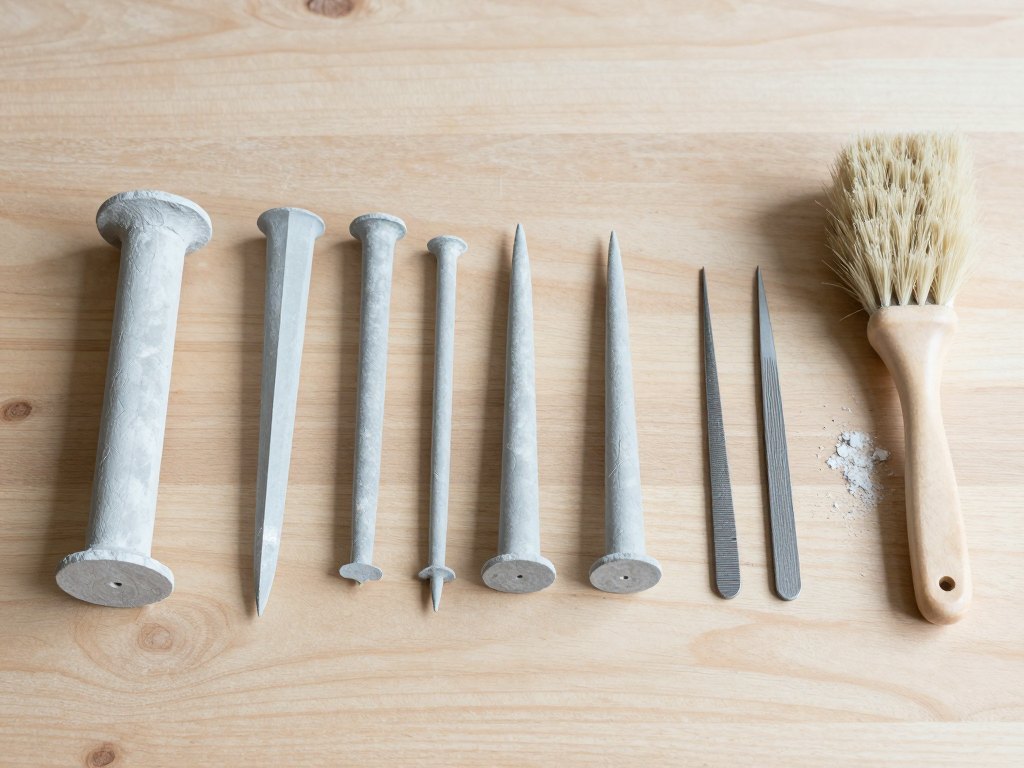
What changes when length becomes extreme
At ordinary lengths, a nail forgives a lot. At extreme length, every small decision is magnified. A slight asymmetry becomes a visible tilt, a thin area becomes a break point, and an unplanned curve changes how the whole piece sits and looks.
That is why the programme spends real time on planning before any building begins. You learn to judge proportion on paper, to anticipate where stress will gather, and to choose a build order that keeps the work stable at each step.
The same thinking also saves time. When the structure is right from the start, filing is faster, assembly needs fewer corrections and you spend your energy on the details that make a piece memorable.
How the course works
The programme is delivered as self-paced video lessons with supporting materials. You decide when to study, pause or rewatch a step as often as you need. Lessons are arranged in a fixed order, so each module builds on the previous one, and you can follow along at your own work table.
We recommend watching a lesson through once, then repeating it while you work. Fine filing and assembly are skills of the hands, and they improve with practice, so expect to revisit some lessons several times as your confidence grows.
Everything is available online from the moment your payment is confirmed. You can study on a computer, tablet or phone, and return to any lesson later when you start a new project.
The programme
Six modules that follow the real order of work, from the first idea to the finished piece.
1Module 1 — The system and the conceptUnderstand the overall approach and plan your first fantasy design.3 lessons
- How the build system is organised
- Finding and developing a fantasy concept
- Turning the concept into a working sketch
2Module 2 — Architecture of extreme lengthLearn how structure, proportion and balance work at extreme length.3 lessons
- Proportions and silhouette at extreme length
- Where strength must sit in the structure
- Common architectural mistakes and how to avoid them
3Module 3 — Materials and preparationPrepare your workspace, tools and base elements for a clean build.3 lessons
- Choosing tools and materials for large pieces
- Preparing the base elements
- Planning the order of work for your design
4Module 4 — Jeweller-style filingRefine each element with precision and control.3 lessons
- Principles of fine filing
- Shaping edges, surfaces and transitions
- Checking symmetry and fit before assembly
5Module 5 — Assembly at championship levelPut the parts together into one balanced piece.3 lessons
- Assembling the elements in the right sequence
- Aligning the structure and correcting deviations
- Securing the piece for durability
6Module 6 — Finish and reviewPolish, evaluate and present the finished work.3 lessons
- Final refinement and surface finish
- A checklist for evaluating your own work
- Presenting and photographing the piece

What you get
- Six modules of video lessons
Eighteen lessons arranged in the order of the real build process.
- A repeatable build algorithm
One clear sequence you can apply to your own designs.
- Supporting materials
Reference notes that accompany the lessons.
- Self-paced access
Study when it suits you and rewatch any step.
- Lifetime access
Come back to the lessons whenever you start a new piece.
- Study on any device
Watch on a computer, tablet or phone.
- 14-day money-back guarantee
If the programme is not right for you, ask for a refund within 14 days.
Is this course for you?
This course is for you if…
- Nail technicians who want to move into fantasy and sculptural work
- Experienced artists who want a structured method instead of trial and error
- Technicians preparing pieces for portfolios or competitions
- Anyone who enjoys detailed, patient handwork and wants to refine it
Probably not a fit if…
- Complete beginners who have never worked with nail products
- Anyone looking for a quick, five-minute design
- People who do not plan to practise the techniques between lessons
- Learners who expect personal feedback on every piece
After the course
When you finish the programme, you will no longer start a fantasy piece with a vague picture and hope. You will begin with a plan: a sketch, a structure and a clear order of work, and you will know what to check at every stage.
Your filing will be more deliberate, your elements will fit together with less correction and your finished pieces will look more balanced. You will also be able to explain your decisions, which helps when you refine your style or teach others.
The lessons stay available, so you can return to any module when you take on a new design. Many learners find that the second and third build go noticeably faster than the first.
Questions before you buy
How much time do I need each week?
There is no fixed schedule. Many learners set aside a few hours a week to watch a lesson and then practise it at their work table, but you can go faster or slower.
Do I need previous experience?
Yes, a basic level of nail technician skills is expected. The programme is aimed at people who already work with nail products and want to develop fantasy and extreme-length work.
How does access work after payment?
Once your payment is confirmed you receive access to the lessons online. You can start straight away and study at your own pace.
What is the refund policy?
You can request a full refund within 14 days of purchase if the programme is not what you expected.
What format are the lessons in?
The lessons are recorded video, supported by additional materials. You can pause, rewind and rewatch any step.
Does the material stay available?
Yes. Your access does not expire, so you can return to the lessons whenever you start a new project.
Can I study on my phone?
Yes. The lessons can be watched on a computer, tablet or phone, although a larger screen helps when you follow fine detail.
Will I get personal feedback on my work?
The programme is a self-paced lesson library. It teaches a method you apply yourself rather than offering one-to-one coaching.
Start building your first fantasy piece
Get access to all six modules and work through the system at your own pace.