Creative · All levels
Draw and paint regularly, with a whole year of guided practice
New workshops every week, a large archive of recorded lessons and a set of full courses, from first pencil lines to oil portraits.
- 108 new workshops over the year
- Archive of 1,000+ lessons
- 14 full courses included
- Feedback on every finished work
- One free month of pause
Why most people stop drawing after a few weeks
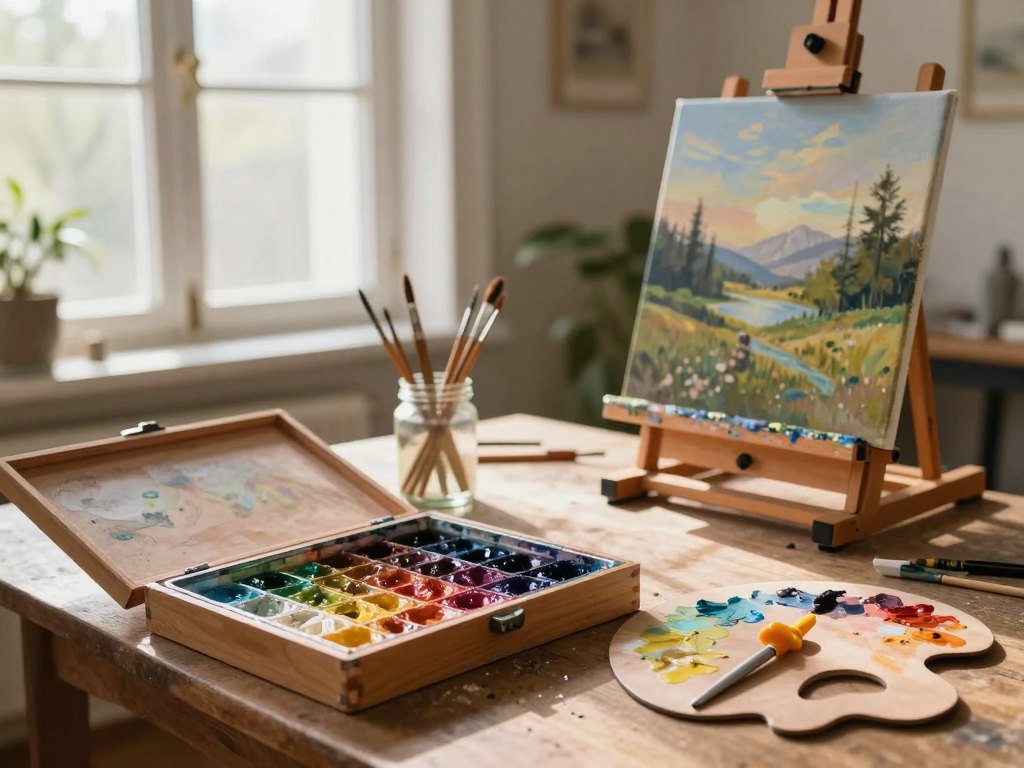
Many adults start drawing with enthusiasm. They buy a set of paints or a sketchbook, watch a few videos and make two or three pictures. Then life gets busy, the materials stay in a drawer, and the habit never forms. The problem is rarely talent. It is usually the lack of a clear path, a regular rhythm and someone to look at what you made.
Free tutorials are scattered. One video shows gouache, the next shows charcoal, and none of them explains how to move from one skill to the next. You can copy a picture step by step and still not understand why the colours work or how to build a face from scratch. Without feedback, the same mistakes repeat for months.
This programme is built around those gaps. It combines a steady stream of new workshops, which keeps you drawing week after week, with structured courses that teach the foundations: construction, light and shadow, colour and composition. Every month brings different materials and subjects, so practice stays interesting.
You can follow the weekly workshops live as they are prepared for the season and the mood of the group, or work through the archive in your own time. Either way, you always have a next picture to make and a place to show it.
What you will be able to do
Skills you build across the year, depending on the courses and workshops you choose.
- Construct simple forms in perspective
Build cubes, prisms and cylinders, then combine them into towers, churches and whole city scenes.
- Mix colours with confidence
Tell warm and cool shades apart and find the colour you need with a limited set of paints.
- Draw a face from its structure
Place the eyes, nose, mouth, ears and cheekbones using the skull and muscles as a guide.
- Create portraits in several media
Work in pencil, charcoal and sepia, acrylic and oil, each with its own approach to tone.
- Compose a still life with light and shadow
Arrange objects on the sheet and give them volume and material quality using oil pastel.
- Recognise and use painting styles
Rework one subject in cubism, impressionism, pop art, op art and other movements.
- Explore abstraction step by step
Use dots, lines, colour, texture and gesture to express a mood without depicting objects.
- Sketch the human figure in motion
Capture balance, weight and proportion in standing, sitting and dancing poses.
- Try new materials without guesswork
Follow clear material lists for gouache, tempera, acrylic, watercolour, pastel and oil.
- 12
- months of access
- 108
- new workshops in the year
- 1,000+
- lessons in the six-year archive
- 14
- full courses included
A different subject and material every month
The workshops follow the seasons. One month might bring landscapes in oil pastel, the next animals in acrylic, then tea-time still lifes in coloured pencil or portraits in ink and watercolour. Participants choose the references, so the lessons reflect what the group actually wants to paint rather than a fixed list.
Each workshop comes with a clear list of what you need: paper format, brush numbers, the exact paint colours and tools. You can prepare in advance, and you never have to guess whether a material will suit the task. If you do not own a particular medium, many sessions are repeated in other materials, so you can swap in what you have.
The weekly rhythm matters more than any single lesson. Three workshops a week give you plenty of chances to pick up the pencil, and the accompanying chat keeps you in touch with other people who are working on the same picture at the same time.
How the programme works
You join for one year. During that time you can take part in the weekly workshops as they appear, browse the archive of recorded lessons from the past six years and work through the full courses at your own speed. There are no fixed exam dates, and you decide how many hours a week to spend.
Most lessons are video demonstrations: you watch the process, then paint along or after. Each lesson lists the materials and describes the task. When you finish a piece, you can submit it and receive feedback on that specific work, with comments on construction, tone, colour and composition.
A community chat is part of the access. It is a place to share finished pictures, ask about materials, and find people to practise with. Twelve themed contests run during the year, with prizes. Joining them is optional, but they give a reason to finish something you might have left half-done.
If you need a break, you can freeze your access for one month at no cost. The programme also includes extra lessons on creative practice and personal development.
The programme
The year includes the weekly workshops and the full courses below. Here is a selection of the courses, with their lessons.
1Architectural drawingLearn to build buildings from simple forms and place them in perspective.12 lessons
- Cube: through-construction from different angles
- Cube on cube and the four-sided prism
- Cylinder, including the horizontal position and ellipses
- Assembling a tower and a church from simple forms
- Putting a city together: overlapping buildings and perspective
2Colour theoryUnderstand warm and cool shades and practise mixing them with gouache.12 lessons
- Shades of yellow
- Shades of blue and violet
- Shades of red and green
- Colour mixing exercises
- Consolidation tests
3Different painting stylesStudy the key features of each movement, then rework a still life in that style.12 lessons
- Cubism
- Impressionism and expressionism
- Art deco in two parts
- Pop art and op art
- Suprematism
- Your own picture in a chosen style
4Face anatomy: the base for all portrait coursesBuild the head from its structure before drawing any portrait.15 lessons
- Main proportions and features of the face
- Anatomy of the eye, including direction of gaze
- Anatomy of the nose and mouth
- Anatomy of the ears, cheekbones and cheeks
- Sketching a person from the front and in three-quarter view
5Pencil portraitsPractise tone, hatching and smudging on a range of portrait subjects.11 lessons
- A young woman: head construction and hatching
- A bearded man
- A child: working from the tonal patch
- A portrait with a cat, in two parts
- A longer portrait worked over three lessons
6Still lifes in oil pastelLearn light, shadow and composition with a medium that is easy to start.13 lessons
- Simple still life with fruit
- Still life from a photo
- Still life on newspaper and on black paper
- Still life with flowers and sunlight
- Complex still life in two parts
7The art of abstractionMove from impressions to understanding through ten expressive exercises.13 lessons
- Dot and spot: balance and accent
- Line and rhythm
- Contrast and dominant
- The sound of colour
- Texture
- Fluid art and the freedom of gesture
- Typographic collage
8CalligraphyTry several historical and modern lettering traditions.6 lessons
- Introduction: tools, paper and ink
- Gothic calligraphy
- Old Slavic ligature and uncial script
- Brush-pen calligraphy
- Copperplate script
- Modern experimental calligraphy
What you get
- 12 months of access
Full access to the content for a year from payment.
- 108 new workshops
New lessons every week with materials lists.
- A six-year archive
More than 1,000 lessons you can open any time.
- 14 full courses
From architectural drawing to oil portraits and calligraphy.
- A foundation programme
A multi-term course covering materials, colour, composition, anatomy and copying master works.
- Feedback on your work
Comments on every piece you finish and submit.
- The community chat
Conversation with other learners for the whole year.
- 12 themed contests
Optional challenges with prizes.
- A free one-month pause
Freeze your access when life gets in the way.
Is this programme for you?
This course is for you if…
- You enjoy drawing or painting and want to do it every week, not once in a while.
- You are a beginner who wants a structured path from simple forms to full pictures.
- You have tried a few materials and want to know which ones suit you.
- You like learning in a friendly community and getting feedback on your work.
- You want a large library of lessons you can return to throughout the year.
Probably not a fit if…
- You want one short lesson on a single technique rather than a year-long programme.
- You are not willing to buy basic art materials, which every lesson needs.
- You expect to become a professional without regular practice.
- You are looking for private one-to-one tuition.
After a year with the programme
After twelve months you will have a drawer full of finished pictures in many media, instead of a handful of abandoned attempts. You will know how to build a cube, a face or a still life from simple forms, and how to judge tone and colour by eye.
You will have tried pencil, charcoal, gouache, tempera, acrylic, watercolour, pastel and oil, so you can say which you enjoy and why. You will also know how to follow a painting from a photo, and how to compose your own subject.
Most importantly, drawing will be a habit. You will have a weekly rhythm, a circle of people to share work with and an archive to turn to whenever you want to learn a new subject.
Questions before you buy
How much time do I need each week?
It is up to you. A single workshop usually takes an evening, and three are published each week. Many learners pick one or two a week and work through other courses when they have time.
Do I need any previous experience?
No. The foundation courses begin with simple forms, colour basics and facial structure. If you are more experienced, you can go straight to the portrait, abstraction or oil courses.
What materials will I need?
Each lesson lists the paper, pencils, paints and brushes it uses. You can buy materials gradually, starting with a pencil and an eraser for the first drawing lessons.
How does access work after payment?
Once your payment is confirmed, you receive access to the lessons, courses and chat. Access lasts for twelve months from the date of purchase.
In what format are the lessons?
The lessons are video demonstrations with written task descriptions and material lists. You can watch them on a computer, tablet or phone, and pause or repeat any step.
Will the material stay available?
Yes, for the whole access period. The archive and the courses stay open for twelve months, so you can return to any lesson as often as you like.
What if I need a break?
You can freeze your access for one month at no extra cost, and then continue where you left off.
Can I get a refund?
Yes. If the programme does not suit you, you can ask for a full refund within 14 days of purchase.
Is feedback included?
Yes. You can submit the works you finish and receive comments on each of them, so you know what to improve next.
Start your year of drawing
Pick up a pencil this week and join a community that paints together.