Wellbeing · All levels
Rebuild your daily routine and get your energy back
A step-by-step programme of video lessons and practical tasks that replaces exhaustion and guesswork with a routine you can actually keep.
- 29 video lessons
- 23 practical tasks
- Starts right after payment
- Short daily practices
- 14-day refund policy

Why tiredness keeps coming back
Many adults describe the same pattern. You wake up already tired, push through work, spend what is left of the evening on the sofa, and promise yourself that next week will be different. Then next week arrives with the same schedule, the same late nights and the same drained feeling by mid-afternoon.
Most advice makes this worse. It tells you to add intense workouts, strict diets or a perfect morning ritual on top of a life that is already full. These plans rarely survive the first busy week, and each failed attempt makes you trust yourself a little less.
This programme starts from a different idea: energy is a resource that you spend and refill every day, and the biggest factor is not a single heroic effort but the routine around it. When sleep, movement, meals, rest and focus are arranged sensibly, you stop leaking strength on things that do not matter.
The lessons walk you through that arrangement one piece at a time. Each step is small enough to fit into an ordinary day, and each one comes with a practical task so that you try it instead of just watching it.
What you will be able to do
By the end of the programme you will have both the understanding and the habits behind it.
- Build a daily routine that fits your real schedule
You design the structure around your work, family and hobbies instead of copying someone else's perfect day.
- Spot where your energy is being drained
You learn to notice the habits and kinds of tension that quietly use up your strength.
- Plan your sleep and wake-up time sensibly
You set a rhythm that you can hold on weekdays and weekends alike.
- Use short movement practices through the day
You add ten to twenty minutes of gentle activity without special equipment.
- Organise meals and rest around your energy
You see how the timing of eating and breaks affects how you feel in the afternoon.
- Handle stress with simple calming techniques
You keep a few quick practices ready for tense moments.
- Build discipline without forcing yourself
You turn good intentions into habits using small, repeatable steps.
- Track your progress and adjust the plan
You use simple notes to see what works and change what does not.
- 29
- video lessons
- 23
- practical tasks
- 6
- modules
- 10–20 min
- typical daily practice
Small steps, repeated every day
The method behind the programme is consistency over intensity. Instead of asking for an hour of exhausting exercise, it asks for a short practice that you can do on your worst day as well as your best one.
Every module ends with a practical task. You apply the idea to your own week, notice what changes, and bring that observation into the next lesson. Over time, these small adjustments add up to a routine that feels like yours.
- Short practices that fit a morning or evening routine
- No hard loads and no complicated movements
- Tasks that turn each lesson into a real habit
- Gradual progress that avoids overload
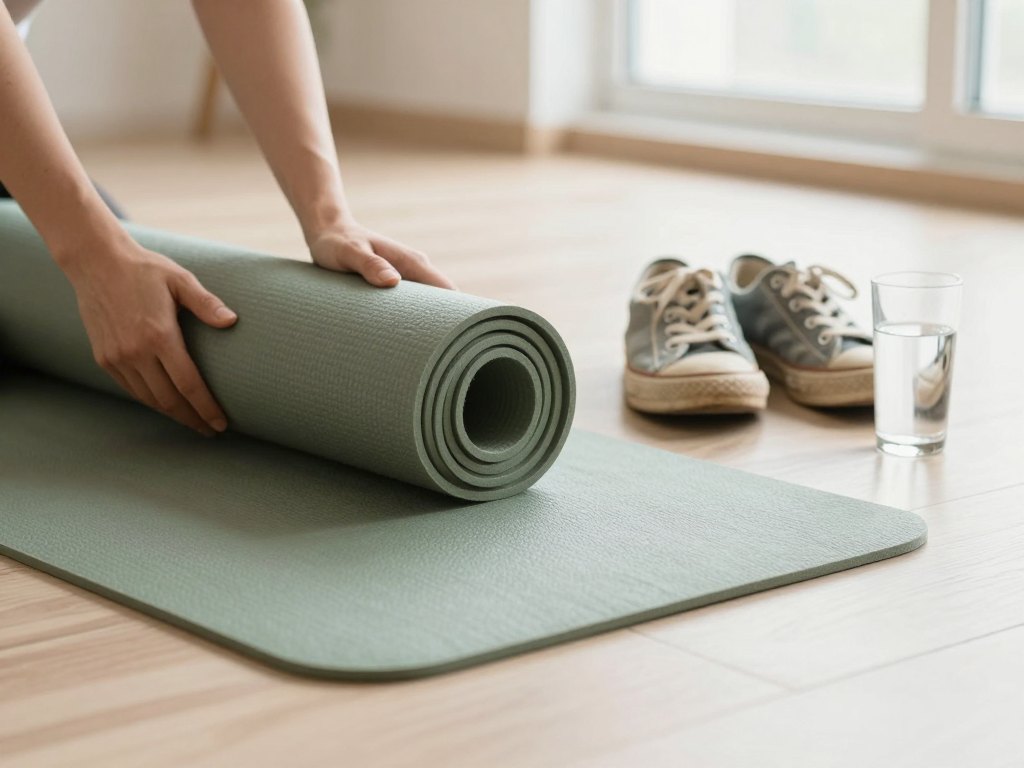
How the course works
The programme is a self-paced video course. After payment you get access straight away and can start the first lesson the same day. You choose your own pace: some people watch a lesson a day, others take a lesson every few days and spend the rest of the week on the tasks.
Each lesson combines a short explanation with something to try. The theory is kept practical, so you always know why you are doing a step and what it should change in your day. The 23 practical tasks are spread across the modules and are designed to take only a few minutes at a time.
Because everything is recorded, there is no fixed class time to keep. You can watch in the morning, on a commute or in the evening, and return to any lesson whenever you want to refresh a step. The programme is meant to sit alongside whatever activity you already do, not replace it.
The programme
Six modules, 29 video lessons, each building on the previous one.
1Module 1 — Why a routine is the foundationUnderstand how daily structure shapes how you feel.5 lessons
- How energy is spent and refilled during the day
- Why intense plans fail and routines last
- Finding the hidden drains on your strength
- Setting a realistic goal for the programme
- Your starting point: a simple self-check
2Module 2 — Sleep and waking upCreate a rhythm for rest that you can maintain.5 lessons
- What a steady sleep rhythm looks like
- Preparing for the evening and winding down
- Waking up without a fight
- Handling late nights and irregular days
- Practical task: your two-week sleep plan
3Module 3 — Gentle daily movementAdd short, safe practices that wake up the body.5 lessons
- A ten-minute morning sequence
- Releasing tension in the neck and shoulders
- Movement breaks for desk days
- An evening practice for calm
- Adapting the exercises to your fitness level
4Module 4 — Food, water and daily rhythmArrange meals and breaks around your energy.5 lessons
- Meal timing and the afternoon slump
- Simple habits around water and snacks
- Building breaks into a working day
- Rest that actually restores you
- Practical task: your weekly rhythm
5Module 5 — Calm, focus and disciplineManage stress and build habits you keep.5 lessons
- Quick techniques for tense moments
- Breathing practices for a steadier state
- Habits without willpower battles
- Balancing discipline with enjoying life
- Keeping your attention on what matters
6Module 6 — Putting it all togetherCombine the pieces into one routine for the long term.4 lessons
- Assembling your full daily routine
- Adjusting the routine for busy and quiet weeks
- Tracking progress and reviewing what works
- Your plan for the months ahead
What you get
- 29 recorded video lessons
Clear, practical lessons you can watch at any time.
- 23 practical tasks
Short assignments that put each idea into your own day.
- Immediate start
Access opens straight after payment.
- Short daily practices
Most exercises take about ten to twenty minutes.
- Self-paced learning
Move as quickly or slowly as your schedule allows.
- Adaptable exercises
No hard loads or complex movements, so you can adjust to your level.
- Return to lessons any time
Revisit any step when you need a reminder.
Is this course for you?
This course is for you if…
- Adults who feel tired even on quiet days and want a sustainable routine
- Busy people who need practices that fit into ten to twenty minutes
- Beginners who have not exercised in a long time and want a gentle start
- People who have tried strict plans before and could not keep them
- Anyone who already trains and wants a better foundation of rest and rhythm
Probably not a fit if…
- Anyone looking for a quick fix or an overnight transformation
- People who want intense, high-load workouts
- Those looking for live one-to-one coaching or personal feedback
- Anyone expecting a substitute for medical advice; if you have a health concern, speak to a doctor first
After the course
When you finish the programme you will have a written routine that matches your life, not a generic template. You will know when you go to bed and wake up, when you move, when you eat and when you rest, and you will have a few practices ready for the moments when stress builds.
You will also have the habit of checking in with yourself. Instead of waiting until you are exhausted, you can notice early signs, adjust the day and keep going. That awareness tends to be the most lasting part of the programme.
Because the lessons stay in your account, you can come back whenever your circumstances change, such as a new job, a new baby in the family or a busier season, and rebuild the routine step by step.
Questions before you buy
How much time do I need each week?
Most practices take about ten to twenty minutes a day. Plan for roughly two to three hours a week including the lessons and tasks, and adjust that to your own pace.
Do I need any experience or equipment?
No. The programme suits any level of fitness, and you do not need special equipment. The exercises are gentle and can be adapted if something feels uncomfortable.
How does access work after payment?
Access opens immediately after payment. You receive a link to your account, where you can start the first lesson straight away and move at your own pace.
What if I cannot study at a set time?
All lessons are recorded, so there is no fixed schedule. You can watch in the morning, evening or whenever suits you.
What format are the lessons in?
They are self-paced video lessons accompanied by practical tasks. You can watch them on a computer, tablet or phone.
Will the material stay available?
The lessons remain in your account so you can return to them whenever you like and repeat any step.
What is the refund policy?
If the programme is not right for you, you can ask for a refund within 14 days of purchase.
Will it work if I have limited fitness or I am busy?
The practices are short and gentle, so they fit busy days. If you have a medical condition or concerns about exercise, check with your doctor before starting.
When will I notice a difference?
Results vary from person to person. Many people notice small changes in how they feel once a regular routine is in place, but the programme does not promise specific outcomes.
Start building your routine this week
Get access to all 29 lessons and 23 practical tasks and begin with the first step today.