Cooking · All levels
Bake bakery-quality filled croissants and decorate them with confidence
Six croissant varieties, two preparation methods and several decoration styles, taught in step-by-step video lessons you can follow at your own pace.
- 6 croissant varieties
- Home or professional equipment
- Step-by-step video lessons
- Recipes and materials
- 14-day refund

Why croissants feel out of reach
A good croissant looks simple and is not. The butter has to stay in distinct layers, the dough has to rest at the right moments, and the proofing has to be judged by eye rather than by the clock. Many home bakers try once, end up with a greasy puddle in the oven, and give up.
Professional bakers face a different problem. A display case needs variety, and customers now expect more than a plain butter croissant. Almond, fruit, cream and double fillings sell well, but each one brings its own risks: leaking filling, soggy layers and decoration that collapses by the afternoon.
This course takes the guesswork out of the process. You learn the dough and lamination once, properly, and then apply the same base to six different croissants. Each lesson shows the steps close up, with the timings and the reasons behind them, so you understand what you are doing and can fix it when something changes.
The course also takes into account that not everyone owns a deck oven and a sheeter. It shows two ways of making the croissants, one for a household kitchen and one for professional equipment, so you can start with what you have.
What you will be able to do
- Prepare laminated dough from scratch
Mix, rest and fold the dough so the butter forms clean, even layers.
- Bake croissants in a household oven
Adapt temperatures, steam and timings to the equipment you already have.
- Work with professional equipment
Follow the second method if you bake in a bakery or a small production kitchen.
- Make six different croissant varieties
Range from classic and almond to exotic flavours with double fillings.
- Fill croissants without leaks
Choose fillings that hold their shape in the oven and stay moist afterwards.
- Combine flavours in a double filling
Pair a cream and a fruit or nut layer so each bite is balanced.
- Decorate in several different styles
Use glazes, toppings and finishing touches that look neat and are quick to repeat.
- Plan a small croissant assortment
Build a range that is easy to produce, sell and photograph.
- 6
- croissant varieties
- 2
- preparation methods
- 5
- modules
- 17
- video lessons
The method: one dough, many croissants
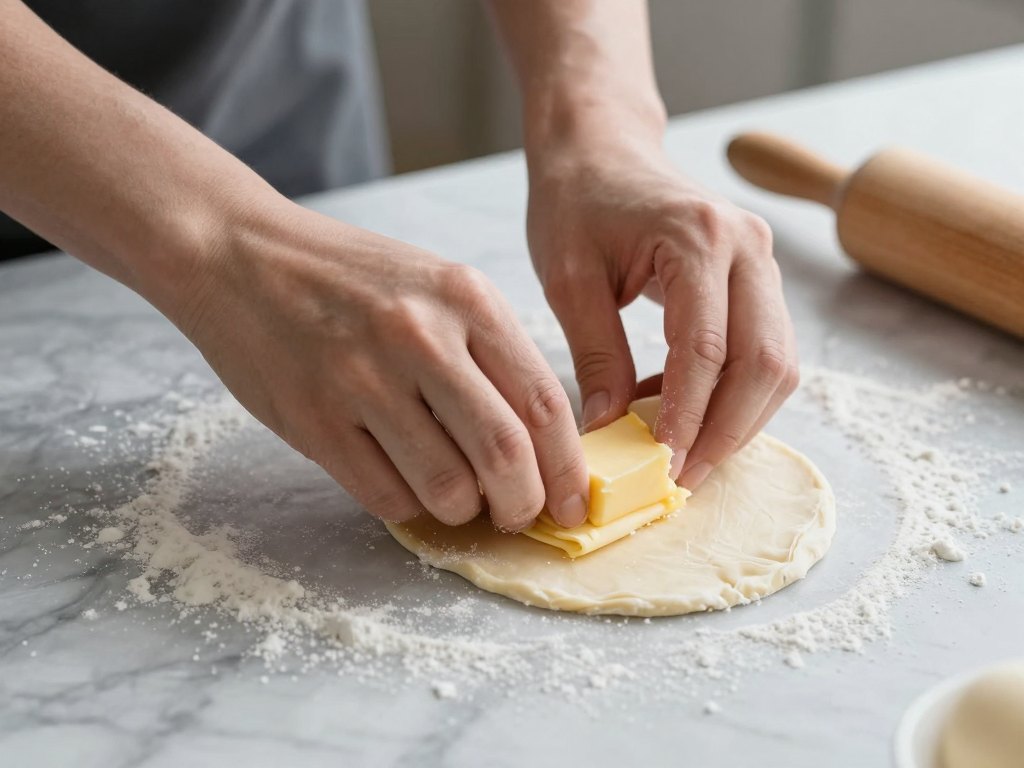
The course is built around a simple idea: master the base, then vary it. You begin with the dough and the lamination, because everything that follows depends on them. Once the layers are right, a filling or a decoration is a matter of technique rather than luck.
Every variety is shown from start to finish, including shaping, filling, proofing, baking and finishing. You see the dough at each stage, so you learn what it should look and feel like, not only what the recipe says.
Two technologies are presented side by side. One is designed for a household oven and basic kitchen tools. The other uses professional equipment and suits larger batches. Comparing them also helps you understand why each step exists, which makes it easier to adjust the recipe later.
The design part of the course is just as practical. Decoration options are chosen so that they can be repeated consistently, whether you are making six croissants for friends or a full tray for a display.
How the course works
All lessons are recorded video and sit on an online learning platform. You can open them at any time and on any device, so you can watch in the evening and then bake at the weekend. The lessons are filmed with professional lighting and sound, which makes it easy to see the details of folding, shaping and filling.
The programme is built for any level of preparation. Complex terms are explained in plain language, and the early lessons assume nothing more than an interest in baking. If you are already experienced, you can move quickly through the basics and spend your time on the fillings and the decoration.
You work at your own pace, and access to the materials is extended so that you are not forced to rush. Lessons come with recipes and written materials so you can print them, keep them in the kitchen and refer to them while you bake. Where the programme includes feedback or group discussion, it is optional and does not replace the recorded lessons.
The programme
Five modules, from the dough to the finished display. Every lesson is a recorded video.
1Module 1 — Laminated dough from scratchThe base that every croissant in the course is built on.4 lessons
- Choosing flour, butter and other ingredients
- Mixing the dough and the first rest
- Laminating: butter block, folds and turns
- Cutting, shaping and proofing the croissants
2Module 2 — Two ways to make themA household method and a professional method, compared.3 lessons
- The household method: oven, tools and steam
- The professional method: equipment and larger batches
- Adjusting temperatures and timings to your equipment
3Module 3 — Classic and almond croissantsStart with the two most popular varieties.3 lessons
- The classic butter croissant, step by step
- Making and using almond filling
- Baking, glazing and checking the crumb
4Module 4 — Double fillings and exotic flavoursTurn the base dough into a wider assortment.4 lessons
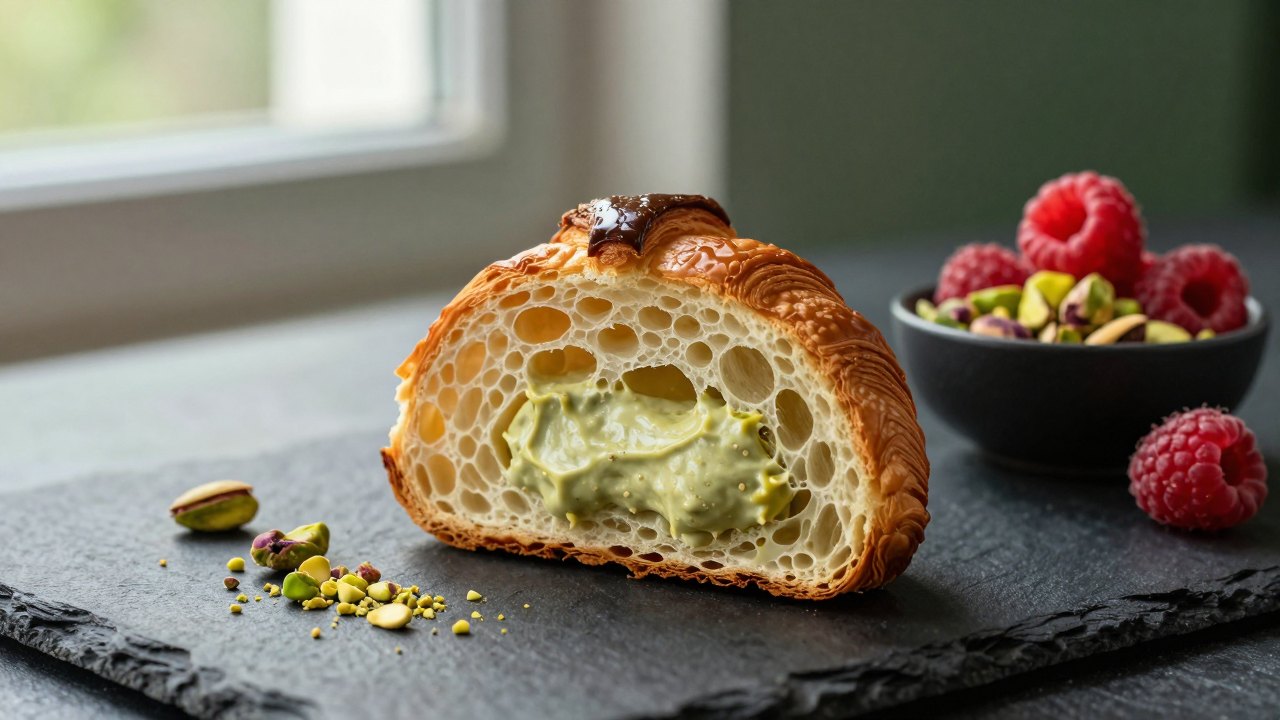
- Principles of a good double filling
- Fruit-based fillings that keep their shape
- Exotic flavour combinations
- Filling before and after baking: when to use which
5Module 5 — Design and presentationFinish the croissants so they look as good as they taste.3 lessons
- Glazes and toppings that hold their shine
- Different decoration options for each variety
- Arranging, storing and presenting the assortment
What you get
- 17 recorded video lessons
Filmed close up with professional light and sound.
- Recipes for six croissant varieties
Quantities and steps you can keep next to your oven.
- Two preparation methods
One for household equipment and one for professional kitchens.
- Decoration ideas for each variety
Several design options that are simple to repeat.
- Access on any device
Watch on a phone, tablet or computer, whenever it suits you.
- Extended access period
Work through the course at your own speed without a deadline pressing on you.
- Support within the programme
Where offered, you can ask questions about the lessons and get answers from the teaching team.
- 14-day refund
If the course is not what you expected, you can ask for your money back within 14 days.
Is this course for you?
This course is for you if…
- Home bakers who want to move from simple bakes to laminated dough
- Small bakeries and cafés that want to widen their pastry range
- Pastry cooks who want new fillings and decoration ideas
- Anyone who enjoys detailed, step-by-step video instruction
- People who want a hobby that can also grow into a small business
Probably not a fit if…
- Those looking for a live, in-person class with a chef beside them
- Readers who want a general introduction to all kinds of baking
- Those who expect to master lamination in a single evening without practice
- Anyone who is looking for a savoury, bread-only programme
After the course
Once you have finished, you will be able to make laminated dough without fear and to judge when it is ready for the next step. You will know why a batch fails and what to change next time, which is the biggest difference between following a recipe and understanding a technique.
You will have six croissant varieties to choose from, each with a tested filling and a finishing style. You can bake a small selection for a family gathering, or prepare a tray for a display case, using the method that matches your equipment.
Most importantly, you will have a base you can keep adapting. New fillings, seasonal flavours and fresh decoration ideas all slot into the same process, so the course keeps being useful long after the last lesson.
Questions before you buy
How much time do I need each week?
There is no fixed schedule. Most people watch one or two lessons and then bake, so a few hours per week is a comfortable pace. You can go faster or slower.
Do I need any experience?
No. The programme is built for any level of preparation, and the first module explains the dough and lamination from the beginning. Previous baking experience helps, but it is not required.
What equipment do I need?
The course shows two methods. One uses a household oven and ordinary kitchen tools. The other uses professional equipment. You can follow whichever matches your kitchen.
How does access work after payment?
After payment you receive access to the course on the learning platform. You can log in from any device and start immediately.
What format are the lessons in?
The lessons are recorded video, filmed with professional lighting and sound, and supported by recipes and written materials.
Will the material stay available?
Yes. The materials stay in your account, and the access period is extended so you can work in your own time.
What is the refund policy?
If the course is not right for you, you can ask for a full refund within 14 days of purchase.
Can I ask questions during the course?
Where the programme includes support, you can ask questions about the lessons and the homework. The recorded lessons are always available whether or not you use it.
Start baking better croissants
Order the course today and begin with the dough in your first lesson.