Business · All levels
Learn to grow seven kinds of mushrooms from start to finish
One programme covers button mushrooms and six exotic species, with step-by-step video lessons, technology maps and downloadable documents.
- 7 courses and modules
- 130 lessons, 250 videos
- Documents and photo galleries
- One year of access
- 14-day refund
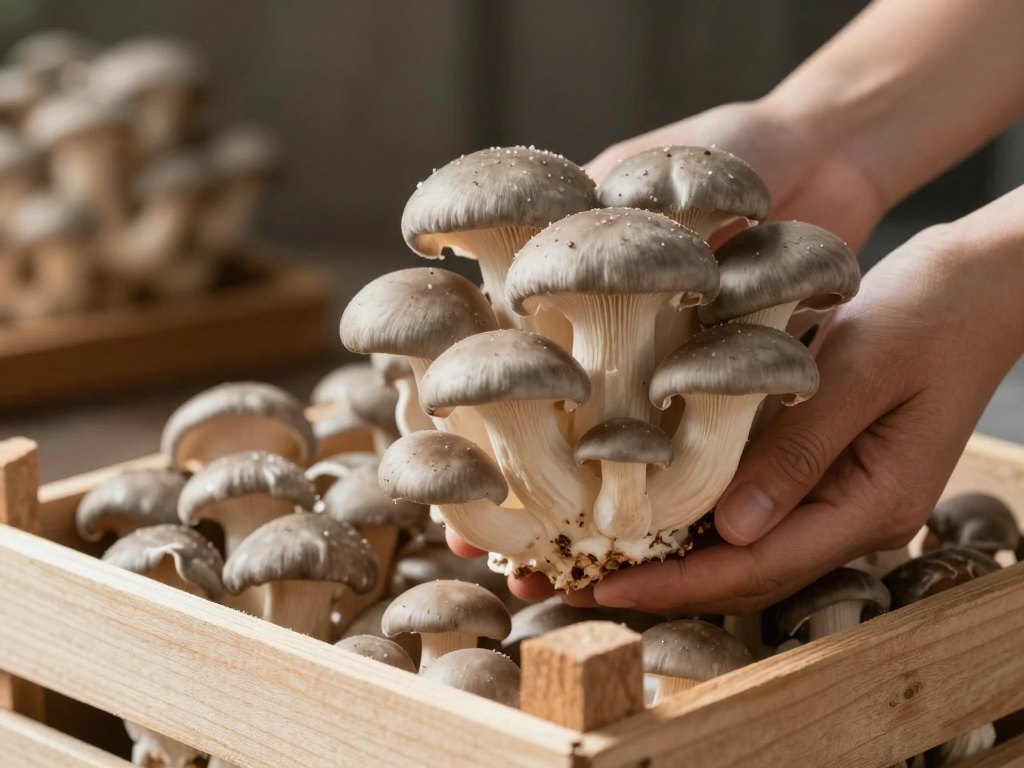
Why growing mushrooms feels harder than it looks
Mushrooms look simple: a little substrate, some moisture, and a harvest a few weeks later. In practice every species has its own temperature, humidity, timing and hygiene requirements, and a small mistake in the first days can ruin an entire batch.
Most people start with scattered videos and forum advice. The advice often contradicts itself, skips the unglamorous steps such as preparing the room, making agar medium or handling the casing layer, and never explains why a step matters.
This programme puts the whole process in one place and in the right order. It is built from long hands-on practice, both in a small experimental growing chamber and on a large production scale, and it explains each phase the way you will actually meet it.
You can follow it as a hobbyist with a spare room, or as someone planning a small farm. In both cases you get the same thing: a clear route from the first preparation to a finished harvest, plus the reasoning behind each decision.
What you will be able to do
- Prepare a room and conditions for growing
Learn what the space, transport and general conditions need before you begin.
- Run the full button mushroom cycle
Follow incubation, casing, watering, the rest phase, the shock phase and fruiting.
- Make and apply a casing layer
The lessons explain how to prepare the casing yourself and when to apply it.
- Harvest and manage two waves of mushrooms
Pick correctly, move from the first wave to the second and keep records.
- Recognise common mushroom diseases
Use the lessons and photo gallery to spot problems early.
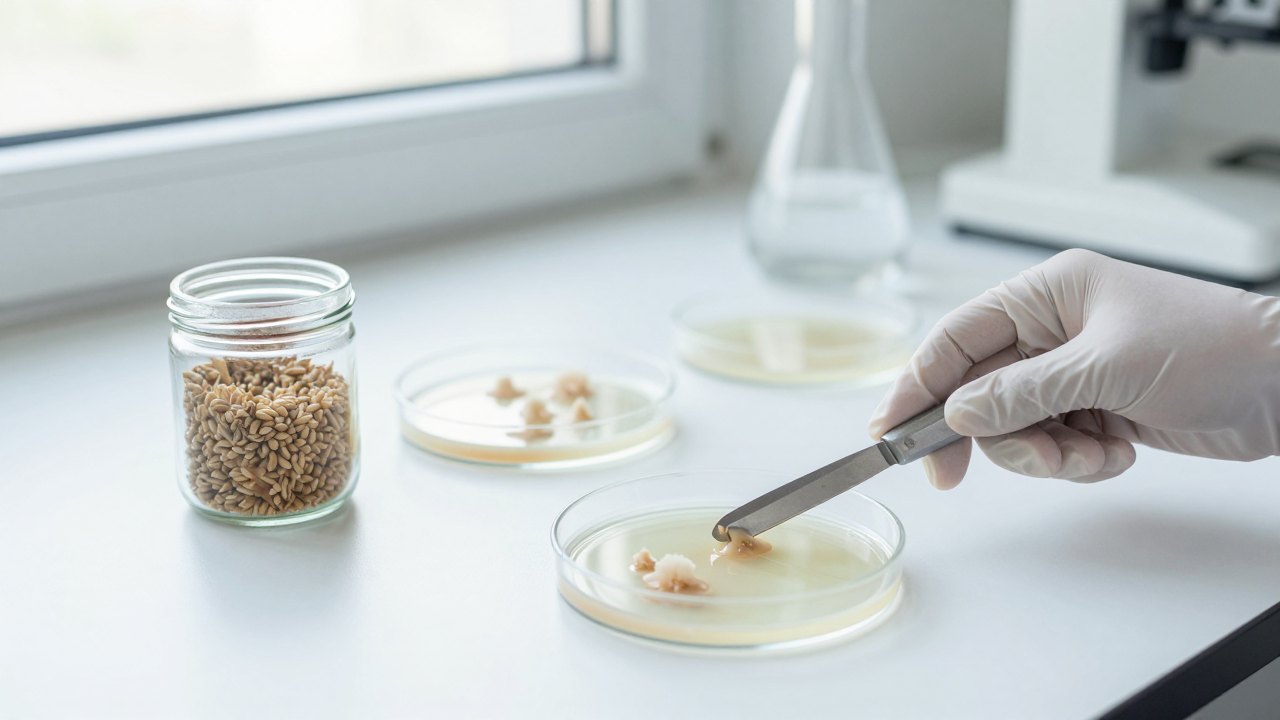
- Prepare agar nutrient medium
Work with recipes and a clear method for growing mushroom tissue on agar.
- Produce grain spawn
Prepare grain, inoculate it and transfer culture from grain to grain.
- Make sawdust blocks for exotic species
Prepare secondary substrate and inoculate it with grain mycelium.
- Grow enoki, oyster, king oyster, lion's mane, shiitake and poplar mushrooms
Each species has its own module with specific instructions.
- 7
- courses and modules in one programme
- 130
- lessons in total
- 250
- training videos
- 1 year
- of access to the materials
Two learning tracks in one programme
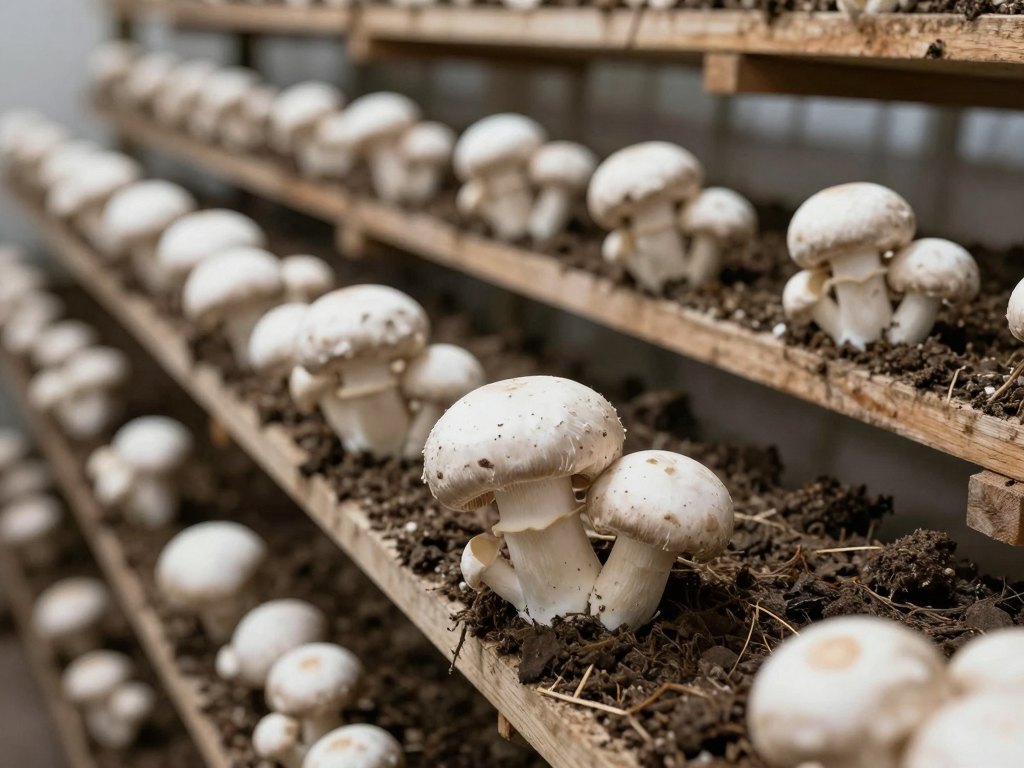
The programme combines two parts. The first is a dedicated course on button mushrooms, which follows one crop from the preparation stage through two harvest waves. It is the most structured part, with a day-by-day incubation schedule, a technology map and a growing timetable.
The second part is a set of modules on exotic species: enoki, oyster, king oyster, lion's mane, shiitake and poplar mushrooms. They begin with laboratory fundamentals such as culture, agar and grain spawn, then move on to substrates, blocks and fruiting.
You can start with whichever track suits your goal. Those who want a first successful harvest in a simple setting often begin with button mushrooms. Those who like working with cultures and want more variety move to the exotic modules.
How the course works
Lessons are recorded in video and text format, so you can watch, pause and re-read at your own pace. There is no fixed schedule. You can open the lesson that matches the stage you are at, which is useful because growing is a process that unfolds over days and weeks.
Many lessons come with downloadable documents, such as technology maps and growing schedules, and some include photo galleries to compare with what you see in your own room. The materials work on a computer and on a phone through a free mobile app, so a lesson can be next to you while you work.
Each module has its own closed chat for questions and discussion with other learners. Access to the materials in this programme lasts one year from purchase, and an extension is available if you need more time.
The programme
Seven courses and modules: one on button mushrooms and six on exotic species. The list below shows the main topics covered.
1Button mushrooms: preparation and incubationGet ready and run the incubation period day by day.Pre-training course and incubation videos
- Pre-training: the room, transport and other conditions
- Incubation: 16 days of video lessons
- Technology map and growing schedule
- Loosening phase and applying the casing layer
2Button mushrooms: from fruiting to harvestMove through the phases that decide your yield.Phases, harvest and documents
- Watering
- Recovery and the stop phase
- The shock phase
- Fruiting phase and the first wave
- Picking the mushrooms
3Button mushrooms: second wave and diseasesFinish the cycle and protect the crop.Videos, documents and photo galleries
- Moving from the first wave to the second
- The second wave
- Mushroom diseases and how to recognise them
4Exotic mushrooms: laboratory foundationsLearn the culture work that every exotic species depends on.Starter module on enoki
- Buying a mushroom and making a spore print
- Preparing agar nutrient medium and its recipes
- Inoculating agar with a spore print
- Long-term storage of the culture
5Exotic mushrooms: grain spawnTurn a clean culture into grain spawn you can scale.Grain preparation and inoculation
- Preparing grain: straight into the jar, or boiled first
- Inoculating sterile grain with a spore suspension
- Inoculating grain with an agar wedge
- Working with grain spawn and transferring grain to grain
6Exotic mushrooms: substrate and blocksPrepare secondary substrate and grow on it.Substrate, blocks and fruiting
- Plastic bags for substrate
- Substrate from sawdust, shavings and chips
- Making high-yield sawdust blocks
- Inoculating the substrate with grain mycelium
- Growing in a tent and in production conditions
7Species modules: oyster, king oyster, lion's mane, shiitake, poplarSpecies-specific instructions for the rest of the exotic set.Five further modules
- Oyster mushrooms: inoculation and growing at home
- King oyster mushrooms: inoculation procedure
- Lion's mane mushrooms
- Shiitake mushrooms
- Poplar mushrooms
- Selling freshly grown mushrooms: tips and strategies
What you get
- A button mushroom course
Preparation, incubation, casing, watering, fruiting and two harvest waves.
- Six exotic species modules
Enoki, oyster, king oyster, lion's mane, shiitake and poplar mushrooms.
- 130 lessons and 250 training videos
Shown in video and text format.
- Downloadable documents
Technology maps, growing schedules and other practical files.
- Photo galleries
Reference images for comparing your own crop and recognising problems.
- Six closed module chats
A place to ask questions and discuss each module.
- Mobile and desktop access
Study on a computer or with the free mobile app.
- One year of access
Extension is available if you need more time.
Is this course for you?
This course is for you if…
- You want to grow mushrooms at home and prefer a clear, ordered method.
- You plan a small mushroom farm and need to understand the full technology.
- You already grow one species and want to add others.
- You enjoy hands-on projects and are ready to follow hygiene and timing rules.
Probably not a fit if…
- You are looking for a quick result with no practical work.
- You expect a guaranteed income from mushrooms.
- You want live, in-person training or one-to-one consulting.
- You need a diploma or formal qualification.
After the course
Once you have worked through the lessons, you will know the whole sequence of mushroom growing: how to prepare the space, how to run each phase and what to check at every step. You will not have to guess why a crop slowed down.
You will also be able to work with your own cultures: make agar, produce grain spawn and fill sawdust blocks for several species. That gives you more control and a wider choice of what to grow.
With the materials and module chats still available during your access year, you can return to any lesson when you reach that stage in your own growing room.
Questions before you buy
How much time do I need per week?
There is no fixed schedule. Many learners spend a few hours a week on the lessons, and more once they are running their own cycle, because growing itself takes daily attention.
Do I need experience?
No. The programme starts with preparation and basic conditions, then moves to more detailed techniques. A willingness to follow instructions carefully matters more than previous experience.
How do I get access after paying?
After payment, an email arrives at the address you entered with login details and a link to the lessons. Check the address carefully before ordering, because everything is sent there.
What format are the lessons in?
Lessons are recorded in text and video format, with downloadable documents and photo galleries in many of them. You can study at your own pace on a computer or a phone.
Does the material stay available?
The materials in this programme are open for one year from purchase, and you can revisit any lesson as often as you like during that time. An extension is available if you need longer.
Is there a refund?
Yes. You can request a refund within 14 days of purchase.
Does the course show how to make the casing layer?
Yes. The button mushroom course explains how to prepare the casing yourself and how to apply it.
What if I have questions while learning?
Each module has its own closed chat where you can ask questions and talk with other learners, and the programme also includes a general support channel.
Start growing with a clear plan
Get all seven courses and modules in one programme and begin with the stage that suits you.