Health · All levels
Learn classical full-body massage from video lessons you can copy hand by hand
Theory, demonstrations and guided practice in one online programme. Every practical lesson is filmed from two angles, so you see exactly where the hands go.
- 87 video lessons
- Two camera angles per technique
- Practice tasks with feedback
- Online test at the end
- Study on any device
Why massage is hard to learn from a screen
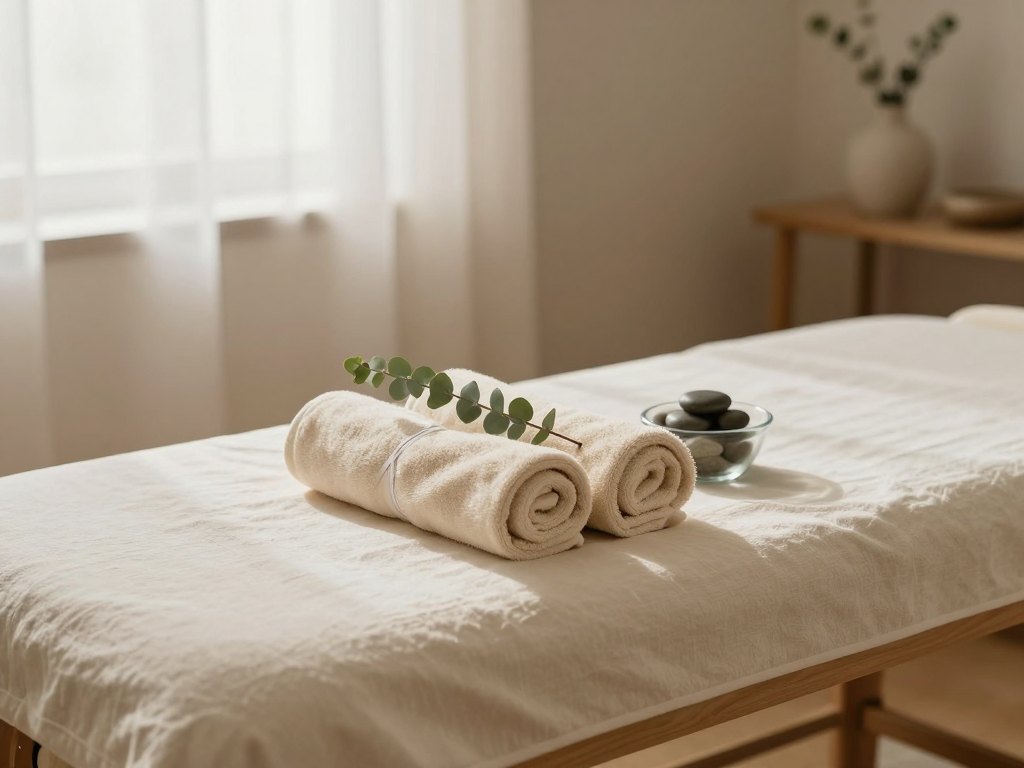
Many people who want to learn massage hit the same wall. Books describe strokes in words, and photographs freeze a movement that is really about rhythm, pressure and posture. Standard videos filmed from across the room show a person at work, but not what the hands are actually doing or how the body is held.
Classical massage is the foundation of almost everything else in the field. If your basic strokes, your hand position and your sense of pressure are shaky, every other technique you add later will inherit the same weak spots. That is why a solid, complete course on the classical full-body routine is a sensible first investment.
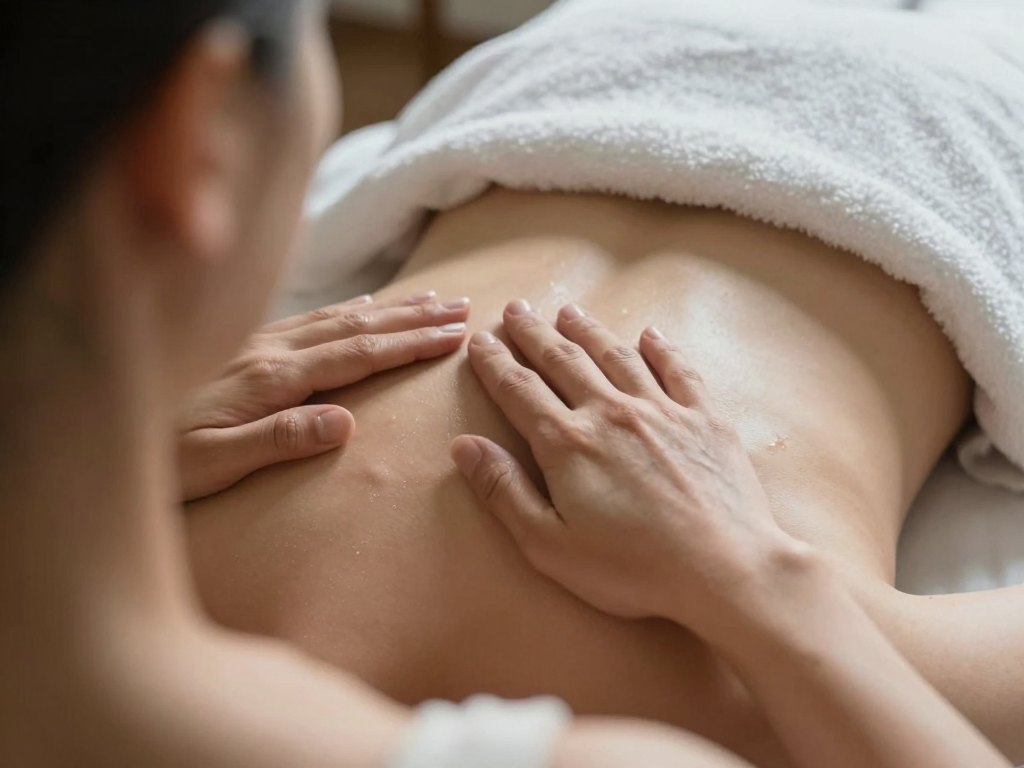
This programme was built to remove the guesswork. Each practical lesson is shot in two formats: from the side, as you would see a colleague working, and from a first-person view, where the camera follows the presenter's head and imitates the movement of your own hands. You do not have to translate what you see into what you should do. You simply look down at the model and repeat.
You work through the material at your own pace, practise on friends or family, and get answers from a curator when something is unclear.
What you will be able to do
- Perform a complete classical full-body massage
Move through the body in a logical order, from preparation to the final strokes.
- Place your hands and hold your body correctly
Learn the posture and hand positions that protect your own wrists and back.
- Use the core classical techniques with confidence
Stroking, rubbing, kneading and other basic movements, shown step by step.
- Adjust the intensity of pressure to the person
Follow practical advice on how deeply to work in each area.
- Recognise when massage is not appropriate
Understand the basic cautions so that you work safely.
- Build an individual routine for a client or a relative
Decide what a particular body needs and plan the session around it.
- Review and repeat techniques until they feel natural
Replay any lesson as often as you need, from either camera angle.
- Check your knowledge with an online test
Finish the programme by testing what you have learned.
- 87
- video lessons
- 2
- camera angles for practical lessons
- 3
- steps in every topic: watch, practise, test
- 6
- modules in the programme
A different way of showing technique
The most distinctive feature of the course is the first-person filming. The camera is fixed to follow the head of the presenter, so what you see on screen closely matches what you would see looking down at your own hands. Angles, finger positions and the direction of each stroke become obvious rather than something to decode.
Alongside that view, the same technique is shown from a general, wider shot. This lets you check the posture of the whole body, the position of the feet and the way weight shifts during a movement. Together the two views cover both the details and the big picture.
Theory lessons are demonstrations with practical comments on the degree of pressure, supported by checklists you can keep next to you while you practise.
How the course works
Each topic follows the same three steps. First you watch the theory part: demonstrations of the techniques filmed in a wide shot, with advice on how strongly to work and checklists to summarise the key points. Then you do a practical task: you give the massage together with the lesson, following the first-person video, and receive feedback from a curator. Finally you complete an online test on what you have studied.
The learning platform works on any device, so you can study on a laptop at home, or watch a technique on a phone or tablet while you practise. You can study from anywhere and at whatever time suits you, and there is no fixed timetable to keep up with.
You will need people to practise on. Relatives and friends are usually happy to help, and regular practice with them is what turns the lessons into a real skill. When a question comes up, you can ask the curator and get an answer.
The programme
The course follows the logic of a real session, from preparation to the finishing strokes. Modules below show the structure of the programme.
1Module 1 — Foundations of classical massageWhat massage does, how a session is organised and how to prepare.Theory and demonstrations
- How classical massage works and what it is used for
- Preparing the room, the table and yourself
- Posture and hand placement that protect your body
- Basic strokes and how pressure is graded
2Module 2 — Safety and the clientWorking responsibly with every person who lies on your table.Theory and checklists
- Indications and cautions: when not to massage
- Talking with the client before the session
- Choosing intensity for different people
- Hygiene and comfort during the session
3Module 3 — Back and neckThe area most people ask you to work on first.Demonstrations and practice
- Warming up the back with stroking and rubbing
- Kneading techniques for the muscles beside the spine
- Working on the shoulder girdle and neck
- Practice task: a complete back sequence from the first-person view
4Module 4 — Legs and feetTechniques for the back and front of the legs.Demonstrations and practice
- Massage of the back of the legs
- Massage of the front and sides of the legs
- Working around the knees and ankles
- Practice task: a full leg routine filmed from two angles
5Module 5 — Arms, chest and abdomenCompleting the remaining areas of the body.Demonstrations and practice
- Massage of the hands and arms
- Working on the chest and shoulders
- Gentle techniques for the abdomen
- Practice task: front of the body from start to finish
6Module 6 — The complete sessionPutting every part together into one confident routine.Practice and testing
- Linking the areas into a smooth full-body sequence
- Timing and rhythm across a whole session
- Building an individual routine for different needs
- Final online test
What you get
- 87 video lessons
Theory, demonstrations and practical lessons in one library.
- Two views of every practical technique
A wide shot plus first-person footage that imitates your hands.
- Checklists
Short summaries of pressure and technique to keep beside you.
- Practice tasks
Guided exercises you carry out on a model.
- Curator feedback
Questions about the lessons and your practice get answered.
- Online test
A final check of the knowledge you have gained.
- Access from any device
Learn at home or on the move, at any time of day.
- Lasting access to the lessons
Return to any technique whenever you want to refresh it.
Is this course for you?
This course is for you if…
- You are a complete beginner who wants to learn massage properly from the basics.
- You want to help relatives and friends relax and relieve everyday tension.
- You already practise and want to tidy up your technique with a clear classical foundation.
- You learn best by watching and copying movements rather than reading descriptions.
- You need a flexible schedule and cannot attend classes in a hall.
Probably not a fit if…
- You are looking for a one-to-one coaching programme or a live in-person workshop.
- You expect to treat medical conditions; this is a massage skills course, not medical training.
- You do not have anyone to practise on, even occasionally.
- You are only interested in one narrow specialised technique rather than the classical full-body routine.
After the course
When you finish, you will have a complete full-body routine in your hands, not only in your notes. You will know where to begin, how to move from one area to the next and how to adapt the pressure to the person in front of you.
You will be able to give a safe, structured massage to family and friends, and to plan a session around what a particular person needs. If you already work with clients, you will have a clear reference for the classical base on which other techniques are built.
Because the lessons remain available, you can return to any technique, in either camera view, whenever you want to refine it or learn a new area. Results naturally vary from person to person, and regular practice is what makes the difference.
Questions before you buy
How much time do I need per week?
There is no fixed schedule. Many learners set aside a few hours each week to watch lessons and practise, but you decide the pace. Practical lessons take longer because you work on a model alongside the video.
Do I need any previous experience?
No. The programme starts with foundations such as posture, hand placement and basic strokes. If you already practise, you can move faster through the early lessons.
How does access work after payment?
Once your payment is confirmed you receive access to the learning platform and can start straight away. You can study on a computer, tablet or phone, from any place.
What is your refund policy?
You can ask for a full refund within 14 days of purchase if the course is not what you expected.
What format are the lessons in?
They are recorded video lessons. Practical lessons are filmed in two formats: a general view and a first-person view that imitates your hand movements. Checklists support the theory.
Will the material stay available?
Yes. The lessons stay in your account, so you can rewatch any technique whenever you need to.
Can I ask questions if something is unclear?
Yes. A curator answers questions about the lessons and gives feedback on your practice tasks.
Who will I practise on?
Most learners practise on relatives and friends. Regular sessions with a willing model are enough to build the skill step by step.
Start learning classical massage today
Open the first lesson, put your hands where the camera shows, and build the skill one technique at a time.