Creative · Beginner
Master the Four Noble Ones of Chinese painting
Discover the meditative art of Se-i. Learn to paint bamboo, orchid, plum blossoms, and chrysanthemum using traditional ink techniques.
- Step-by-step video tutorials
- Personal teacher feedback
- Beginner-friendly format
- Lifetime access to materials
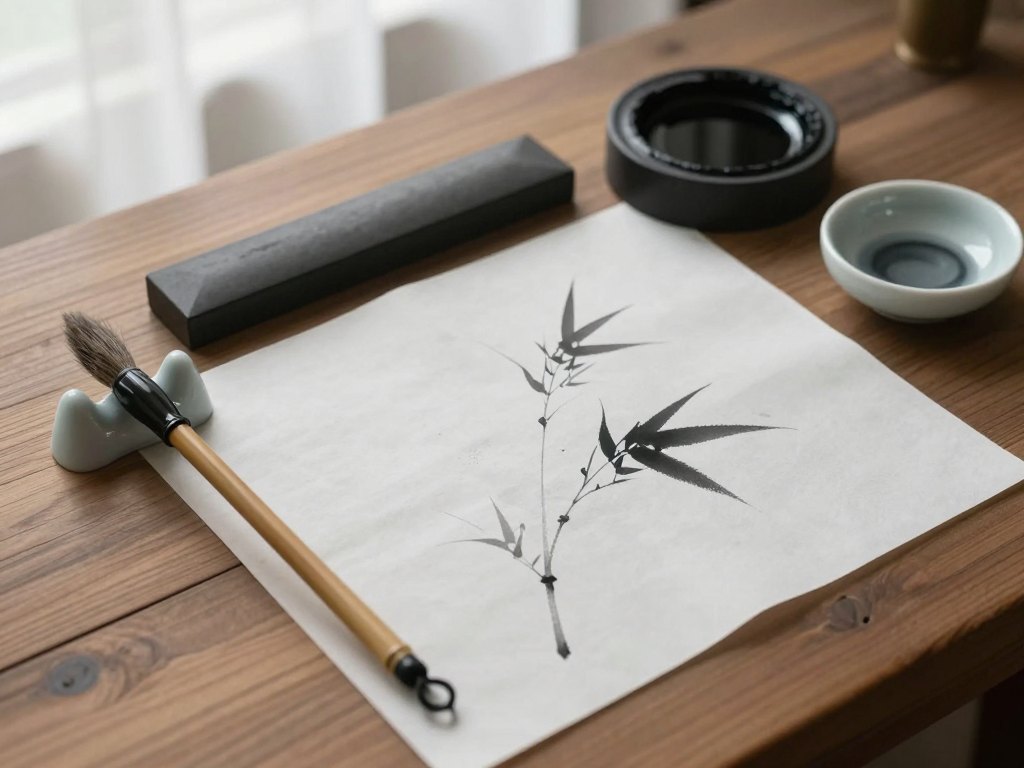
Why the 'Four Noble Ones' are the perfect start
If you have ever admired the elegant, minimalist strokes of traditional East Asian art, you might feel intimidated by the apparent complexity. Many beginners believe that mastering Chinese painting requires years of rigid academic training or an innate artistic gift. In reality, the foundation of this art form lies in a specific set of motifs known as the 'Four Noble Ones': bamboo, orchid, plum blossom, and chrysanthemum.
These four plants are not just subjects; they are the alphabet of Chinese painting. Each one teaches you a fundamental brush technique. Bamboo teaches you to control the speed and pressure of your brush for strong, linear strokes. Orchid teaches you fluidity and grace. Plum blossom teaches you to balance empty space with dense detail. Chrysanthemum teaches you precision and repetition.
This course is designed to demystify the process. We break down each plant into simple, manageable steps. You do not need prior drawing experience. By the end of this programme, you will have created four distinct artworks and, more importantly, you will understand the core mechanics of the Se-i (free and easy) style that allows you to paint anything from landscapes to birds.
What you will be able to do
By completing this course, you will possess:
- Control ink and water
Learn how to mix ink to achieve different shades, from deep black to light grey, and control water absorption on paper.
- Paint bamboo with confidence
Master the 'X' joint technique and learn to vary leaf direction and density to create depth.
- Draw orchid leaves
Develop the ability to paint long, sweeping strokes that maintain tension and elegance without breaking.
- Compose plum branches
Understand how to structure a composition using the 'T' and 'Y' branching patterns common in plum trees.
- Paint chrysanthemum petals
Create realistic flower heads by mastering the radial stroke pattern and balancing the flower with its leaves.
- Apply traditional seals
Learn where and how to place your name seal to complete the traditional aesthetic of your artwork.
- 21,000+
- Students trained in our method
- 4
- Core plant motifs covered
- 100%
- Personalized feedback
- 4 weeks
- Duration of the guided course
The Se-i Style: Freedom through Structure
Chinese painting is often divided into two main styles: Gongbi (meticulous) and Se-i (free and easy). While Gongbi involves precise outlines and layered colors, Se-i relies on the expressive power of the brush. It is closer to calligraphy than to Western realism. In Se-i, the value of the work is determined by the quality of the stroke itself.
This course focuses on Se-i because it is the most accessible entry point for beginners. It requires fewer materials and allows for immediate expression. However, 'free' does not mean 'random.' There is a strict internal logic to how a brush hits the paper. We teach you this logic through the Four Noble Ones.
By focusing on these specific plants, you are not just learning to draw flowers; you are learning to think in strokes. You will learn when to press, when to lift, and when to let the ink bleed. This foundational skill set will serve you in any future subject you choose to paint, whether it is mountains, birds, or abstract forms.
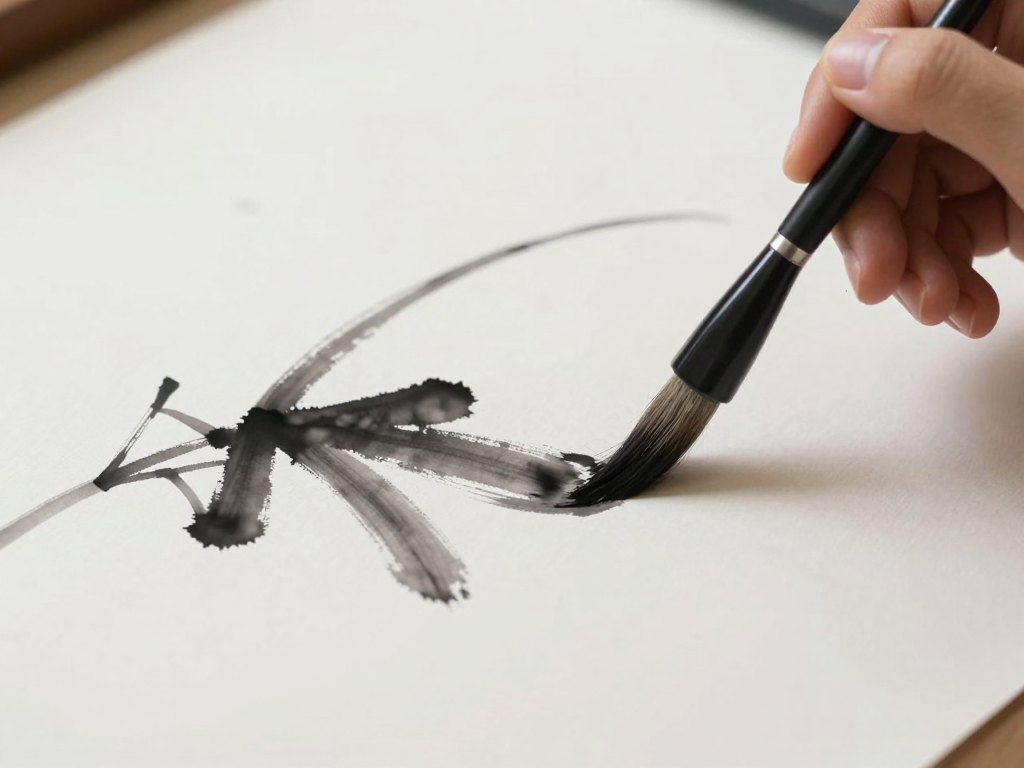
How the course works
Learning a visual art form online can feel isolating, but this programme is built on interaction. You are not just watching videos; you are participating in a guided workshop. The course is structured around weekly themes, each dedicated to one of the Four Noble Ones.
For each module, you receive high-quality video lessons where the painting process is shown in detail. You also get access to step-by-step diagrams and reference images. Your task is to practice these techniques and upload your attempts to the course platform.
The key differentiator of this course is the feedback loop. A dedicated teacher reviews every submitted assignment. They provide specific, actionable advice on your brushwork, ink consistency, and composition. This ensures you do not reinforce bad habits. You can ask questions directly in the comments under each lesson, creating a supportive community of learners.
The Programme
A structured path through the four essential motifs of Chinese painting.
1Module 1: Bamboo – The Backbone of StrengthLearning to control the brush for strong, linear strokes.5 lessons
- Introduction to materials: Brushes, ink, and paper
- Painting bamboo stems: The 'X' joint technique
- Painting bamboo leaves: Angle and density
- Composing a bamboo cluster
- Assignment: Creating a bamboo study
2Module 2: Orchid – The Grace of FluidityDeveloping long, elegant strokes and understanding rhythm.4 lessons
- The anatomy of the orchid leaf
- Brush pressure and speed for long strokes
- Painting orchid flowers: The heart and petals
- Assignment: Painting an orchid cluster
3Module 3: Plum Blossom – The Art of StructureMastering branching patterns and balancing detail with empty space.5 lessons
- Drawing the plum trunk: Texture and age
- Branching logic: The 'Y' and 'T' patterns
- Painting plum blossoms: Five-petal structure
- Adding buds and birds for context
- Assignment: A full plum blossom composition
4Module 4: Chrysanthemum – Precision and RepetitionCreating complex forms through simple, repeated strokes.4 lessons
- Painting chrysanthemum petals: Radial symmetry
- Painting leaves: Vein structure and shading
- Assembling the flower head
- Assignment: Final composition with chrysanthemums
5Module 5: Final Composition and SealsCombining skills to create a finished piece.3 lessons
- Reviewing common mistakes
- The art of sealing: Placement and meaning
- Final project: A multi-element artwork
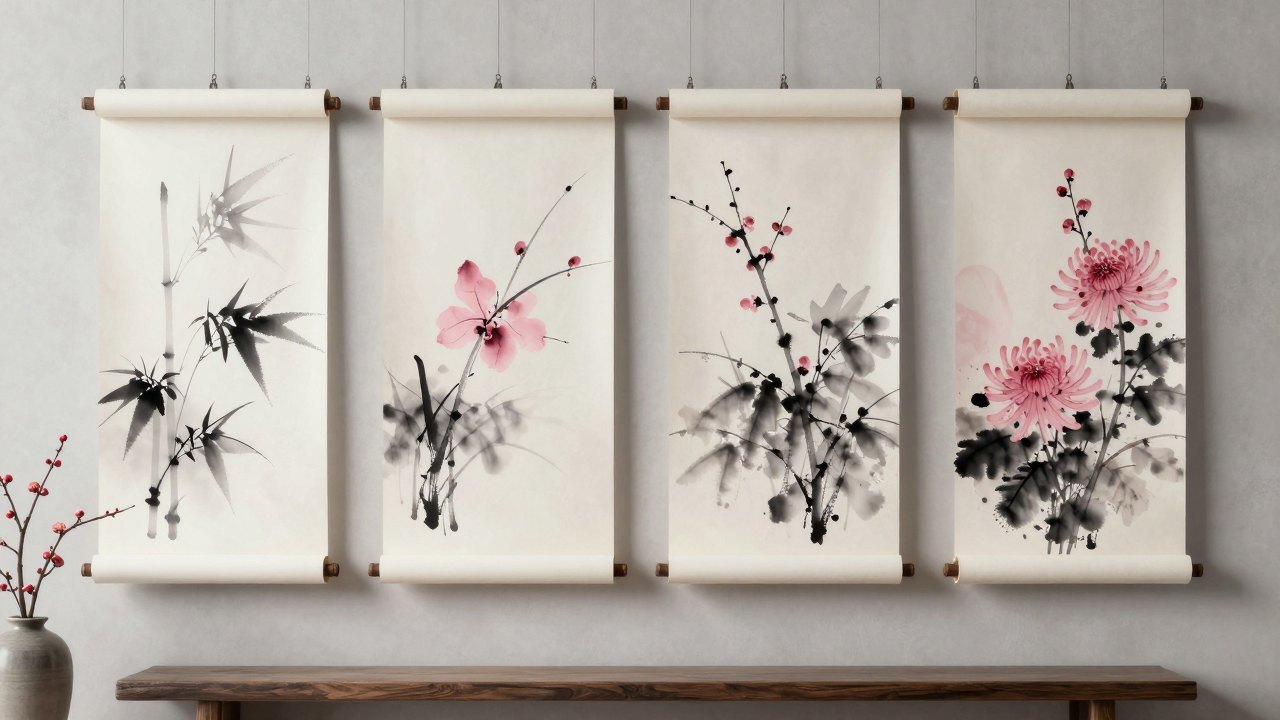
What you get
Everything included in your enrollment:
- HD Video Lessons
Clear, top-down camera angles showing every brushstroke in detail.
- Step-by-Step Guides
Downloadable PDFs with numbered stages for each painting.
- Personal Feedback
Detailed review of your homework by a qualified teacher.
- Community Access
Join discussions with other students and share your progress.
- Lifetime Access
Keep the course materials forever to revisit techniques.
- Completion Confirmation
Receive a digital confirmation upon successful completion of the final project.
A Mindful Practice
Beyond the technical skills, this course offers a meditative practice. The rhythm of preparing ink, the focus required for a steady stroke, and the patience needed for the ink to dry create a calming routine.
Many students report that painting becomes a form of stress relief. Unlike digital work or fast-paced tasks, ink painting demands presence. You cannot rush a brushstroke without ruining the line.
This aspect of the course is not explicitly taught in lessons but emerges naturally from the method. As you master the Four Noble Ones, you will likely find yourself returning to your brush not just to produce art, but to find clarity and calm in your daily life.
Is this course for you?
This course is for you if…
- Absolute beginners who have never held a Chinese brush before.
- Art enthusiasts looking to understand the philosophy behind East Asian art.
- Calligraphy students wanting to expand their brush control skills.
- People seeking a mindful, meditative creative hobby.
- Those who prefer structured learning with professional feedback.
Probably not a fit if…
- Individuals looking for Western oil painting techniques.
- People seeking guaranteed income or professional career changes.
- Those unwilling to practice between lessons.
- Students who only want to watch videos without submitting work for review.
After the course: A new way of seeing
Completing this course changes more than just your portfolio. You will develop a new sensitivity to line, space, and texture. The discipline required to paint a perfect bamboo leaf translates to patience and focus in other areas of life.
You will have four completed artworks that you can frame and display, or gift to others. More importantly, you will possess the foundational skills to tackle more complex subjects. Whether you decide to move on to landscapes, birds, or more advanced Gongbi techniques, you will have the essential toolkit.
Many students find that painting becomes a daily ritual, a way to decompress after work. The 'Four Noble Ones' are timeless subjects. You can paint them for years, refining your style and deepening your understanding of the tradition. This course is the first step on a long and rewarding artistic journey.
Frequently Asked Questions
Do I need to buy special art supplies?
You will need a set of Chinese brushes, ink (or ink paste), and rice paper. The first lesson includes a detailed guide on what to buy and where to find affordable starter kits.
How much time do I need to dedicate per week?
We recommend 2-3 hours per week. This includes watching the video lessons (approx. 30-45 minutes) and practicing the strokes. You can spread this time out as you prefer.
I have never drawn before. Is this too hard?
No. The course is designed for absolute beginners. We start with the simplest strokes. The 'Four Noble Ones' are traditionally the first things students learn because they teach the basics without complex forms.
How does the feedback process work?
You upload a photo of your painting to the course platform. A teacher reviews it within a few days and leaves comments on your brushwork and composition. You can then revise and resubmit if needed.
What if I miss the live start date?
This is a self-paced video course. You can start immediately after purchase. While there is a recommended schedule, you can progress at your own speed. Access to materials is long-term.
Is there a refund policy?
Yes, we offer a 14-day money-back guarantee. If you decide the course is not for you within the first two weeks, you can request a full refund.
Do I need to speak Chinese?
No. All instructions, video lessons, and feedback are provided in English. Chinese terms are translated and explained clearly.
Will I get proof of completion?
Yes, upon completing the final assignment and receiving approval from the teacher, you will receive a digital confirmation of your achievement.
Start your journey in Chinese painting
Join thousands of students who have discovered the beauty of ink and brush. Enroll today and take advantage of the special introductory price.