Education · All levels
See inside a car and understand how it really works
More than seven hours of 3D-animated video lessons that take you from the basic layout of a car to the detail of each major system.
- 7+ hours of video
- 14 core topics
- 25 additional videos
- 3D animation
- 14-day refund
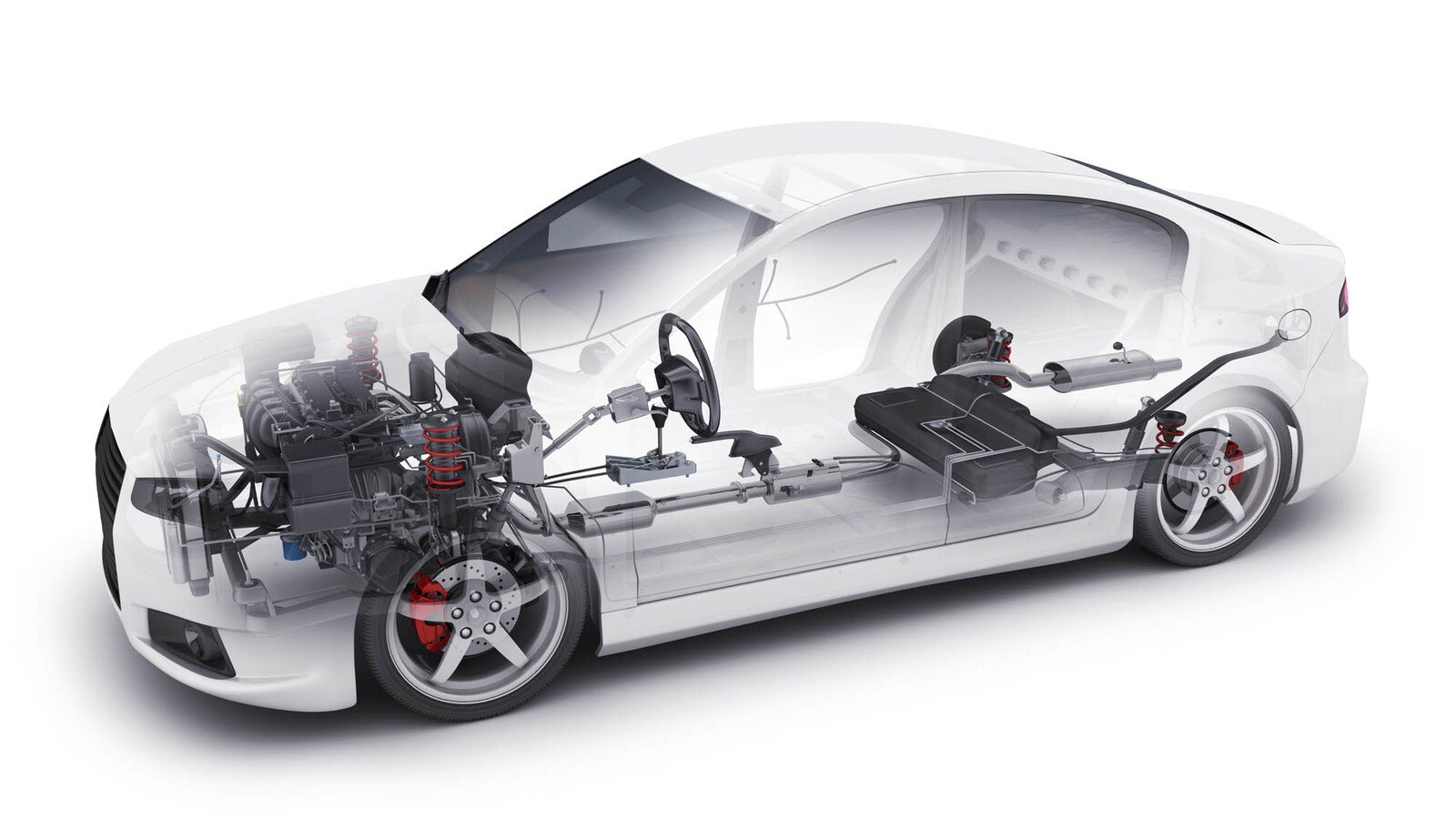
A car is easier to understand when you can see inside it
Most of us use a car every day without knowing what happens under the bonnet. We hear words like timing belt, thermostat, torque converter or MacPherson strut, and they stay abstract because the parts are hidden behind metal and plastic.
Photographs and static diagrams only help so much. A crankshaft, a camshaft and a set of valves are moving parts that work in sequence. A cooling system is a loop in which liquid travels through passages, and the same is true of oil in the lubrication system. To understand them, you need to watch them in motion.
This course uses 3D animation to open up the car. Each lesson takes one system, shows where it sits in the vehicle, breaks it into components and then shows how they work together. You see the cycle of a petrol engine, the path of oil through an engine, and the way a disc brake or a rack and pinion steering gear does its job.
The course is meant for anyone who wants to learn how a passenger car is built, whatever they know today. You can start with the basics and move through the systems one by one, or jump to the topic you are curious about.
What you will be able to do
After working through the lessons, you will be able to:
- Describe the main systems of a passenger car
Name them, say what each one does and explain how they connect.
- Explain how a 4-stroke petrol engine works
Follow the full cycle and the role of each main part.
- Compare petrol and diesel engines
Understand where the two designs are similar and where they differ.
- Trace the flow of oil and coolant
Follow the lubrication and cooling cycles through pumps, filters, thermostat and radiator.
- Distinguish fuel, intake, exhaust and injection systems
See how the engine receives air and fuel and how exhaust leaves it.
- Read a simple automotive circuit
Understand power sources, consumers, fuses, relays, series and parallel connections.
- Compare transmission types
Tell front-, rear- and four-wheel drive apart and understand manual, automatic, dual-clutch and CVT designs.
- Recognise suspension and brake layouts
Identify independent and dependent suspension, disc and drum brakes and their parts.
- Explain how steering and air conditioning work
Understand rack and pinion and worm steering, power assistance and the A/C cycle.
- 7+ h
- of educational video
- 14
- core topics
- 25
- additional videos on specific components
- 3D
- animation throughout
Learning by watching the parts move
The method behind the course is simple: show the whole car first, then zoom into one system at a time. A transparent cutaway view lets you see the engine, drivetrain, suspension and exhaust in their real positions, so every component has a context.
Once you know where a system sits, the animation separates it into its parts and runs them in sequence. You see what moves, what stays still and what flows through, which is hard to learn from a written description.
- Start with the layout of the whole car
- Zoom into one system at a time
- Watch each part in motion, not just labelled
- Return to the additional videos for detail on single components
How the course works
The course is a library of recorded video lessons that you watch online at your own pace. There are no deadlines and no assignments. You choose when to watch and which topic to open next.
The 14 core topics are arranged in a logical order: general structure, engine, engine support systems, electrics, transmission, and then the chassis and comfort systems. Following this order is the easiest route for a beginner, because the later topics build on ideas from the earlier ones. If you already know part of the subject, you can go straight to the topic you need.
Alongside the core topics, there is an additional video section with short, focused lessons on individual components, from hydraulic lash adjusters and the thermostat to relays, the alternator and the CVT. This section is supplemented and updated with new videos throughout your access period.
Videos are streamed on the learning platform and cannot be downloaded. You can be logged in on two devices at the same time, for example a laptop and a phone.
The programme
Fourteen core topics, grouped into eight modules here, plus a library of additional videos on specific components.
1Module 1 — The car and its enginesThe overall structure of a car and the two main engine types.4 lessons
- Car systems: the basics and the structure of a car
- The 4-stroke petrol internal combustion engine
- The 4-stroke diesel internal combustion engine
- Forced induction engines: an introduction
2Module 2 — Engine mechanicsThe moving parts that turn combustion into rotation and keep the valves in time.3 lessons
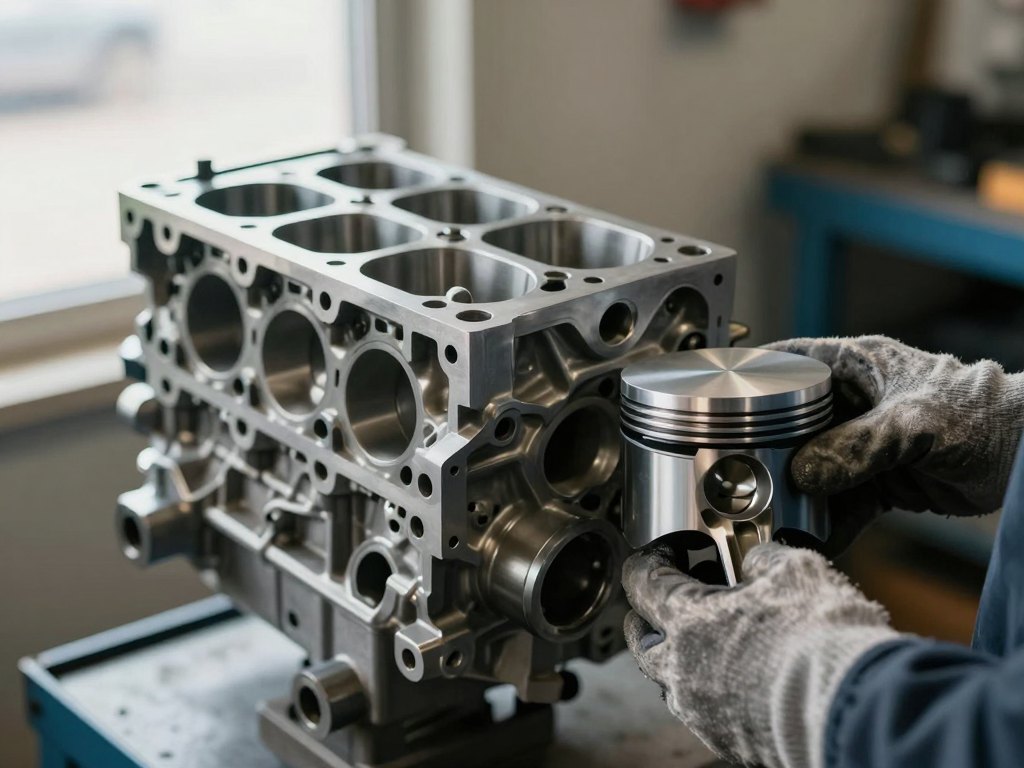
- The crank mechanism: crankshaft, connecting rods, pistons and cylinder block
- The valve timing mechanism: valves, camshaft, timing belt and chain
- Hydraulic lash adjusters
3Module 3 — Lubrication and coolingHow an engine is kept lubricated and at the right temperature.4 lessons
- The lubrication system: oil cycle, passages, pump and filter
- The crankcase ventilation system
- The cooling system: coolant cycle, water pump and radiator
- The thermostat
4Module 4 — Supply systemsHow air and fuel reach the engine and how exhaust leaves it.3 lessons
- Fuel, intake, exhaust, injection and EVAP systems
- The electromagnetic fuel injector
- The EGR system
5Module 5 — Car electrical systemsThe foundations of electricity in a vehicle.6 lessons
- Introduction to car electrical systems: wiring, sources and consumers
- Electricity basics
- Basic elements of an electrical circuit
- Circuit protection
- Series and parallel circuits
- Automotive relays
6Module 6 — Electrical components and testingKey electrical parts and the basics of measuring a circuit.6 lessons
- The alternator and its overrunning pulley
- Engine sensors on a petrol engine
- Multimeter: basic functions
- Measuring voltage, current and resistance in automotive circuits
- Connectors: measurement techniques and connection quality
- Short circuits, open circuits and high resistance
7Module 7 — TransmissionHow power gets from the engine to the wheels.6 lessons
- Drivetrain layouts: front-, rear- and four-wheel drive
- Manual transmission
- The single plate clutch
- Hydraulic automatic transmission and the torque converter
- Dual-clutch transmission
- CVT: continuously variable transmission
8Module 8 — Suspension, brakes, steering and climateThe systems that carry, stop, steer and cool the car.6 lessons
- Suspension, wheels and tyres: independent, dependent and semi-independent layouts
- Double wishbone and MacPherson strut suspension
- The brake system: disc brakes, drum brakes and brake circuits
- The steering system: worm, rack and pinion, hydraulic and electric power steering
- The car air conditioner
What you get
- Over 7 hours of video lessons
Fourteen core topics covering the main systems of a passenger car.
- 3D-animated explanations
Components are shown in motion, so you see how they work.
- A growing additional video library
Short lessons on individual components, updated during your access.
- Learn at your own pace
Watch in any order and repeat lessons as often as you like during your access.
- Access on two devices
Use your account on two devices at the same time.
- Access for the period you buy
Material stays available for the whole access period.
- 14-day refund policy
If the course is not what you expected, you can ask for a refund within 14 days.

Is this course for you?
This course is for you if…
- You drive a car and want to understand what is happening under the bonnet
- You are thinking about a career or hobby around cars and want a solid foundation
- You are a car enthusiast who wants to fill gaps in your knowledge
- You want to follow what a mechanic tells you with more confidence
- You learn best from visuals and animation rather than long texts
Probably not a fit if…
- You want a hands-on workshop where you repair a real car with a tutor
- You are looking for a manual for a specific make and model
- You need downloadable videos to keep offline
After the course
When you finish the lessons, a car stops being a black box. You can name its main systems, say what each one does and explain how they depend on each other, from the oil pump and the thermostat to the gearbox and the brake circuits.
Terms you used to nod along to, such as valve timing, torque converter or independent suspension, will have a clear picture behind them. That makes conversations at a garage easier, makes reading about cars more rewarding and gives you a base for deeper study.
If you also worked through the electrical modules, you will understand simple circuits, fuses and relays, and how a multimeter is used to measure voltage, current and resistance in a car.
Questions before you buy
What is this course about?
It is an informational video course on the structure of a passenger car. It covers general layout and in-depth lessons on the engine, supply systems, electrics, transmission, suspension, brakes, steering and air conditioning, using 3D animation.
How much time do I need per week?
It is up to you. The core lessons add up to more than seven hours, so you can finish in a few weekends or spread them across the weeks of your access. Watching one or two topics per sitting works well.
Do I need any prior knowledge?
No. The course is suitable for anyone who wants to learn how a car is built, regardless of their starting knowledge. It begins with the overall structure of a car and builds from there.
How does access work after payment?
After payment you get access to the lessons online. Access is for the period you purchase, and you can watch on two devices at the same time.
Do I keep the material after the course?
The lessons stay available to you for the whole access period you bought. The course is also updated with new additional videos during that period.
What format are the lessons in?
They are recorded video lessons with 3D animation, watched online. The videos are streamed and cannot be downloaded.
Can I get a refund?
Yes. If the course is not right for you, you can request a refund within 14 days of purchase.
Is the course updated?
Yes. The additional videos section is supplemented with new videos over time, so you can return to it for new lessons on individual components.
Open up the car and see how it works
Start with the first lesson today and follow the systems at your own pace.