Cooking · Beginner
Bake 20+ popular desserts and present them with confidence
A system that teaches you not only how to bake, but how to photograph, package and show your work to other people.
- Video lessons with materials
- 20+ key desserts
- Basic decor techniques
- Food photography module
- 14-day refund
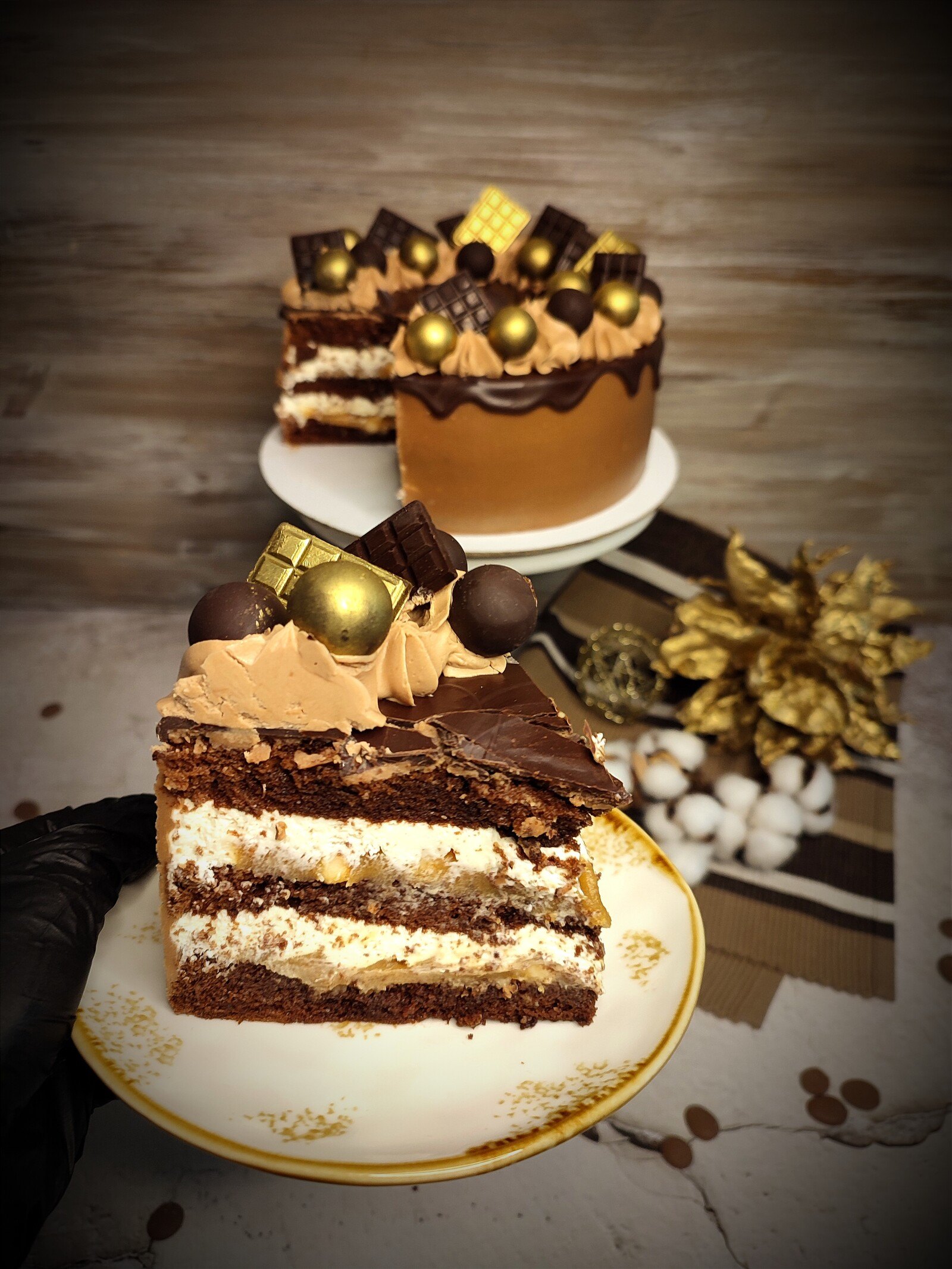
Why home baking so often stops at a good biscuit
Many people love sweets and would happily bake for their family, but get stuck early. A sponge sinks, a cream splits, a mousse does not set, and the cake that looked so simple in a video ends up lopsided on the plate. It is rarely a lack of talent. It is usually a lack of a clear system: the right tools, the right proportions and an order in which to learn things.
This course is built as that system. It starts with the fundamentals that every pastry cook relies on, then moves into hands-on work with the most popular cakes, individual pastries, mousses and meringue desserts. Nothing is padded. Each lesson is there because the next one depends on it.
The programme also goes one step further than most baking courses. Once you can make a dessert you are proud of, you will want to show it, share it or maybe take your first orders. The final part covers food photography, packaging and setting up a baking profile that presents your work clearly.
You do not need a professional kitchen or years of experience. You need a standard oven, basic equipment and the willingness to repeat each recipe until it works.
What you will be able to do
- Choose and use essential pastry tools
Know what to buy now, what can wait and what you can skip.
- Work with correct norms and terms
Read a recipe like a pastry cook and understand why the proportions matter.
- Bake popular cakes from start to finish
Go from dough and cream to assembly and final finish.
- Prepare individual pastries and mousses
Make portioned desserts that hold their shape and taste balanced.
- Make meringue-based desserts
Handle meringue so that it stays light, stable and neat.
- Apply basic decor techniques
Finish desserts neatly with simple, reliable decoration.
- Photograph your desserts well
Use light, angles and styling to show food at its best.
- Set up a clear baking profile
Present your work, describe your offer and organise your account.
- 3
- stages: fundamentals, practice, presentation
- 6
- modules
- 20+
- key desserts
The method: fundamentals, practice, presentation
The course is organised in three stages. The first stage gives you the base: equipment, norms and concepts, explained without filler. You will learn the vocabulary once, so that every later lesson makes sense straight away.
The second stage is practice. This is the longest part of the programme and covers more than twenty key desserts: the most popular cakes, a range of individual pastries, mousses, meringue and basic decor. Because the desserts are chosen to overlap in technique, each one reinforces the skills of the previous ones. By the end you are not following recipes blindly; you recognise the building blocks.
The third stage is promotion. Food photography, packaging and the structure of a baking profile are taught as practical skills, not as vague advice. This stage is useful whether you want to build a small side project or simply keep a beautiful record of your baking.
How the course works
The programme is delivered online as video lessons with accompanying materials. You can study at your own pace, rewatch any step and pause the video while your dough rests or your oven heats. There are no live sessions you have to attend at a fixed time.
A sensible rhythm for most beginners is one or two lessons a week, with a baking session after each. Baking is a hands-on skill, so the best results come from cooking along with the lessons rather than watching several in a row.
The modules follow a clear order, from fundamentals to practice to presentation. We recommend following that order the first time through. Later you can return to any module and use it as a reference whenever you want to bake a particular dessert again.
The programme
Six modules covering the three stages, from your first tools to presenting finished work.
1Module 1 — Foundation: tools, norms, conceptsEverything you need to understand before you start baking.3 lessons
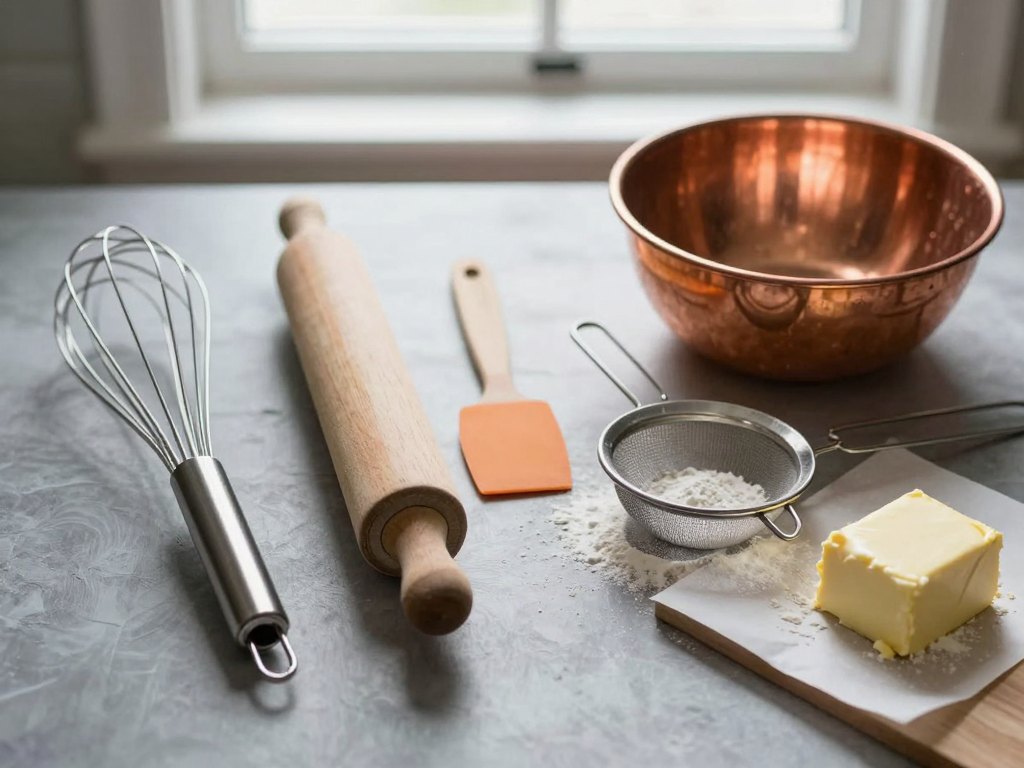
- Essential equipment and what to buy first
- Weights, norms and proportions in pastry
- Key terms every baker should know
2Module 2 — Classic cakesThe most popular cakes, from dough to final assembly.4 lessons
- Sponge bases and how to keep them moist
- Creams and fillings that hold their shape
- Assembling and levelling a layered cake
- Smooth finishing and clean cutting
3Module 3 — Individual pastries and moussesPortioned desserts with stable texture and balanced flavour.4 lessons
- Mousse structure and setting
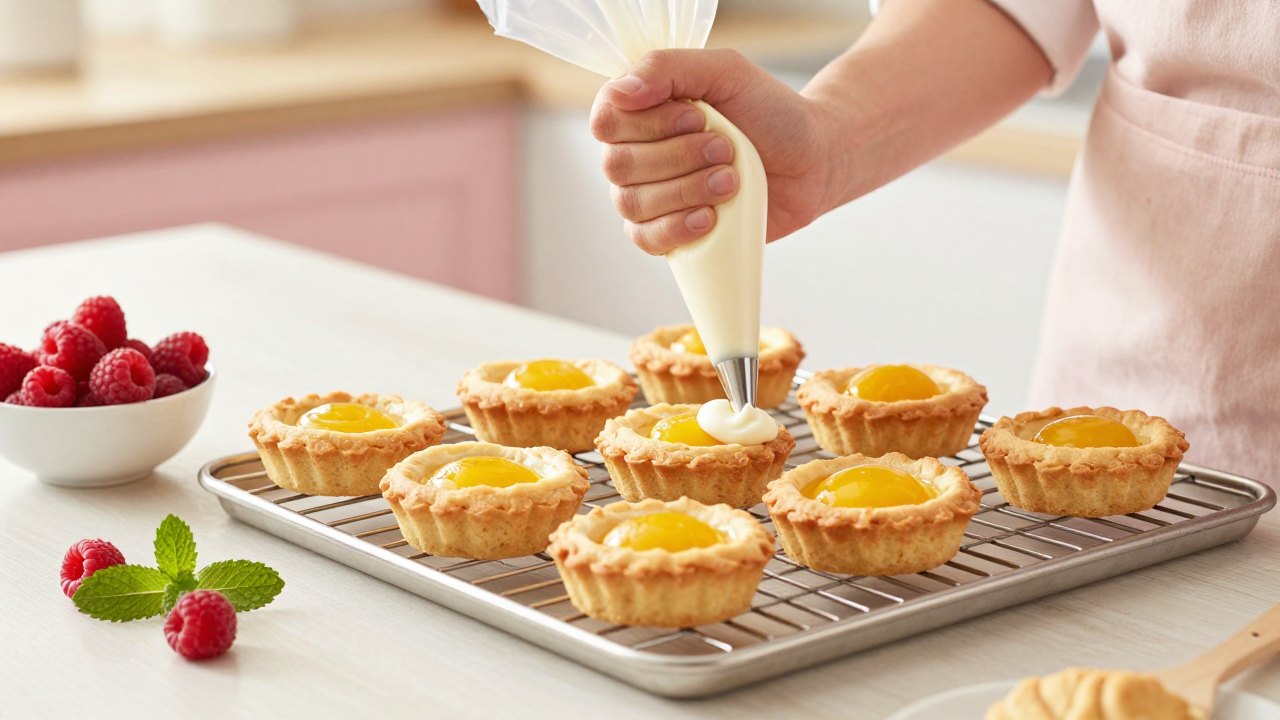
- Individual cakes and pastries
- Inserts and glazes
- Serving and storing portioned desserts
4Module 4 — Meringue and basic decorLight meringue desserts and simple decoration that looks neat.3 lessons
- Meringue types and stable whipping
- Meringue desserts step by step
- Basic decor for cakes and pastries
5Module 5 — Food photographyShow your desserts at their best with simple equipment.3 lessons
- Light and background for food
- Angles and composition
- Styling and light editing
6Module 6 — Packaging and your baking profilePresent your work clearly and put together a profile that is easy to understand.3 lessons
- Packaging desserts for transport and gifts
- Structuring a baking profile
- Reviewing a profile and improving it
What you get
- Video lessons in a clear order
Six modules from fundamentals to presentation.
- 20+ key desserts
Popular cakes, pastries, mousses and meringue desserts.
- Basic decor techniques
Simple finishes you can repeat at home.
- A food photography module
Practical steps for better pictures of your baking.
- Guidance on setting up a baking profile
Learn how to present your work and your offer.
- Self-paced access
Study when it suits you, as often as you need.
- Materials alongside the lessons
Reference notes to use while you bake.
- 14-day refund policy
Try the course and decide with confidence.
Is this course for you?
This course is for you if…
- You want to start baking cakes and desserts and need a clear plan.
- You bake at home and want more consistent, more professional results.
- You would like to turn a hobby into something you can show and share.
- You prefer concrete explanations without long theory.
- You want to learn at your own pace from home.
Probably not a fit if…
- You are looking for live, one-to-one coaching or in-person classes.
- You already work as a professional pastry chef and want advanced sugar or show-cake work.
- You expect results without baking along with the lessons.
- You want a single quick recipe rather than a full system.
After the course
When you finish, you will have a solid base of techniques rather than a folder of recipes. You will know why a sponge behaves the way it does, how a mousse sets and how to finish a cake so that it looks tidy and appetising.
You will have baked a wide range of desserts yourself, which means you can choose confidently what to make for a birthday, a family gathering or a gift. You will also know how to photograph your work and how to present it in a clear, attractive profile.
From there, the next step is up to you: keep baking for pleasure, deepen your decor skills or build a small project. The course gives you the foundation for any of these directions, without promising results that depend on your own effort and market.
Questions before you buy
How much time do I need per week?
Plan for about two to four hours a week: one or two lessons plus a baking session. Because the course is self-paced, you can go faster or slower depending on your schedule.
Do I need any experience?
No. The course starts from the fundamentals and assumes only that you have a kitchen and some curiosity. Previous baking helps but is not required.
How does access work after payment?
After your payment is confirmed you receive access to the lessons and materials, and you can start straight away. You choose when to study.
What is the refund policy?
You can ask for a refund within 14 days of purchase if the course is not what you expected.
What format are the lessons?
Recorded video lessons with accompanying materials. You can pause, rewind and repeat any step on your computer, tablet or phone.
Will the material stay available?
Yes. Once you have access, the lessons and materials remain available so you can return to them whenever you want to bake a dessert again.
What equipment do I need?
A home oven, basic bowls, a mixer or whisk, scales and a few moulds are enough to begin. The first module explains what to buy first and what can wait.
Do I have to follow the modules in order?
For your first pass we recommend it, because each stage builds on the previous one. Afterwards you can jump to any lesson.
Start baking with a plan
Learn the fundamentals, bake 20+ key desserts and present your work with confidence.