Music · All levels
Play bass guitar with understanding, not just from tabs
A clear four-month plan for adults: set up your hands, learn the fretboard and rhythm, play well-known riffs and start building your own bass lines.
- 20 video lessons
- Tabs and backing tracks
- 10+ famous riffs
- Self-paced, no hard deadlines
- 14-day refund

Why playing from tabs is not enough
Many bass players can reproduce a riff from a video and still could not explain why those notes work. They play by tabs, look at the fretboard instead of listening, and feel that something is missing even after years of practice.
Others have tried a teacher or a pile of online videos and got stuck anyway. One lesson says play scales, the next says learn a song, and nobody explains what to do this week or why. Information is everywhere, but a route through it is not.
There is a third problem that is hard to notice from the inside: technique mistakes. A tense hand, the wrong finger or a thumb in the wrong place can go unnoticed for years when nobody ever checks your playing.
This course is built around the two things that fix this: one understandable route from the first lesson to your own bass lines, and a clear explanation of every step, so you know what you are doing and why.
What you will be able to do
- Hold the bass comfortably
Set up both hands so playing is easy and does not leave your wrist or joints sore.
- Find any note on the fretboard
Stop searching blindly and start listening to what you play.
- Keep time with a metronome
Understand how rhythm is built and lock into it.
- Build chords from their parts
See what a chord is made of and how chords turn into a bass part.
- Play major and minor scales and pentatonics
Use them as tools rather than finger exercises.
- Use hammer-ons, pull-offs and a pick
Add the essential techniques to your playing.
- Play more than ten famous riffs
From classic grooves to more demanding parts.
- Start slap bass
Learn the basics and play your first three slap riffs.
- Create your own bass parts
Apply the principles of bass line construction in different styles.
- 4
- months of guided learning
- 20
- video lessons
- 4
- modules plus an introduction
- 10+
- well-known riffs
Explaining the why behind every exercise
Every lesson answers the question most courses skip: why this exercise, and how to do it correctly. Notes and theory are explained in plain words, as if you had never studied music, and each lesson comes with a short written summary you can return to.
Practice follows the same logic. After a lesson you get a task, film yourself on your phone for about 30 seconds and send it in. You do not need a studio, an audio interface or good lighting; the point is to hear what actually came out and to get specific advice on what to improve.
- One route from basics to your own parts
- Short written summary for each lesson
- Tabs and notation for every riff
- Backing tracks to practise with
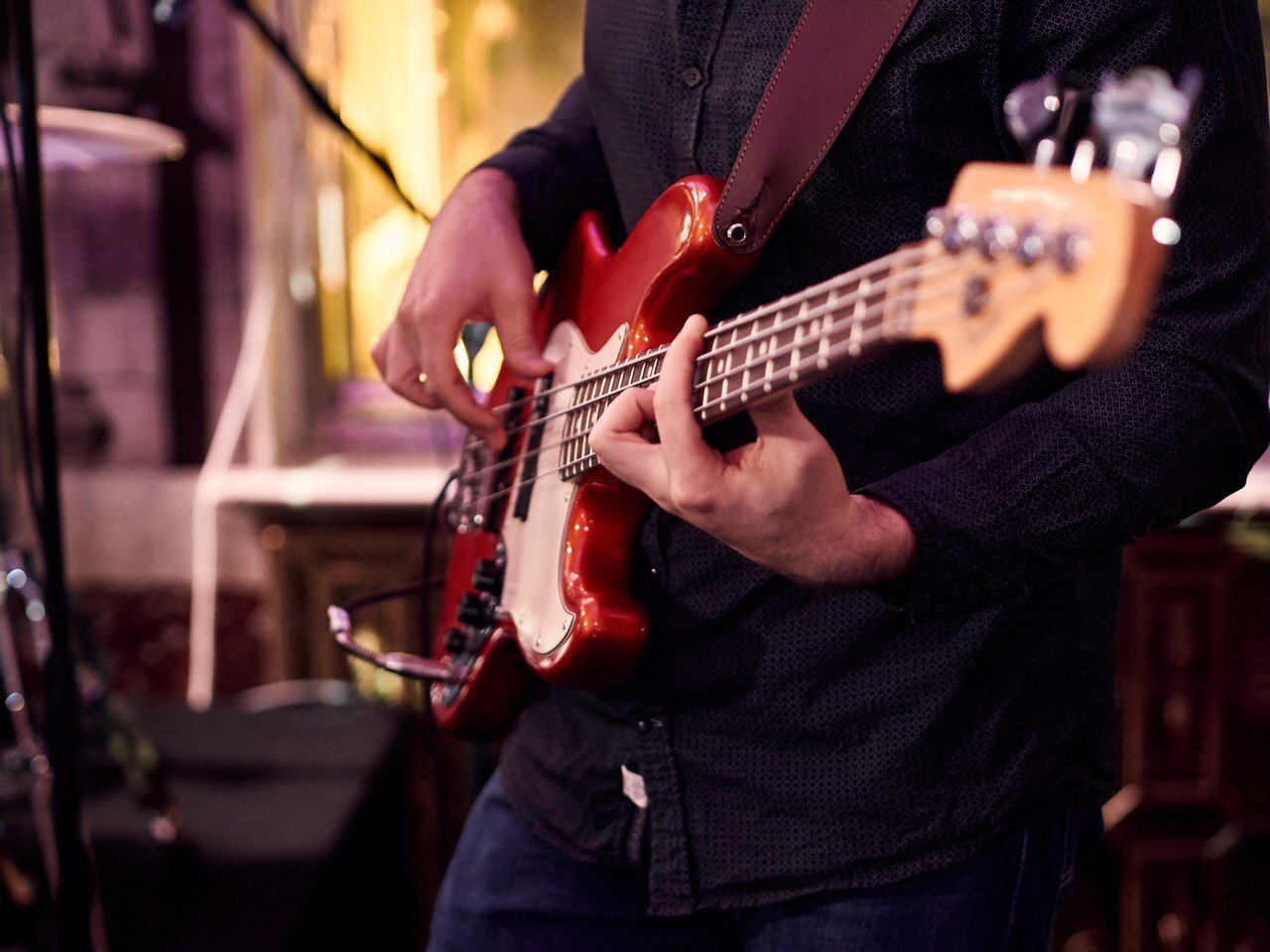
How the course works
The course is delivered online as recorded video lessons that you can open at any hour. New lessons are released once or twice a week, which keeps a steady rhythm without overloading you. Each lesson contains a video, a short summary, notation and tabs, and backing tracks for practice.
There are no hard deadlines. You hand in assignments when it suits you and can resubmit if the first attempt did not work out. If you work shifts, travel or have a busy fortnight, a missed lesson stays available and you simply continue when you are back.
Feedback from a curator on your recorded assignments is available with the support options. The curator watches your recording, points out details you cannot see yourself and tells you what to change, so you do not stall on a difficult lesson and quietly give up.
The programme, lesson by lesson
Everything is arranged from simple to complex, and every lesson builds on the previous one.
1Introduction — StartGet oriented and prepare your instrument.2 lessons
- Welcome and how the course is organised
- How to choose a bass guitar and equipment
2Module 1 — Hands, rhythm, notesComfortable technique, a sense of rhythm and your first riffs.5 lessons
- Lesson 1. Hand position
- Lesson 2. Rhythm basics
- Lesson 3. Riffs: Billie Jean and Sunshine Of Your Love
- Lesson 4. Notes on the fretboard
- Lesson 5. Playing with a pick
3Module 2 — Techniques and scalesCore techniques, scales and working with a metronome.5 lessons
- Lesson 6. Intervals, hammer-ons and pull-offs
- Lesson 7. Riffs: Sweet Dreams and Come As You Are
- Lesson 8. Major and minor scales
- Lesson 9. Working with a metronome
- Lesson 10. Another One Bites The Dust and Money
4Module 3 — Chords and your own partsFrom chords to constructing bass lines.5 lessons
- Lesson 11. Main chord types and their symbols
- Lesson 12. Pentatonic scales
- Lesson 13. The I Wish riff
- Lesson 14. Principles of building a bass part
- Lesson 15. The Californication bass part
5Module 4 — Slap and stylesFirst steps in slap and bass lines across styles.4 lessons
- Lesson 16. Slap basics
- Lesson 17. Three slap riffs
- Lesson 18. The Hysteria riff
- Lesson 19. Building a bass part in different styles
What you get
- Recorded video lessons
Available around the clock on the learning platform.
- A short summary for every lesson
Plain-language notes you can revisit.
- Notation and tabs
For all the riffs and parts covered.
- Backing tracks
Play along and practise the parts in context.
- A clear weekly route
You always know what to work on this week.
- Assignments after each lesson
Record on your phone and resubmit as needed.
- Flexible pace
Lessons wait for you if life gets in the way.
- Help choosing an instrument
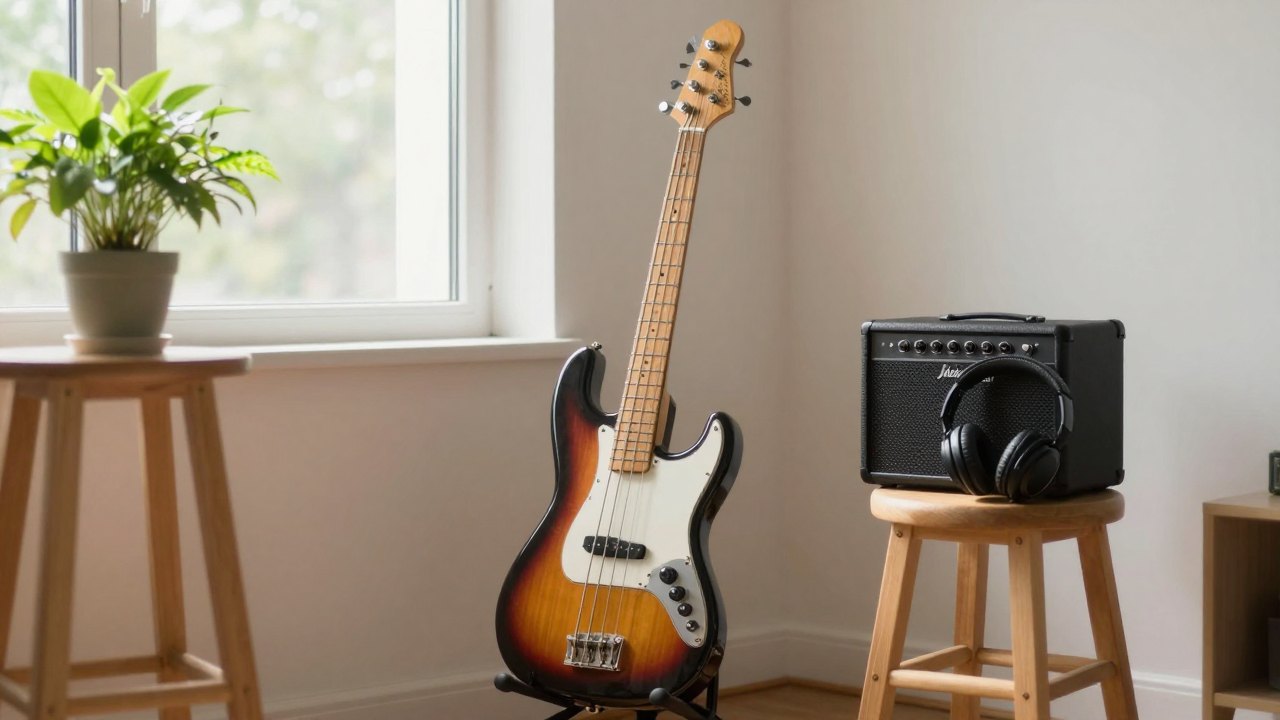
A lesson on picking a bass and equipment so you do not rush a purchase.
Is this course for you?
This course is for you if…
- You play from tabs but do not understand what you are playing
- You do not know where the notes are on the fretboard
- Your playing sounds the same everywhere and you cannot come up with your own part
- You have tried a teacher or random videos and never had a plan
- Nobody has ever checked your hand position and technique
Probably not a fit if…
- You have played systematically for many years and are looking for groove, improvisation and transcribing by ear: the material will feel too basic
- You are looking for a live in-person teacher at every session
- You want instant results without regular practice
After the course
After four months you hold the bass in a comfortable position, know your way around the fretboard and keep time with a metronome without effort. You understand how chords are built and how a bass part grows out of them.
You have played more than ten well-known riffs, including your first slap lines, and you can explain why the notes in them work. When you hear a song, you start to think about what the bass is doing rather than just looking at your hands.
Most importantly, you have a plan. You know what to practise and why, so you can keep improving without wandering between random videos.
Questions before you buy
How much time do I need per week?
Short, regular sessions work better than rare long ones. Three or four sessions of 20 to 30 minutes a week is a good target, and lessons are released once or twice a week.
Do I need to read music or have a music education?
No. Notes on the fretboard and theory are explained from scratch in simple words, and every lesson has a short written summary.
I have been playing for years, or only a couple of months. Is it for me?
Experience matters less than the symptoms: playing by tabs without understanding, not knowing the notes, having no system. If that sounds familiar, the course suits both a few months and several years of playing.
Which bass guitar do I need?
You do not need an expensive instrument to start. The introduction includes a lesson on choosing a bass and equipment, so there is no need to buy in a hurry.
How does access work after payment?
After payment you get access to the lessons on the learning platform and can study at any hour. Lessons open once or twice a week, and you submit tasks when convenient.
What is the lesson format?
Each lesson has a video, a short written summary, notation, tabs and backing tracks. After the lesson you record a short clip on your phone and send it in as your assignment.
I am afraid of recording myself. Is that a problem?
It is the most common worry and it is normal. A phone and about 30 seconds are enough; the recording does not need to be perfect.
Will the material stay available if I fall behind?
Yes. The lessons are recorded, so you can return to them and revisit any topic whenever you need it.
Is there a refund policy?
Yes. You can request a full refund within 14 days of purchase if the course is not what you expected.
Start playing bass with understanding
One clear route, short regular practice and a plan that fits your schedule.