Education · All levels
Understand how Rome's golden age rose and why it ended
Nineteen video lectures on the emperors of the second century, based on ancient sources and modern scholarship, with facts, myths and the reasons behind events.
- 19 video lectures
- 8+ hours of video
- Ancient and modern sources
- 91 days of access
- 14-day refund
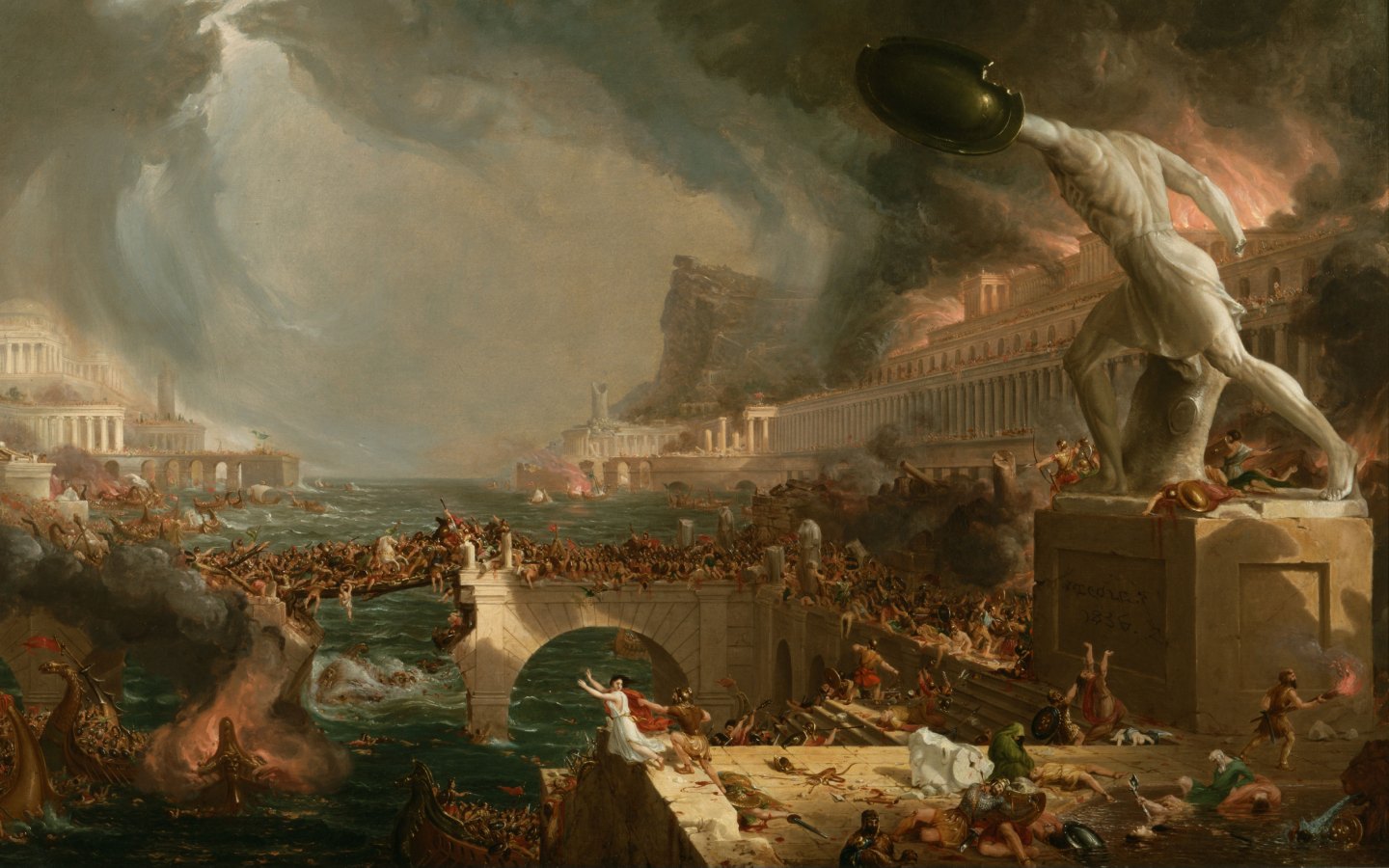
A century that looks calm until you read closely
The second century AD is often called the golden age of the Roman Empire. Borders were wide, cities were growing, and for several generations power passed from one ruler to the next without a civil war. It is an appealing picture, and it is also a simplified one.
If you have tried to learn about this period on your own, you probably know the problem. Popular accounts jump from the famous names to the dramatic scenes and skip the explanation in between. Academic books assume you already know who is who, why succession mattered, and what the provinces wanted from the centre.
This course takes a middle path. It walks through the reign of each emperor of the dynasty in order, tells you what the surviving sources actually say, and separates well-documented facts from later legend and gossip.
By the end you will not only know the sequence of rulers. You will understand why adoption worked as a way of choosing an heir for so long, what the empire paid for its stability, and why the system finally broke.
What you will be able to do
After the lectures you will be able to talk about the period with confidence and with sources in mind.
- Place every emperor of the dynasty in order
You will know who ruled when, how each came to power and what defined each reign.
- Explain why adoption replaced inheritance
You will see the political logic behind the succession of the period and its limits.
- Tell fact from legend in popular stories
You will learn which famous episodes rest on solid evidence and which grew later.
- Read ancient historians critically
You will understand who wrote about each emperor, for whom, and what biases to expect.
- Connect wars, building and finance
You will trace how campaigns and public works shaped the state's resources.
- Describe life in the provinces
You will see how the empire looked from outside the capital, under rulers who travelled and governed.
- Follow the crisis that ended the golden age
You will be able to explain the pressures of plague, frontier wars and an unfit successor.
- Continue with other Roman topics
You will have the framework to approach earlier and later periods with less effort.
- 19
- video lectures
- 8+ h
- of video
- 6
- modules in the programme
- 91 days
- of access after purchase
Sources first, stories second
Each lecture starts from the evidence. The course draws on the works of ancient historians, biographies, letters and the writings of the emperors themselves, and compares them with the work of modern researchers of the Roman Empire.
This matters because the stories most people remember about Rome were often written long after the events, by authors with their own loyalties. When a famous anecdote appears, you will hear where it comes from, how reliable it is and what historians make of it today.
- Ancient accounts read alongside modern research
- Facts, myths and gossip clearly separated
- Causes of events explained, not just dates
- Every reign given its own context

How the course works
The course is a library of recorded video lectures. There are 19 of them, with more than eight hours of video in total, arranged in the order of the emperors' reigns. You can start as soon as your payment is confirmed and watch whenever suits you.
There is no fixed timetable. Many learners take one or two lectures an evening, while others prefer a longer weekend session on a single reign. Your access runs for 91 days from purchase, which is enough to go through all the lectures at a relaxed pace and return to the ones you want to hear again.
The lectures are narrated storytelling rather than dry academic delivery, but they stay close to the sources. Expect names, places and chains of cause and effect, presented so that someone new to the subject can follow and someone who already reads about Rome still finds new detail.
The programme
Nineteen lectures in six modules, following the dynasty from its first emperor to the end of the golden age.
1Module 1 — The empire after the FlaviansThe political situation that made a new kind of ruler possible.3 lessons
- The empire at the end of the first century
- Nerva and the problem of succession
- Adoption as a political solution
2Module 2 — Trajan, the soldier emperorConquest, building and the greatest territorial extent of Rome.4 lessons
- Trajan: a ruler from the provinces
- The Dacian wars and the wealth they brought
- Roads, harbours and the great forum
- The eastern campaign and the limits of expansion
3Module 3 — Hadrian and the consolidated empireA ruler who chose to hold the borders rather than extend them.4 lessons
- A new course: securing the frontiers
- Journeys through the provinces
- Court, culture and Greek taste
- The final years and the question of an heir
4Module 4 — Antoninus Pius and the quiet reignA long period of calm and what lay beneath it.2 lessons
- A reign without wars: how real was the peace
- Law, provinces and everyday life under steady rule
5Module 5 — Marcus Aurelius and Lucius VerusTwo rulers on one throne and an empire under pressure.4 lessons
- Two emperors sharing power
- Wars on the Danube and in the East
- Plague and the strain on the state
- The philosopher on the throne
6Module 6 — Commodus and the end of an eraThe break in the chain of adopted heirs and what followed.2 lessons
- Commodus: the son who inherited the throne
- Was this really the end of the golden age
What you get
- 19 recorded video lectures
More than eight hours of narrated history, ready to watch from the moment you pay.
- A clear chronological structure
Six modules that follow the reigns one after another, so the story never gets lost.
- Source-based explanations
Each lecture is grounded in ancient writings and modern scholarship.
- 91 days of access
Enough time to watch everything and to revisit the lectures you enjoyed most.
- Self-paced learning
No deadlines and no live attendance; you decide when and where to watch.
- 14-day refund window
If the course is not what you expected, you can ask for your money back within 14 days.
Is this course for you?
This course is for you if…
- You enjoy history and want a clear, ordered account of the second-century empire
- You have read popular books on Rome and want to know what the sources really say
- You are studying or teaching and need a structured overview of the period
- You like stories about rulers but prefer them separated from myth
- You want to start Roman history with a calm, well-documented era
Probably not a fit if…
- You are looking for a short summary of a few minutes
- You need a university-level reading list with exercises and grading
- You expect a course on military tactics or archaeology only
- You want live discussion with a teacher, as the lectures are recorded
After the course
When you finish, the second century will no longer be a blur between the famous names of the first century and the crises of the third. You will see it as a sequence of decisions, each one responding to the problems left by the previous ruler.
You will be able to follow documentaries and books about Rome with sharper attention. When a familiar story appears, you will know whether it comes from a contemporary or a much later writer and how much weight to give it.
Many learners find that this period becomes a base for exploring neighbouring ones, whether that means the earlier emperors or the troubles that came after. You will already have the vocabulary, the geography and the habit of asking where information comes from.
Questions before you buy
How much time do I need each week?
The course has more than eight hours of video in total and no schedule. Two to three hours a week would take you through it in about a month, and you can go faster or slower within your 91 days of access.
Do I need to know Roman history already?
No. The lectures start from the situation at the end of the first century and explain the people and terms as they appear. If you already know the subject, you will still find detail and source discussion.
How does access work after payment?
Once your payment is confirmed you can open the lectures straight away. Your access lasts for 91 days from the date of purchase, and you can watch in any order and as often as you like during that time.
What format are the lessons in?
The lessons are recorded video lectures. You can watch them on a computer, tablet or phone whenever it suits you, and pause or replay any part.
Is there a deadline for finishing the course?
There is no weekly deadline. The only limit is the 91-day access period, which is long enough to complete all 19 lectures at a comfortable pace.
Will the material stay available?
The lectures stay available throughout your 91-day access period, so you can return to any lecture as often as you need during that time.
What is your refund policy?
You can request a refund within 14 days of purchase if the course is not right for you. Contact our support team with your order details and we will process it.
Are the lectures based on research or just retelling?
They are based on ancient written sources and on modern studies of the Roman Empire. Where the evidence is thin or the story is a later legend, the lectures say so.
Begin with the first emperor of the dynasty
Nineteen lectures, a clear order and a period of Roman history explained from its sources.